
Kansas wildlife commission to vote on snake’s threatened species listing
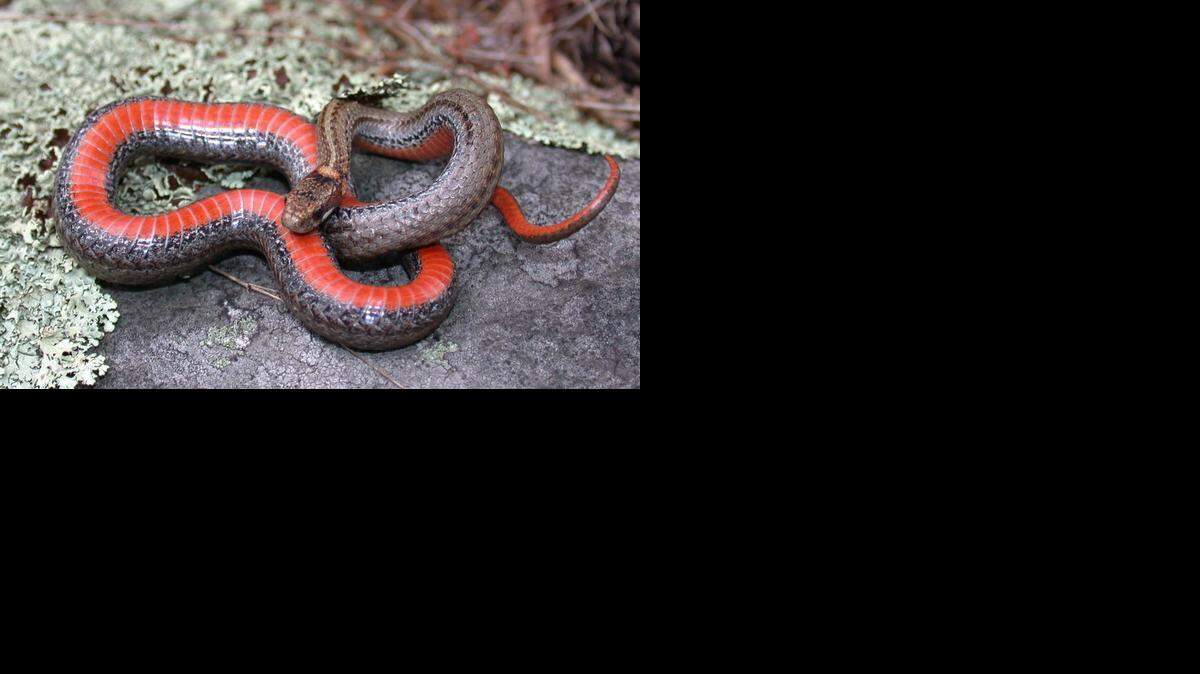
For the first time in about 40 years, the Kansas Wildlife, Parks and Tourism Commission will be asked to vote against science in favor of politics concerning a threatened species when it meets Thursday in Salina.
Earlier this year, the Kansas Threatened and Endangered Species task committee suggested that the small, rarely seen redbelly snakes of eastern Kansas retain a listing of threatened under the Kansas Threatened and Endangered Species Act. At about the same time, the Kansas Legislature considered a bill that would have removed the snakes from the list because the designation has hampered some development projects in the Kansas City area.
Robin Jennison, Wildlife and Parks secretary, agrees the snakes are having population problems in Kansas but wants the species taken off the list to keep the Legislature from taking such action – or actions even more drastic. During the latest legislative session, some legislators tried to revoke all of the Kansas threatened and endangered species regulations.
“Science clearly shows the redbelly snake is clearly jeopardized in Kansas,” Jennison said at a June Wildlife and Parks Commission meeting, later adding his fears of legislative involvement.
“If the department does not pay attention to politics, then the Legislature (could) run natural resource management,” he said.
Some conservation groups want Jennison and the commission to hold their ground and continue the tradition of following the advice of the task committee.
“The precedence this could set could gut the protection of nongame species in Kansas,” said Elaine Giessel, Kansas Sierra Club endangered species chairwoman. “At any time, anybody could just up and ask that a species be taken off the list.
“For the 40 years we’ve had the act in Kansas, there has never been a single case when the recommendations of the task committee were changed or overridden until now.”
Redbellies are tiny snakes that live in the moist leaf litter in oak and hickory forests and are rarely seen by humans. They are common in many Eastern states where such habitat is in greater supply than in eastern Kansas.
Elmer Finck, a Fort Hays State University biology professor, has been on the state’s endangered species task committee for more than 25 years. He said leaving redbellies under the threatened listing seemed the obvious recommendation. Finck said the committee gathered as much current information as possible on the species and could find no proof the population had improved in recent years.
The committee is asked to review species within the Kansas endangered species act every five years. The public, or conservation groups, can also ask the committee to investigate a species they think deserves threatened or endangered status.
The task committee did vote to remove the smoothearth snake, another species complicating development in northeast Kansas, from the threatened list. Finck said that was because the committee had solid biological evidence that the population had probably improved, unlike redbellies.
While removing redbelly snakes from the state’s threatened species list could make it easier for the snake’s habitat to be commercially developed, Jennison said he would like to see his agency continue to work to improve redbelly populations in Kansas. He mentioned education, forming partnerships and establishing more habitat areas as ways of helping the species.
He said he also would like to pursue more research to help determine the current Kansas redbelly population. There are some who question whether numbers are low enough to warrant the threatened listing.
In August, Travis Taggart, director of the Center for North American Herpetology, said he thought redbellies were more reclusive than rare and said it was his opinion they not be listed. In a recent letter to the seven Wildlife and Parks Commission members, Taggart urged them to follow the request of the threatened and endangered species task committee. He urged commissioners to make their decision based on biological and not political concerns.
Duane Schrag, Kansas Sierra Club conservation co-chairman, wants Jennison and the commission to also consider the desires of the public.
“It’s their responsibility to represent the public,” Schrag said, “and studies show the public has overwhelming support for protecting (threatened and endangered) species. We’d at least hope they’d listen to the public.”
Reach Michael Pearce at 316-268-6382 or mpearce@wichitaeagle.com.
Kansas Wildlife and Parks Commission
When: Thursday
Where: Martenelli’s Restaurant, 158 S. Santa Fe, Salina
What: The afternoon session should run from 1 to 5 p.m. The evening session, which will include voting on threatened and endangered species, begins at 6:30 p.m.
Online: The meeting can be watched live at www.ksoutdoors.com.
This story was originally published October 13, 2014 at 11:28 PM with the headline "Kansas wildlife commission to vote on snake’s threatened species listing."