
From speed to solitude: Drag racer John Wiebe learned to love quiet of bowhunting
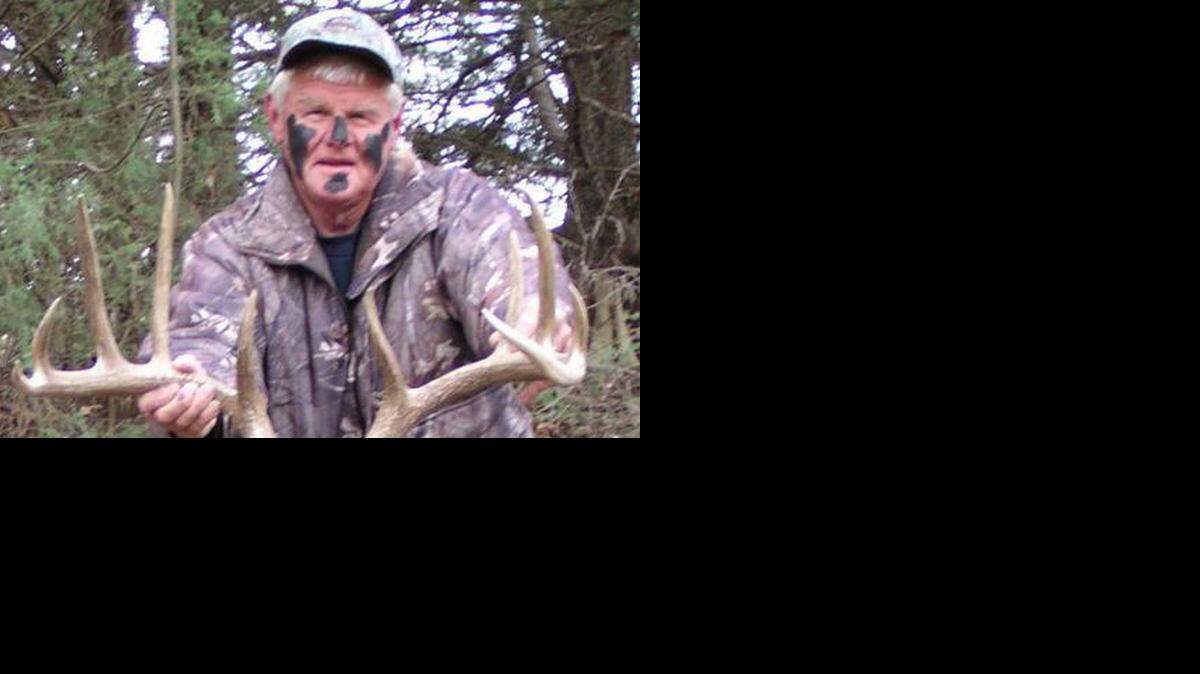
Twenty-two days last fall and winter, John Wiebe patiently waited for a particular big 10-point buck to come within bow range.
He waited through Indian summer heat and Arctic cold, through sunshine and rain and snow. For long stretches, he remained almost totally immobile and silent. He shot the buck on Christmas Day.
There was a time when patience, solitude and immobility couldn’t have been further from the Newton native’s life. Through much of the 1960s and ’70s, he was known as Kansas John Wiebe, a top fuel drag racer who could get to 270 mph in six seconds.
Wiebe was a multiple-time world champion and won many other titles on his way to induction into the Drag Racing Hall of Fame. He was on the cover of Hot Rod magazine, did commercials for Coca-Cola and others. His drag races against other heavies, like “Big Daddy” Don Garlits, made national television.
And in 1978, at the top of his game, he gave up racing and eventually turned to another longtime passion.
“I quit cold turkey,” Wiebe said last week from his Wichita home. “When I came back, hunting started being something I wanted to do again.”
Wiebe the racer
Wiebe was raised on a dairy farm in Harvey County. When not doing chores, he was outdoors.
He used old, rusty fishing hooks for catching bullheads, and scrounged for ancient shotgun shells to hunt up enough pheasants and rabbits for a family dinner.
“I always felt I was on a mission to go out and get dinner every time I went hunting and fishing,” he said.
When he was about 12, he took up another mission – to go fast. He built his first go-kart with the motor from a grain auger. Eventually, chainsaw motors became the power behind more go-karts. As he grew, and left home for college, he began modifying street automobiles to get maximum speed.
“I was just completely obsessed with motors and racing,” he said. “I just always wanted to go faster and faster. Of course, I also wanted to be the best.”
In his early 20s, he leased a service station in Newton, worked into the wee hours of the morning on cars for clients, or his own racing cars. He mostly raced on weekends, and took the step into full-time racing in 1967.
As he had with that first grain auger go-kart, Wiebe did his own work, from building up a 5,000-plus horsepower motor to making track-side tweaks. He developed an incredible eye for mechanical details that could give him a few more miles per hour, or keep him from a deadly crash.
In 1978, he suddenly realized it was time to quit. He was tired of 100,000 miles per year traveling, and felt fortunate his most serious injury was a broken leg from a fiery crash in Tulsa. He also had enough money to get his family, which included two young daughters, off to a good start. Walking away on top, he thought, had many merits.
“I know some guys who were forced out (financially) and they remained pretty bitter about it,” Wiebe said. “I’m fine. I’ve never spent much time looking over my shoulder.”
Wiebe the bowhunter
Nor has he spent much time reliving his high-profile racing past. Since the day he quit, he’s remained a private person. He’s attended few races, and declined most requests for racing interviews. He often prefers to avoid the conversation in public and keeps some facts, like his age, to himself.
Many who’ve known him the past decade or so have no clue to his “Kansas John” days. At Diamond Archery, where he’s a regular customer, manager Blake Nowak seemed surprised when he heard the news. Nowak, though, knows Wiebe as one of his most consistently successful bowhunting customers.
“One time he sent me a picture of a big buck, and said he would probably kill that buck within the next three days,” Nowak said, “and he did.”
Wiebe shot his first buck with a .270 rifle in the early 1980s, and got little from the experience other than venison and antlers. His hunting changed, though, after he bought his first bow. In bowhunting for trophy whitetails, he found some things he’d also found in racing.
There is the rush within his “inner-predator” whenever a buck he’s hunted for weeks walks into range. Both sports are difficult to learn and never totally mastered. Also within both, hard work beats relying on luck.
As with racing, he’s paid attention and learned as he’s gone along in deer hunting.
“When I first got started, if I saw a few fresh tracks beside a hedgerow, I’d put up a stand,” he said. “It took me a while to figure out things like pinch points, and bedding areas.”
Wiebe takes all matters of trophy bowhunting seriously, from scent control to the right time and places to use rattling and deer calls.
As he did with race cars, Wiebe is the one who works on tuning his bow and coming up with the proper arrow and broadhead combination. Surprisingly, while he appreciates a fast bow, he doesn’t shoot super-light arrows. He wants to make sure the shafts are heavy enough to get optimal penetration.
He doesn’t want any plastic or aluminum in his broadheads, only solid steel. Wiebe can get those broadheads sharper than they come from the manufacturer.
Wiebe has killed no world or state records, but he’s managed to shoot some of the best bucks living within the places he hunts in south-central Kansas. Each of his bucks from the last three years have scored in the 160s. For comparison, it takes 125 inches to make the archery record book.
He’s found possibly a better buck for this fall. But even if he does kill the big non-typical, chances are he won’t rate it as the most enjoyable bowhunt of his life. That day happened several years ago.
It was a gray afternoon, and a northern cold system was sweeping through. Like many who hunt, Wiebe felt invigorated by the conditions as he enjoyed a show.
There was a dark cloud bank marching across the horizon, and a squirrel that scolded Wiebe in his stand. A covey of quail passed below him, hurriedly feeding before spending a cold night in a tails together circular roost. There were few signs or sounds of human activity.
Years after the event Wiebe can still describe walking out in the darkness and his flashlight’s narrow beam finding a fuzzy caterpillar trying to make it to cover. He spent time studying it before moving on.
Did Wiebe get a buck on that great afternoon?
“I didn’t even see a deer,” Wiebe said. “Everything else was just so special that it was still such a great hunt.”
More than 35 years after he left racing, John Wiebe still has his world-championship eyes for the really important details.
This story was originally published October 11, 2014 at 3:33 PM with the headline "From speed to solitude: Drag racer John Wiebe learned to love quiet of bowhunting."