
Cross Timbers State Park east of Wichita a natural window on fall
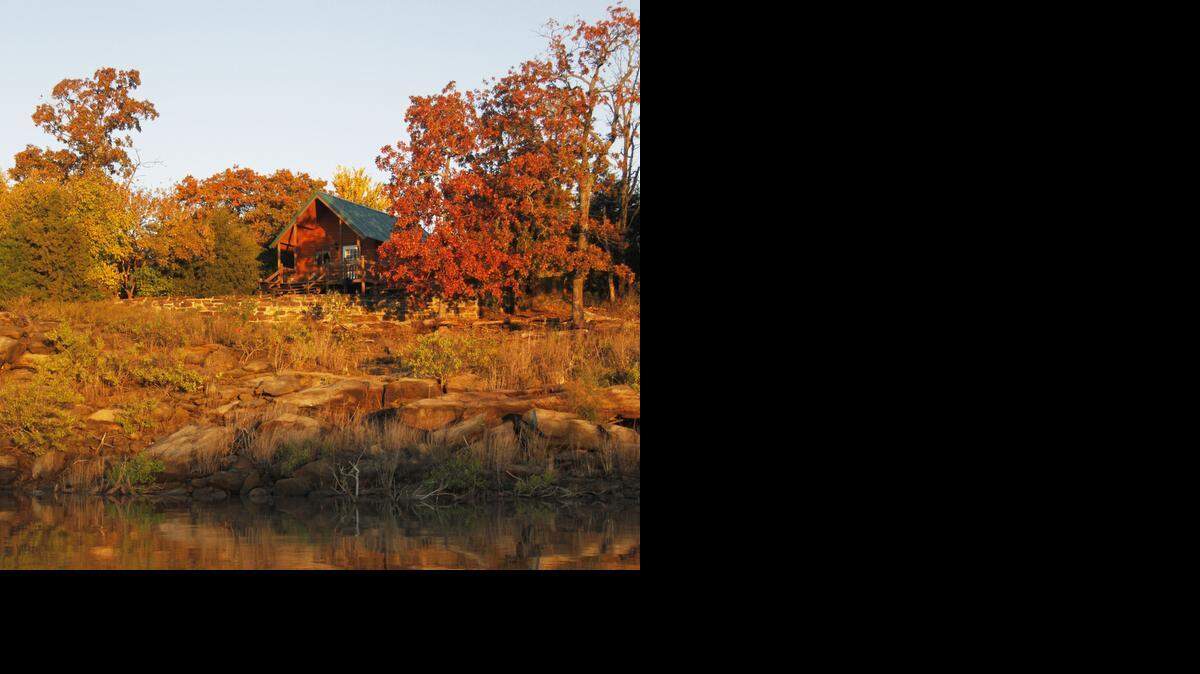
During her dozen years working at Cross Timbers State Park, Kimberly Jones has seen a lot of seasons. She knows her favorite is coming soon.
“The fall is my favorite time, absolutely, no doubt,” said Jones, the park manager. “I love all the colors we get in the trees. Really, last year I don’t see how the colors could have possibly been more beautiful.”
She’s recently seen the first signs of what’s to come this year, too.
The foliage in southeast Kansas usually begins to turn in mid-October and peaks later in the month. Last year the colors were still vivid into early November. Although this year’s peak and intensity of coloration are unknown, Jones is confident that at no Kansas state park will they be prettier.
Cross Timbers State Park, at Toronto Reservoir, about 85 miles east of Wichita, is named after the Cross Timbers geographical region, also known as the Chautauqua Hills. Beginning in central Texas, it’s a very slender finger of combined woodlands, tallgrass prairie, savannahs and often rugged canyons. It is never more than 20 miles wide in Kansas. Cross Timbers State Park sits at the northern tip of the region.
Jones said it’s that combination of Flint Hills-quality prairie mixed with Ozarks-quality hardwoods and ruggedness that makes the Cross Timbers region so special in the fall.
The annual color displays begin out on the grasslands.
The prairie’s sumac is one of her favorites – brushy plants that grow in scattered clusters, with russet, sorghum-like heads. At their peak, the plants’ brilliant leaves can be brake-light red. The assorted prairie grasses each have their own hue to create a pastel quilt that spreads across the grasslands. The color on the grasslands eventually flows into the nearby timber, starting at ground level and climbing higher.
Inside the woodlands, Cross Timbers has many miles of Virginia creeper, with radiant red, five-leafed clusters scattered along vines that crawl and climb across forest floor and high into trees. Poison ivy, such a pain to human skin all spring and summer, becomes pleasing to the eye as it turns brilliant yellow in the fall.
Softwoods, like cottonwood and elm, usually are the first of the trees to turn pale yellow. Mother Nature saves the best for last, when she begins to brighten the thousands of hardwoods.
Cross Timbers can hold six species of oaks, from mammoth, mushroom-shaped bur oaks to much smaller, brush-like chinkapins. Not only does every species have its unique colors, but individual trees also often have their own brilliant patterns. Jones is a big fan of the often orange-colored leaves, so brilliant they could make a Maine maple seem dull.
It is possible to simply sit within the Cross Timbers State Park and behold the autumn foliage from the deck of a lake-view cabin or one of the 170 campsites. Instead, Jones encourages viewers to walk amid the colors.
The state park has 15 miles of maintained trails for hikers and bikers. The 12-mile Chautauqua Hills Trail has several smaller loops that can be combined for an all-day trek. The 1.5-mile Overlook Trail, which twists and turns and climbs and dives amid classic Cross Timbers topography, includes hulking rock outcroppings, lake views, many species of trees, and lichens, mosses and ferns that are found few other places.
The mile-long Ancient Trees Trail is appropriately named with interpretative signs that identifies an assortment of oaks several centuries old.
For instance, through core-drilling, biologists discovered that one of the trees was a seedling in 1750, meaning it was probably cloaked in autumn brilliance the October day British General Cornwallis surrendered at Yorktown, ending the Revolutionary War.
Adam Murray, a park ranger, is one of many who likes to view the scenery from afloat. Cross Timbers is one of Kansas’ most kayak- and canoe-friendly state parks. The Blue Water Trail is about a mile-long paddle with a map and interpretive signs. The park lends canoes and kayaks to park users much of the year, but annually suspends the program on Oct. 1.
Murray enjoys time in his fishing boat, slicing through large flocks of migrating gulls resting on the water, beneath circling flocks of pelicans and bald eagles perched on flooded trees. The lake’s fall fishing, he said, can rival that of the spring for channel and flathead catfish and crappie.
His favorite technique is to toss a fine-meshed cast net to capture small gizzard shad, with which he baits trotlines of 25 hooks. Other anglers place such shad on traditional rod and reel gear, weighted to drag the bait along the bottom, and use the wind to drift the shad across wide stretches of the lake for catfish.
Fishing in the fall, like fishing any time, carries no guarantees. Murray said one day the action may be red hot and the next day as cool as the autumn morning air.
But when Cross Timber’s hills are ablaze in autumn color, even a fishless day can hardly be considered a failure.
Cross Timbers State Park
This is the final article in a six-part, monthly series on Kansas state parks. For more information on Kansas state parks go to www.ksoutdoors.com.
Location: Cross Timbers State Park and Toronto Reservoir are about 85 miles east of Wichita, between Eureka and Yates Center. The area does not have a marina.
Information: For fall color updates and other information during the week, call the Cross Timbers State Park office at 620-637-2213.
Admission: The daily vehicle rate to access the park is $5; the annual rate is $25. Annual park permits may be purchased for $15.50 when vehicle licenses are renewed. Reservations are recommended for cabins. Utilities options for campsites can cost up to $12 per day.
Supplies: Limited supplies and meals may be purchased at Lizard Lips, a cafe/convenience store on Highway 54 near Toronto. Hilltop Bait and Cafe is near the state park office on the west side of Toronto Reservoir.
Dining: Courtney’s Place, an Italian restaurant in Toronto, is open evenings, Wednesday-Sunday. Reservations are highly recommended for the gourmet-quality meals. Take-out pizza and pasta are available. The restaurant does not take credit cards. More information is available at www.courtneysplaces.com.
This story was originally published September 26, 2014 at 8:43 PM with the headline "Cross Timbers State Park east of Wichita a natural window on fall."