
Friday’s Thunder reunion brings back Wichita’s wildest, winningest hockey era
For one night, the Wichita Thunder will turn the clock back to the loudest, wildest and most victorious era in franchise history.
Around a dozen alumni from the Thunder’s back-to-back Central Hockey League championship teams in 1994 and 1995 are returning to Wichita for Friday’s 7:05 p.m. home game against the Kansas City Mavericks at Intrust Bank Arena, bringing together many of the faces who helped build hockey in this city and create the gold standard that every Thunder team since has chased.
The current Thunder (25-31-7-4) are out of playoff contention, but Friday still shapes up as the franchise’s most meaningful night of the season. Members of those title teams will be honored during the game, highlighted in a pregame video and reunited for a full day of events that includes golf, meals and time together before the puck drops. The organization also has quarter-zips for the returning players. Fans can pick up free upper-level tickets to the game at any local QuikTrip.
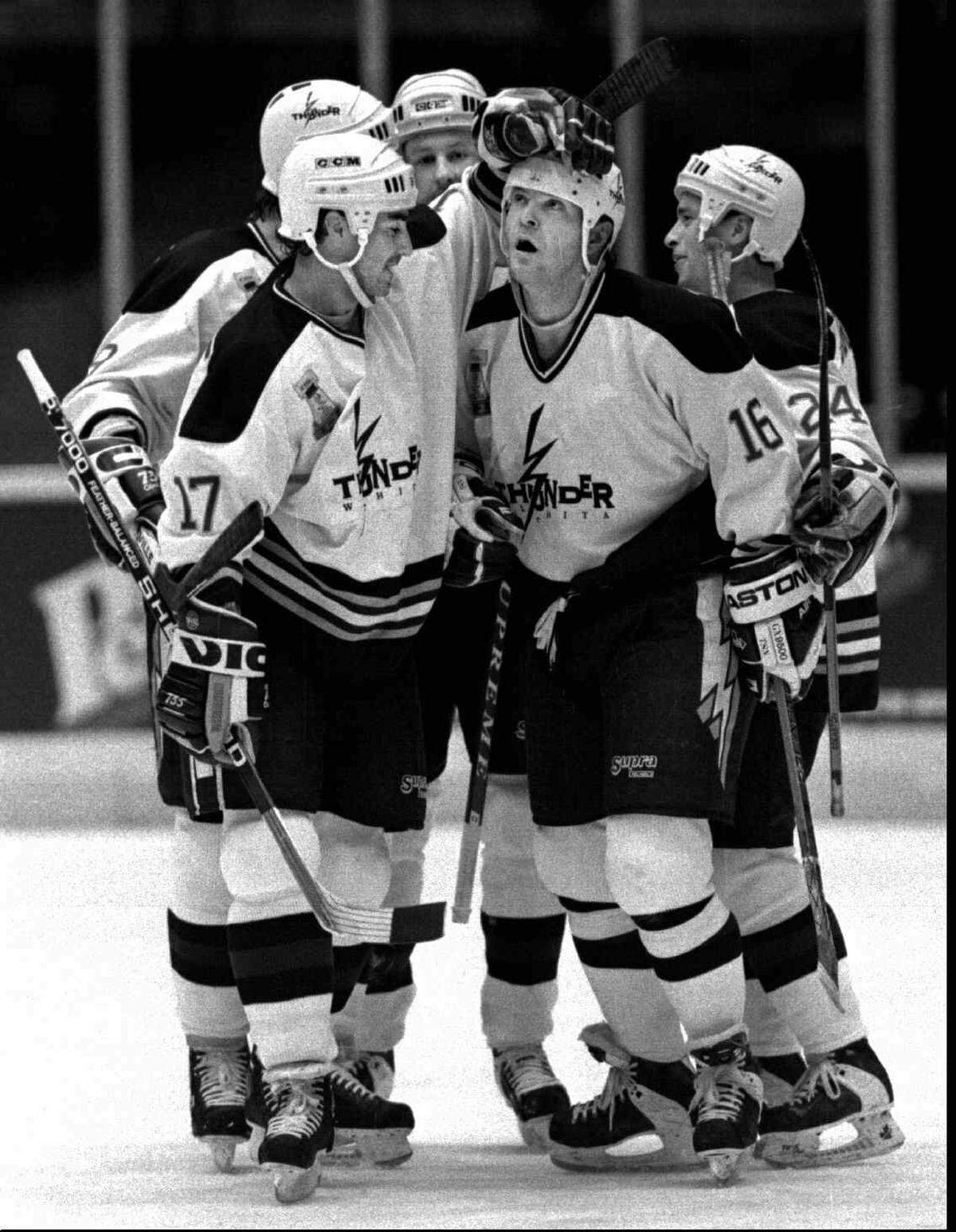
For some of the players, it will be the first time they have seen one another in more than 30 years.
That alone would be enough to make the reunion special. In Wichita, though, those teams mean more than old banners and distant box scores. They were the teams that made Thunder hockey matter.
“For a lot of die-hard fans in Wichita, these guys were their first taste of hockey,” Thunder general manager Joel T. Lomurno said. “So I think everyone is really excited about it. Hopefully we’ll have a big crowd on hand and it will be a big night for us on the ice all the way around.”
Lomurno has a unique place in that history. He was there for the beginning, starting as an unpaid intern during the 1993-94 season when the Thunder won the first of two straight Levins Memorial Cup titles. Now he is the front office executive helping organize the reunion, a full-circle moment for someone who still speaks about those players like heroes.
“I’m happy that hockey has survived this long in Wichita,” Lomurno said. “A lot of cities have lost their hockey since we won our championships back in ’94 and ’95.”
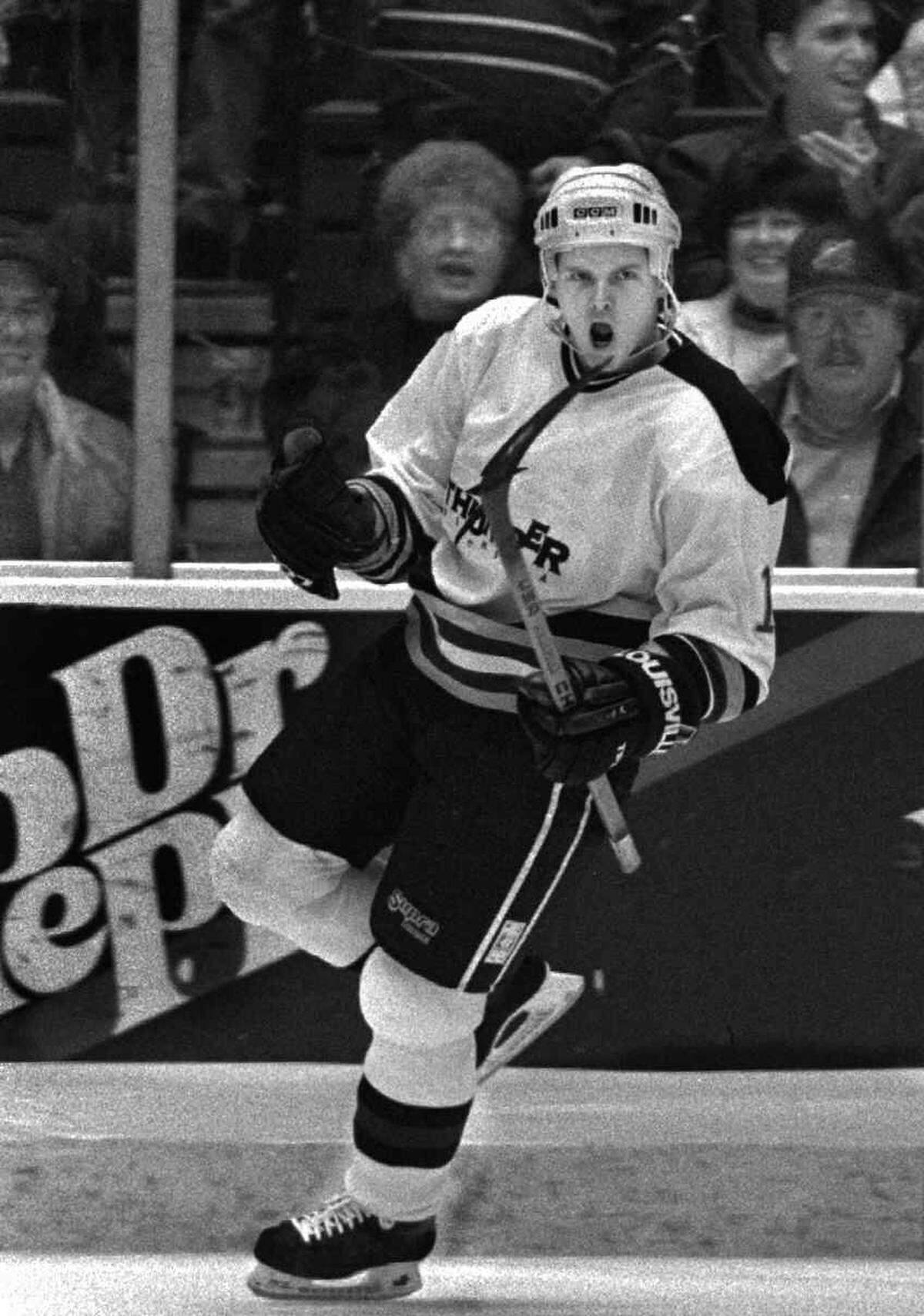
The Thunder were only in their second season when they broke through in 1993-94, but under coach Doug Shedden, the turnaround was immediate and dramatic. Wichita had finished in last place during its inaugural season in 1992. Shedden took the team from worst to first, then kept it there.
In 1993-94, the Thunder went 40-18-6 in the regular season, beat Dallas in a seven-game semifinal and then swept Tulsa 4-0 in the finals for the franchise’s first title. The next season brought more of the same: a 44-18-4 record, a semifinal series win over Oklahoma City and a 4-2 championship series victory over San Antonio.
Over those two seasons, Wichita won 100 games at a 70% clip, a stretch that still stands as the benchmark in franchise history. The Thunder have returned to league finals since, but each run ended in heartbreak in 1998, 2012 and 2013. No Wichita team has matched what those mid-1990s clubs accomplished.
They were not just champions. They were a spectacle.
The old Kansas Coliseum, where the Thunder played before the move downtown, became arguably the league’s most intimidating building. The hockey was bruising and the crowds were brutal.
“Visiting teams knew they were in for it when they came to our building,” Lomurno said.
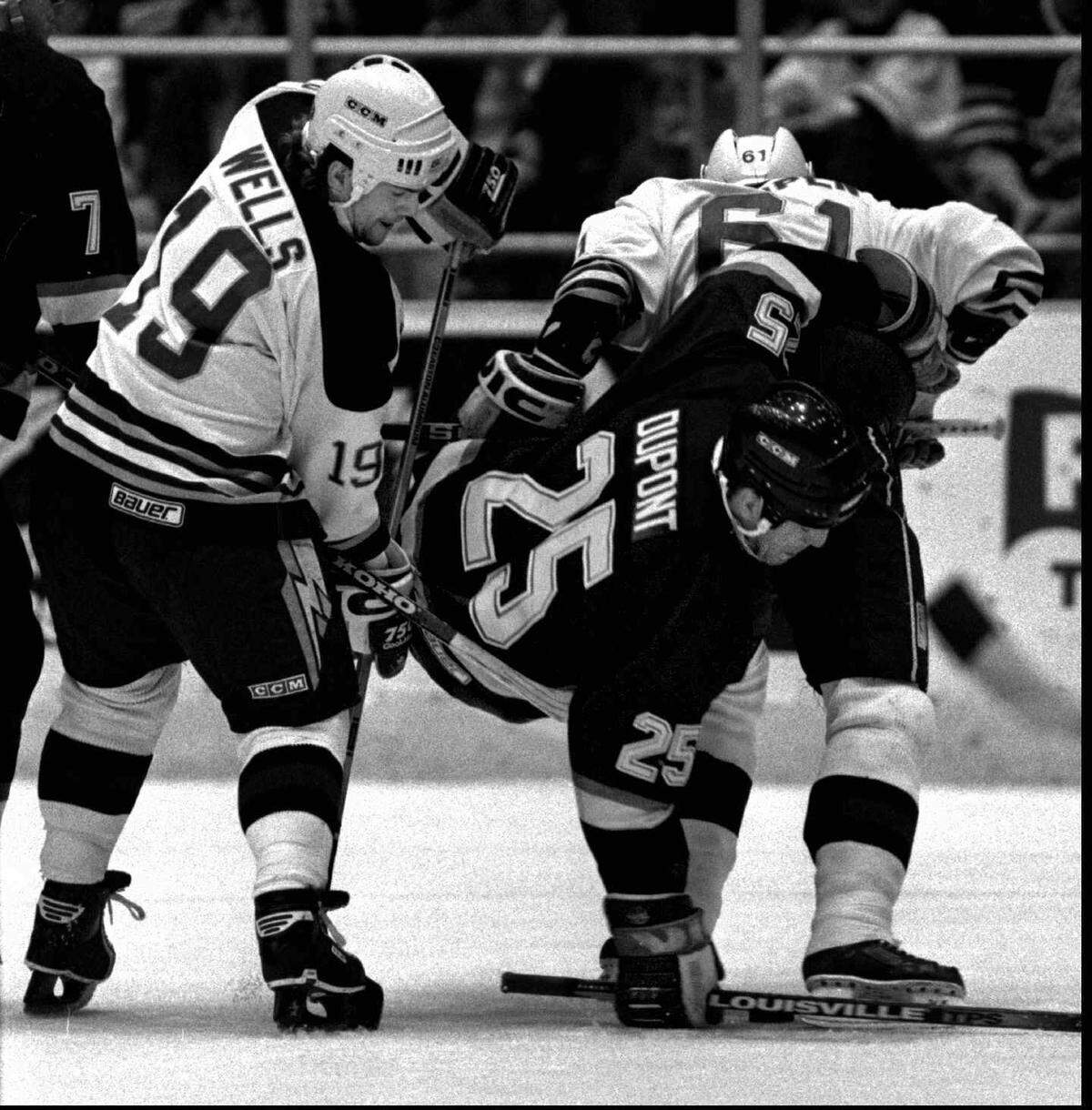
One of the defining scenes from that era came in the 1993-94 season opener, when Wichita beat Tulsa 7-5 in a game that was called with 13 seconds remaining after a fight spilled beyond the ice. A melee between players escalated near the Tulsa bench with Oilers players and Wichita fans becoming involved. By the end, the game had produced 265 penalty minutes, a league record at the time.
That was just the beginning.
Ron Handy later helped instigate what became the league’s largest brawl at the time, a 154 penalty-minute fight against Fort Worth that lasted 14 minutes. The Thunder embraced a reputation as the bullies of the CHL, and in Wichita, that edge only deepened the team’s bond with its fans.
“These guys gave me a thousand headaches and a thousand smiles,” Shedden told The Eagle after winning the title in 1994, referring to the nearly $8,000 in fines assessed to his players, a league record at the time.
For all the chaos, those teams could play.
During the two-year championship run, Bob Berg led the Thunder in scoring with 113 goals and 129 assists. Handy was right behind him with 80 goals and a team-best 151 assists. Brent Sapergia added 110 goals and 79 assists. Paul Jackson was the 1994 scoring champion, piling up 71 goals and 64 assists while tying a professional record for the fastest 50 goals, reaching the mark in just 37 games. Sapergia became the first professional player to score five goals in one period.
And then there was the goalie who looked nothing like a prototype.
Bobby Desjardins, the 5-foot-5 Montreal native who had also been the goalie for the inaugural team, backstopped Wichita to the 1994 championship and won league MVP honors that season. He spent his career hearing that he was too small, then turned one of the greatest seasons in franchise history into his answer.
“All my life I’ve heard I’m too small,” Desjardins said after winning in 1994. “I just wanted a chance. This year, I just wanted to prove I wasn’t a fluke, that I’m for real and I could play hockey.”
That rough identity was not always universally embraced. The play on the ice and the mood in the stands could get so overheated that some residents wrote letters to The Eagle, worrying that Thunder hockey had become, in one letter writer’s words, “un-family like.” Shedden responded with a letter to the editor of his own, defending his team and pointing the finger elsewhere.
“I’ve played professional hockey in cities all across the U.S., Canada and Europe and have yet to encounter such misdirected anger,” Shedden wrote. “It seems to me that the frustration expressed in these letters results from the behavior of a few rowdy spectators rather than the Wichita Thunder.”
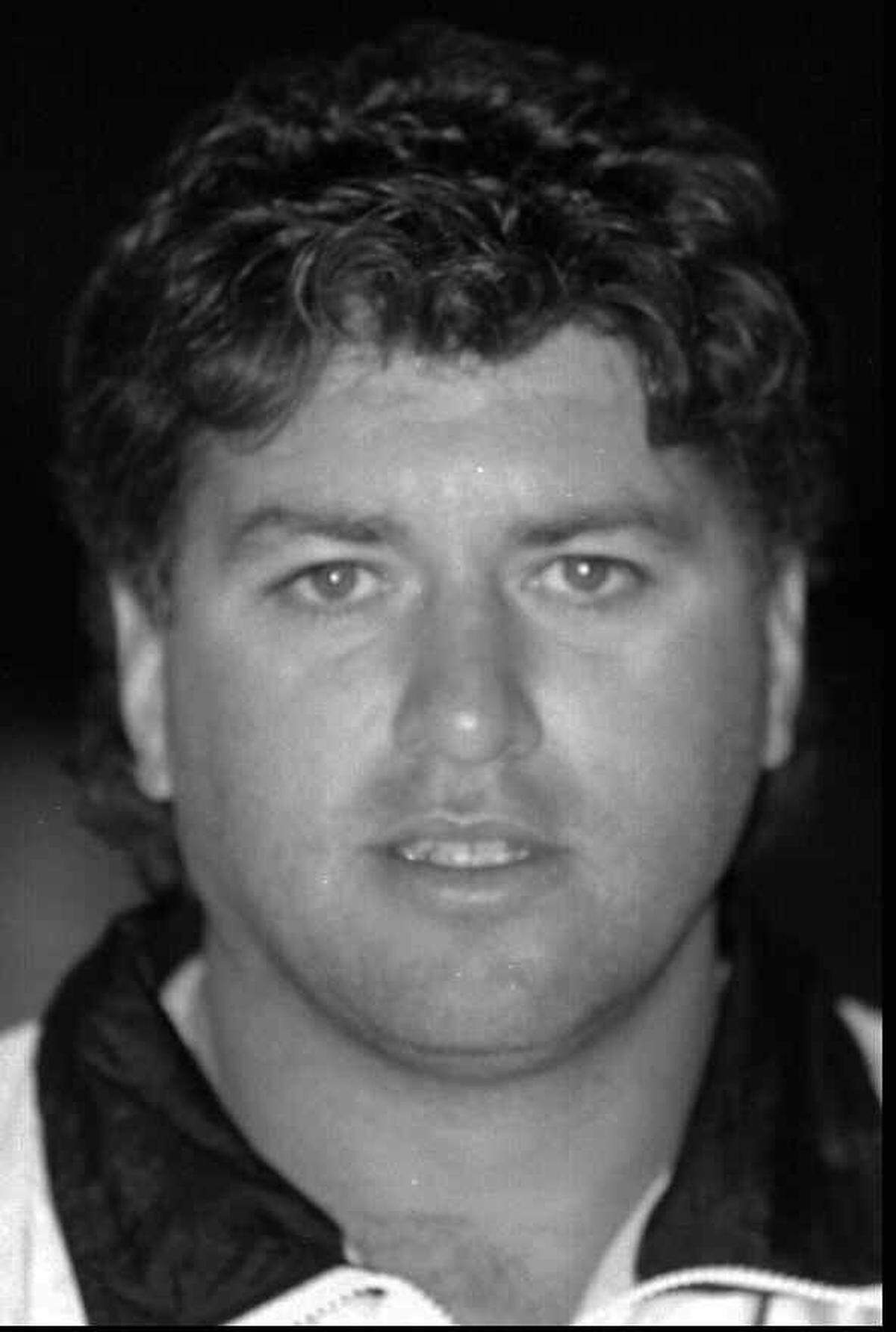
To others, of course, the rowdiness was part of the appeal.
“The atmosphere was just incredible,” Weingartner said with a laugh. “I don’t even know if they had rules about when they stopped serving drinks back then. I’ll just say a lot of our fans really got to enjoy themselves.”
What made the connection stick, Weingartner said, was that it did not end at the arena doors. Players would go out after home games, stop into bars and restaurants and get to know the fans who packed the Coliseum. In a city that was learning the sport in real time, the Thunder became accessible, familiar and fiercely protected.
It was not just fandom. It felt like true ownership.
“The biggest thing about our toughness as that it was a team mindset,” Weingartner said. “Everybody wanted to play for each other. That helped us win a lot of games back then. We just had a really good group with everybody sticking up for each other. If you took a shot at one of us, you were going to have three different guys to answer to.”
That same feeling extended to the stands. When someone went after a Thunder player, the crowd reacted as if one of its own had been challenged.
That is why Friday’s reunion carries such emotional pull.
The confirmed list of alumni attending includes Weingartner, Handy, Berg, Sapergia, Steve Chelios, Tom Roulston, Paul Dukovac, Mike McCormick, Greg Neish, Conrade Thomas, Greg Smith and Stephanne Venne. Several members of those teams, including Weingartner, Roulston, Desjardins and Neish, still live in the Wichita area.
Lomurno has spent the past few years talking with local alumni about making a reunion happen. It finally came together this season, even if the timing was never going to work for everyone. Getting roughly 13 players back is enough to make it feel real.
For Lomurno, the memories are still vivid, especially from the frantic finish to the 1995 title run. When Wichita had a chance to clinch in San Antonio, the organization traveled south, only to watch the Thunder lose on a Sunday. Lomurno then had to make the drive back through the night, get to Wichita and immediately begin helping sell tickets for Game 6 back at the Coliseum.
He still remembers the number.
“8,360,” Lomurno said.
That was the crowd that packed the building with just 36 hours’ notice to watch the Thunder beat San Antonio 9-4 and capture a second straight championship. More than three decades later, he still says the number with pride.
“I couldn’t have picked a better place to go work after college,” Lomurno said. “I had so much fun and it was such awesome hockey. We were the best team in the league and we were the toughest team in the league.”
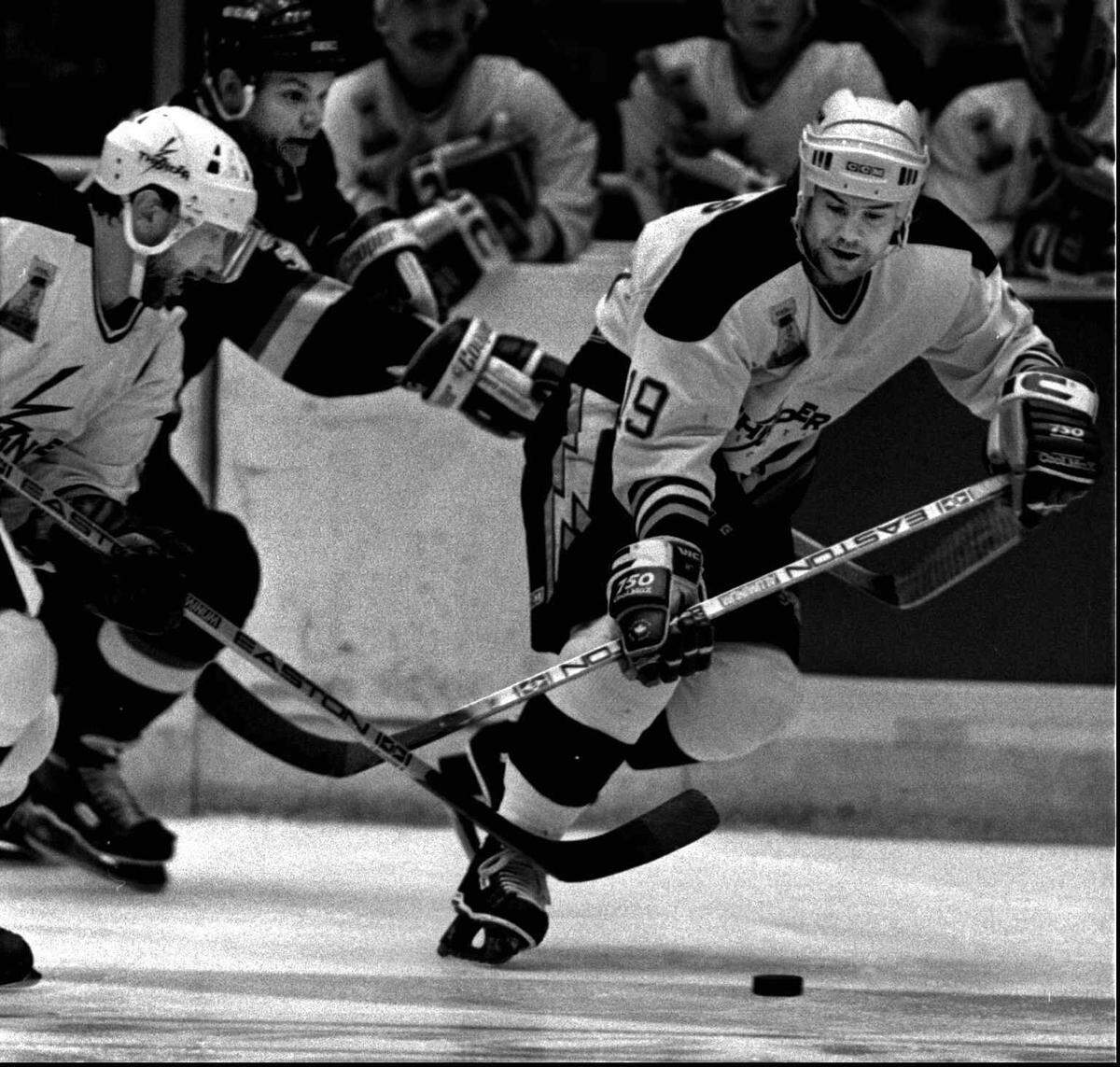
That, in the end, is what Friday is really about. Not just nostalgia, though there will be plenty of that. Not just honoring players, though they deserve it. It is about reconnecting Wichita with the teams that taught this city how electric hockey could feel when the building shook, the benches emptied and the home team almost always ended the night with the last word.
For older fans, the reunion should bring back the soundtrack of the Coliseum and the swagger of a franchise that once ruled the league. For younger fans, it offers a glimpse into why those 1994 and 1995 teams still resonate so strongly.
The current Thunder will skate Friday with no playoff stakes attached. But for one night, the franchise’s proudest era is back in the building.
And in Wichita, that still means something.
.jpg)