
Before this Wichita doctor was saving lives in scrubs, he did it in cleats
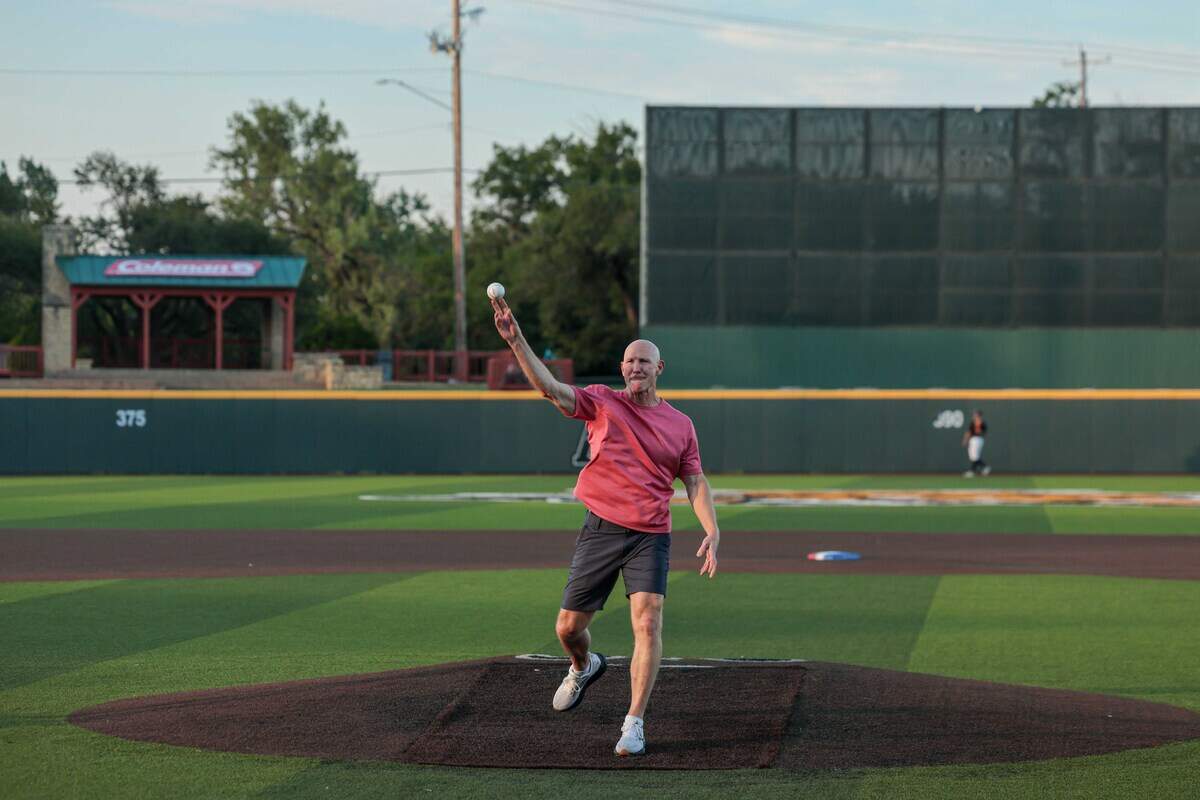
As Dr. James Walker stepped onto the mound Thursday night at Eck Stadium for the ceremonial first pitch at the National Baseball Congress World Series, it wasn’t just nostalgia washing over him.
It was muscle memory.
Walker, a local anesthesiologist at the KU School of Medicine, was a former star pitcher and a perfect choice to represent health care workers on Heartland Heroes Night, a tribute to first responders, teachers and medical professionals.
But this was more than a ceremonial nod. For Walker, who also leads a neurocritical care team at Via Christi St. Francis Hospital, it was a full-circle moment. He once made headlines for saving a life during the very same summer he pitched in the Wichita summer baseball tournament.
In 1991, Walker was a rising sophomore at the University of Kansas, a pre-med student coming off a promising season after missing most of his freshman year with a knee injury. That summer, he joined the Kenai Peninsula Oilers in the prestigious Alaska Baseball League, where he faced future MLB players like Craig Counsell, Darren Dreifort and Brooks Kieschnick.
But what defined that summer wasn’t a showdown on the mound. It was a hot dog. And a bat boy.
Early in the second inning of a game in Anchorage, Walker — a reliever keeping score in the dugout — noticed something was wrong. A young bat boy, chosen from the crowd that day, looked panicked and mouthed the words: “I can’t breathe.”
Walker didn’t hesitate. Relying on a Heimlich maneuver he had just learned in a first-aid class, he dislodged a piece of hot dog lodged in the boy’s throat and likely saved his life.
“It was really an odd thing because the game just kind of went on,” Walker recalled. “The kid wasn’t really part of the game and he was fine, so things just kept moving. And then all of a sudden, I’m in the game and I had to switch into a different mindset.”
Later in that game, Walker came out of the bullpen and earned the save for the Oilers. The local newspaper headline the next day captured it perfectly: “Walker’s two saves.”
To this day, he downplays the incident. He received a thank-you note from the boy’s parents after the game, but they never kept in touch.
“It was other people who made a bigger deal out of it,” Walker said. “Otherwise, it probably would have fallen off everyone’s radar. It wasn’t something that I was dwelling on.”
But it was the first glimpse of how naturally Walker gravitated toward helping others.
That same instinct to lead translated seamlessly into medicine. Today, Walker serves as chair and program director of anesthesiology at KU’s medical school in Wichita, helping train 20 new residents each year. Sine 2010, he’s also been the medical director of neurocritical care and stroke at Via Christi St. Francis, overseeing a 20-bed ICU and advanced stroke center.
“I love being part of a team who all have a common goal,” Walker said. “It’s an honor for me to help lead a team like that and I think sports have been very beneficial for me in my profession.”
But long before he was saving lives in scrubs, Walker was a star player in cleats. His baseball journey included a College World Series run with KU in 1993, a third-round MLB draft selection by the Baltimore Orioles, and a summer pitching in the NBC World Series with the Kenai Oilers. His 1991 team finished runner-up in the tournament, falling to rival Anchorage Glacier Pilots in the final.
So when NBC organizers invited him to throw out the first pitch on behalf of health care workers, it wasn’t just recognition of his titles. It was a nod to his past, to a pitcher who once showed what it truly meant to be a teammate, on and off the field.
“It was a nice honor because there’s so many people who are certainly deserving of the opportunity to go out and throw the first pitch on behalf of health care individuals,” Walker said. “My baseball background fits and the fact that I played in it, so it was very nostalgic for me.”
Even though the game was played at Eck Stadium, not Lawrence-Dumont, where Walker once chased a national title, the moment still hit home. And it stirred up memories. In digging up his old story from 1991, Walker found himself going down a rabbit hole: reading about former teammates, reliving games and rediscovering just how magical that summer had been.
“It made me remember how much fun that summer was,” Walker said. “That was one of the best summers that I’ve ever had.”
Walker may have never coached a sports team, but in every operating room and ICU he enters now, he brings the same leadership he once showed on the field — and in that dugout with a bat boy’s life on the line.
“This is my way of being able to still coach and be a leader and help younger individuals reach their goals,” Walker said. “It’s an honor.”
This story was originally published August 2, 2025 at 6:04 AM.
.jpg)