
Get up to speed on the pain and pleasure of rooting for the Royals
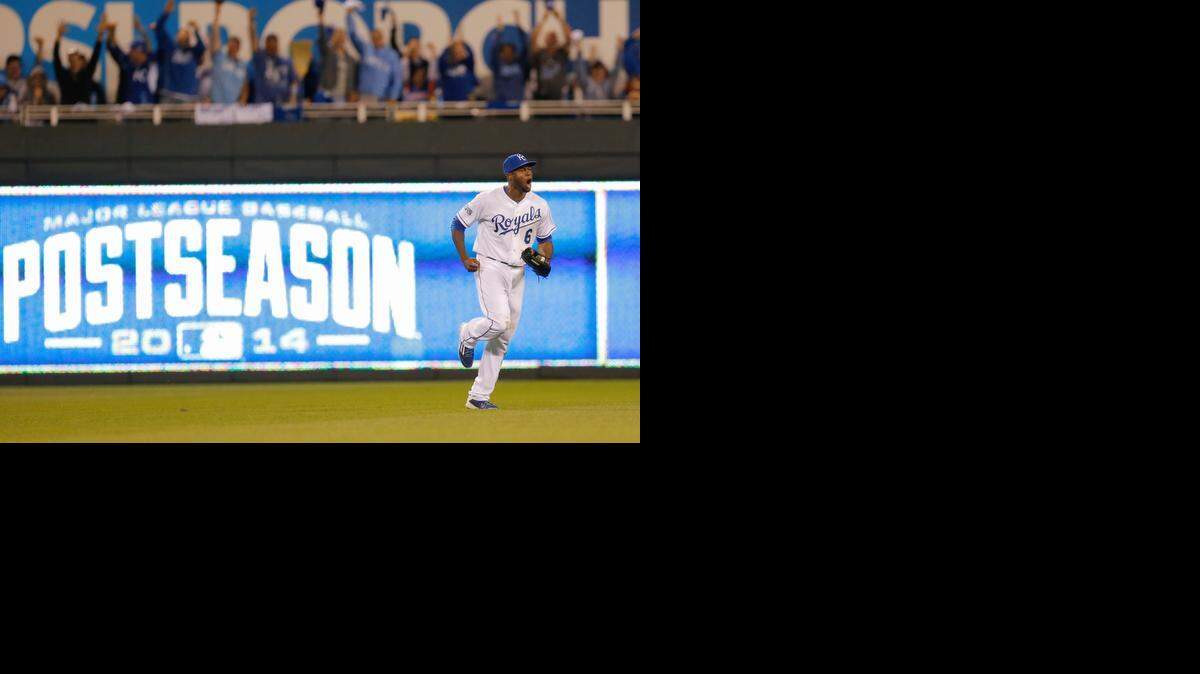
Perhaps the first 17 seasons went too smoothly for Royals fans. Then the next 28, without a doubt, unfolded in a manner too painful for most to stand.
Welcome to 2014, when the Royals are easy to love again. If you were born around 1980, when Kansas City made its first World Series appearance, you likely have little memory of the franchise as a power. You entered a world in which the Royals collapsed into a joke. If you remember the Royals as a model organization, the fall perhaps soured you on baseball and certainly tested your devotion.
If you stuck with the team through the death of owner Ewing Kauffman, the tortuous process of finding new ownership, David Cone-for-Ed Hearn and Brian Anderson starting on opening day, you are a rare fan and deserve this month. If you checked out somewhere around the time of the Johnny Damon trade in 2001, join the club.
You didn’t leave the Royals. The Royals left you.
It is hard to blame a fan who didn’t want to sit through the 100-loss season of 2002, manager Bob Boone’s nightly lineup changes, the 106-loss season of 2005 and the gradual erosion of Kauffman Stadium into a place dominated by visiting Yankees, Cardinals, Twins and Red Sox fans.
Now you can’t wait to watch the Royals. They are the darlings of the nation, with their underdog story, flashy defense, speed and lights-out bullpen. The Royals buy drinks for fans. They crash into outfield walls to catch line drives. They score from second base on infield singles. They are easy to love.
They are more fun, though, if you can act like you’ve suffered through the dismal times. Here is what you missed the past 29 years.
Everybody’s farm system
The Royals possessed some excellent players. But after about 1995, fans knew that every homegrown Royals star yearned to make more money and play for a better team. They would shine in Kansas City for a few years, perhaps win Rookie of the Year, as three Royals did between 1994 and 2003. Then they would leave, as Damon, Carlos Beltran and Zack Greinke did.
Or worse, they would fade away, as Bob Hamelin and Angel Berroa did.
Buying a Royals jersey with a name and number on the back made little sense as a long-term investment.
When did it go bad?
To be fair, the Royals continued to play competitive baseball after the 1985 World Series title.
The 1989 Royals went 92-70 and tied for the third-best record in the major leagues. In 1994, the Royals won 14 straight games to move within a game of first in the American League Central. At 64-51, KC stood four games back when a strike ended the season. Kansas City fired manager Hal McRae the next day and would not record another winning season until 2003.
Ewing Kauffman died on Aug. 1, 1993, throwing the franchise into turmoil for the rest of the decade. His succession plan to keep the team in Kansas City did not unfold as planned and the Royals disintegrated into a low-budget drama, spiced with black comedy.
Kauffman brought the expansion franchise to Kansas City for the 1969 season and treated it as a beloved part of his family. He spent big and tried new ideas, such as the training academy in Florida that produced second baseman Frank White. With Kauffman in charge, the Royals wrote the textbook for building an expansion team. It took three seasons for a winning season and seven to get to 90 wins. Between 1976 and 1985, the Royals appeared in the playoffs seven times and the 1980 and 1985 World Series.
Without his guidance and checkbook, the Royals fell to the bottom of baseball.
David Glass, a Wal-Mart executive, joined the Royals in 1993 as interim chairman of the board and CEO. He purchased the team in 2000 and appeared to do little to invest in success. Unlike Kauffman, he rarely came to games and the string of 100-loss seasons in 2004, 2005 and 2006 proved to fans he cared more about low-budget baseball than winning. The Royals, according to the Kansas City Star, cut cellphones for scouts and declined to pay draft picks after the fifth round more than $1,000 for a signing bonus.
And the low point
From 1995 to 2012, the Royals finished 15 games or more out of first place 16 times, including 30 or more four times in a five-season span. Amid all that losing, the era from 2002 to 2007 stands out as particularly inept, even with a fluke winning season in 2003.
Sometimes, it didn’t appear as if they tried.
The Royals gave Double-A pitcher Eduardo Villacis his first major-league start in Yankee Stadium in 2004. The Yankees shelled him and he never pitched in the big leagues again. That same season, Matt Stairs’ throw from the outfield hit first baseman Ken Harvey in the back. In 2006, Mark Redman went 11-10 with a 5.71 ERA and won the club’s pitcher of the year award.
In 2005, according to the Kansas City Star, the Royals didn’t bother taking a team picture because, they assumed, no one would want a picture of that team.
Sometimes, they tried too hard.
They signed two-time former MVP Juan Gonzalez in 2004 and he played 33 games. They paid pitcher Gil Meche $55 million before the 2007 season. After two solid seasons, shoulder injuries ruined his career and he retired after making nine starts in 2010. First baseman Mike Sweeney hit 20-plus home runs four straight seasons, up until the Royals signed him to a big contract in 2003 and his back began to fail. He never played more than 74 games after 2005 and departed Kansas City in 2008, another symbol of poor choices and bad luck.
A glimmer of hope
Glass hired Dayton Moore, born in Wichita, in 2006 and the Royals began a slow move toward respectability. Moore, from the successful Atlanta Braves organization, came to Kansas City with assurances that Glass would spend money and build a farm system and professional atmosphere in Kansas City.
He signed Meche, a bold move that failed. He paid outfielder Jose Guillen $36 million and Guillen flopped. He hired manager Trey Hillman, a man lacking big-league experience as a player or coach. Moore fired him in 2010.
But in 2011, Baseball America named the Royals the best farm system in baseball. High draft picks Eric Hosmer and Mike Moustakas and a devotion to finding pitchers with power arms appeared to be paying off. Alex Gordon and Billy Butler, prized picks from the previous regime, were in Kansas City, waiting for help.
The Royals stumbled through 2012, saddled by an “Our Time” slogan not supported by the product on the field.
After the 2012 season, Moore’s tenure included seven losing seasons. Tired of waiting on young and injured pitchers, he made his signature move. The Royals traded outfielder Wil Myers, ranked Baseball America’s No. 4 prospect, and others for Tampa Bay pitchers James Shields and Wade Davis. Moore wanted Shields to show his club how to win and nuture young pitchers. He turned Davis, a flop as a starter, into a bullpen star.
The Royals improved to 86-76 in 2013 and finished seven games behind Detroit in the AL Central, not really a contender. Close enough, however, to set the stage for 2014.
Fast and furious
On July 21, the Royals dropped to 48-50 after losing four games in which they scored six runs.
Cue the typical Royals crumble. Butler showed no power and grounded into double plays at a tremendous rate. Moustakas, hitting .190 and banished to the minors in May, platooned at third base with Danny Valencia.
Instead of crumbling, the Royals pulled it together after a team meeting on July 22, inspired by ancient outfielder Raul Ibanez. They won that day to start a five-game win streak. They won 19 of their next 23 games, a season-defining streak in which KC held its opponents under three runs 12 times.
Relievers Kelvin Herrera and Wade Davis didn’t allow a run in July or August. Closer Greg Holland allowed one. Nori Aoki hit .328 in July and .350 in August. Hosmer hit .425 in July to reverse a disappointing season and then missed most of August with a broken hand.
In August, they won 5 of 7 games against Oakland and swept San Francisco. South Korean super fan SungWoo Lee made his first trip to Kansas City and witnessed an eight-game win streak and became Kansas City’s favorite tourist.
While Kansas City faded in late August and eventually lost its lead in the AL Central, it won six of its final eight games to clinch a wild-card spot.
The Royals finished last in the majors with 95 home runs and last with 380 walks. Manager Ned Yost bunted too much for most fans, and don’t bring up some of his pitching moves. His American League team won with a National League mix of speed and defense — a style that isn’t supposed to work these days. The Royals play six-inning games. Teams that trail KC at that point must deal with Herrera, Davis and Holland. During the regular season, the Royals went 65-4 when leading after six innings and 72-1 when leading after seven.
Then it gets crazy
The Royals made their first playoff appearance since 1985 at home and faced Oakland and pitcher Jon Lester. They trailed 7-3 with six outs remaining. They won 9-8 in 12 innings after stealing seven bases and surviving a pitching move by Yost that confirmed every fan’s worst fears about their manager’s suitability for postseason chess moves.
No matter. KC survived the Yosting and moved on.
They faced the Angels, the team with the best record in baseball, and won twice in 11 innings. Moustakas homered in the 11th for a 3-2 win. The next night, Hosmer’s two-run homer in the 11th led to a 4-1 win.
They swept the Angels.
The American League Championship Series with Baltimore started with an 8-6 win in 10 innings. Again, the team that couldn’t hit for power blasted home runs in extra innings — Gordon and Moustakas — to grab a series lead.
They swept the Orioles, winning games 3 and 4 by scoring four runs on a groundout, a sacrifice fly, a fielder’s choice and an error. Moustakas made a tumbling catch into the stands that will live forever, as will Gordon’s as he crashed into the left-field wall. Any ball that escaped those two landed in the glove of ALCS MVP Lorenzo Cain.
The Royals are 8-0 in the postseason, a feat no other team can claim. They start the World Series against San Francisco on Tuesday at Kauffman Stadium with an 11-game postseason winning streak that started in 1985. Rumors are that SungWoo Lee will return.
There is even time to buy a jersey with a name on the back. After 29 years, this team might be worth it.
Reach Paul Suellentrop at 316-269-6760 or psuellentrop@wichitaeagle.com. Follow him on Twitter: @paulsuellentrop.
This story was originally published October 18, 2014 at 1:53 PM.