
2006 Wranglers did their part for Royals’ rebirth
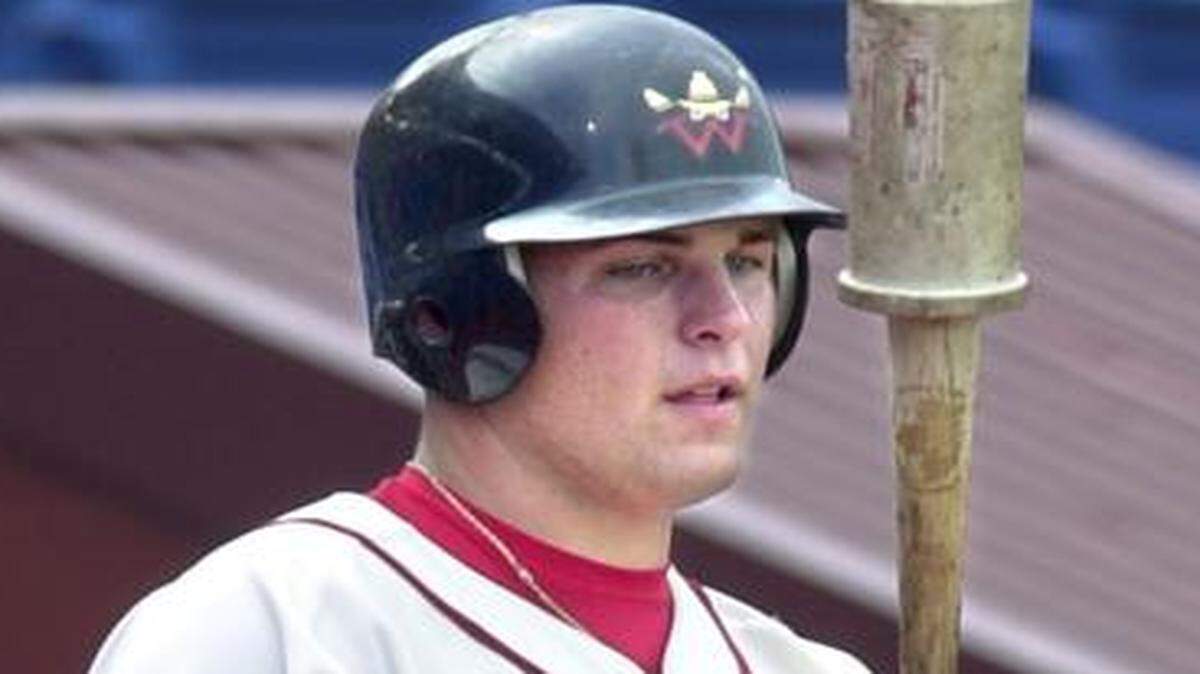
For the Royals, hope resided at Lawrence-Dumont Stadium in 2006, the start of Dayton Moore’s tenure as general manager and the start of eight rebuilding seasons.
The 2006 Wichita Wranglers went 77-62, won the Texas League East Division and defeated Tulsa 3-1 in the playoff semifinals. The Wranglers lost the championship series 3-1 to West Division-champion Corpus Christi. The future of the Royals seemed to be blossoming on the playoff roster, which included Baseball America Minor League Player of the Year Alex Gordon, hitting machine Billy Butler, No. 1 pick Luke Hochevar, future Cy Young Award winner Zack Greinke and four other first-round draft picks.
“There was a huge sense of optimism,” said Eric Edelstein, the Wranglers’ general manager. “There was a renewed sense of energy and professionalism that had kind of gotten beaten out during years of futility. Those guys came in and they had confidence and they had a plan.”
It didn’t turn out exactly the way expected in 2006. Moore took over the Royals in May, tasked with ending years of futility and restoring pride to a floundering organization.
The Royals didn’t finish with a winning record until 2013. That 86-win breakthrough grew into this fall’s thrilling run to the American League Championship Series. The Wranglers, Kansas City’s Double-A affiliate from 1995-2007, remain a small, but significant, part of the Royals. When the Royals clinched a spot in the postseason, Butler posted a locker room picture of Gordon, Hochevar and himself on Twitter, reading “Best. Feeling. Ever. Started in Wichita with these boys. #homegrown.”
Gordon moved from third base to left field and needed a return trip to the minors to revive his career. Butler couldn’t handle the outfield and became a designated hitter. Greinke’s biggest contribution to the 2014 Royals came from his part in a trade that acquired outfielder Lorenzo Cain and shortstop Alcides Escobar. That trade with the Brewers also netted pitcher Jake Odorizzi, later dealt as part of the trade for pitchers James Shields and Wade Davis from Tampa Bay. Hochevar, after struggling as a starter, excelled as a reliever in 2013. He missed all of this season with an elbow injury.
The Wranglers won the Texas League title in 1999 as a Royals affiliate and finished second in 1996, 1998 and 2000. The 2006 team provided Wichita a last look at a successful affiliated minor-league team before the franchise moved to Arkansas after a dismal 2007 season. For those invested in the Wranglers, those associations are plenty to feel a special part of the Royals in October.
“I’m watching every game,” said Wayne Larsen, a member of the Wranglers booster club. “That’s something else. That 2006 team – they were young and they were great.”
Gordon, 22, hit .325 with 29 home runs, 39 doubles and 22 steals in his first minor-league season. Butler, 20, hit .331 with 15 home runs and 33 doubles. Normally, the minor leagues are about developing players and winning games is secondary. That summer, Moore resisted the urge to move players up because he wanted his first-rounders together for a playoff run. He added Greinke to the roster in June and Hochevar joined the Wranglers for the playoffs. Outfielders Dee Brown, Chris Lubanski and Mitch Maier, and pitcher Tyler Lumsden also joined the Wranglers as first-round picks.
“If a team has a chance to win, you put the best team out there and you can go for it,” Moore said in 2006. “Winning’s part of development.”
Former Royals second baseman Frank White managed the team and Hall of Famer George Brett made frequent visits to Lawrence-Dumont Stadium to evaluate talent.
“Dayton really, truly, believed that that young group of guys was the future,” said Josh Robertson, then assistant general manager for the Wranglers. “He wanted them to learn to win together, because that’s something that the Royals hadn’t done in a long time.”
The Wranglers produced a poster with Gordon, Butler, Lubanski and Maier to promote the season. ESPN did a live interview with Gordon from Lawrence-Dumont.
“It was a really exciting time,” said Robert Slaughter, then an account executive for the Wranglers. “It’s good to see some folks with Wichita connections do well. I know they’ve waited a long time.”
Edelstein, now executive vice president of the Reno (Nev.) Aces, Arizona’s Triple-A club, watched Moore and his front office increase the franchise’s emphasis on developing players and on procuring Latin American talent. They also, with cooperation from owner David Glass, spent more money and brought the Royals up to big-league standards. Edelstein noticed more consensus and more organization among scouts and executives. Moore brought in people who knew the plan and believed in it.
“That was exciting for the minor-league clubs, because we knew that there was going to be great talent coming through, because it mattered,” Edelstein said. “They weren’t just pawns who were going to be traded.”
Moore’s plan included polishing up details. Edelstein remembers when Moore saw Gordon wearing baggy uniform pants with the cuff of the pants tucked into his spikes. That look was popular with ballplayers, but Moore considered it sloppy and said so.
The next season, the Royals mandated that minor-leaguers must wear stirrups and show six inches of socks.
“It was a way to show how he wanted the team to look and how he wanted it presented,” Edelstein said. “We actually had to go and hem all of our pants to meet that standard.”
Butler, drafted out of high school, reached Double-A at 19 in 2005. His hitting carried him to the Royals, even though he lacked speed and defensive ability.
Gordon set an example on that 2006 team with his maturity. Edelstein remembers him eating carefully portioned meals of boneless, skinless chicken breasts and vegetables at a time when many players survived on peanut butter sandwiches and fast food.
“He was religiously regimented back then,” Edelstein said. “His discipline bled out to everyone else. It was a very mature Double-A club. Frank brought that maturity to the club and Alex Gordon was such a machine in how he approached everything every day.”
Edelstein still follows the Royals closely. In 2007, he moved with the Double-A club to Northwest Arkansas and saw Royals such as Eric Hosmer and Mike Moustakas come through on their way to the big leagues. He keeps in touch with Robertson, now general manager of the Wichita Wingnuts, and his Facebook page is filled with pictures of Butler, Hosmer and Moustakas in the minors. He is happy for Moore and assistant general manager J.J. Picollo and others.
“All these guys who toiled tirelessly in the background year after year after year,” Edelstein said. “They’re great people. The vindication and the validation for them — I’m thrilled.”
Reach Paul Suellentrop at 316-269-6760 or psuellentrop@wichitaeagle.com. Follow him on Twitter: @paulsuellentrop.
This story was originally published October 8, 2014 at 7:02 PM with the headline "2006 Wranglers did their part for Royals’ rebirth."