Black player on Royals’ 40-man appreciates their listening ear, commitment to inclusion
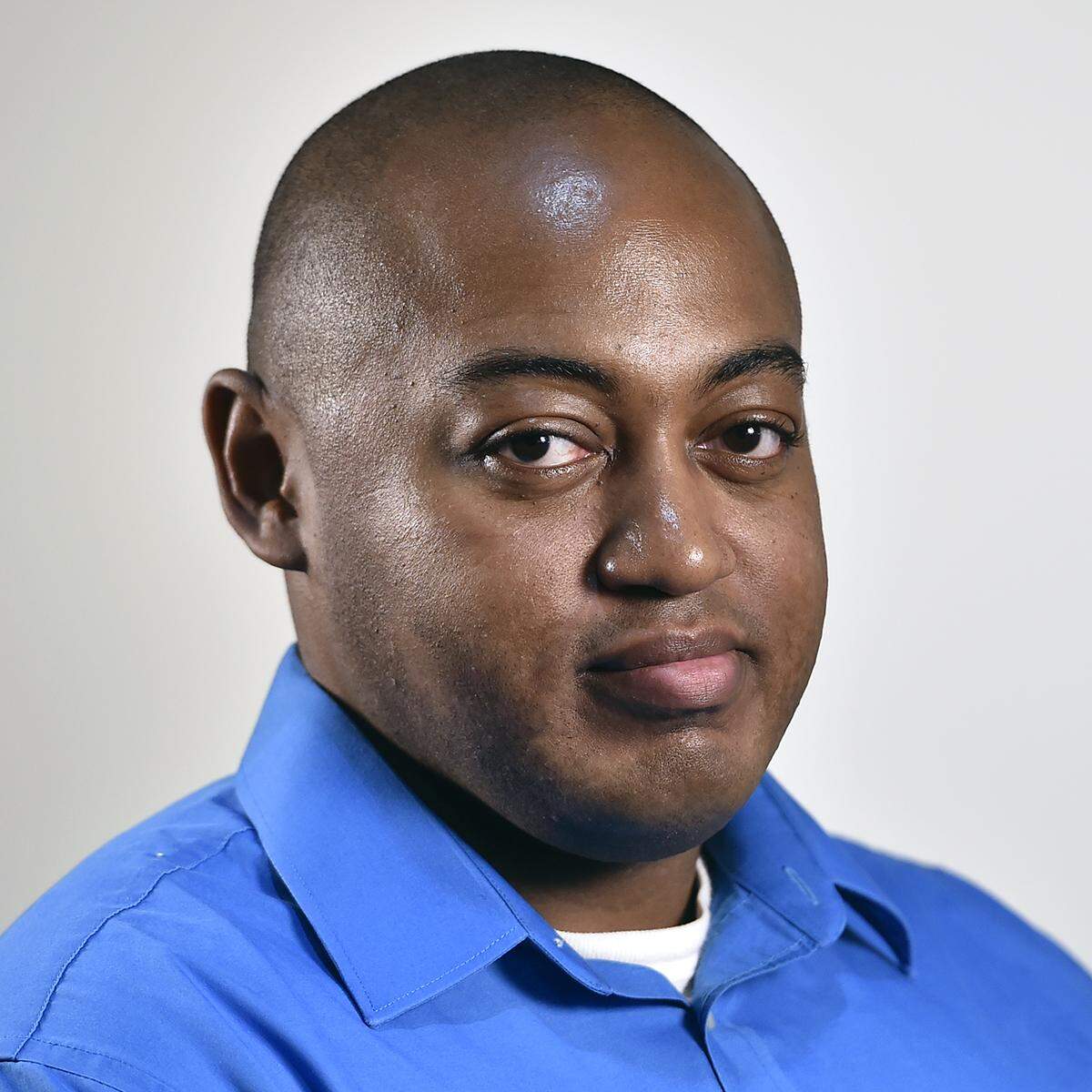
Nick Heath is college educated. He’s a professional athlete. He’s a member of the Kansas City Royals organization. He’s got an infectious personality.
He’s also a Black man in America. And this distinction too often overrides everything else, and can prove imperiling. It’s also the reason a recent video of George Floyd’s death at the hands of a white Minneapolis police officer resonated so viscerally with him.
Floyd, handcuffed with his hands behind his back and forced to the ground, was killed when since-fired and criminally charged officer Derek Chauvin knelt on his neck for nearly nine minutes while Floyd pleaded for his life and choked out the phrase “I can’t breathe.”
The weeks following Floyd’s death have been marked by widespread civil unrest. Neither players like Heath nor members of the Royals’ front office have shied away from the realities of this pivotal moment in time.
Heath, using his platform as a professional baseball player, has been outspoken about his experiences and what he believes needs to change.
“I don’t want this to fade away in two weeks and then we deal with the same thing again in three years,” Heath told The Star recently. “Then you’ve got the cycle going again.”
If given the opportunity, he’ll continue to discuss issues of race, social justice and police brutality.
While working out in Arizona and waiting for Major League Baseball and the players’ union to reach an agreement that would portend the start of the 2020 season, Heath attended a protest in Phoenix along with some teammates, several of whom are white.
“I’m going to hammer it home to somebody because just as easily as it was him it could have been me,” Heath said. “Then what? That’s it for me.
“Now, we’re going to go through the situation again. I don’t want that. I want to be in the situation where I’m not ever thinking it’s going to be me.”
Heath, 26, hopes people don’t forget Floyd. He also hopes society will advance to the point where people are no longer comfortable being openly angry or prejudiced toward someone simply because of their skin color.
A graduate of Junction City High School in Kansas who went on to play college baseball at Northwestern State University in Louisiana, Heath has learned from his own brushes with racial tension.
One time he was called the N-word on a school bus and got into a fight that led to his suspension. As bad as that incident was, he then had to explain it to his mother.
As a college student he had a heated on-field exchange with a coach who addressed him as “boy” during practice. Heath’s emotions boiled over and he yelled at the coach.
The two discussed the incident later and Heath said they grew closer because of it. The coach even reached out to him recently to check on his well-being in light of the nation’s recent turmoil.
“When I was younger, I used to handle it with aggression,” Heath said. “I’ll be open about that. But now that I’m older, I’m more so like, ‘Look man. You’ve got a lot of hate in your heart. If I can help you at all, let me know. But I’m not going to let you get me out of element because you’re expecting to see an angry Black dude.’”
Outsiders on the inside
Just 7.7 percent of players on MLB rosters on Opening Day 2019 were African-American, according to USA Today. In 1991, MLB rosters were 18 percent African-American.
Last season, the Royals had two African-American players (Billy Hamilton, Terrance Gore) on their roster at the start of the season.
This year, going into “Spring Training 2.0,” Heath is the lone African-American player on the Royals’ 40-man roster.
Heath, the minor leagues’ stolen-base champ last season (60), has advanced as high as Triple-A since being selected in the 16th round of baseball’s 2016 draft.
Having so few African-American players in baseball can make conversations about race tough to have, if not altogether non-existent, in many clubhouse settings.
For a player like Heath who hasn’t yet established himself as a big-leaguer, broaching the topic of racism in the absence of existing relationships with those around him can be daunting.
He is not alone in his hesitance. Several current African-American ballplayers talked about their experiences during a recent MLB Network roundtable, hosted by former big-leaguer Harold Reynolds, called “Being Black In Baseball and America.”
Miami Marlins pitching prospect Sterling Sharp used the example of former NFL quarterback Colin Kaepernick to convey the difficulty of getting the message of racial equality across to one’s teammates.
“We want to get established enough to be respected and have our voice heard without our message being hijacked like Kaepernick’s did,” Sharp said.
Sharp said Kaepernick’s very name elicits an immediate response in many — he disrespected the flag — in such a way that his actual protest of social injustice and police brutality gets lost.
In the same show, Arizona Diamondbacks pitcher Jon Duplantier described the experience of Black players as one of isolation.
“The representation is so low on the coaching side and the playing side and the management side where I feel like I’m on an island,” Duplantier said. “A lot of guys feel like we’re on an island, and so we suppress all these feelings and the experiences we have and say, ‘You know what, push it aside and we’re going to be OK. We’re strong. We’re going to be OK.’ ... And that’s not OK.”
In a recent interview on ESPN radio’s “Golic and Wingo” show, five-time All-Star and nine-time Gold Glove-winner Torii Hunter, who spent 19 years in the majors, said players of his era were wary of the backlash.
Even a highly regarded player such as Hunter has had police officers pull guns on him in his own home. Fans have showered him with racial slurs in ballparks. He said he knew he ran the risk of being labeled as “militant” if he made too much noise.
Willing to listen
Oftentimes the only place for African-American players to turn in hopes of discussing racial issues is one another.
While social unrest gripped the U.S. and sparked demonstrations abroad, Royals players such as Heath were having these conversations in small groups via texts and video conferencing.
Heath said players were giving each other the space to “be vulnerable” and “get out what’s on our heart.”
Royals special assistant to baseball operations Reggie Sanders and director of leadership development Matt Marasco have also been reaching out to the players during this time.
Sanders, an African-American man who spent 17 seasons in the majors, suggested the idea of scheduling a video call between the Royals’ players and top front-office officials, including general manager Dayton Moore and assistant general manager J.J. Picollo. About a dozen of the organization’s African-American players spent two hours sharing their experiences, feelings and ideas; Moore and Picollo embraced it.
Players talked about what it’s like to run errands and see people lock their car doors as they near, or get pulled over by police, or be avoided in the grocery store.
“They listened and they gave us some feedback,” Heath said. “They were like, ‘What can we do to help? We want to work on it. We want to press the issue. We want to make you guys feel like we understand where you’re coming from, and at the same time we do want to know where you’re coming from.’
“Dayton shared his background and where he came from. J.J. did too. That was the most productive phone call I’ve ever had in my entire life. Especially since you don’t think you can have that conversation with Dayton and J.J. They run the organization.”
Heath came away thinking he’d experienced the “family environment” that many organizations claim to have ... or want.
“I’m so proud to be a Royal,” Heath said. “I’m serious. From every fiber in my being, I’m so happy to be a Royal.”
Picollo, who oversees the organization’s player-development system, described the conversation as “eye-opening” and “very mature.”
“I think they just appreciated people listening,” Picollo said. “We look forward to continuing to do that.”
Picollo said the players brought ideas to the table that the organization plans to explore.
“It was very productive call,” Picollo said. “Truthfully, it was a very emotional call, but it was great for us to listen, to hear concerns, to hear ideas. One of the things we shared with the players is we want to help. We’ll never profess to understand what your life is like versus what our life is like ... as a white man, to facilitate change, to draw attention to any injustices, we want to know.”
Desire for diversity
Part of the impetus for Moore’s establishment of the Urban Youth Academy in Kansas City’s 18th and Vine District was his desire to bring together youth from different backgrounds and get them to interact and learn about one another in a common setting.
Perhaps it shouldn’t be surprising, then, that Moore actually scheduled the video call more immediately than Sanders had expected when he suggested the idea.
Moore likes to say that one of the things he’s learned spending a large part of his career around young men age 16-25 is that around 7 p.m. — game time — they’re all the same ... yet everyone has different stories. He also recognizes the onus falls upon the organization to listen to and understand the stories of its players.
Moore believes the Royals do a good job of helping their Latino players transition to the U.S. While that’s important and shouldn’t change, he acknowledges the club needs to do a better job of understanding all players better, “especially our African American players.”
“I believe that they are more equipped to emerge as leaders than anybody within our population because they’ve had to overcome a lot of different things,” Moore said. “It’s not right, but it’s a fact. They’ve had to overcome many things. I want them to know that we support them and we want to come alongside them and embrace those challenges together.”
Moore cited an example from his “C You In The Major Leagues Foundation,” which pairs students with mentors and academic resources and works to build life skills. C You In The Major Leagues currently serves 17 high school students (nine boys, eight girls) from disadvantaged parts of the community. Eight are African American or Black. Five are Hispanic. Four are white.
“To watch these kids come from where they were three years ago to where they are now, just because they’ve had mentors come into their life, highly educated people who love them, care about them and listen to them and encourage them, it blows you away,” Moore said. “That’s not an experiment. That’s just a fact. If you come alongside a kid and listen and pay attention to them and care about them, that’s all we’ve got to do.”
Moore has also participated in prison ministries, sharing his testimony, answering questions and praying with men incarcerated for a wide range of offenses, including violent crimes.
“I understand why buildings are getting torn up,” Moore said. “I don’t condone it, but I understand it because I’ve listened to them and know where they come from, how they were treated, how their mother was treated.”
Moore insists that stories of the disadvantaged and victims of racism must be told because rational, loving people will hear those stories and want to do something about it.
Leading the way
“I was raised to understand that baseball has always been a part of healing the country, helping with social change,” Moore said. “That’s how I was brought up. That’s what I’ve always believed the higher purpose of baseball is.”
History supports this suggestion. Baseball hasn’t always lagged behind. In fact, it’s been ahead of the curve during some turbulent times.
Jackie Robinson’s breaking of the color barrier in 1947 came more than seven years before the Rosa Parks- and Martin Luther King Jr.-led Montgomery Bus Boycott of 1955.
A group of Black players, including Hank Aaron, integrated the South Atlantic League in 1953 and played in front of mixed crowds in Southern states still operating under Jim Crow laws. The landmark Supreme Court decision that ruled segregation unconstitutional, Brown v. Board of Education, didn’t come until 1954.
The Brooklyn Dodgers also fielded the first black majority team in the majors in 1954, a roster featuring Jim Gilliam, Sandy Amoros, Roy Campanella, Don Newcombe and Robinson. Buck O’Neill became the first black coach in the majors in 1962.
The Civil Rights Act, which called for the end of segregation in public places and banned employment discrimination on the basis of race, color, religion, sex or national origin, didn’t arrive until 1964.
In other words, baseball has played a somewhat central role in America’s social progress, and Moore believes it can do so again.
“That’s what we all hope baseball can once again become,” Moore said. “That’s the higher purpose in this game ... and that’s how I want to see the future of baseball. I think there’s a lot of people who feel the same way, but we’ve got to work and we’ve got to do it. We’ve got to inspire and we’ve got to give opportunities.”
This story was originally published July 2, 2020 at 5:00 AM with the headline "Black player on Royals’ 40-man appreciates their listening ear, commitment to inclusion."