
Wichita golfer conquers resentment after amputation to find joy at US Adaptive Open
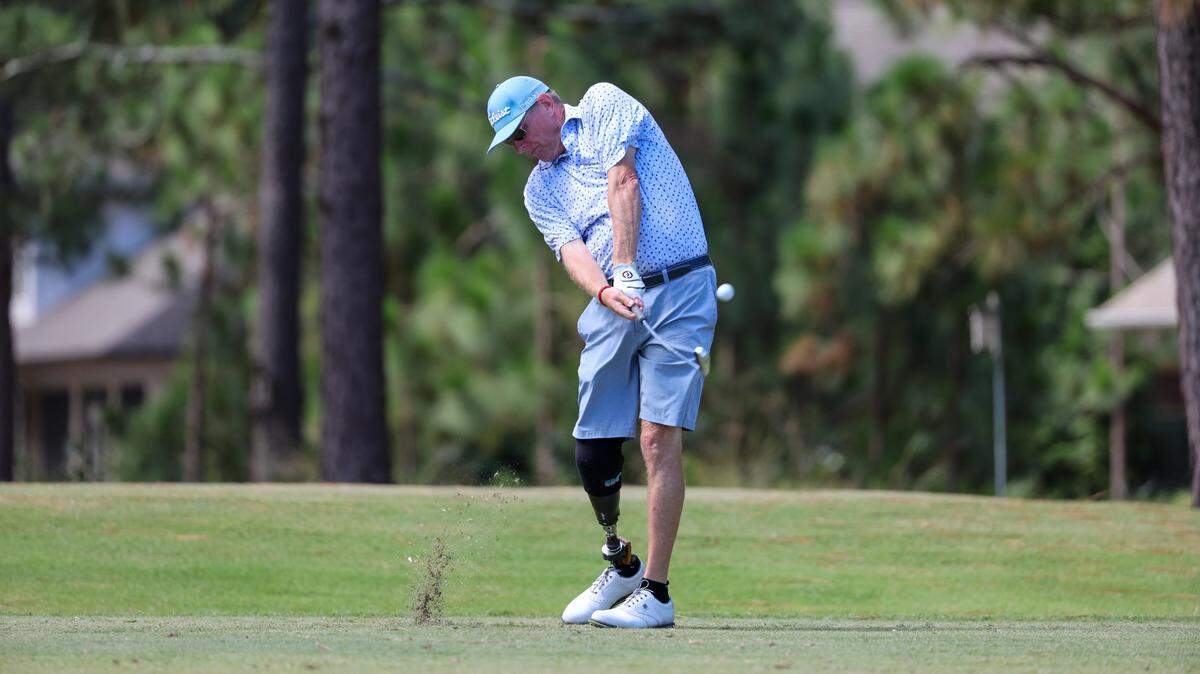
The reaction to being told his leg might have to be amputated is something Greg Hollingsworth will always remember.
After three decades of chronic pain in his right ankle, another reconstructive surgery would not alleviate the pain for Hollingsworth. But the other option — amputation — didn’t sound so great, either.
“I jumped off the exam table and pulled my pant legs up and showed him my calves,” Hollingsworth said. “I’ve always been really proud of my calves. I yelled at him, ‘You don’t cut a leg off that looks like this’ and walked out of his office.”
Almost five years later, Hollingsworth can laugh at the memory now because he ended up going through with the surgery and it has given the 53-year-old who lives in the Wichita suburb of Peck, a town two miles from the Kansas Star Casino, a new lease on life.
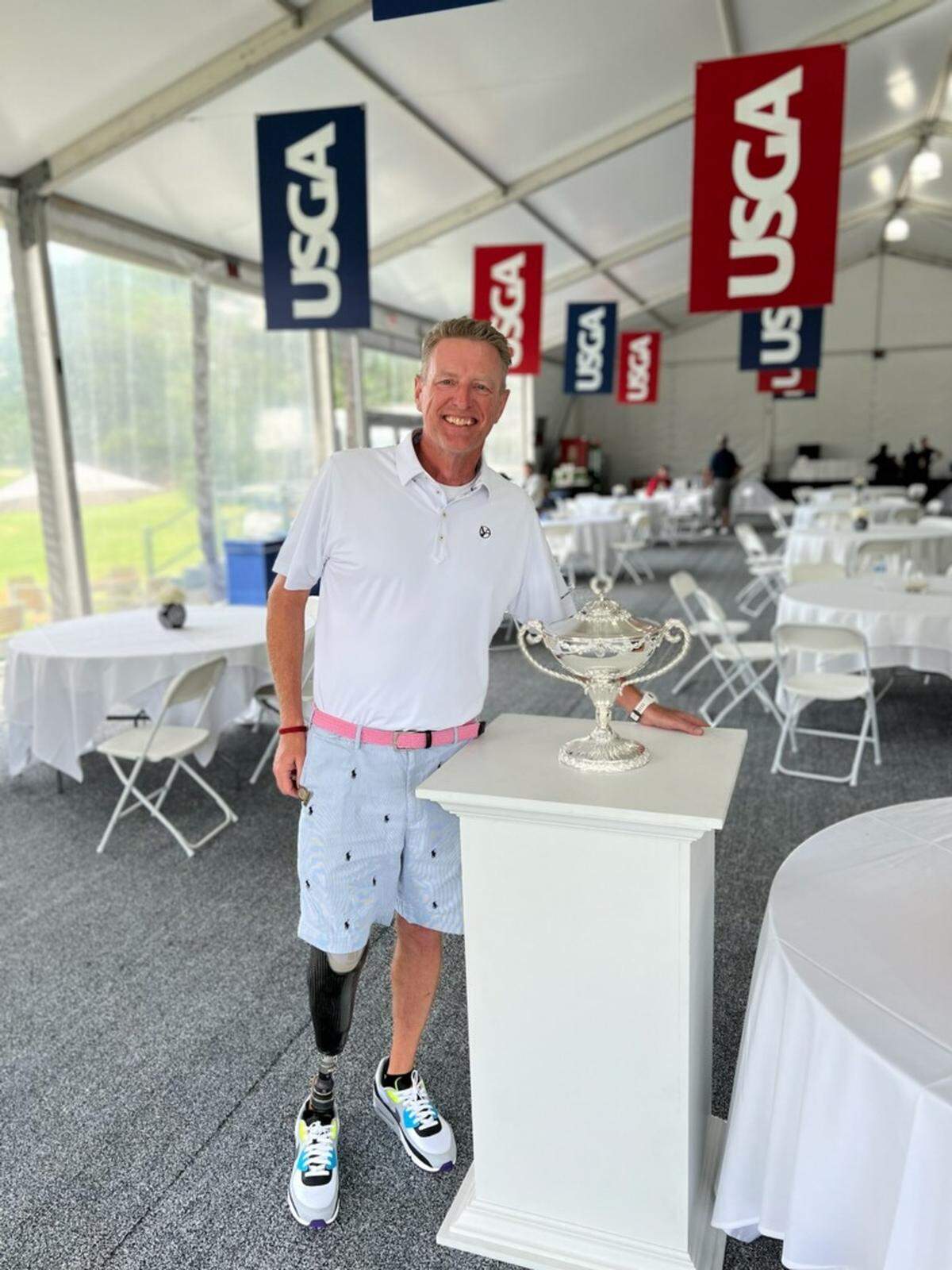
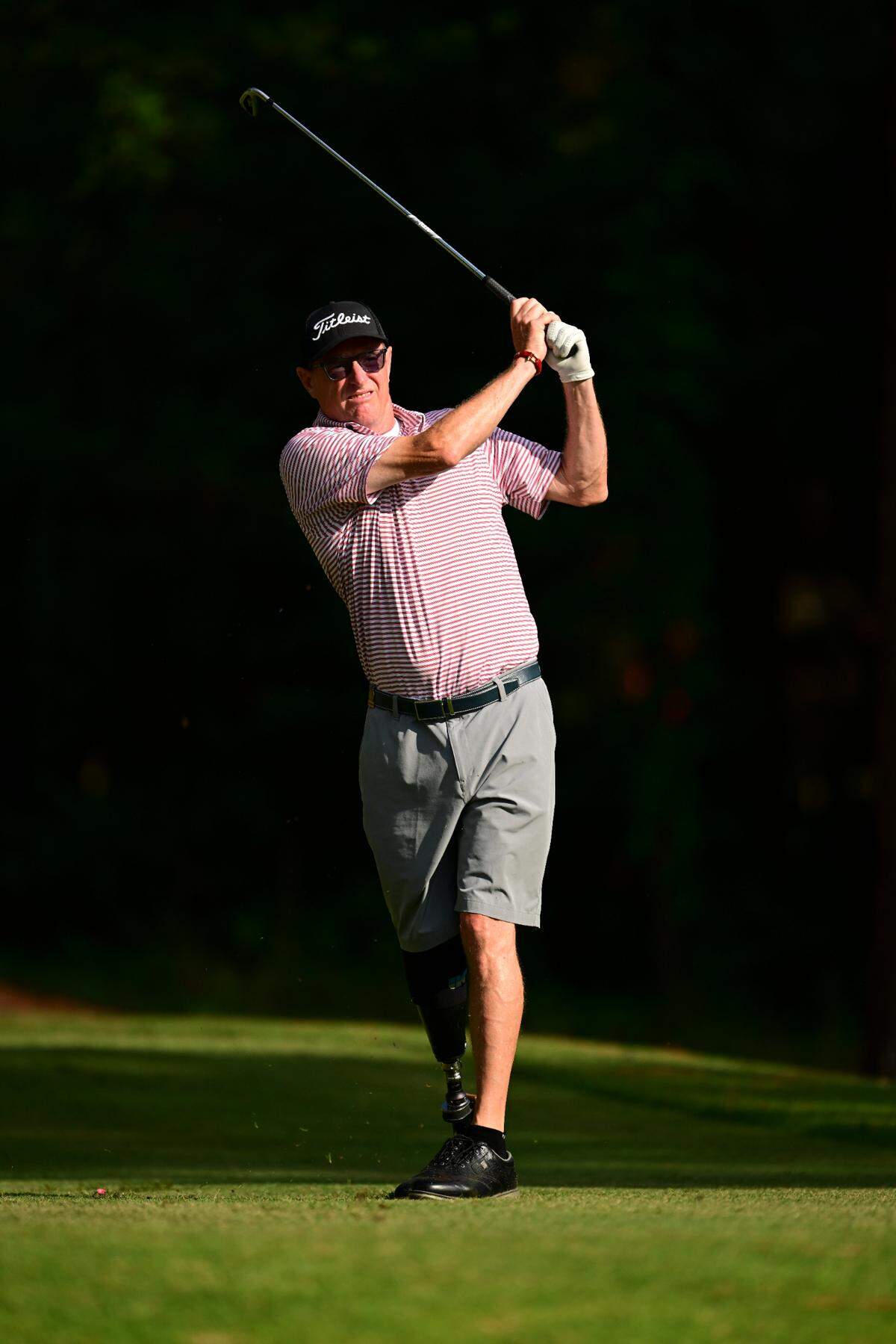
He has capitalized on the absence of pain to revitalize a dormant dream of playing competitive golf, which culminated this week with Hollingsworth, who is nearly back to being a scratch golfer with a prosthetic, earning a spot in a selective field at the inaugural U.S. Adaptive Open at Pinehurst Country Club in North Carolina.
“I hope I can play in this for years to come, but it’s not lost on me that this might be a once-in-a-lifetime experience,” said Hollingsworth, who was in a tie for 42nd place entering Wednesday’s final round for golfers with physical, visual and intellectual impairments. “I’m just trying to soak everything in. It’s great to be here and to be part of the adaptive sports community. I’m just so thankful for what the USGA is doing to give us this tournament because this is pretty special.”
‘How long are you going to live like this?’
There was no major injury that led Hollingsworth down the path to amputation, rather a series of minor ones.
He grew up playing football, basketball and golf in northern California and a series of rolled ankles on the basketball court in high school led to the first of two reconstructive surgeries at the age of 18.
“I had so many ankle sprains that the anterior tendon that holds the foot together on the outside was completely deteriorated,” Hollingsworth said. “I had no tendons, no ligaments. The only thing holding my ankle together was skin.”
The pain temporarily subsided following the surgeries, but it never failed to return. When his 40th birthday rolled around, Hollingsworth was living with severe pain in his right ankle on a daily basis.
His tolerance was growing thin with his 50th birthday in sight, which spurred Hollingsworth to seek a resolution. He saw a host of specialists who all told him the same thing: they could do another reconstructive surgery, but it wouldn’t rid him of the pain. That was a nonstarter to him.
When Hollingsworth paid a visit to his primary care physician to request a refill of his pain medication, the doctor issued him a reality check.
“How long are you going to continue to live like this?” the doctor asked Hollingsworth.
“I asked him what other option I had and he asked if I had considered amputation. I told him to go fly a kite. I was so ticked off. But he told me there wasn’t anything anyone could do to save my ankle, but if they amputated it, then they would effectively be cutting the pain off of my body. That phrase really resonated with me. They told me I would be able to do everything I did before, but without the pain.”
After researching the procedure and weighing his options, Hollingsworth committed to the surgery.
Since the operation on Dec. 18, 2019, Hollingsworth said he has lived pain-free.
“It was a crazy decision to cut my leg off, but man, I should have done it five years ago,” Hollingsworth said.
‘You better believe I have some resentment’
The pain was gone, but it had been replaced inside Hollingsworth by bitterness. At least in the immediate aftermath of the surgery.
“I tried very hard to never say that: ‘Why me?’ But that’s 100% what you’re feeling,” Hollingsworth said. “I’ve come to realize that it was medically absolutely the best decision, but I was really angry right after. I had to find my way as an amputee.”
He had no interest in receiving pity, which is why he made it a personal rule to never allow himself to use a wheelchair in the hospital. Instead, he used either crutches or a walker, so no one had to help him around.
But once he was fitted for his prosthetic, he resented the attention it brought in those early days.
“It would really bother me knowing people were looking at my prosthetic,” Hollingsworth said. “Not so much the kids. I get it, I look like I’m half-Transformer. And I know the adults are just trying to be nice, but I would catch people looking and then they would look away. It’s a weird feeling being aware that people are looking at you. I had to get used to the fact that this is me now.”
The anger eventually subsided, but the resentment remained bubbling beneath the surface for Hollingsworth in his new life.
It wasn’t until a golf lesson months later that he was finally able to resolve his feelings when his instructor asked Hollingsworth if he still carried with him any resentment from the amputation.
“I was honestly surprised by how quickly I answered the question. I said, ‘You better believe I have some resentment,” Hollingsworth said. “And as soon as I said the words, it was like, ‘Oh wow, I am angry.’ It surprised me.
“Just like with anything, you have to recognize the thing that you want to overcome and I still hadn’t realized I still had resentment. Once I understood that I had those emotions, I was finally able to deal with them.”
‘It doesn’t seem real to be an inspiration to others’
Doctors told Hollingsworth he would be able to live a normal life following the amputation, but that didn’t quell the nerves he had going into the surgery.
There was no way for him to know for sure.
But nearing his 3-year anniversary of the operation, Hollingsworth says the doctors were right: he’s living life with no limitations and with no pain.
He doesn’t walk with a limp and he says if he’s wearing pants, people have no idea he is walking with a prosthetic.
“I feel very fortunate because it really hasn’t changed or affected my daily life at all,” Hollingsworth said. “If anything, it’s enhanced it because now I can do everything I used to without the pain.”
That also applies to his golf game.
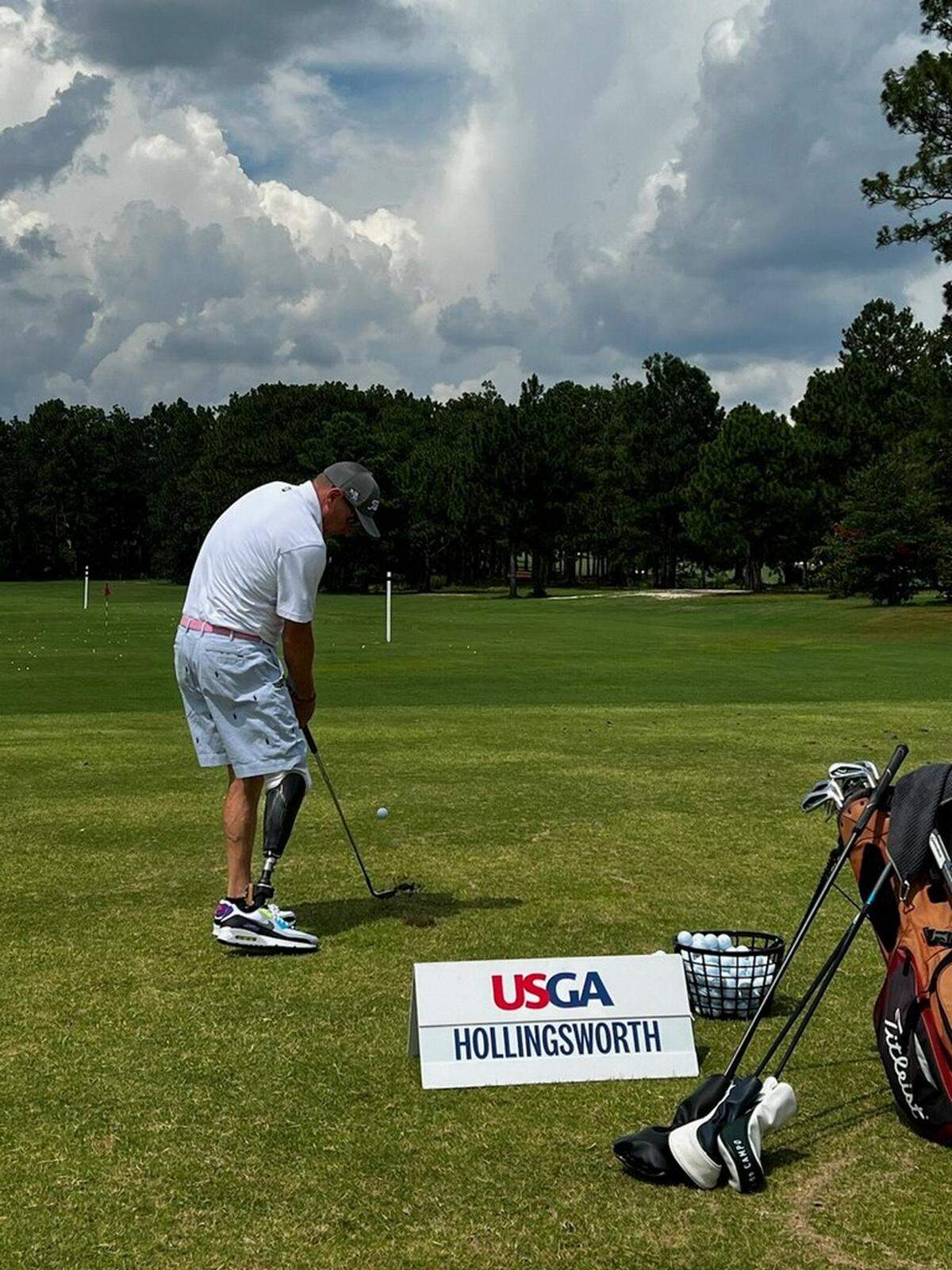
Two days after receiving his prosthetic, Hollingsworth was already back on the golf course, determined to fulfill his dream of becoming a professional golfer. He had tried in his 20s, but had given up for a more stable income when he and his wife, Nataly, decided to start a family.
A regular at Derby Country Club, Hollingsworth now carries a 0.5 handicap.
“My ankle was so bad for so long, I honestly think I have a better foundation now with my prosthetic than I did prior to my surgery,” Hollingsworth said. “I haven’t lost any distance or accuracy. It’s allowed me to get back on the golf course pain-free.”
Through the journey, Nataly has been “the rock” for her husband.
“She’s been my biggest cheerleader and has always told me I could do it,” Hollingsworth said. “She’s experienced the loss of my leg as much as me without it being cut off of her. We have gone through every emotion together and without her, there’s no way I would be where I was as quick as I was and where I am right now.”
Hollingsworth used to be self-conscious when he felt like others were looking at him.
Now he doesn’t mind being someone others look at.
“It still doesn’t seem real that I could be an inspiration to others, but my story is for some and people have told me that,” Hollingsworth said. “It changes you when you know others are looking at me to give them hope. I’ve grown as a person way more than I ever thought I would. I’ve talked to other amputees all over the world through social media and I’ve found how loving and caring and supportive the community is and that’s given me strength.”
This story was originally published July 20, 2022 at 6:00 AM.
.jpg)