
Shocker basketball 2014-15: Hoop schools face increased financial pressure in college athletics
Basketball, the argument would go, is the ideal college sport. It culminates in the perfect postseason tournament, full of drama and passion. Men and women participate. Small schools compete with the big and with 65 schools playing, almost every fan can find an underdog story or a geographic favorite to root for.
In a related development, it pays most of the bills for an athletic organization that serves more than 1,200 schools. More than 80 percent of the NCAA’s revenue comes from its $681 million TV contract for the men’s Division I basketball tournament. Without the tournament that began in 1939 and grew into a March obsession, there would be no NCAA in its current form.
Football, on the other hand, is an insatiable behemoth that operates its most lucrative postseason outside the NCAA. At the highest level, the sport is reserved, almost exclusively, for the large state schools and its postseason has long been regarded as a mess in its best moments and corrupt in its worst. Its profits are directed to the 10 conferences and their schools in the Football Bowl Subdivision.
“What bothers me is that football generates no money for the NCAA, yet we’re making a lot of decisions because of football,” Creighton athletic director Bruce Rasmussen said.
The NCAA’s new governance structure gives 10 of the 24 spots on its Board of Directors to presidents from schools which play football at the top level (FBS), with five from non-football schools and five from the Football Championship Subdivision. So even if a person recognizes that schools from the ACC or Big 12 contribute as much or more to the NCAA Tournament than the Big East or the Atlantic 10, the same might not be said for schools from the Mid-American, Mountain West or Sun Belt conferences.
Yet, as Rasmussen points out, those conferences benefit from stronger representation in the NCAA.
“All the revenue distribution comes from the basketball tournament,” Virginia Commonwealth athletic director Ed McLaughlin said. “We need a voice in this whole process.”
So you can understand why the basketball schools are alternately perplexed and worried about the seemingly unlimited power wielded by the top five football conferences. That group — the SEC, ACC, Big 12, Big Ten and Pac-12 — is in the process of writing some of their own rules for how their schools can treat athletes and they don’t particularly care if the rest can keep up.
“Autonomy” is the buzzword of the school year and while nobody is sure exactly what will that will mean, everyone figures it will cost a lot of money. In August, the NCAA board of directors voted to allow the top five conferences freedom on issues that could include stipends that cover the extra college “cost of attendance” items such as travel and personal expenses, medical insurance, meals, staff sizes and more. Schools will submit their first set of proposals on Dec. 1 and vote on the agenda in January at the NCAA Convention.
“The uncertainty is certainly causing anxiety,” Missouri Valley Conference commissioner Doug Elgin said. “I think our schools will reach as high as they possibly can … to remain relevant and competitive. You’re going to see a widening gap of haves and have-nots, not only between leagues, but inside of leagues, I think you’re going to see a widening gap between the high-resource and the low-resource institutions.”
Wichita State is one of those high-resource basketball-only schools. When athletic director Eric Sexton says WSU will do what it takes to keep pace as a nationally ranked basketball program, he is credible. WSU is already doing that and its supporters show no appetite for backing down.
“Having the ability to be in a basketball-centric conference and be part of that is a great opportunity for the A-10, the Missouri Valley Conference, the Big East, to carve out a niche of excellence,” Sexton said. “Our vision for Wichita State is, within that venue, is to compete at the highest level.”
The basketball schools — at least the successful ones — are confident in one asset. They care about basketball and their fans care about basketball, so there are no factions or divisions. Before getting depressed worrying about how to compete with Florida’s $100-million athletic budget, understand that football is lining up first to get paid.
“We can target our resources,” VCU’s McLaughlin said. “I don’t know if we’re at a disadvantage. Our men’s basketball team is on national TV 24 times. That’s a heck of a lot more than any football team. We’re very happy to make basketball a priority.”
Other MVC schools are saying the same thing about men’s and women’s basketball. WSU, Evansville, Bradley and Loyola don’t play football. Drake plays non-scholarship FCS football. Missouri State, Southern Illinois, Northern Iowa, Illinois State and Indiana State are members of the scholarship FCS Missouri Valley Football Conference.
“Our president and our athletic director are over-the-top committed to winning in basketball,” Bradley coach Geno Ford said. “I don’t have any worries about the school not being into basketball. We have facilities. We have a good travel budget. We have money for scheduling.”
While MVC schools wait for specifics, most are making some moves to benefit their athletes while they prepare for bigger ones. WSU is giving athletes who live off campus meals at student dining halls. SIU opened a Saluki Refueling Station in its basketball arena where athletes can get fruit and healthy snacks. Bradley and Northern Iowa offer similar options.
Keeping up with larger schools in high-profile conferences isn’t a new problem for MVC schools. As Bradley athletic director Michael Cross said, his school of 5,700 students isn‘t going to “Out-Texas Texas or out-Michigan Michigan.”
“The beauty of our league is that we’ve always overcome challenges,” Elgin said.
MVC schools must find ways to compete, while remaining true to their missions and remaining financially prudent.
“The big difference is going to be focused on the cost of attendance,” SIU athletic director Mario Moccia said. “I think that’s something that we’re going to have to do for men’s basketball.”
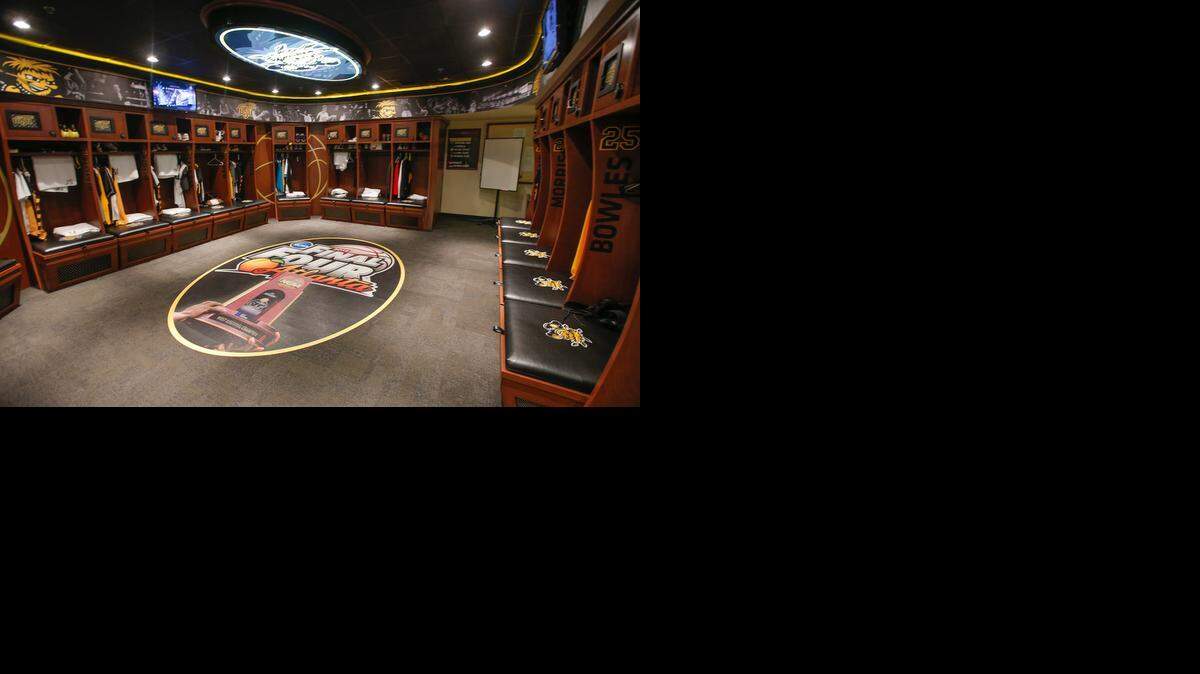
At WSU, Sexton plans ahead to give his coaches assets. Koch Arena’s locker rooms are in the middle of remodeling projects. A new recruiting room is in use on the arena’s concourse to give coaches a place to meet with parents and recruits. Koch Arena, renovated in 2003, is at maximum occupancy with no room to grow. Discussions regarding a student services building near the arena to relieve crowding and provide academic and office space are getting serious.
“We need to be a half-step ahead,” Sexton said. “We are going to continue to vision on, ‘What are the next great facility needs we have. What are the next great opportunities relative to the autonomy list that is going to be coming out in January?’ Most of the things that are on that list, from a Wichita State standpoint, are expensive. But it is the cost of being a relevant part of the Division I basketball, volleyball, baseball experience.”
Reach Paul Suellentrop at 316-269-6760 or psuellentrop@wichitaeagle.com. Follow him on Twitter: @paulsuellentrop.
This story was originally published November 6, 2014 at 3:00 AM with the headline "Shocker basketball 2014-15: Hoop schools face increased financial pressure in college athletics."