
How the relentless optimism of Paul Mills sparked Wichita State’s turnaround
At first listen, some of Paul Mills’ sayings can sound like the kind of hokey coaching lines that belong on a locker-room wall.
He talks about “TNT” plays — takes no talent. He warns against uphill dreams with downhill habits. He tells players everything they want is on the other side of hard. He is full of one-liners for adversity, effort, attitude and belief and he returns to them over and over. From the outside, it can sound corny.
Inside the Wichita State men’s basketball program, it has become the language of a turnaround.
That is the part of this Wichita State season that is easiest to miss from a distance. The record tells one story. The Shockers are 21-10, they’ve won 11 of their last 13 games, they’ve delivered the program’s first 20-win season in six years and they sit two wins away from returning to the NCAA Tournament for the first time since 2021. The numbers can tell another. Since the road win at South Florida that began this surge, WSU’s defense has performed like a top-35 unit nationally and the Shockers have performed like a borderline at-large team by Wins Above Bubble standards.
But if the question is how Wichita State got here, how a season that looked shaky in mid-January became one of the best seasons in years at Koch Arena, the answer begins with the personality of its head coach.
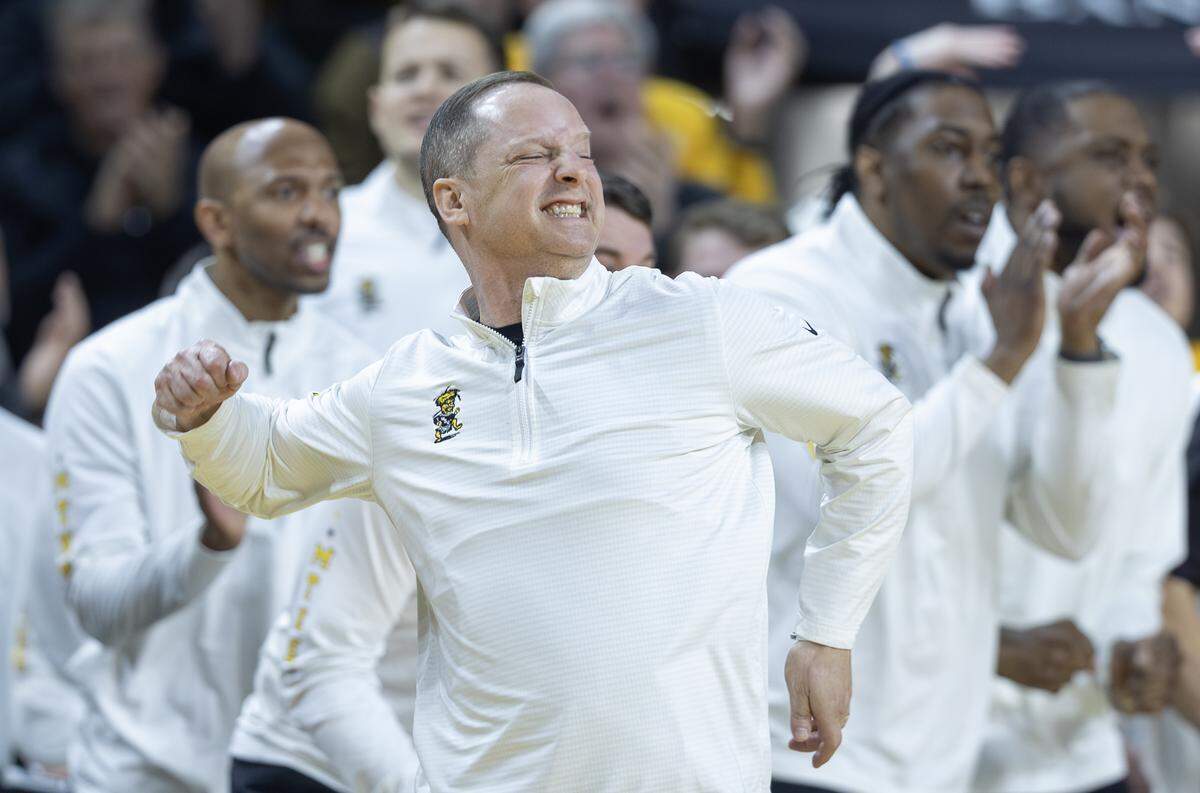
Because Mills never allowed panic to enter the equation.
Not when the Shockers kept dropping close games in November. Not when a talented team left the Bahamas without a win. Not when they missed 15 free throws in a three-point home loss to DePaul. Not after they squandered an 18-point lead in a double-overtime loss at Charlotte. Not when they followed that with a clunker at home against Rice. And not even when Florida Atlantic ran the Shockers out of the gym on Jan. 15, dropping the team’s record to a mediocre 10-8 overall.
That was the low point, or at least it looked like it from the outside.
From the inside, Mills saw a test.
“Nobody is telling you that it’s fun going through difficult experiences,” Mills said. “But you have to think about the adversity in a way where we are making sure we get something out of it in order to produce something later.”
That is Mills in a nutshell. He does not deny hardship. He refuses to waste it.
He is outspoken in his faith and when WSU was going through its roughest stretch, he found comfort in the scripture of James 1:2-4, which reads “consider it pure joy when you face trials of many kinds, because the testing of your faith produces perseverance.”
For Mills, that was not a slogan meant to soften a losing streak. It was a way of understanding it. A belief that the struggle itself could become productive, that adversity could clarify rather than crush.
That belief is powerful in any locker room. It is even more powerful when players know their coach is not faking it.
“We believe in our guys and we believe in who they are,” Mills said. “I don’t think you can say you believe in them and then when it doesn’t go well, not believe in them. That just tells me you don’t actually believe in them during difficult times.”
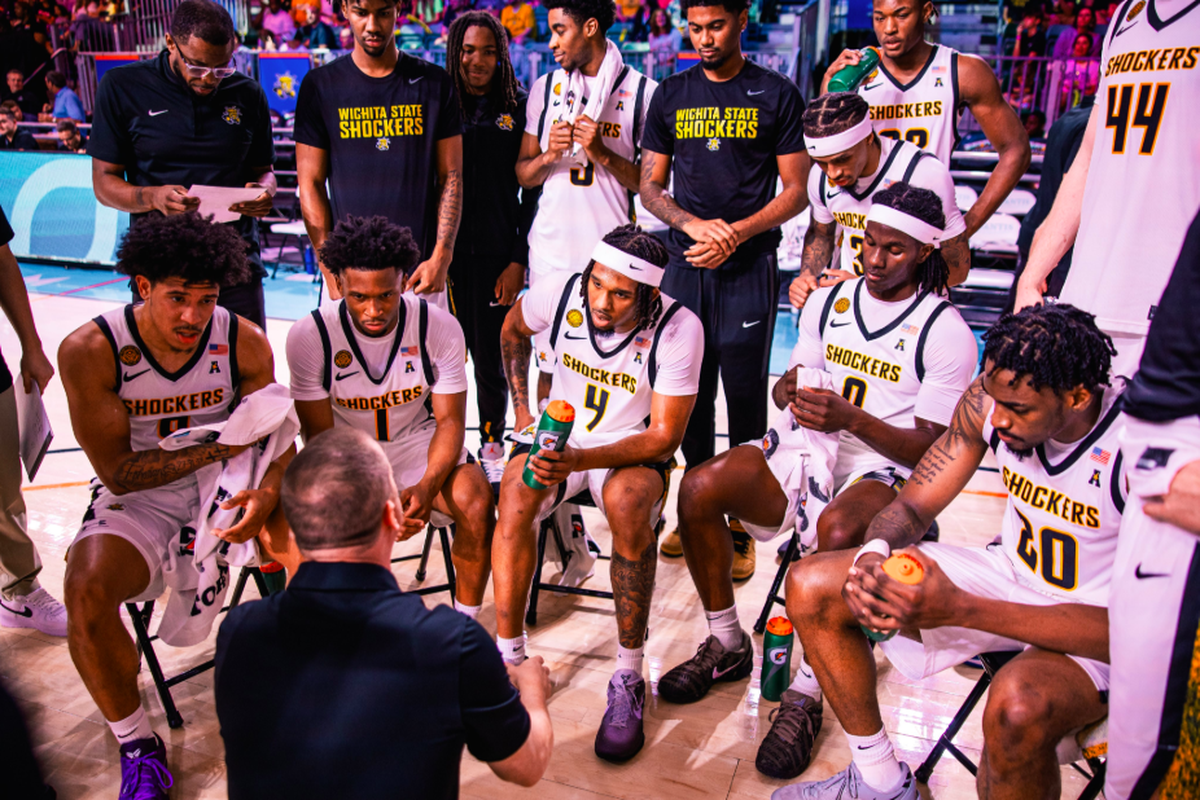
He has built the program that way. WSU does not just recruit skill and athleticism. Mills and his staff put a premium on character, on fit, on families, on whether a player can withstand hard moments without splintering. That was part of Mills’ calm during the ugly stretch. He did not fear losing the locker room because he believed he had assembled a room full of players who would not run from difficult things.
“Who they are as people impacts who they are as players,” Mills said. “Good people make good players. You’ve got to see it resonate inside of your locker room. That’s where winning always begins. And the way that you do it is you assemble the right people.”
That conviction allowed Wichita State to keep its footing when the results had not yet caught up.
The early losses were maddening because this roster was plainly better than the first two Mills teams. The talent level had risen. There was more shot-making, more experience, more positional size, more pieces that looked like they should fit. But talent did not save Wichita State from a 62-59 loss at Boise State. It did not save the Shockers from an 0-3 trip to the Bahamas, where they lost three straight games to Saint Mary’s, Colorado State and Western Kentucky, all by two possessions. It did not save them from that DePaul loss in which 15 missed free throws hung over them.
Even after WSU finally gained traction with a stirring 16-point comeback win at UAB to open conference play, the Shockers coughed it back up. The collapse at Charlotte was the sort of loss that can rot a season from the inside if a team lets it. The home loss to Rice only deepened the concern. Then came the beatdown at Florida Atlantic.
Outside the walls of the program, the doubts were obvious. Inside them, Mills never let the mood change.
“You cannot live under this cloud of doom because something bad happened to you,” Mills said. “The Eeyore’s of the world hang their heads and they pout and they cry, ‘Look at how bad it is.’ You’re just not going to get anywhere like that. You need to understand that these trials, they produce something. So when you have a group like this who responds the right way, you have tremendous hope on account of the character in the room.”
His assistants laugh about the volume of his phrases, but they also understand why they work. They only become cliche when a coach uses them as decoration. With Mills, they become culture because he embodies them.
“He really does walk the walk and talk the talk,” said assistant coach Iain Laymon, who has been with Mills longer than anyone on staff. “That’s why it’s easy for guys to follow him because it’s not like he’s saying one thing and doing another. It’s really what he believes. They’re not just one-off things to say. Some of them are cliche, but he exemplifies it. What he says, he does.”
That credibility matters in losing seasons, maybe more than in winning ones. Players can smell fraud. They know when a coach’s energy rises and falls with the standings. They know when belief is conditional.
Wichita State’s players learned the opposite.
“That belief comes from when you go through the struggle,” said assistant coach Kenton Paulino, who has also been with Mills since the Oral Roberts days. “Like after we lost three games in the Bahamas, the guys didn’t know how he was going to react. When they see that he’s still the same, the intensity is the same, he treats you the same, that’s when it resonates. That’s how he earned the respect from everybody on the team.”
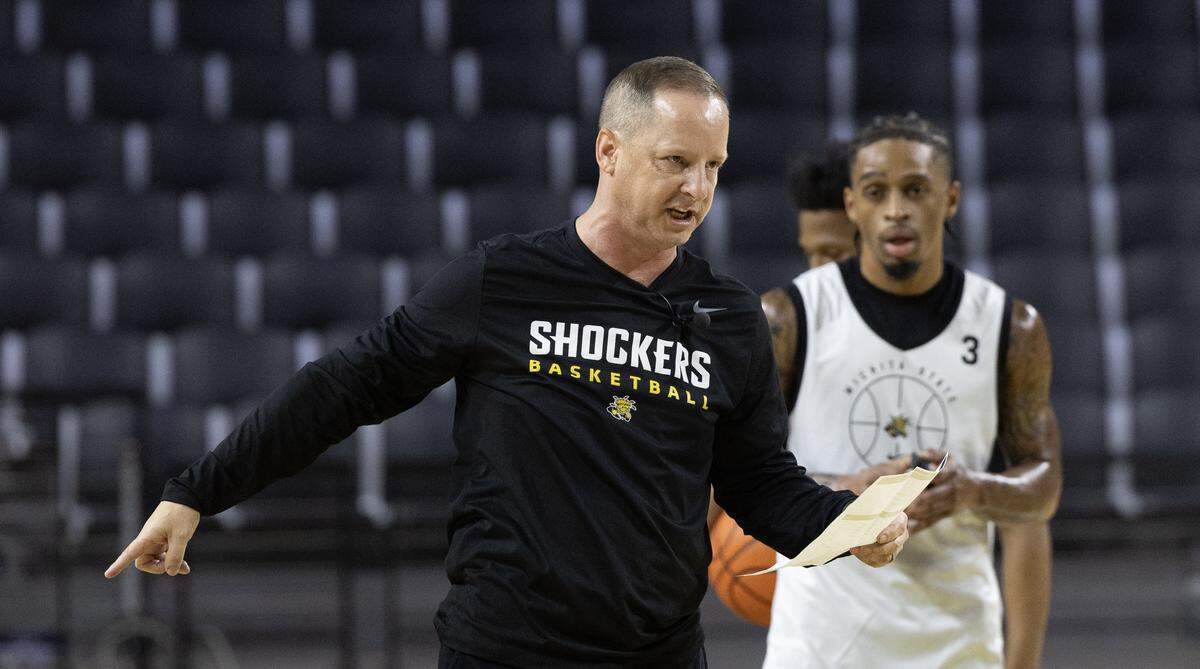
The consistency is not accidental. Mills sees it as part of the job description of being a head coach.
“I don’t know how someone can bring that much energy every day,” Laymon said. “There are times when my energy changes based on how much sleep I got or how stressed I am. He is so consistent. Every day at practice, he is the same guy. He always tells us that the head coach can’t have a bad day of practice.”
That steadiness showed up in the way WSU practiced, especially in the stretches when it would have been easiest for standards to slip. The staff has pointed to the early-morning practices on days when they travel — the kind players usually dread because a road trip looms right after — as a subtle but meaningful example. In previous years, those sessions could drag. This season, Mills demanded juice and precision anyway. He held the stars, the reserves, the assistants and the managers to the same standard. He extracted competition when the circumstances invited complacency.
“Whether we’re winning or losing, coach Mills is going to be the same,” Paulino said. “He’s always going to focus on the details. He’s not going to get too high or too low. He’s all about finding ways to get better every day. And he leads by example.”
That phrase — finding ways to get better every day — may be the cleanest summary of what Mills has done in Wichita.
He inherited a program that had drifted from its old edge. His first season ended 15-19. Last season improved to 19-15 and included an NIT appearance. This season has brought another step forward: 21 wins, a second-place finish in the American and a team now standing on the doorstep of March Madness. It has not been a straight line. Fans were restless in January, and with reason. At WSU, especially in a new-look American where the program believes it should contend near the top, top-three finishes and championship races are not luxury goals. They are expectations.
Mills does not shrink from that.
“With all due respect, it just doesn’t really do much for me,” Mills said of the 20-win barrier. “You have to pay attention to the direction rather than the destination. Whatever the win total, you never want to think that you’ve arrived. I’m happy that we’ve been able to stack some wins, but it’s never been a goal to hit some arbitrary number of wins. Our goal is to continue to play better and let’s try a way to win the next one.”
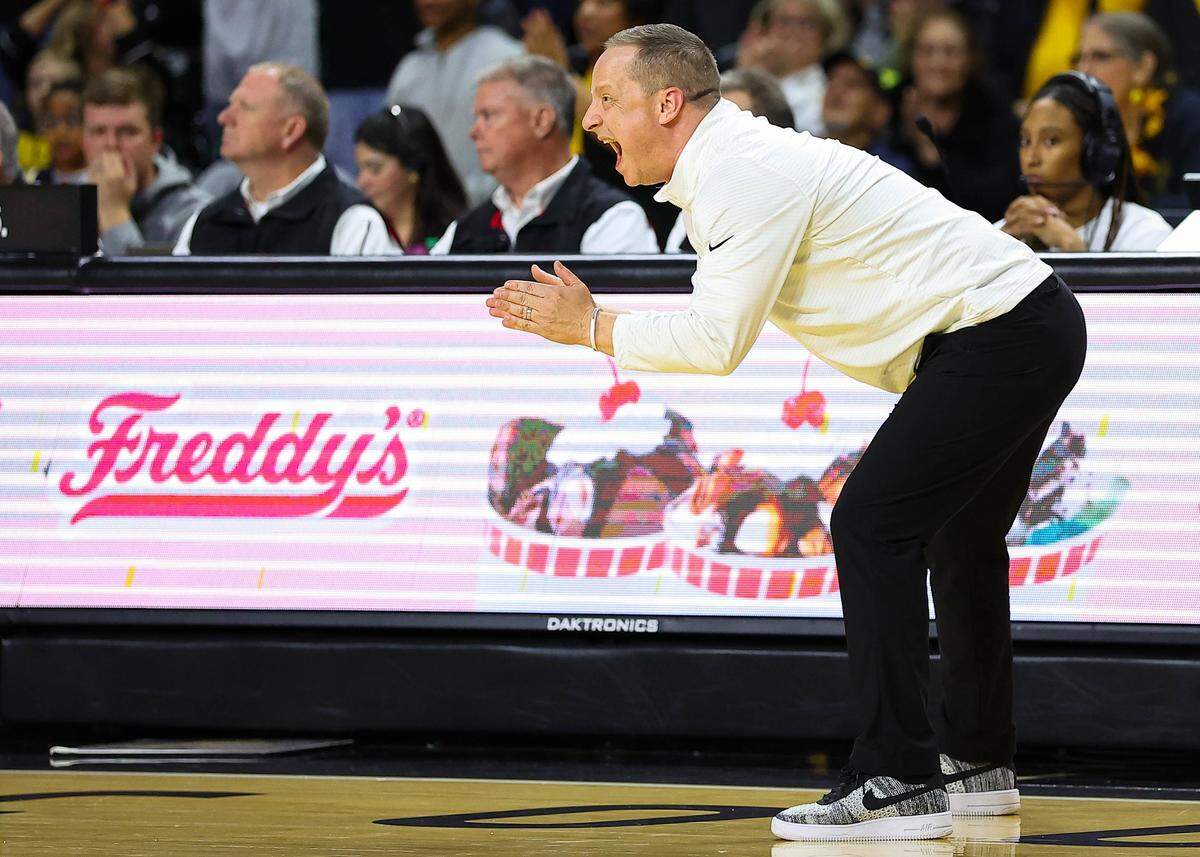
Direction over destination. Improvement over applause. It sounds like another one of those Mills-isms. It also explains why this season turned when it did.
The most obvious tactical pivot came after the Florida Atlantic loss, when Mills sat down with Kenyon Giles and had a hard conversation. Giles, the team’s best shot-maker, had taken only five shots and scored a season-low two points against FAU. For a player with that kind of offensive gravity, passive basketball was losing basketball.
Mills told him so.
“There had to be changes made,” Mills said. “Some of that was on KG, but a lot of it was on us. We needed to have better formations on the court, better spacing. We needed to put KG in situations where we weren’t relying on sets and counters.”
That is where optimism met accountability.
Mills did not simply tell Giles to be aggressive and hope the problem fixed itself. He showed him the data. Wichita State is a much better offensive team when Giles hunts shots. The numbers back it up in almost absurd fashion. Between Giles’ own efficiency and the way Wichita State crashes the glass off his misses, the Shockers are scoring 1.40 points per shot every time Giles simply attempts a shot, whether it goes in or not. So Mills did what good coaches do: he paired belief with adjustment.
He began using Giles more as a primary ball-handler in early offense, bringing him up the floor and setting high drag screens in transition. That forced opposing big men to defend higher up the floor or risk Giles walking into rhythm 3s. WSU then toggled which screener it used — center or power forward, depending on the matchup — to create cleaner reads. The staff also incorporated ways to weaponize Giles when teams tried to face-guard him, using him as a screener and then springing him free through layered off-ball actions.
The result was not just more shots. It was smarter shots.
Giles has averaged 21.3 points in conference play and is now shattering Wichita State’s single-season record for 3s with 105 and counting. His star turn has become central to the resurgence. But even Giles frames it through Mills.
“A lot of people are going to see my name in the record book and think it’s all about me,” Giles said. “I put in a lot of work, but I wouldn’t have that record without coach Mills. He’s given me so much confidence. He has a lot to do with it.”
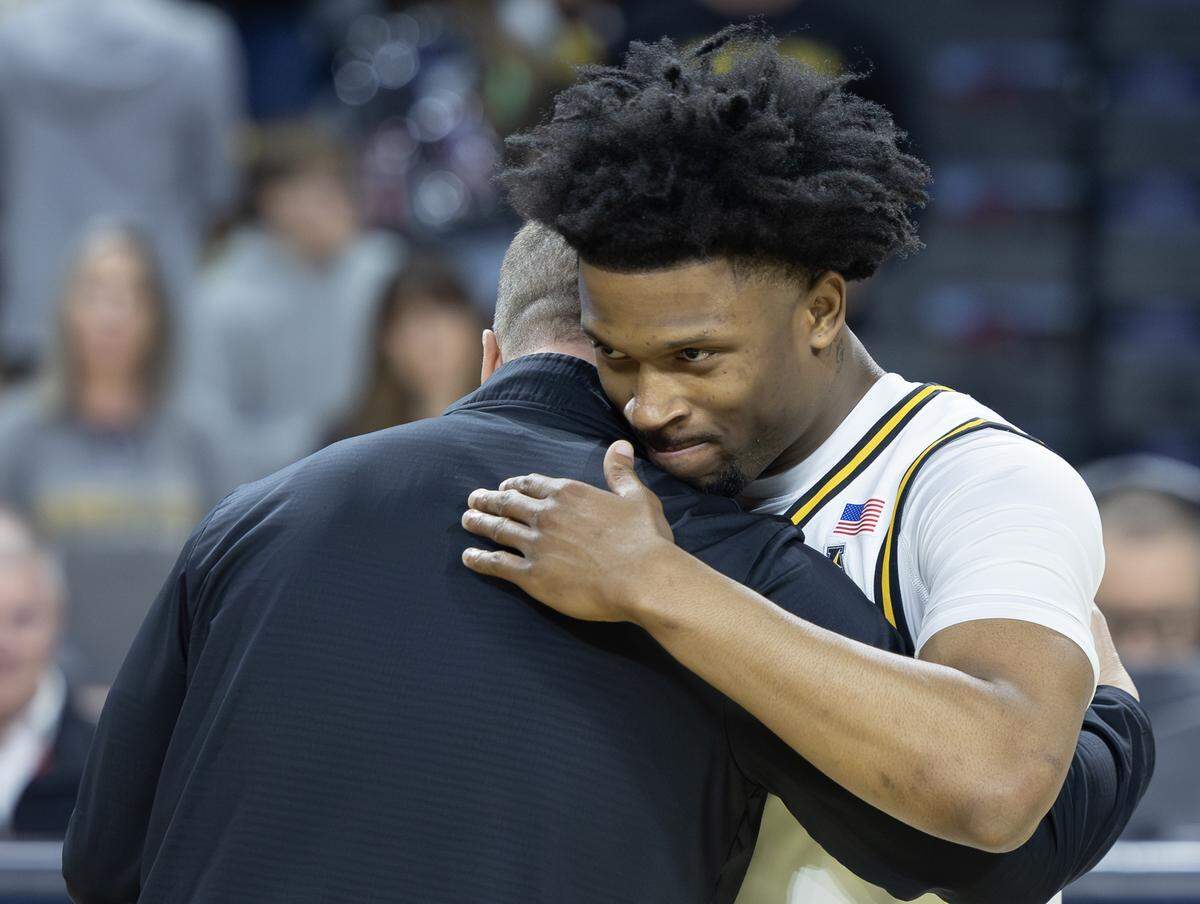
That is the thread that runs through this season. Mills’ optimism is not some soft-focus personality trait hovering above the real basketball. It is attached to specifics. It is attached to problem-solving, to roster construction, to teaching, to player development, to tactical changes made in real time. Optimism, in Mills’ hands, is not the denial of flaws. It is the refusal to believe flaws are permanent.
“Winning basketball a lot of times is just eliminating losing basketball,” Mills said.
That line sounds simple, almost too simple, until you watch how Wichita State has changed. Early in the season, the Shockers lost seven of their first eight games decided by six points or fewer. Since then, they are 4-0 in two-possession games. That is not magic. It is the byproduct of a team that became more fundamentally sound, more composed, more precise in big moments. It is the product of a coach who obsesses over details and a team that eventually absorbed his message.
Mills’ beloved “TNT” plays are a perfect example. Box out. Secure a rebound with two hands. Sprint back. Dive for a loose ball. Jump stop. Play off two feet. None of it is glamorous, but all of it travels. Wichita State has become more reliable in those areas as the season has advanced, which is why the Shockers now look like a team built for March-style basketball.
Josh Eilert, in his first year on the WSU staff after serving as an interim head coach the last two years at West Virginia and Utah, has noticed the same thing.
“When a coach goes through all of that and comes back two days later and gives everything he’s got for this team, they’re going to turn around and give him everything they have,” Eilert said. “That’s just who coach Mills is as a person. He’s a salt of the Earth type of guy and I’m proud to work for him. Wichita is lucky to have him.”
Eilert’s quote points to another chapter in this season, one the public only learned later.
On Dec. 7, following an overtime road win at Northern Iowa, Mills suffered a cardiac event and needed emergency heart surgery. Doctors told him his right coronary artery was 100% blocked. Two stents were placed to restore circulation. Three days later, he was back at Koch Arena for practice. He did not make the surgery public until Dec. 21, meaning almost no one outside the program knew that he coached the Dec. 13 game against DePaul with heart monitors on and a cardiologist sitting behind WSU’s bench.
To Mills, it barely registered as drama.
“I think I had the procedure at 3:30 and I woke up at 5:30 and I was a new person,” Mills said. “So it was a two-hour event in my life.”
And when asked why he returned so quickly, he answered with another one of those lines that can sound hokey until you hear the conviction underneath it.
“It’s a calling, so I think it’s your responsibility,” Mills said. “The reason people have gifts is to give them away. I love our players, I’ve always loved the game. So what I really enjoy is helping the guys. There’s not a day that goes by where I’m not excited the second that I wake up. I don’t think players understand that the most exciting part of my day, outside of seeing my family, is at practice.”
That episode left a deep imprint on the team.
“When somebody goes through something like that, it would have been easy to step aside,” senior Karon Boyd said. “But he showed how dedicated he is to this team and to his craft and how much this game means to him and how much Wichita State means to him. I think that amazed all of us.”
Paulino had missed a practice earlier in the season because of the flu. When he came back, he went to Mills in disbelief about how quickly he returned from surgery.
“This team will run through a brick wall for their head coach,” Paulino said. “They want to win for themselves and for the school and for the fans, but they also want to win for him.”
Laymon put it just as directly.
“You can’t not let it have a trickle-down effect,” Laymon said. “When he comes in with that energy and that commitment, after everything he’s been through this year, how do you not match that energy?”
There is a temptation to cast that moment as the dramatic turning point, but that would miss the larger truth. The surgery did not give Mills any more passion for the job. It only further revealed it. It showed players and staff the depth of a commitment they had already been hearing in every meeting and every practice. It gave physical proof to his constant refrain that belief and consistency matter most when circumstances argue otherwise.
That is why his optimism resonates. It is not shallow. It is durable.
“In those really big moments, you always look to your head coach and see how he’s going to react,” Giles said. “Coach Mills is always calm. That’s our head of the snake. There’s been so many times this season where he’ll just walk into a huddle and say, ‘OK, we’re going to win this game.’ And he’s so calm about it. He gives us that belief in hard moments and that’s something you need as a player.”
It is why Boyd talks about Mills not just as a coach, but as an example.
“He tells us all of the time about how blessed we are to have this opportunity,” Boyd said. “We’re blessed to have another day at life. We’re blessed to have another 24 hours on this Earth. Just seeing him attack every day with such gratitude and graciousness is amazing.”
That perspective has helped shape a team that now looks nothing like the one stumbling through January. The Shockers defend with force. They rebound with force. They handle late-game moments better. And to his credit, Mills has been winning the in-game chess battles more and more often.
It also helps that the players trust their coaching staff, perhaps in part because that staff has NCAA Tournament credibility at every turn. Mills has been to the Sweet 16 and won 30 games in a season. Paulino has been part of Elite Eight and deep NCAA runs. Eilert has lived March at West Virginia. P.J. Couisnard’s name still carries weight in Wichita because of the 2006 Sweet 16 run. On a roster with only one player, Will Berg, who has previously appeared in an NCAA Tournament game, that experience has mattered.
“They’ve had to listen to us about what a game for March actually looks like,” Mills said.
The players have listened, in large part because Mills made them trust the messenger.
And now the payoff is visible beyond the locker room. Koch Arena has felt alive again. WSU set a season-high in attendance its final four home games of the season with the final two home games topping 8,000 fans, as the building has started to sound like itself again. Not all the way back to the roar that only 10,506 can create, but close enough to imagine what next season could feel like if this momentum carries forward.
“It’s not easy to reinvigorate the fan base because they’re so passionate, but also because there’s such a rich tradition here,” Mills said. “We’ve talked about how we need to revive and how it’s our job to get better. If we get better, the market will demand that we get bigger.”
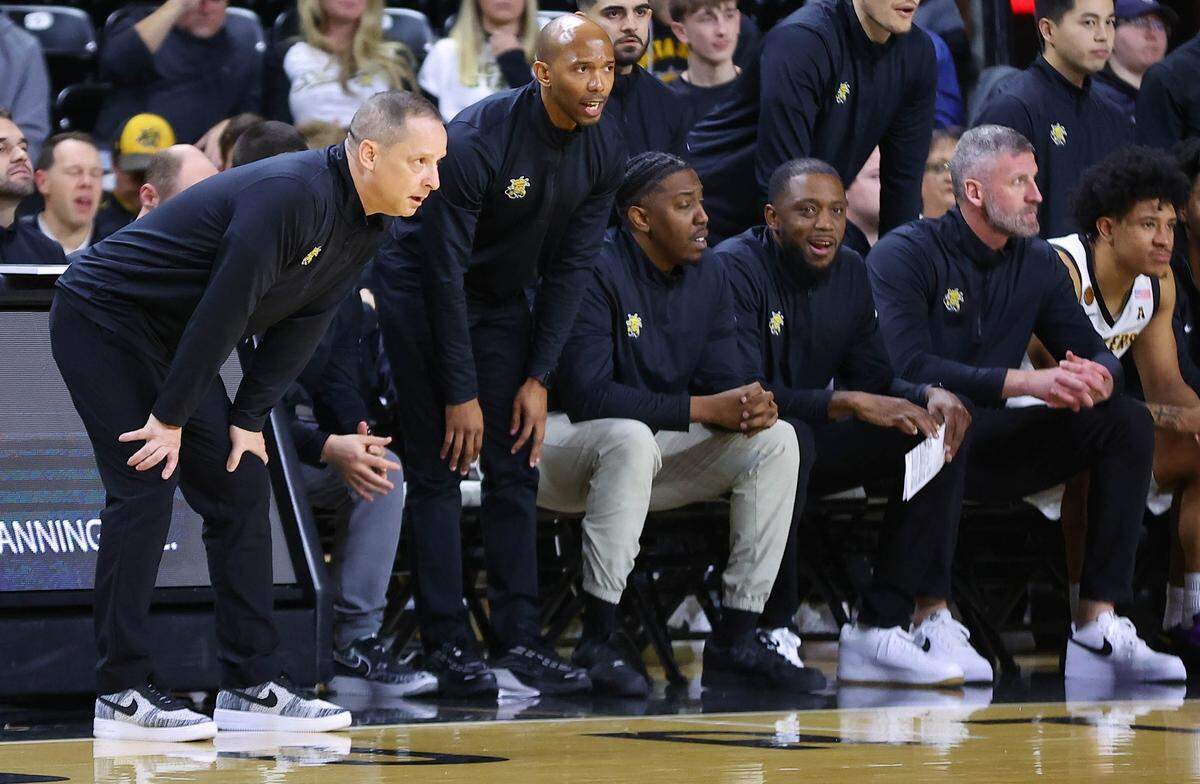
That line, too, feels distinctly Mills. Confident without boasting. Grounded in work. Rooted in the belief that momentum is earned, not wished into existence.
Wichita State will play its first game in the American Conference tournament in Saturday’s 4 p.m. semifinal against either Tulsa or North Texas, two wins from a return to March Madness and two wins from turning a promising rebound season into something bigger. Whether the Shockers finish the job remains to be seen. March has a way of reducing entire seasons to a handful of possessions. Mills knows that. His players do, too.
But whatever happens next, this much is clear: Wichita State’s season did not turn because its coach found the right slogan at the right time. It turned because his players came to trust the worldview behind all of those slogans. They trusted the man who kept showing up the same way, whether they were losing in the Bahamas or surging toward March. They trusted the coach who never confused adversity with defeat. They trusted the optimism because they watched him live it.
“I’ve never done well with the people who live under the darkness of doom,” Mills said. “That’s never been me. I enjoy optimistic people.”
That much has never been in doubt.
What Wichita State has discovered this season is just how far that kind of optimism can take a team.
.jpg)