
‘Be undeniable’: The promise that took Kenyon Giles from rejection to stardom
The car ride home could have broken a lesser player.
Kenyon Giles had made the four-hour drive to Washington, D.C., believing he had earned his place. He had already played for the AAU team once. He thought he had done enough to make it again. Instead, the diminutive guard was cut.
He was left to wonder how much better he would have to be for people to stop seeing what he lacked and start seeing everything he was.
When he returned home, his family did not let him sit in that feeling for long. No one offered pity. No one let the rejection linger. The message was simple: from here on out, be undeniable.
Those two words, first spoken in harder times by his mother, Sharonda Street, became the family creed and, eventually, the engine to Giles’ basketball career. It carried him through being overlooked as a recruit, through shrinking roles on talented teams, through lonely mornings in the garage during the coronavirus shutdown, through two transfers and all the way to Wichita, where for the first time in his career, Giles has found something close to basketball nirvana: a coach who trusts him, a team that believes in him and a fan base that adores him.
On senior day Saturday at Koch Arena, when Wichita State hosts Florida Atlantic at 3 p.m. with the No. 2 seed and a triple-bye in the American Conference tournament at stake, fans will celebrate the made 3s, the heat-check pull-ups and the fadeaway daggers that have made Giles a star.
But the story behind his breakout season begins much earlier, with being cut from a team and a promise.
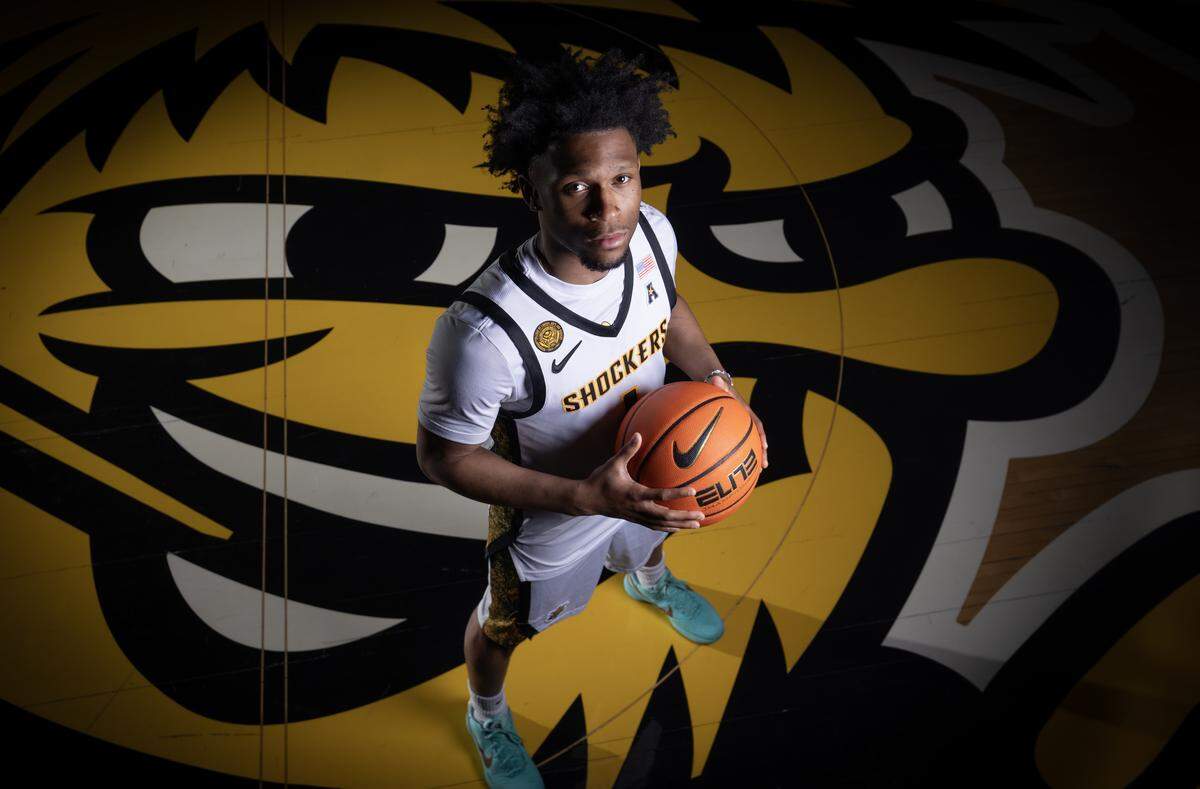
How Kenyon Giles learned how to be undeniable
Long before he captivated the Roundhouse and long before he became the engine of Wichita State’s offense, Giles was the younger brother in a basketball family who never had much choice but to get tougher.
His father, Curtis Giles, served in the Navy, which meant a childhood of movement. Kenyon was born in Jacksonville, Fla., then lived in Hawaii for four years, then finally moved to Chesapeake, Va. when he was in the fifth grade.
The changing addresses forced adaptation. Basketball was always waiting for him.
He loved it first and loved it completely. He was good enough in other sports — his older brothers still recall how coaches had to move Kenyon up in flag football because he was too quick and slippery for kids his own age — but basketball was different. It swallowed his imagination whole. He made rims out of whatever he could find and shot whatever he could turn into a ball. By 9 years old, he was already launching from distances kids his age weren’t supposed to see as reasonable.
His two older brothers, Dexter Williams Jr. and Dezmeon Street, recognized it early. They were both basketball players themselves and both would shape different parts of what Kenyon would become. Dex, the oldest, brought a fierce edge and a defender’s mentality. Dez offered the thoughtful side, the ability to think the game through. Together, they challenged him the way older brothers do when they sense something special.
Dez still laughs at the memory of when he used to bring Kenyon, who was six years younger and only 4-foot-6, to his high school practices and forced him to play against the bigger JV players, some nearly two feet taller. Kenyon took his lumps, but every day he did something that made his brother shake his head.
The whole family saw it. Their only concern was if his size would allow others to.
“I always told him when he was younger,” said Sharonda, his mother. “‘I don’t know how tall you’re going to get, but you have a gift.’”
That gift did not shield him from the usual indignities reserved for smaller guards. If there was a player who was taller, even with a little less skill, coaches usually leaned toward the bigger body. When he played on stacked AAU teams in Virginia, he was repeatedly asked to facilitate for the more highly touted prospects instead of hunting his own offense.
Kenyon felt that most acutely when he returned to try out for Team Durant, a high-profile AAU team on the EYBL circuit, going into ninth grade. He had already played for the program the year before, which made him believe he would be returning when a coach invited him back for a try-out. But he had moved to the area late, after many of the top local players were already established. He sensed there was a pecking order and being cut let him know exactly where he stood.
“Our team was so loaded, so someone’s minutes had to suffer and that ended up being me,” Kenyon said. “A lot of those guys had offers and I didn’t really have any. So if somebody has to get less minutes, it was going to be me. I realized pretty quick they weren’t here to see me.”
Kenyon considers himself headstrong. But at that age, being cut stung.
What defined his basketball career going forward was the response once he returned home.
“After I got cut, that’s when I knew I was in the right family to be successful,” Kenyon said. “I came home and they were like, ‘You’re not quitting, you know that right?’ And I never even thought about quitting, but just seeing how dedicated they were to make sure I kept going... I knew I had the right support system.”
The phrase that steadied him was one his mother had used to push herself through tougher seasons in her own life. Sharonda, who grew up in a small Mississippi town and had her oldest son at 16, had long told herself to be undeniable — not to make noise, but to make doubt irrelevant. Over time, that became the phrase that guided Kenyon.
“Ever since I got cut, I’ve had this fire lit in me,” Kenyon said. “I always told myself, ‘Be undeniable.’”
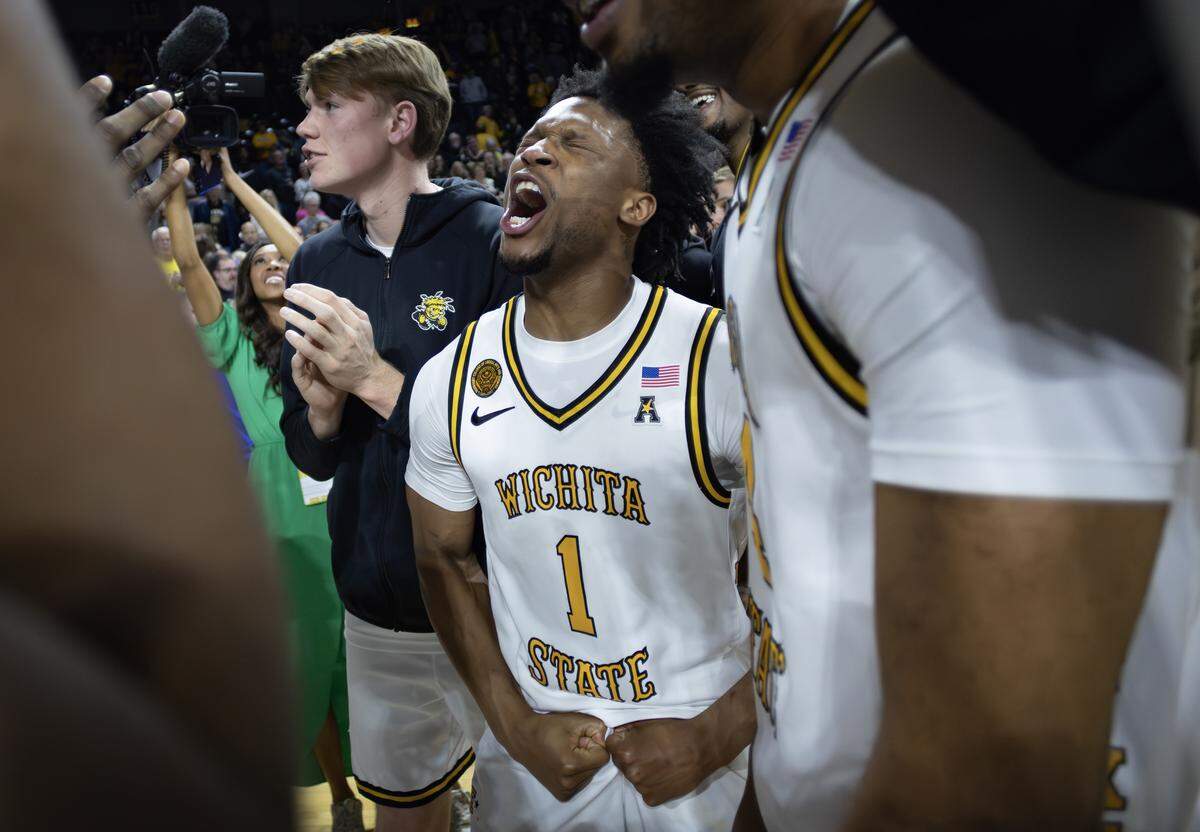
The best-case version of a one-year Shocker
The hidden turning point in Giles’ story came during the pandemic when the world shut down and he decided he was done waiting for basketball to reveal him.
At the time, Giles was a sophomore in high school, old enough to notice the gap widening around him. Friends and teammates were already piling up Division I scholarship offers, while the only thing resembling interest in him was an email from Navy that he wasn’t even sure was legitimate because no coach ever followed up.
He already knew he could shoot. What he lacked was the ability to create separation off the dribble to fully weaponize that shot against better competition. So when gyms around the country closed, Giles turned inward. Every morning, right after waking up, he would head to the garage at home and spend an hour doing nothing but ball-handling drills.
No jumpers. No finish work. No distractions. Just the ball and the concrete and the repetition.
“It made me go, ‘Dang, I’m not working hard enough,’” Giles said. “I had to have a real heart-to-heart with myself during Covid. I just told myself I wasn’t working hard enough and that was not going to be an excuse.”
Those mornings helped make the version of Giles that WSU fans now recognize instantly. The change was not cosmetic. It was foundational. The tighter handle allowed him to create angles. The improved pace let him get defenders off balance. The ball no longer looked like something he dribbled. It was like a yo-yo in his hand.
Giles said he had around 10 Division I offers coming out of high school, but could count on one hand the schools that seriously showed interest. The process left him feeling overlooked, so he stayed close to home and chose Radford, a low-major about five hours away in Virginia.
It was the right place to start.
At Radford, Giles earned a larger role by his sophomore year and averaged 14.3 points. Then came the first portal jump, to UNC Greensboro, where his 3-point percentage soared to 40% and his scoring average climbed to 15.3. The second portal entry was not just about level-jumping. He wanted fit, too. He wanted a placed that needed what he did and would trust him to do it.
That is what Paul Mills sold.
The WSU head coach remembers when he was building his transfer board and searching for the scorer the team needed. The staff watched hours of film on a dozen players, from bigger wings to smaller guards. Then the coaches ranked their preferences.
Mills went around the room and asked each coach. Giles was the unanimous pick.
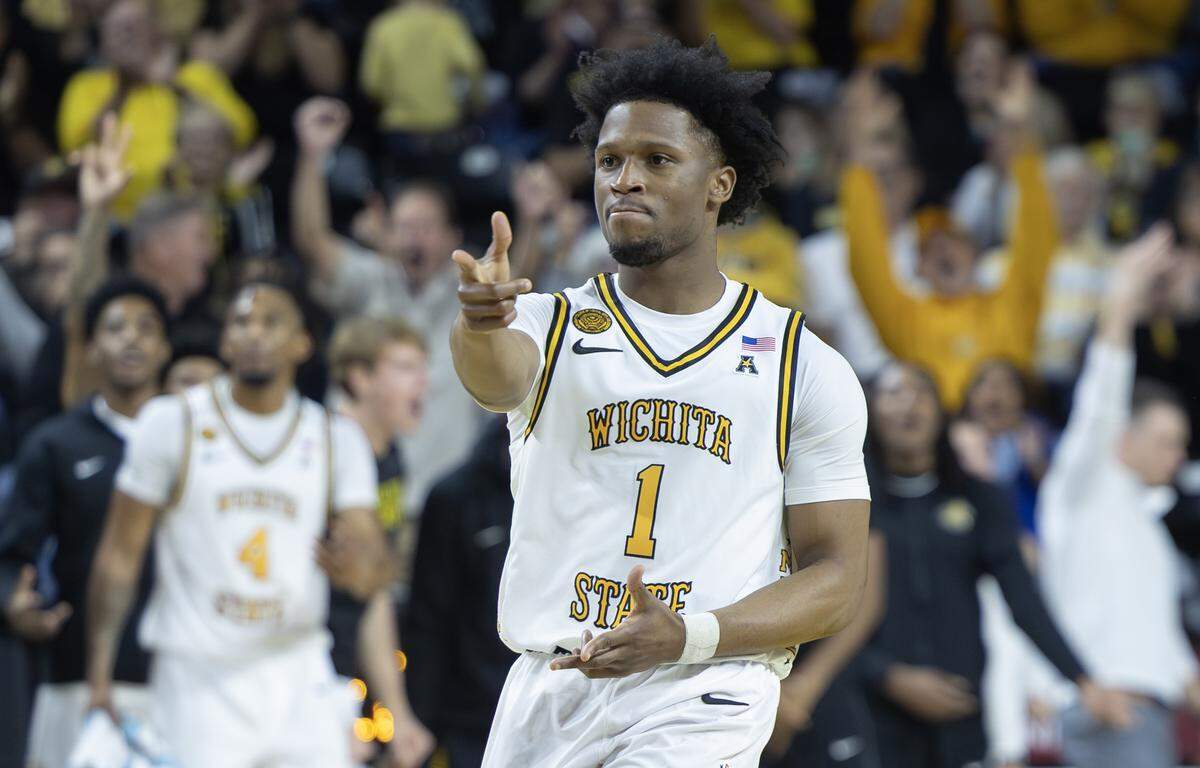
His size did not scare them off. His skill was too obvious. The shot-making. The pace. The fearlessness. The ability to score in ways that are hard to script and even harder to defend. WSU did not need him to tone his game down. The Shockers wanted him to become more himself.
“A big thing in my family is to go where you’re celebrated,” Giles said. “I didn’t come here to prove people wrong. I came to Wichita to prove coach Mills right for picking me.”
That line gets to the heart of who Giles is. He’s no motivated by vendettas as much as by validation. Not from strangers, but from the people who truly see him. His family believed in him before anyone else. Mills believed in him when WSU had other options. And that belief mattered because Giles had spent so much of his basketball life being nudged toward the margins.
Curtis, his father, can hear the difference now.
“I’m so grateful to coach Mills because he’s finally let Kenyon be Kenyon,” Curtis said. “I always knew my son was going to be great, but coach Mills has been a huge key to this.”
Sharonda has seen it this season in the Roundhouse, too. Not just in his production, but in the joy.
“This is the most fun he’s ever had playing basketball, no doubt about it,” Sharonda said. “This is the most electrifying time we’ve ever had as a family. We love it. He is something different this year.”
And that joy, in Wichita, has been mutual.
Giles has always had a game built for entertainment. At a listed 5-foot-10, he is almost always the smallest player on the floor, but he plays as if no shot is too ambitious and no defender too long. He launches from the logo, floats scoop shots over towers, fades away into impossible windows and somehow makes the difficult look so smooth and effortless.
In a place like Wichita, where fans have always prized connection as much as production, the transfer portal had started to erode something real. Too many recent seasons had felt transactional with rosters changing so quickly that players could seem less like Shockers and more like temporary talent passing through on one-year deals. That cynicism began creeping into the fan base.
But Giles, along with the rest of the Shockers this season, has pushed back against it in the most convincing way possible. In one season, Giles has shown that a one-year stay does not have to feel hollow. He has immersed himself in the community, embraced the expectations and affection that come with playing for Wichita State and rewarded that love with one of the most electric scoring seasons Koch Arena has seen in decades.
In the process, he has become a best-case example of what this new era can still look like: not a mercenary stopover, but a genuine connection that has made him feel like a real Shocker.
“He’s never had a fan base like Wichita State show him love like this,” Dez said. “You can tell he loves being that guy in Wichita. There’s a whole lot of smiling when Kenyon is playing basketball this year. He loves the fans and the fans love him.”
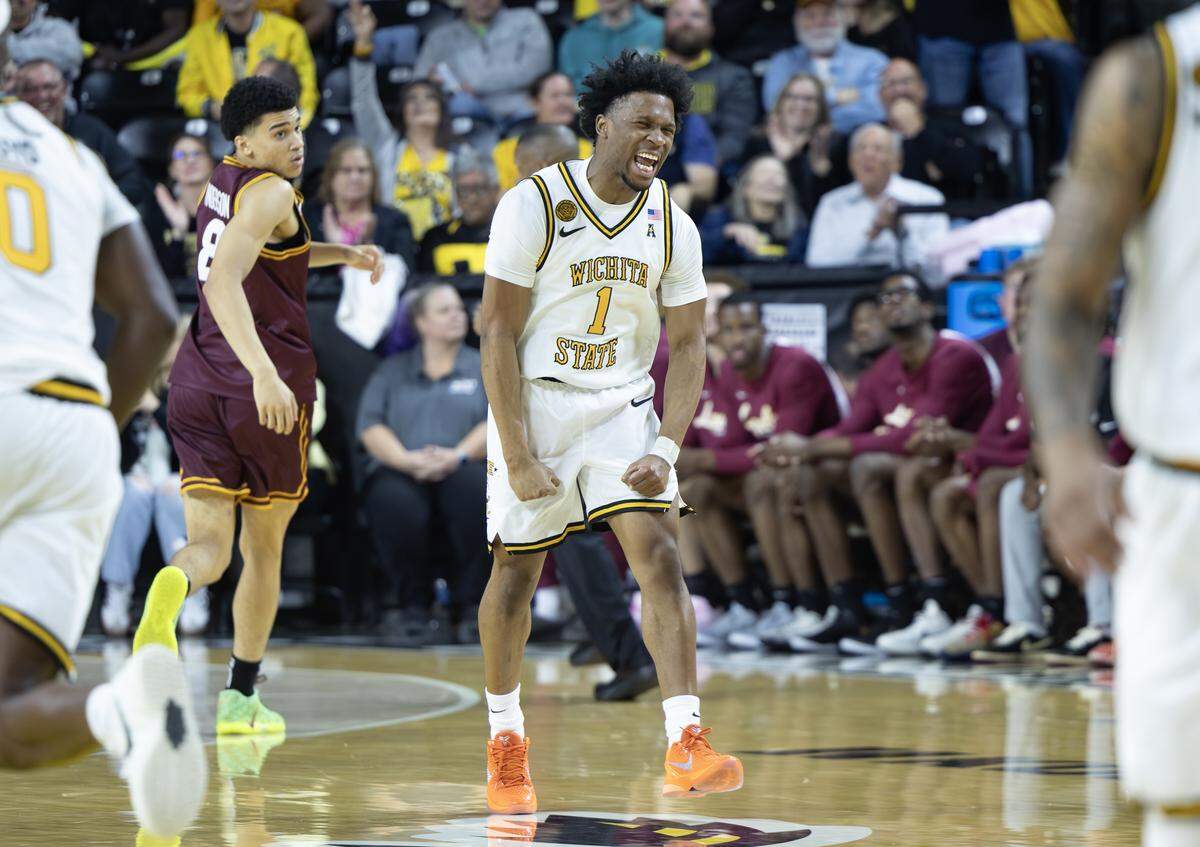
How Wichita State gave Kenyon Giles freedom to become a star
The story of Giles’ breakthrough season at Wichita State is less about making shots and more to do about how Paul Mills poured a level of belief into him that he had never felt before.
Mills gave Giles the ultimate green light, but more importantly, he gave him freedom without fear — the confidence to miss, to keep firing and to trust that one bad shot or one cold stretch was not going to change his standing on the team. That belief has elevated Giles into the most dangerous version of himself, the one WSU needed all along: aggressive, unburdened and fully convinced that the best thing he can do for the Shockers is be exactly who he is.
But the first half of the season was not seamless. Giles needed time to adjust to a bigger stage, tougher competition and the public heat that comes with playing for a more high-profile team. Early losses weighed on him. So did the online criticism, particularly after the DePaul loss when the Shockers fell to 6-5.
“The first half of the year was pretty tough for me to adjust to mentally,” Giles said. “We lose a game and you check your socials and you see all of this stuff people are saying to you. You can’t help but see it. It’s human nature. But after a while, as a man, I learned how to just not care what other people say.”
The pivotal game for WSU actually came in its worst loss of the season at Florida Atlantic when the Owls aggressively denied Giles off the ball and held him to just five shot attempts. He came away from that game realizing that passivity had played directly into the defense’s hands. He had spent too much time worrying about trying to find the perfect shot instead of whether the team needed him to take them.
That is when Mills reframed everything.
He explained to Giles that every shot he took had value, even the misses. When Giles fires, defenses stretch and scramble. Bigs have to step higher up the floor. Help defenders commit earlier. The result is that WSU’s frontcourt gets clean runways to the glass.
It’s not a theory. The numbers back it up.
In conference play, Giles has missed 187 shots and WSU has secured an offensive rebound on 40.6% of those chances. On the rest of the roster’s 429 misses, the Shockers are rebounding at just a 35.7% rate. In other words, WSU’s offensive rebounding jumps nearly five percentage points when Giles is the one shooting.
And those second chances turn into real value. Giles is already scoring 1.13 points per shot in league play, an efficient mark considering his workload. But when you factor in the 92 eventual second-chance points WSU has scored off possessions extended by rebounds on his misses, the Shockers are effectively getting 1.41 points every time Giles puts up a shot.
“When you’re a guard of that nature, you don’t want to get away from your DNA,” Mills said. “You’re wired to score and you need to think score.”
Mills has coached small scoring guards before, from Pierre Jackson at Baylor to Max Abmas at Oral Roberts. He understands that spacing is oxygen for players of that type. So after the FAU game, WSU adjusted. Mills put the ball in Giles’ hands more, gave him more space and encouraged him to hunt shots without fear.
“I’ve been able to coach a number of guys who are similar to KG who are wired to score,” Mills said. “There’s no ego involved there. Everybody else on the team understands that it’s going to benefit everyone if we’re able to space it around him and then be able to offensive rebound.”
The result has been the most dangerous stretch of Giles’ career.
Over the last six games, he is averaging 26 points on 23.2 shots per game. In the 11 games since the FAU loss, he has averaged 22.2 points and WSU has gone 9-2. The efficiency has dipped some from the early part of conference play, but the overall math still strongly favors aggression, especially once the offensive rebounding effect is layered in.
Giles recently broke Wichita State’s single-season record for made 3s and has hit them from just about every zip code. Defenders often think they are safe if they meet him at the 3-point line, only to discover that Giles does not really acknowledge that painted arc as a limit. He has turned logo 3s into something close to routine.
Then there is his fadeaway, maybe his most artful weapon.
According to CBB Analytics, Giles has made 56-of-119 mid-range 2s this season, a remarkable 47% clip for shots that are often heavily contested and self-created. The foundation for that move goes back about six years when Dex, his oldest brother, started working with him on adding a fadeaway jumper modeled in part after NBA player Rudy Gay. The shot became a necessity during runs in Las Vegas when Giles had to create against taller, older players and needed a counter that length could not erase.
He has perfected the timing, footwork and balance so much that it has become practically unblockable.
“I told him if he added that shot to his bag then nobody would be able to stop him,” Dexter said. “I was 6-4 and trying to guard him and couldn’t stop it. That’s why I just laugh when I see these bigger guys trying to guard him. He still can stop on a dime and fade away, just like how we used to practice. I don’t care how tall you are, you can’t stop it.”
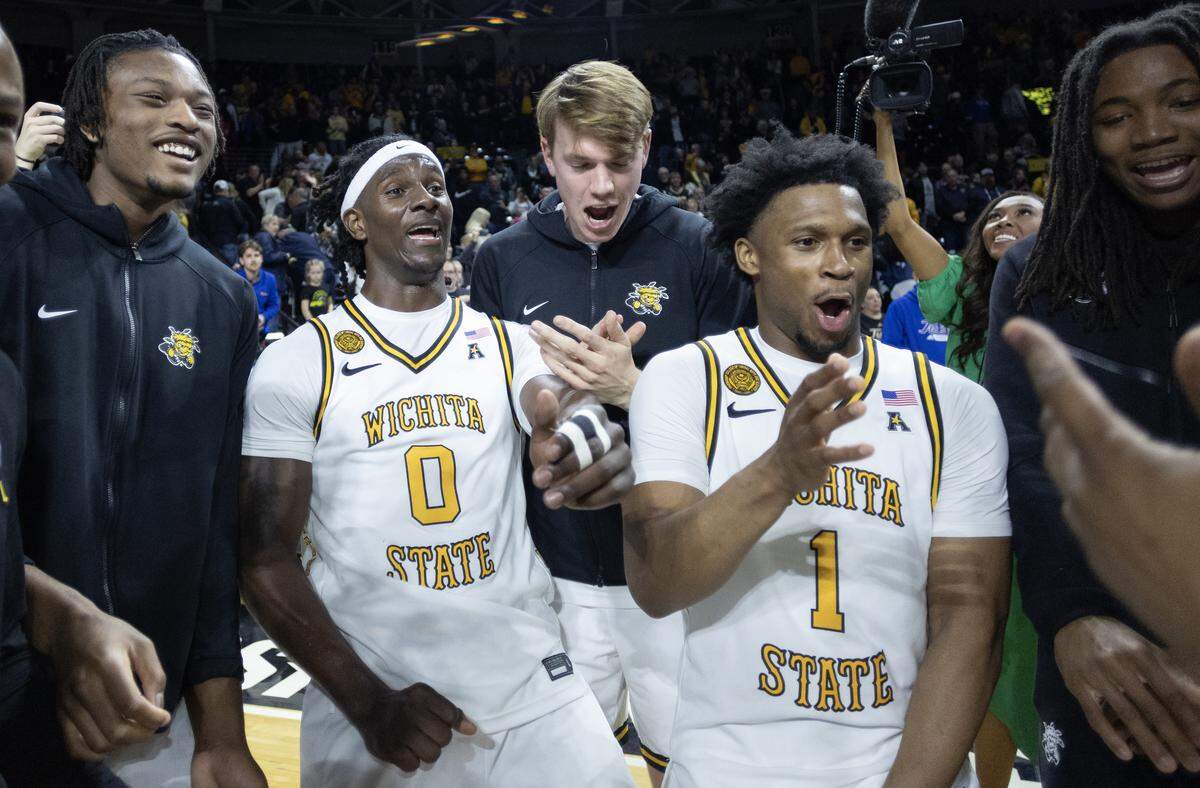
Even teammates are left shaking their heads.
“It’s so aggravating as a bigger defender,” Karon Boyd said. “You think you have it, then he just keeps fading. You can play great defense, but when he creates that separation, it’s impossible to defend.”
When Giles appears to be twisting his body into impossible angles and launching shots over the outstretched arms of taller defenders, he sees far less spectacle in it than everyone watching does.
“I’m the kind of player who just loves to flow,” he said. “I’m not thinking in my head, ‘I’m going to do this move because this guy is taller than me.’ It’s just something that I naturally do and I have the touch down now. So every time I’m fading, I feel like I have the right touch.”
What makes all of this work, though, may be as much mental as tactical. Giles no longer looks over his shoulder after misses. He no longer worries about getting yanked for a string of missed shots. He is playing with the kind of full conviction that only comes when a player feels fully trusted.
“You know when you miss a shot or you mess up and the coach takes you out and you feel some type of way?” Sharonda said. “Kenyon does not have that problem at Wichita. Coach Mills believes in him and he has given him that go-get-it attitude about everything.”
That trust has unlocked not just production, but identity. Giles jokes that he wants to be “the most unselfish ball hog” possible. It is a funny line because it is true. He knows his job is to score. He also knows scoring can be a selfish act if not anchored to the right purpose. So he makes sure the locker room stays aligned. He talks with teammates. He builds relationships. He wants everyone to understand that his volume is not vanity. It is function.
But if you ask Giles, the records and accolades don’t register. The kid who once got cut, who spent long mornings in the garage sharpening his game, who spent years wanting a coach to believe in him, isn’t hung up on any of that now. He’s simply having the time of his life in Wichita.
“I just genuinely love playing basketball here,” Giles said. “I still love it like I’m 12 years old.”
Which is maybe why Wichita has loved him back so completely.
Fans here know the production. They know the logo 3s, the swagger, the absurd fadeaways, the way the Roundhouse can rise in anticipation the moment he has a sliver of space. They know what he has meant to a team that is playing meaningful basketball in March for the first time in years. They know what he has given Wichita State in one short season.
But what they have really embraced is something deeper: a player who never asked for sympathy, only opportunity. A scorer who spent years being told to shrink and finally found a place that asked him to grow.
He’s a one-year Shocker who somehow feels permanent.
“I’ve always just wanted to be undeniable,” Giles said. “Sometimes, I do stop and think, ‘Man, I’ve come a long way. But the funny thing is, I feel like I still have so much further to go.”
This story was originally published March 6, 2026 at 8:57 AM.
.jpg)