
How Kenyon Giles’ sneaky disappearing act is fueling WSU record 3-point chase
Kenyon Giles has found a new way to win a race, not by finishing first, but by coming in last.
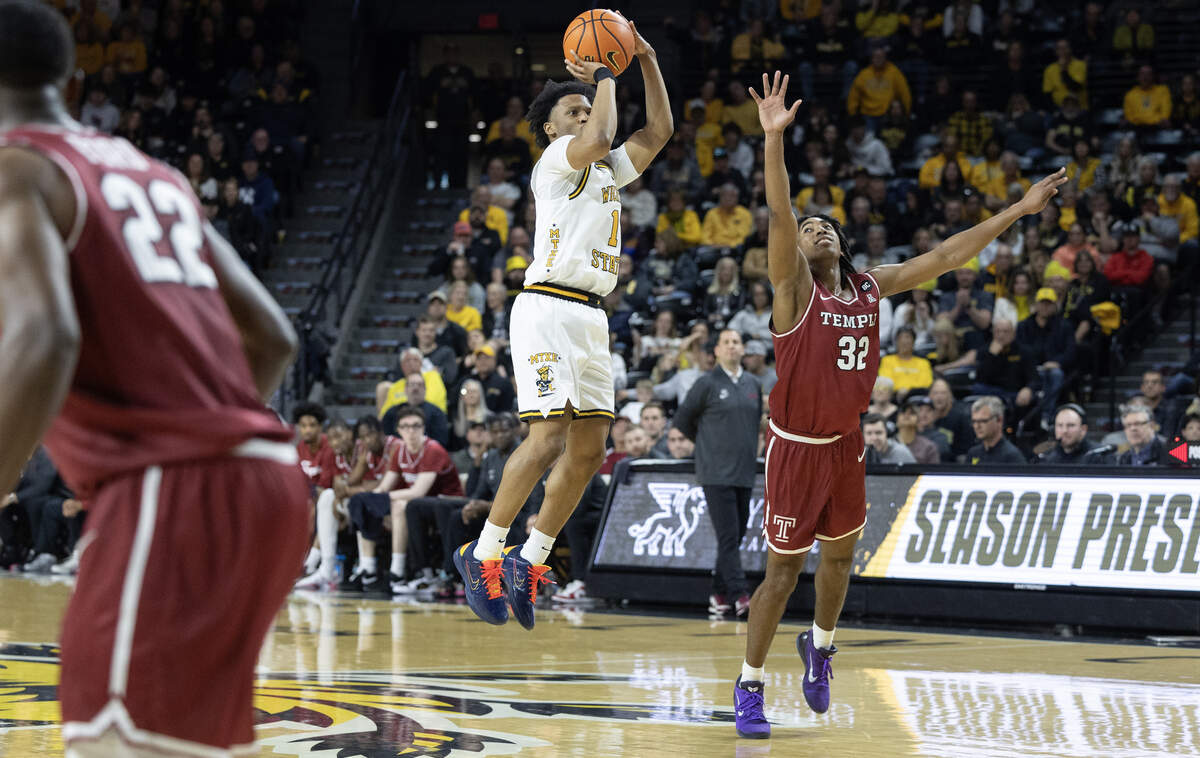
In Wichita State’s 69-57 win over Temple this past Saturday at Koch Arena, the Shockers got out in transition and T.J. Williams pushed the ball with purpose.
But the player who mattered most in this play wasn’t even in view on the television broadcast. That’s because he hadn’t even crossed halfcourt yet.
Giles was trailing so far behind the play that he was the last one to join the action. That was the point. Wichita State’s best scorer wasn’t late, he was lurking.
Williams turned his head back toward the top of the key, knowing exactly where the throwback pass was going: to Giles, one of the nation’s premier shooters, standing wide open beyond the arc. Williams started laughing before the shot even went up. Dre Kindell raised three fingers and started running back the other way. On the bench, WSU coaches threw their hands up in the air.
Splash.
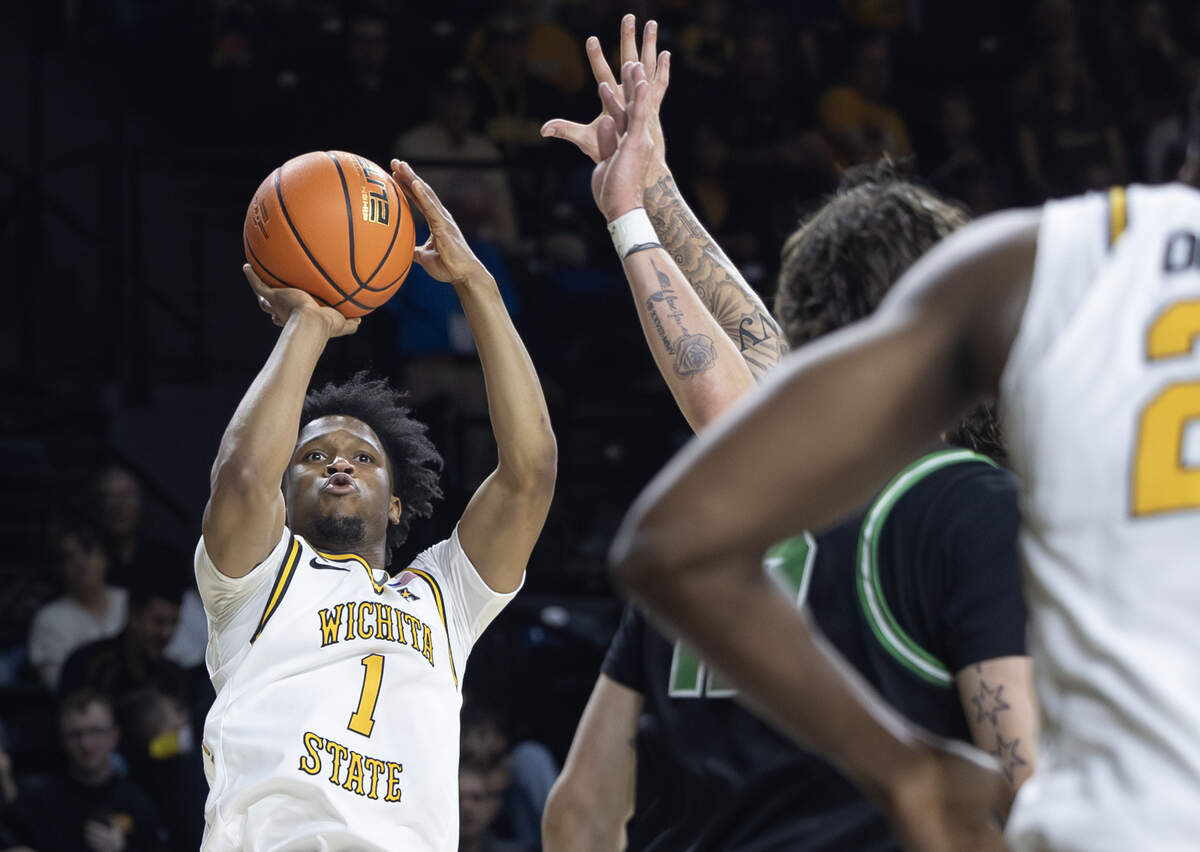
It was a transition 3 that felt inevitable, not because it was drawn up, but because Giles has turned his disappearing act in transition into an art that is helping him chase the program’s single-season 3-pointer record.
“A lot of teams look for me, so if I sit behind, they’ve got to come find me,” Giles said. “And if they can’t find me, everybody on the team knows I’m going to lag behind so I can get an open 3. That’s an easy 3 for me.”
How Giles has perfected the art of arriving late
Normally, the first rule of a fast break is simple: sprint. Beat your man down the floor. Try to score a layup. Giles is taking the opposite approach — intentionally lagging behind the pack in transition, blending into the bodies, letting the chaos hide him, then darting free when defenses are unable to locate him.
It works because transition defense is communication under stress. Defenders are backpedaling, matching up on the fly, trying to rebuild a shell while the ball attacks the pain. All it takes is one defender to ball watch for a second for the structure to collapse.
Giles preys on that moment.
His diminutive 5-foot-10 frame helps. He can slip behind traffic and get lost simply because he’s usually the smallest player on the court. And it’s not accidental. Giles has told teammates in practice and film study to always look for him on throwback passes — that if they’re pushing the ball with advantage, he’ll be late by design.
That’s why, when he rebounds, gets a steal or receives an outlet, he’ll sometimes give it up immediately to a playmaker like Williams, Mike Gray Jr. or Karon Boyd and let them apply pressure at the rim. As defenses collapse toward the ball, Giles strikes.
And what makes him so hard to guard is his affinity for shooting NBA-distance 3s, even when he’s wide open. The deeper he spots up, the more distance the defender has to sprint to close out and the more unlikely it becomes they can contest in time.
Williams, who has become one of WSU’s smartest decision-makers with the ball, has learned to hunt Giles in transition.
“Sometimes you can hear me just start laughing because everyone falls for it,” Williams said. “I just try to get downhill and put pressure on the paint. They usually collapse in because my man usually needs help and that help comes off of the best shooter in the conference. So I just kick it out and then it’s green from there.”
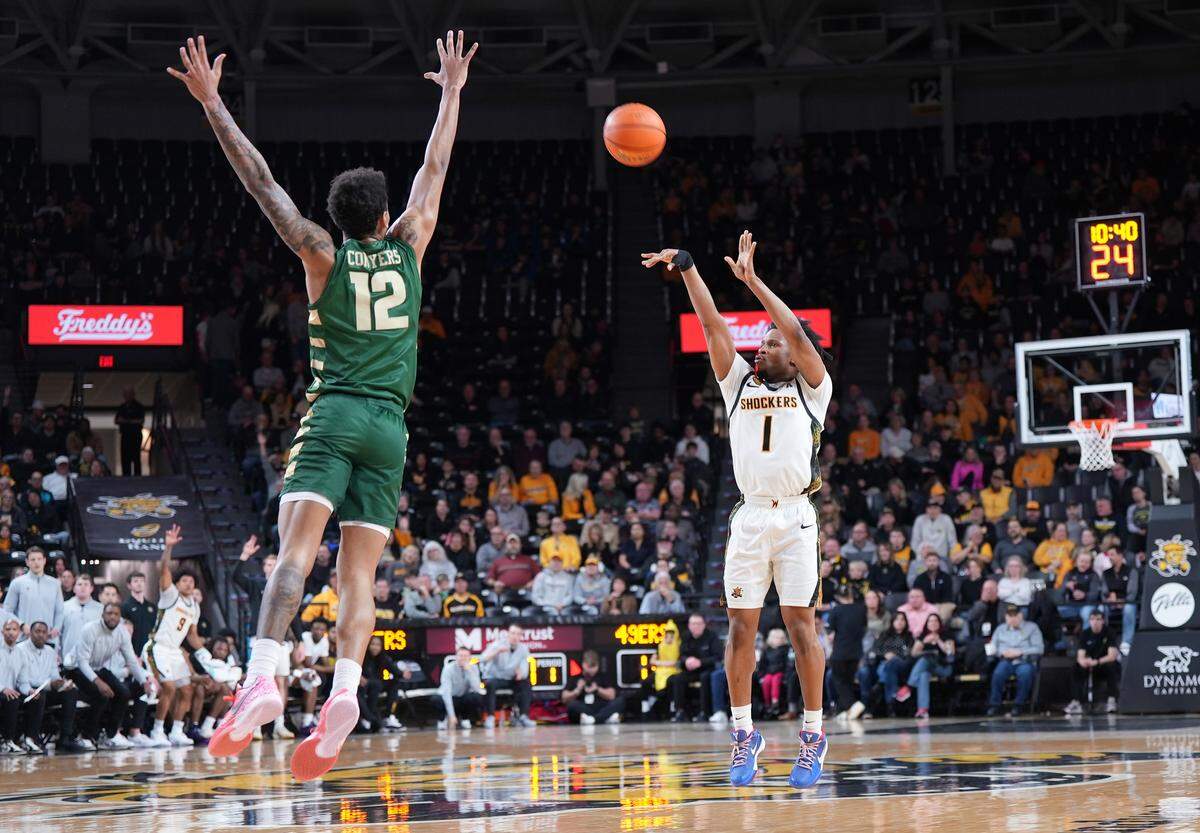
They showed a similar read earlier this month in the Charlotte win on Feb. 3 when Giles advanced the ball in semi-transition and fed Williams streaking down the left side. Giles’ defender drifted toward the ball and Williams recognized it immediately, throwing it right back to a wide-open Giles, who buried the 3 from a few feet beyond the arc.
The 3-point shooting numbers of Kenyon Giles
Synergy tracking data shows Giles is shooting 51.9% on transition 3s (14 of 27) and when he’s designated as the trailer, he’s hit 8 of 14.
It also explains why this method matters for WSU’s offense as conference play tightens. In the halfcourt, every defense knows the scouting report: be physical with Giles, stay attached and make him wrestle away from the ball. It can be exhausting, even for great shooters.
In transition, those rules aren’t as easily applied. Defenders are crossmatched and worried about the rim. Instead of fighting through bodies, Giles is stepping into clean looks — the kind that deliver a 3-point punch before the opponent is organized.
WSU head coach Paul Mills said WSU has leaned into hunting more looks for Giles in transition after Florida Atlantic found a way to shrink Giles in the halfcourt. In that game, Giles took only five shots and scored a season-low two points.
“After Florida Atlantic where he only gets five shots, we needed to install something where everything isn’t set-oriented,” Mills said. “He can shoot with the ball in his hands, he can shoot without the ball in his hands. He doesn’t need a bounce. So we can move him around. That’s one of the huge plusses about KG.”
Early-clock offense, major gains for the Shockers
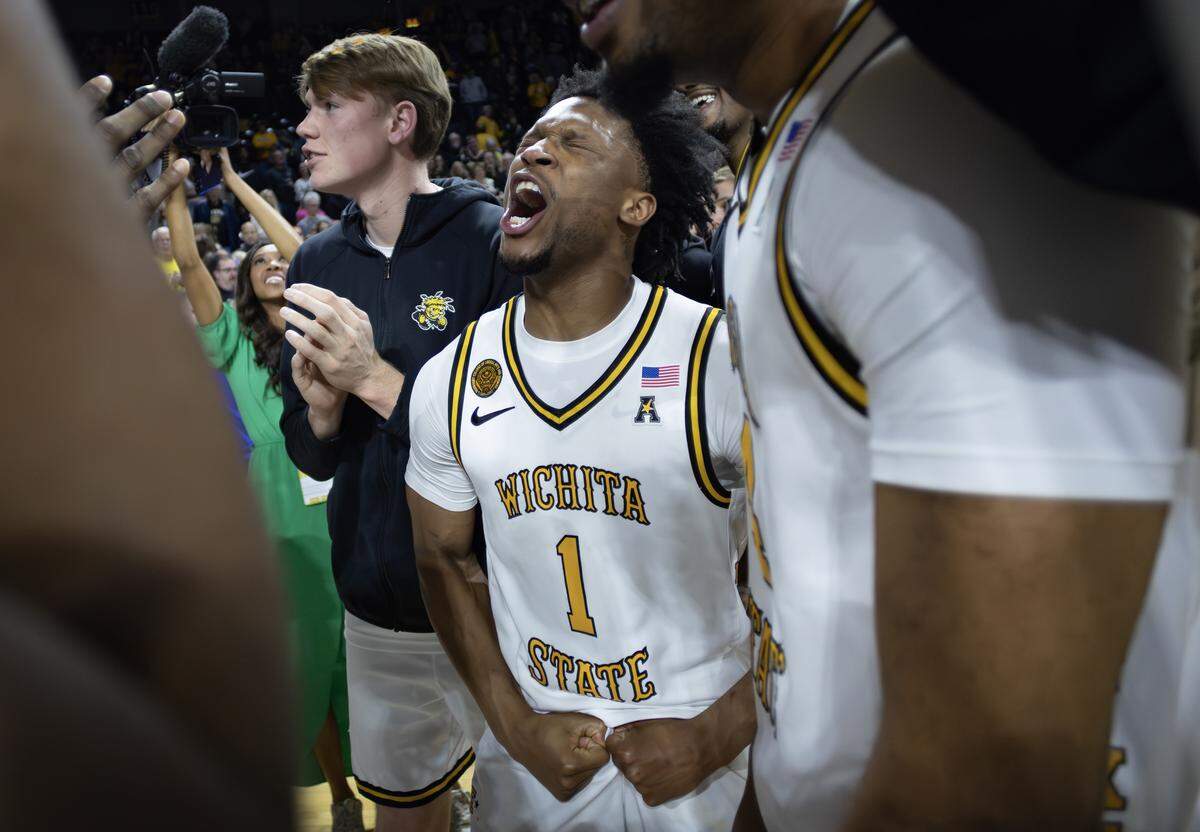
The Temple game was a case study in how WSU is weaponizing time. Giles made five triples against the Owls and four of them came within the first seven seconds of the shot clock. That’s not accidental. It’s a pressure tactic: shoot before the defense can load up, before help can get set, before physicality can take over a possession.
It also dovetails with another transition wrinkle Mills has introduced as the season has progressed: drag screens and early ball screens at the top of the key. When Giles brings the ball up in semi-transition, WSU’s center, either Emmanuel Okorafor or Will Berg, sets a high screen that can flatten the on-ball defender and force the opponent’s big man into a brutal choice: set up and risk giving up a slip and offensive rebound or stay back and watch Giles dribble into an open 3.
“There’s a shiftiness there,” Mills said. “You don’t know which way he’s going. And our bigs do a good job of flipping screens and changing angles. And then if you bring your big up to try to contest a shot, Will Berg and Emmanuel Okorafor can slip behind you and grab an offensive rebound. So just him shooting the ball helps.”
Even when Giles misses, WSU has rebounded an extraordinary amount of those misses, a byproduct of the attention he draws. Because he usually attracts two defenders when he shoots, that has been freeing up lanes for Okorafor and Berg to crash.
Giles notices the difference those screens make because he has gone against them in practice.
“I know him and Eman set big screens,” Giles said. “Because they set them on me in practice and it’s like, ‘Man, I can’t imagine what the other team feels like.’”
The space for Giles to score isn’t accidental for WSU
The secret sauce to all of this is spacing, a mundane detail that becomes lethal when everyone commits to it.
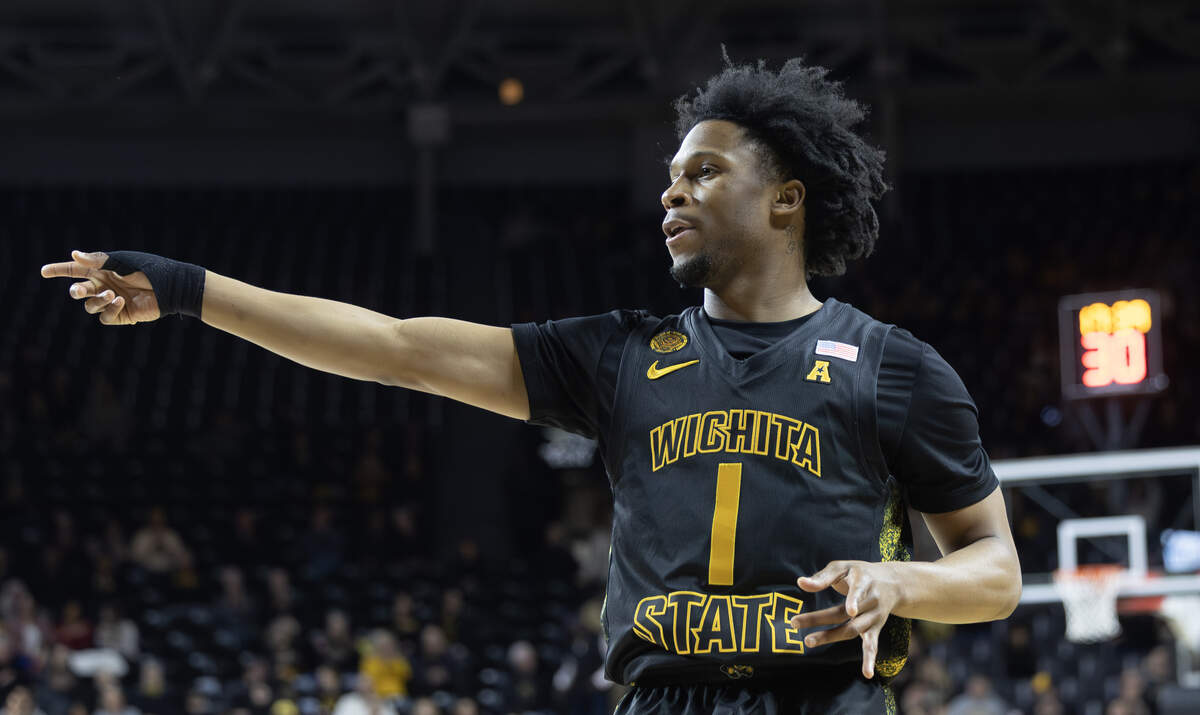
Mills calls it “Race 26,” which is a mandate for two players to sprint and fill both corners of the floor by the 26-second mark on the 30-second shot clock. That stretches the defense wide, pulls help toward the baseline and leaves the top of the floor as Giles’ personal runway — often a two-man game with a screener and a backpedaling big.
“The spacing everywhere else on the court is a pretty good indicator about how everybody understands that he needs space,” Mills said. “The one thing I bet our players could recite in unison is when I ask them, ‘What do good players want?’ It’s space. They need room in order to operate.”
It’s also why WSU doesn’t always need a traditional assist to create a great shot. A sprint to the corner. A well-timed drag screen. A throwback pass made easy because the defense is spread so thin. That’s teamwork that doesn’t always show up as an assist in the box score.
The record chase for Kenyon Giles at Wichita State
Giles is putting together one of the most prolific shooting seasons WSU has ever seen.
He’s averaging 19.1 points, the most at WSU since Jason Perez scored 20.2 per game in the 1999-00 season, hitting 3.3 3s per game and shooting 38.4% from beyond the arc. His offensive rating sits at 120.5, which is elite efficiency that becomes even more impressive when considering he has the fourth-highest usage rate in the American Conference. He’s also playing a career-high 35.8 minutes per game, a number that has climbed to 38.7 minutes in conference play.
“He’s got incredible stamina to be able to do that,” Mills said. “Stamina usually is what allows you to shoot well because you have legs.”
Giles is 11th in the country with 93 made 3s, closing in on the WSU single-season record of 99 set by Colby Rogers in 2023-24. With Giles fully capable of hitting six beyond the arc in a game, the record could become a live target when WSU tries to keep its momentum rolling at 8 p.m. Thursday at Memphis on ESPN2.
The Shockers (18-10, 10-5 American) are looking to extend their three-game winning streak, while the Tigers (12-15, 7-7) are in the midst of a four-game losing streak. WSU has never swept Memphis in the regular season since joining the American in 2017-18.
This is where Giles’ trailing game could matter. It’s portable offense. It doesn’t require perfect execution against set pressure. It punishes momentary lapses.
If Memphis is even slightly scrambled, Giles knows how to vanish — and reappear — right where the game breaks open.
“I like it because it’s organic,” Giles said of transition 3s. “I’m not really a guy where you have to call a lot of plays for me. With what we run in transition, it gives me a lot of space.”
This story was originally published February 24, 2026 at 6:03 AM.
.jpg)