
How Paul Mills changed the math to fuel Wichita State’s rematch win over Tulsa
On paper, the rematch looked like a simple revenge spot: Wichita State back home, Tulsa coming off a decisive win in the first meeting and the Shockers needing a response.
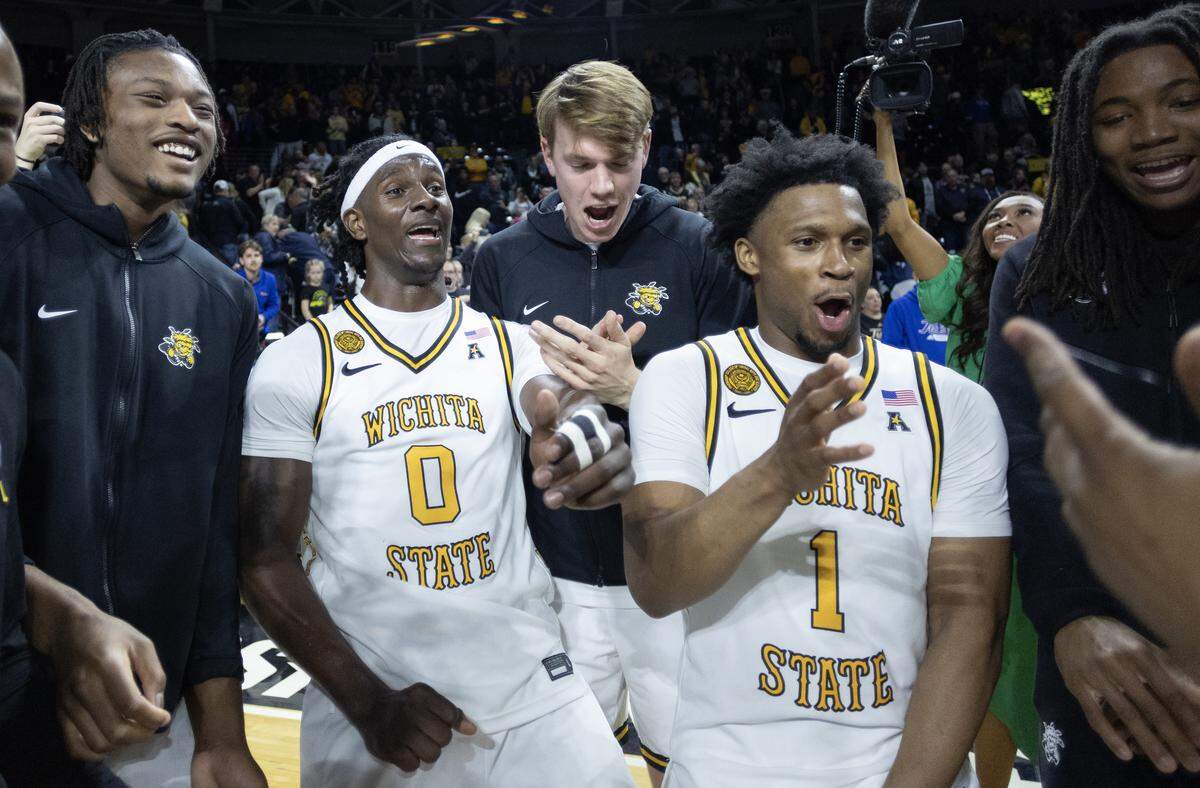
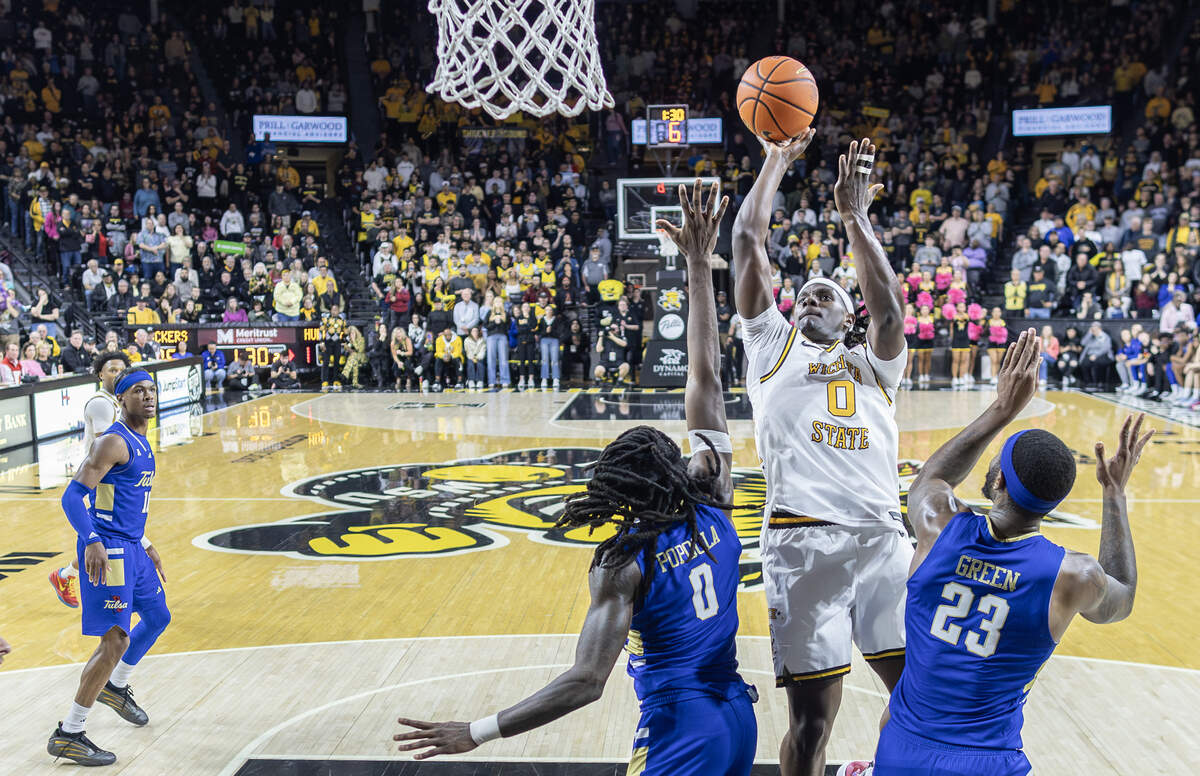
In reality, Wichita State’s 81-77 win at Koch Arena this past Saturday was something much more specific: a clinic in how a coaching staff can take one painful film session, identify the precise “why” behind a defensive breakdown, then rewire the matchup with targeted adjustments to flip the geometry of the game.
The first change was philosophical. The second was a trapdoor. Together, WSU head coach Paul Mills came up with problems that Tulsa never was able to solve.
With the American Conference race tightening by the day, the win didn’t just salvage a series split, it vaulted WSU into second place in the league standings and gave the Shockers a valuable tiebreaker edge over the Golden Hurricane.
Here is how Mills and the Shockers won the chess match this past Saturday:
What went wrong for Wichita State in the first meeting
The loss two weeks ago in Tulsa wasn’t just about giving up 93 points. It was how Tulsa scored them.
In the first meeting, WSU tried to pressure the perimeter to avoid giving up open 3s to one of the nation’s best outside-shooting teams. But Tulsa found the counter quickly after halftime and then spammed it: pull WSU’s rim protector away from the basket and cut behind the aggressive perimeter positioning.
“They were getting to the paint way too easy when we played them the first time,” coach Paul Mills said. “Defensively, they were just eating us up on back cuts and getting too many paint points out of that.”
The numbers tell the story of just how clean it got: Tulsa shot a season-best 71% on 2s in the first meeting, producing 25 made 2-point field goals — the Shockers’ second-worst opponent 2-point percentage of the season — and turned the second half into a layup line.
Even when WSU did force misses, Tulsa often turned them into points anyway. In the decisive 11-minute stretch coming out of halftime, Tulsa dominated the glass and cashed in all four offensive rebounds for second-chance points.
It was the perfect storm: no rim protection, back cuts into open space and Tulsa racking up extra chances on the glass.
The defensive trade that WSU made in the rematch
In the rematch, Mills changed the rules of engagement.
Tulsa is one of the best 3-point shooting teams in the country, bordering on 40% accuracy as a team. In the first meeting, Mills tried to suffocate that, asking WSU’s centers, Will Berg and Emmanuel Okorafor, to press up on Tulsa’s bigs around the perimeter with the obvious aim of reducing handoffs into clean catch-and-shoot 3s.
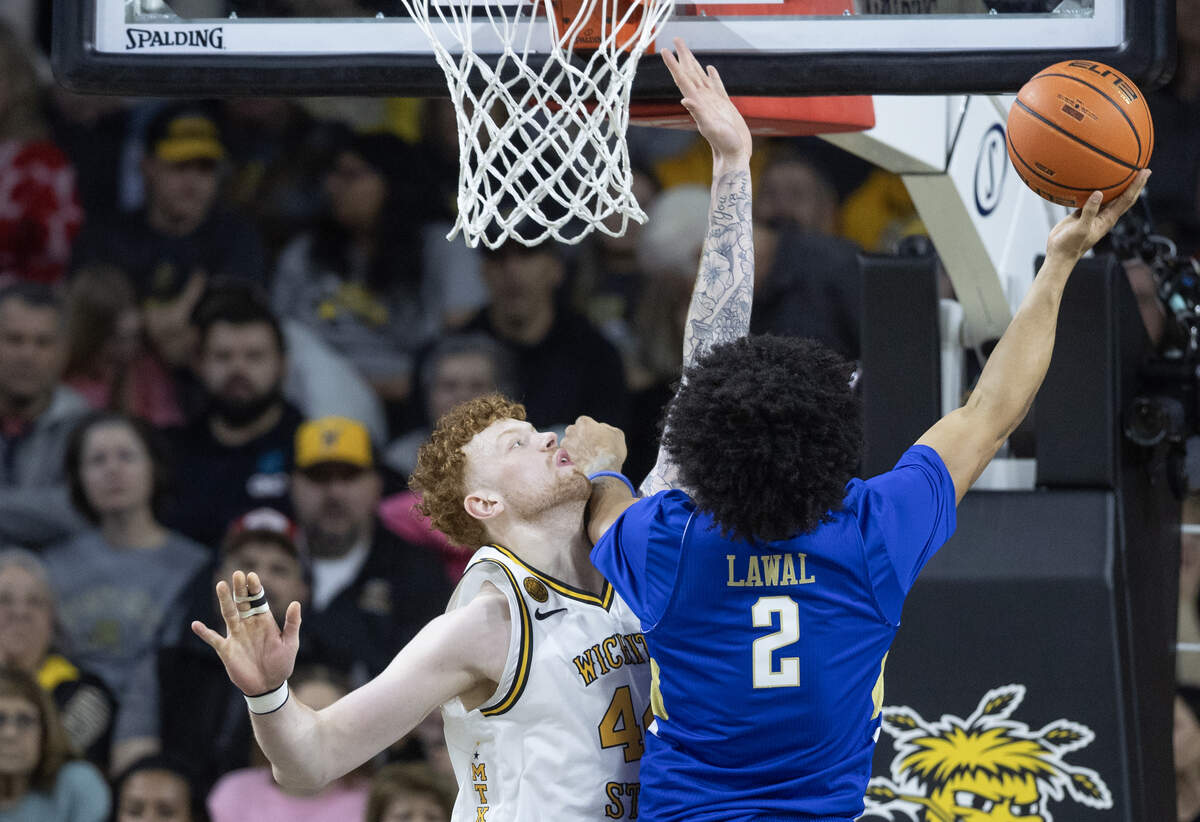
That worked in one sense, as Tulsa only made eight 3s, but it also pulled WSU’s rim protectors 25 feet from the rim and opened up the back-cut buffet.
In the rematch, Mills was done paying that price.
Instead of pressuring Tulsa’s big along the perimeter, WSU’s centers played far off the perimeter actions. So far off that they were essentially parked underneath the rim even when Tulsa’s center was facilitating from the outside. By parking the center in the paint, Tulsa’s steady stream of back cuts was effectively cut off.
Tulsa could run handoffs and set perimeter screens. WSU would do its best to trail and contest late. But the center wasn’t moving.
“I do think us plugging like that covered some holes and kept our bigs out of foul trouble and limited their paint points,” Mills said.
To make that structure work, WSU guards were instructed to go under most ball screens, which conceded some pull-up 3s, and to trail hard on off-ball actions without getting their hands tangled trying to fight through screens. The message was simple: contest late, live with the attempt, then crash the glass.
Tulsa still hit 10 3s, but the volume and accuracy told the real story: 10-of-32. And the bigger payoff for WSU was inside. Tulsa’s interior feast from the first game vanished. Its 2-point makes dropped from 25 to 16 and its 2-point accuracy fell from 71% to 55%.
Shot-chart data captured it in the clearest possible way: Tulsa scored six times at the rim in Wichita after scoring 17 times at the rim in Tulsa.
And because Berg and Okorafor were closer to the rim when shots went up this time, WSU reclaimed the battle on the glass. Tulsa has been outrebounded only five times all season, but the Shockers won the rebounding war 42-34, turning 14 offensive rebounds into 12 second-chance points while holding Tulsa to a 24% offensive rebounding rate.
The in-game adjustment Paul Mills made to free Kenyon Giles up
The other adjustment didn’t show up as clearly in the box score. It showed up in who was setting screens.
Tulsa’s defensive identity is to switch everything one through four. And because WSU’s power forwards in Dillon Battie and T.J. Williams are not 3-point threats, Tulsa was plugging hard off them — sitting in the gaps and crowding the lane.
Mills came up with an in-game adjustment to use this against Tulsa.
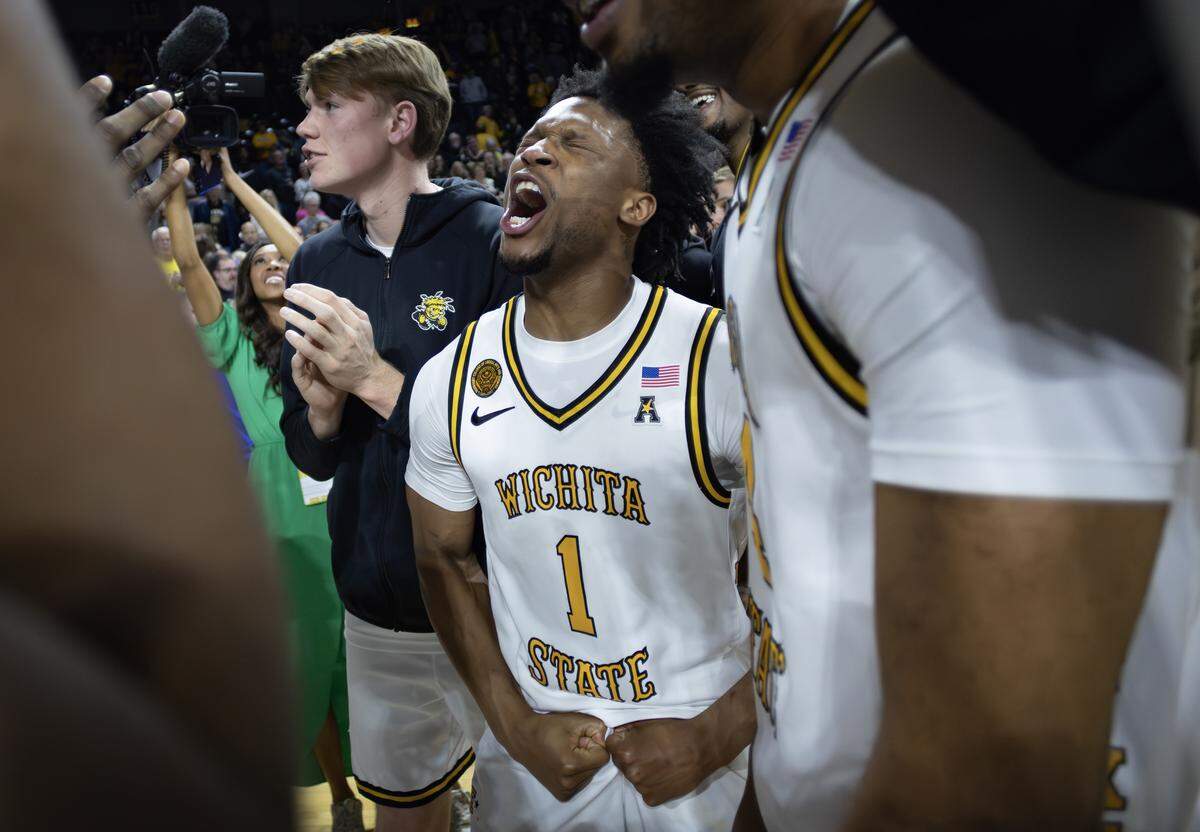
Rather than running WSU’s usual ball-screen package with the center setting the screen for Kenyon Giles, the Shockers began using Battie and Williams as the screeners.
“If they’re going to plug so heavy with those guys, if we can turn around and set (screens), KG is going to get a lot of free looks,” Mills said.
When the 5 set the pick, Giles was going to face a hedge or a double-team look coming off the screen. But when the 4 set the screen, Tulsa was going to switch it, and that set Giles up with a slower-footed forward on an island.
WSU then toggled between actually setting the screen and ghosting it, keeping Tulsa’s on-ball defender constantly guessing and creating just enough indecision for Giles to consistently drive downhill.
Tulsa never found a solution. It briefly switched to a zone, but retreated when WSU scored two buckets in a row. The Golden Hurricane tried to survive the switches, but Giles continued to punish them after halftime.
“We really had a hard time guarding them off the bounce,” Tulsa coach Eric Konkol said. “They just kept punishing us in the paint.”
The dirty-work detail that made Giles look unstoppable at the rim
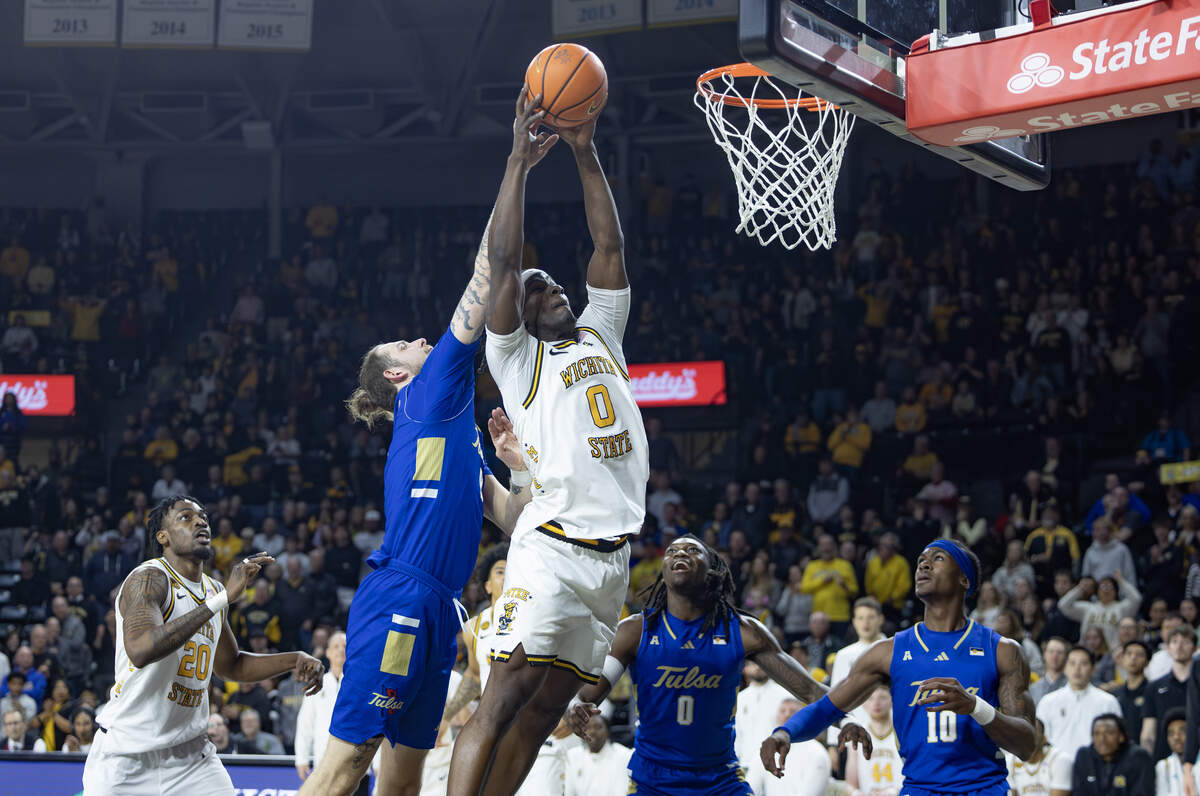
It was quite the sight to see midway through the second half when Giles, the smallest player on the floor, scored three straight times on uncontested layups in a 90-second span.
How is that possible? Because something else, underneath the basket away from the ball, was happening.
Even though the WSU centers were no longer setting screens up top, their duties didn’t stop: They transformed from screen-setters to lane-clearers. As soon as Giles began his ruthless attack off those 4-1 switches, Berg and Okorafor would duck in and seal Tulsa’s center behind them — essentially an off-ball screen often called a “Gortat” screen.
“The bigs did a really good job of clearing it out for me,” Giles said. “Will and Eman always talk to me like, ‘Hey KG, when you drive, don’t try to float it. Go all the way to the rim.’ So I just had to do a better job of getting downhill and they did me a favor with the ‘Gortat.’”
Berg gave a further description of the dirty work that doesn’t show up in a box score, but helps WSU score points just as much as an assist does.
“It’s just part of the position battle down low,” Berg said. “As a big, you’re always fighting for position. When you have fantastic drivers like KG, sometimes the bigs kind of fall asleep or are too consumed by the ball and then we can come in and hit them when they’re not expecting it and clean up the lanes for them to make an easy layup.”
WSU assistant coach Josh Eilert, who works with the big men, explained how those seals don’t happen by accident. There’s a beauty to the timing of it, something that’s been a season-long process.
“A lot of it is timing,” Eilert said. “They’re reading off the guard to figure out when the right time is to bury them. The more they play together, the more they understand the timing and then it just comes down to physicality. The deeper we get them, the more space we clear.”
Dominating the glass and dominating the paint with Gortat screens is the exact kind of recipe WSU is looking for down the stretch of conference play. After spending nearly two decades in the Big 12, mostly at West Virginia, Eilert has a deep appreciation for the style of play WSU is winning with right now.
“Coming from the Big 12 for 17 years, physicality was the name of the game,” Eilert said. “That’s the way we played at West Virginia. Even if shots weren’t falling, if you played a physical brand of basketball, it’s still going to be to your advantage. We’ve strung some good games together and we’re playing some physical basketball right now. We’ve just got to do it consistently, night in and night out.”
The end result: Shockers pull out the rematch win over Tulsa
When all the pieces are put together, the story of the rematch is clear.
WSU took away the easiest thing Tulsa got in the first meeting, paint points, by keeping its centers near the rim, accepting the risk of 3-point volume and betting it could win the rebounding battle underneath.
Then, on the other end, Mills created a mismatch generator, using 4-1 ball screens and perfectly-timed rim seals to create a parade of layups and pull-ups for Giles.
The stats matched the eye test: WSU dominated the paint points 52-26 after losing them 48-36 in the first meeting. And after halftime, while Tulsa’s offense cooled to 36% shooting, the Shockers shot 63% and pumped out 1.44 points per possession with Giles scoring 19 of his 31 points after the break.
After losing the chess match in the first meeting, Mills countered with the right adjustments in the rematch, flipping the matchup and delivering the Shockers a key conference win.
This story was originally published February 16, 2026 at 7:01 AM.
.jpg)