
Wichita State basketball analysis: How USF squeezed the Shockers to steal win
Wichita State had the setting it wanted Wednesday night: a surging team, a four-game home winning streak, its largest crowd of the season and a chance to pull into a tie for first place in the American Conference standings.
Instead, the Shockers were held to their least efficient offensive performance of the season and were out-toughed on the glass in a 66-58 loss to South Florida at Koch Arena.
WSU’s problems mounted up as the game progressed: a second-half rebounding collapse, a packed-in defensive scheme that choked off driving lanes, hesitant finishing inside and perimeter shooting that couldn’t make the defense pay. The result was a game where the Shockers defended well enough to win, but squandered a golden opportunity with a poor offensive showing.
Here’s a breakdown of where it unraveled for the Shockers.
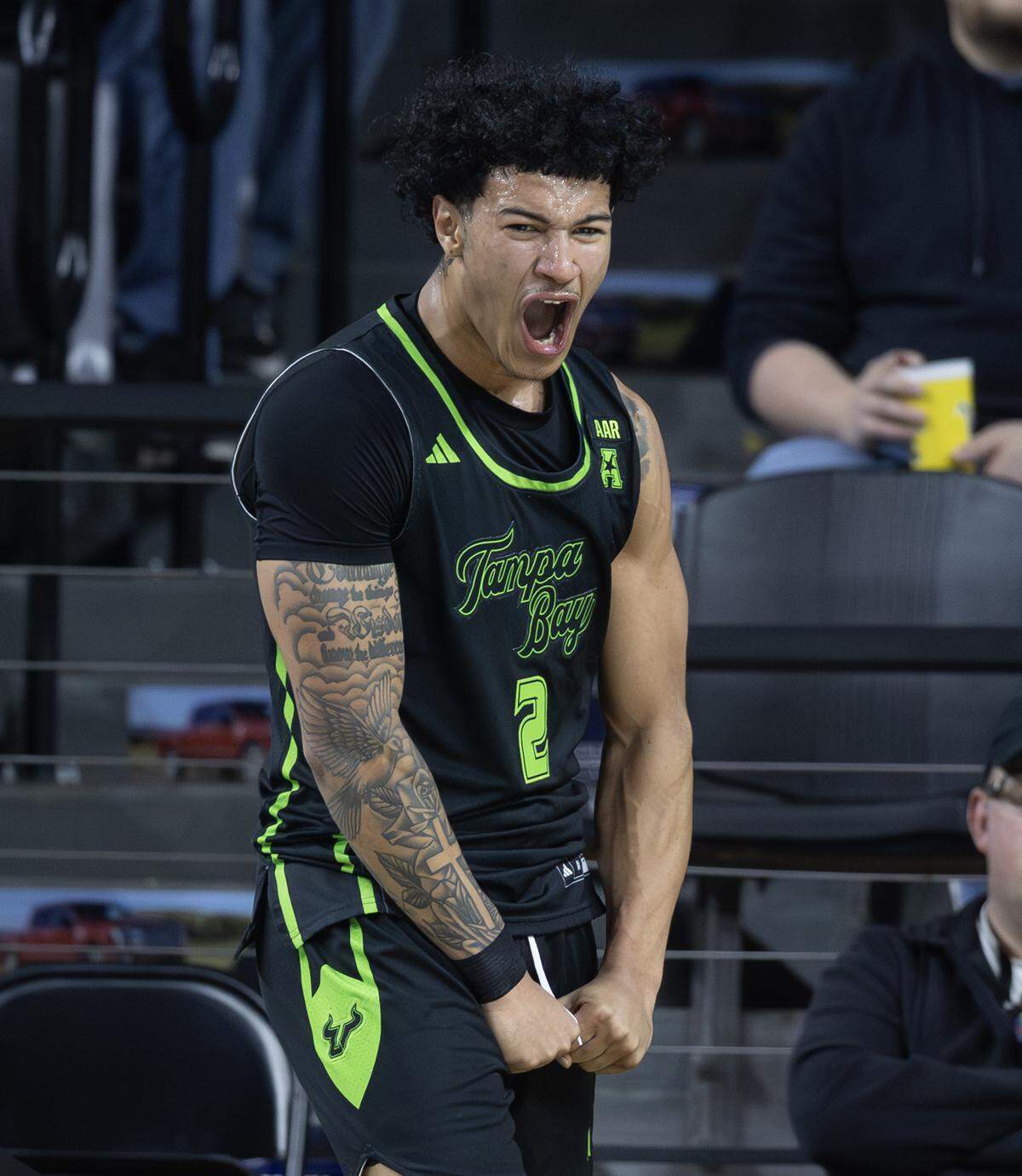
The second-half rebounding collapse flipped the game
For the first 20 minutes, WSU controlled one of its core pillars: rebounding.
The Shockers led 23-18 on the glass before halftime, grabbed 39% of their offensive rebound chances and limited South Florida to just 22% on the offensive boards. That formula mirrored the first meeting between the teams when WSU’s second-chance muscle was the difference in an overtime win.
Then the identity disappeared.
“I don’t think we had the same mindset that we had in the first half,” Mike Gray Jr. said. “They punched us in the mouth and then they just kept going and kept getting to the 50-50 balls. We just didn’t have the same mindset that we had in the first. We’ve got to be more physical next time.”
USF grabbed 10 offensive rebounds in the second half — more than WSU had defensive rebounds (eight) after the break — and turned those into 11 second-chance points. In comparison, WSU managed just one second-chance point after halftime.
“We’re not going to win a game if we’re minus-11 on the glass in the second half,” coach Paul Mills said. “It’s rare for us to turn around and just really get dominated. Minus-11 in a half is just unacceptable. I’m looking forward to showing this film to our guys tomorrow.”
The warning signs showed up late in the first half when USF extended a possession with multiple offensive rebounds while WSU defenders watched the ball instead of finding bodies. The same ball-watching and late-hit technique showed up repeatedly after halftime, costing the Shockers time and time again.
“This is a game that honors toughness,” Mills said. “And we were not tough from a ball-security standpoint and we did not do the things we needed to do from a physicality standpoint in order to give ourselves a chance.”
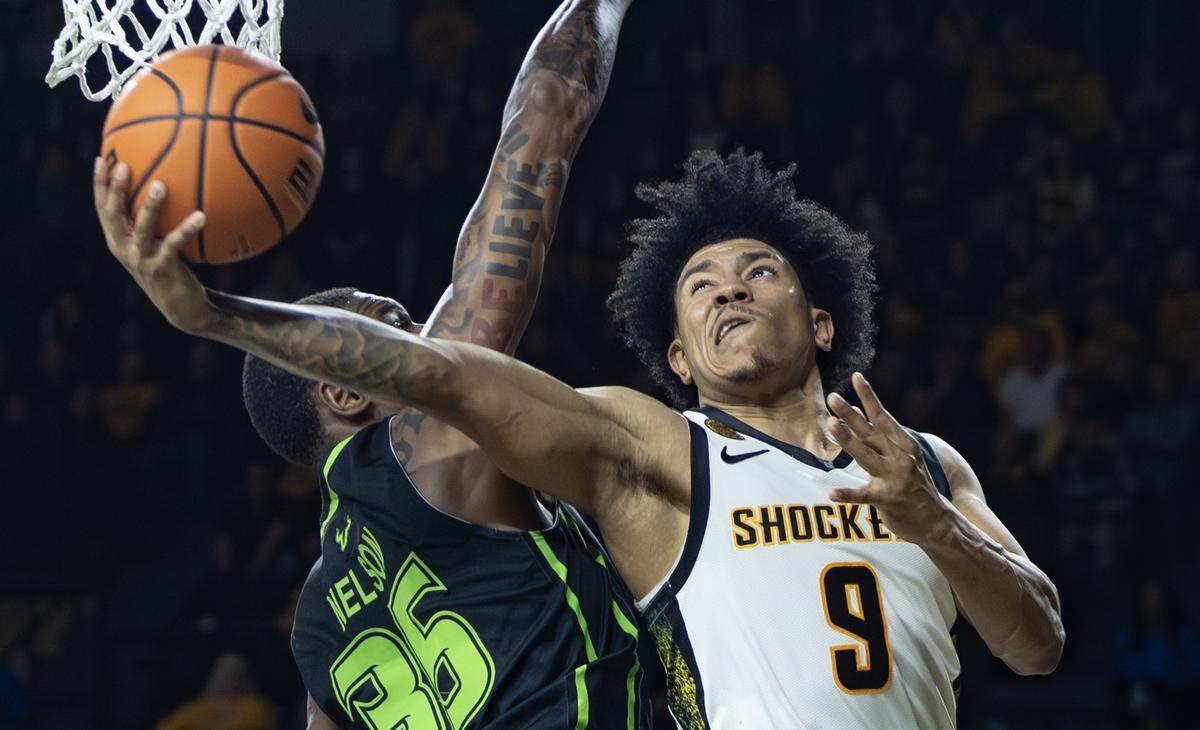
South Florida’s gap defense shrunk the floor on the Shockers
South Florida’s defensive game plan was simple in concept and sharp in execution: shrink the floor, crowd the gaps and make someone other than Kenyon Giles beat them.
Instead of guarding WSU straight up, the Bulls aggressively stationed help defenders in driving lanes and loaded the paint early. Any WSU ball-handler who tried to turn the corner found a second defender waiting.
“That floor was getting squeezed so much,” Mills said. “You’re going to have to be able to make some shots and loosen things up. That just did not materialize for us. It’s kind of like a football team putting eight people in the box if your quarterback can’t throw. You’re going to have to loosen it up with something in order to open up some space.”
The numbers show how effectively it worked, as WSU produced a season-low 0.84 points per possession with a 36.5% effective field goal percentage.
More telling: WSU rarely reached the rim. The Shockers attempted just 13 shots at the basket and made six. That means most of their two-point tries were short pull-ups and contested paint shots, typically the lowest-efficiency looks in half-court offense.
USF coach Bryan Hodgson said the plan centered on coming off of WSU’s non-shooters and choking off driving lanes.
“We really felt like we could shrink the floor on them,” Hodgson said. “We were just focused on being in the gaps with all of those other guys and then being there on the catch. I thought we did a really good job on the guys outside of Giles.”
It worked to perfection, as Giles needed 22 shots to score 24 points and the rest of the roster combined for 34 points on 11-of-41 shooting.
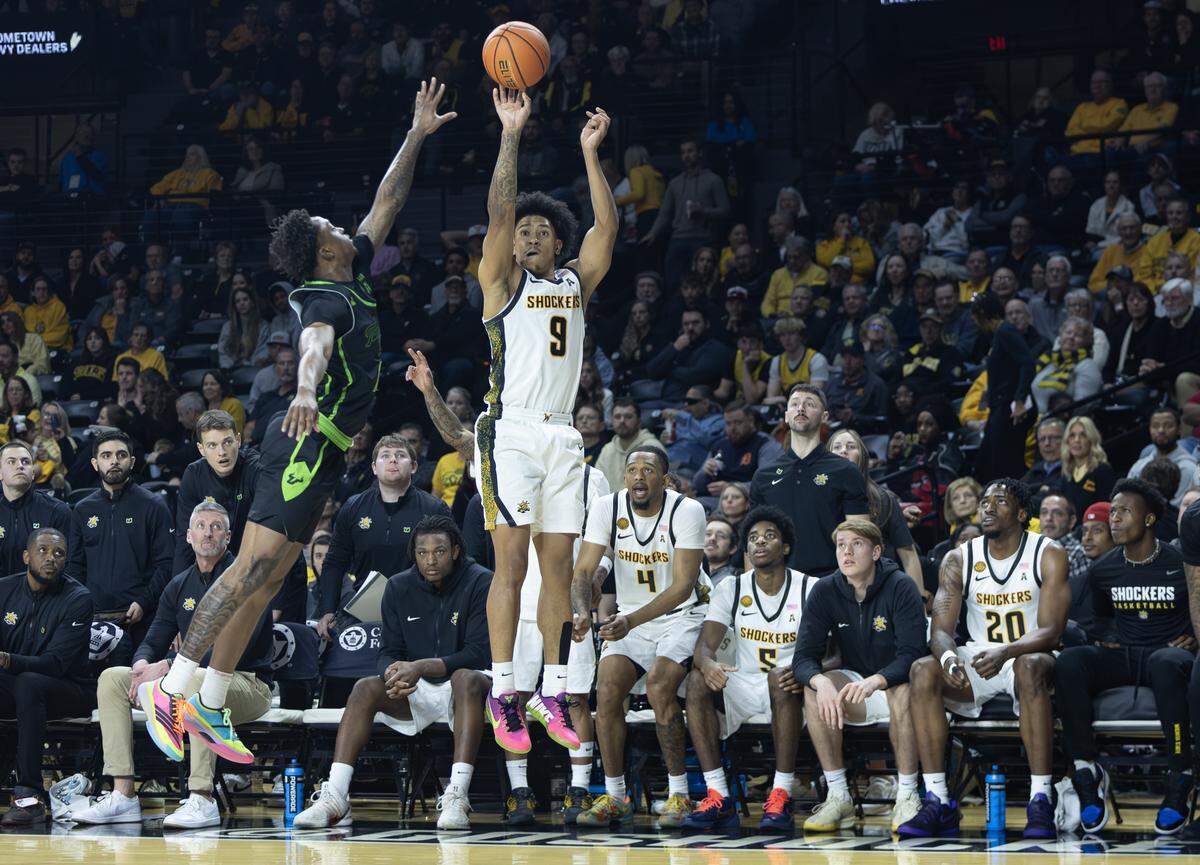
Wichita State had no perimeter counterpunch
When a defense packs the paint and overloads help like USF did, the standard counter is ball movement and perimeter shot-making. WSU couldn’t supply it.
The Shockers went 6-for-29 from deep, their second-worst long-range showing of the season. Multiple usual contributors came up lacking from 3: Gray’s shooting slump in conference play continued with a 2-for-8 showing, while Karon Boyd went scoreless on 0-for-6 shooting in 38 minutes. Others from the supporting cast included Brian Amuneke, Dillon Battie and Dre Kindell, who missed a combined four 3s. Outside of Giles, WSU was just 2 of 15 beyond the arc.
That allowed South Florida to keep shrinking the floor possession after possession without consequence.
Without that release valve, every drive became more crowded, every catch more pressured and every paint touch more contested. Spacing — the oxygen of WSU’s downhill attack — never returned.
“You can still win a game when you do not shoot it well, but you have to rebound,” Mills said.
After halftime, Wichita State did neither.
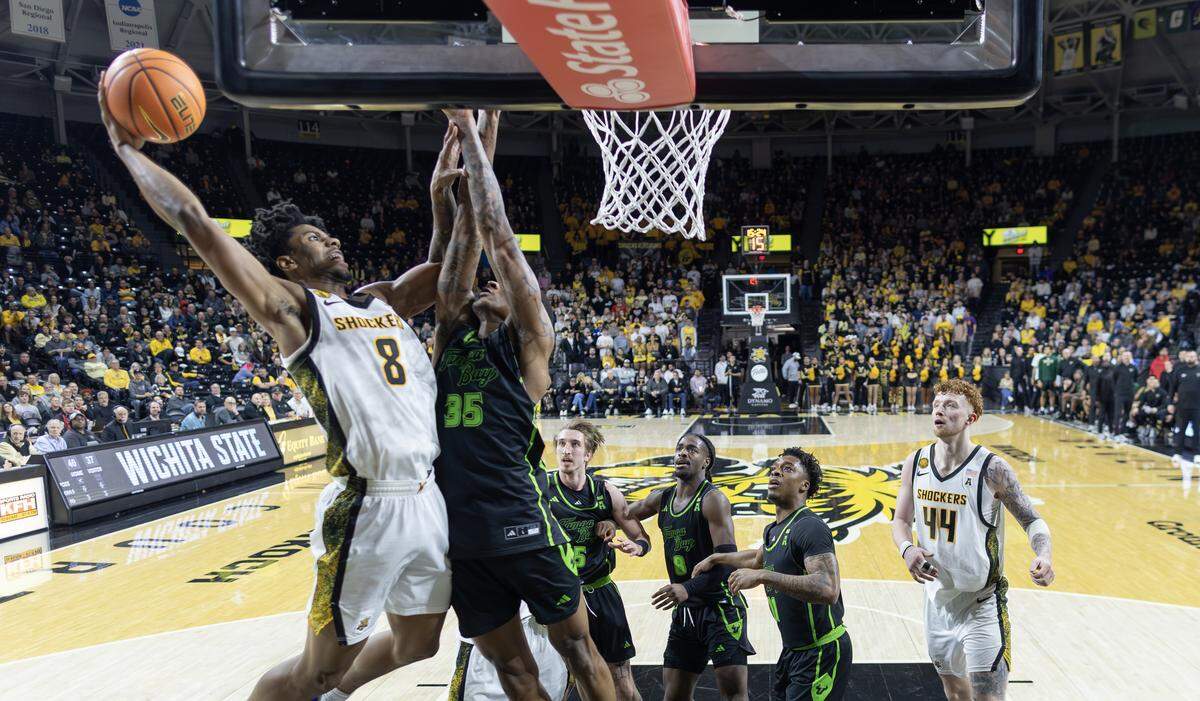
Hesitation turned into disaster for Wichita State
When WSU managed to get in the lane, the finishes lacked the force and conviction they normally have.
Instead of decisive takeoffs and strong gathers, players frequently drove, pump-faked and paused — giving USF’s help defenders time to collapse and strip the ball.
“We would get to the rim, play off two feet, shot fake and I thought there was a hesitancy to go up over people when they were coming down,” Mills said. “We were way too tentative when we needed to go up with the shot. It’s OK if it gets blocked. If you can get a shot and you don’t miss short, then you’re going to get o-board opportunities and we can get back-side o-board chances. That level of tentativeness cannot happen, especially as much as we talk about playing with force.”
That indecision fed directly into turnover trouble, as WSU posted a 19% turnover rate with many coming on strips in crowds or after delayed decisions.
The game’s decisive offensive drought illustrated the porblem. After Giles hit a 3 to put WSU ahead 48-43 with 12:18 remaining, the Shockers fell apart offensively:
- Missed 12 straight shots
- Scored just one point across 10 possessions
- Managed just four points across the next 17 trips
- Shot 1-for-16 with four turnovers in that span
Critical empty trips down the stretch included a perimeter strip of Will Berg, a sideline turnover by Boyd and a jump-ball turnover by Berg. That’s how the Shockers went from up five to down eight in crunch time.
“We’ve just got to do a better job of executing,” Giles said. “We didn’t execute like we wanted to and we didn’t get on the glass like we wanted to.”
Lost in the offensive struggles: WSU’s defense largely held up. USF managed just 0.95 points per possession and turned the ball over 18 times. That’s typically a winning defensive profile at home.
But without rebounds and without offensive counters to the squeezed floor, it wasn’t enough.
The missed opportunity stung in the standings. With other contenders losing, Wichita State could have climbed into a share of first place in the American. Instead, the Shockers fell back into the middle of a tightly packed race — still within reach of the No. 2 seed, but with less margin for error.
“In the second half, they just got to all of the rebounds and second-chance basketballs,” Giles said. “We knew the tougher team was going to win and the rebounding margin showed that.”
.jpg)