
The paradox of Will Berg: Why his flaws and value are inseparable for Shockers
AI-generated summary reviewed by our newsroom.
- Berg pairs rebounding and rim presence with inconsistent finishing near the basket.
- Coaches reward Berg’s growth and team-first bench acceptance with increased trust.
- Extended minutes accelerate Berg’s development after limited Purdue playing time.
Life near the basket is rarely graceful, especially for a 7-foot-2 center who draws every elbow and jersey tug imaginable.
For Will Berg, that reality has produced both historic value for Wichita State and moments that test the patience of home fans at Koch Arena.
That tension has made the center from Stockholm, Sweden one of the most polarizing players Shocker fans have watched in recent years. One possession, Berg is plowing through traffic and using his size to secure a bruising, contested rebound that ignites the crowd. The next, he is missing from point-blank range — a moment that often draws an involuntary groan before he’s already battling for the ball again.
Berg doesn’t dwell on the crowd’s reactions to his misses. He knows he can be better finishing around the rim, but no amount of frustration is going to keep him from crashing the glass to help his team win by piling up offensive rebounds.
“I just try to think, ‘next play,’” Berg said. “You have to be poised out there and I know I’ve had a few games where I haven’t really been able to put them back in, but I know I am capable of doing it.
“Some days, I’m going to miss, some days, I’m going to make them. But I know for a fact that every single day I’m going to go and grab that board anyway.”
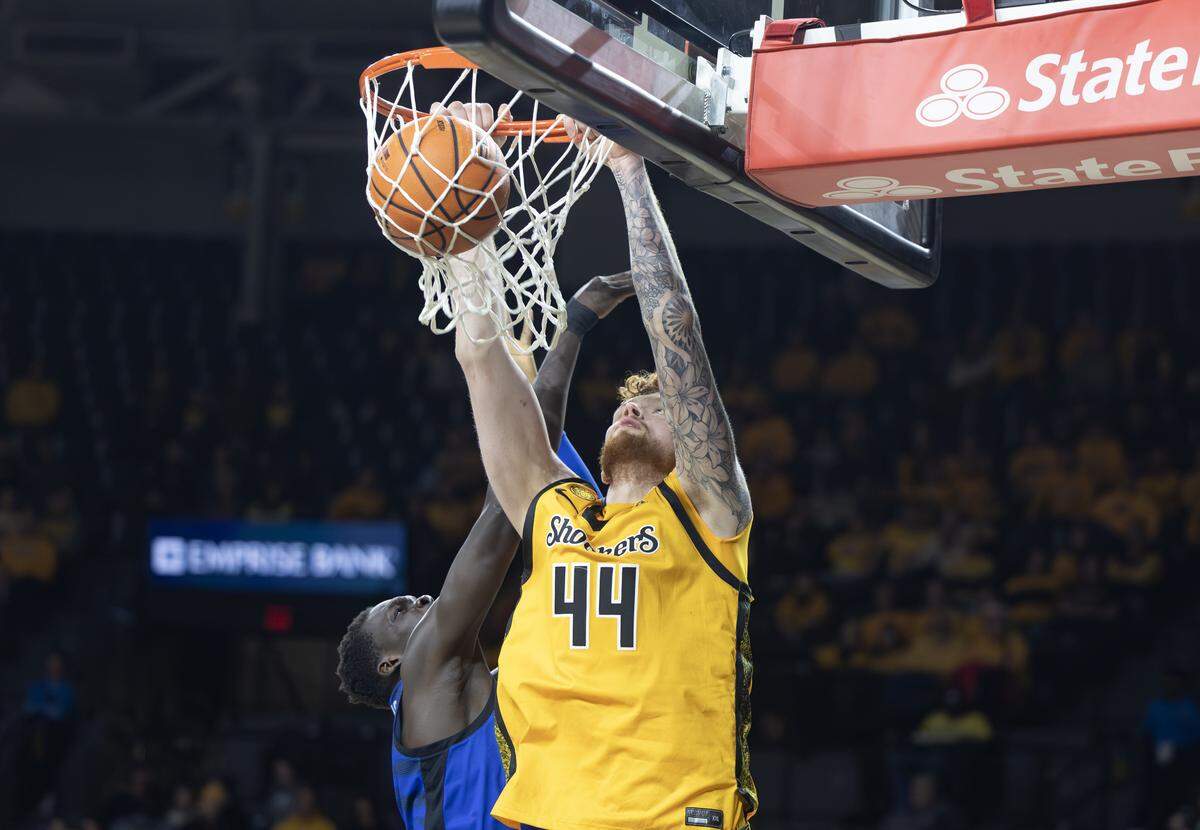
The numbers explain why both reactions exist.
Berg is in the middle of a historic offensive rebounding season. He ranks sixth nationally in offensive rebounding percentage, grabbing 18.5% of available offensive rebounds when he is on the floor. WSU has not placed a player inside the national top 25 in that category in more than 30 years, outside of Rashard Kelly’s eighth-place finish in 2017-18 with a 15.2% rate.
Over the past five games, which feature four WSU victories, Berg has been even more dominant, leading the country with a 21.8% offensive rebounding rate. He is averaging 3.6 offensive rebounds per game, a mark in the 99th percentile nationally, and has twice collected eight offensive boards in a game.
While those rebounds fuel WSU’s second-chance offense, they are often born from a more frustrating truth. According to CBB Analytics, Berg has converted just 41 of 86 attempts within 4.5 feet of the rim, a 47.7% success rate that places him in the ninth percentile nationally. For a 7-foot-2 center, it is an eye-opening number.
“He hears it sometimes when he misses shots,” Mills said. “People are like, ‘How are you that big and how do you miss shots that close?’ Usually it’s from people who have never played basketball and they don’t understand the level of difficulty.”
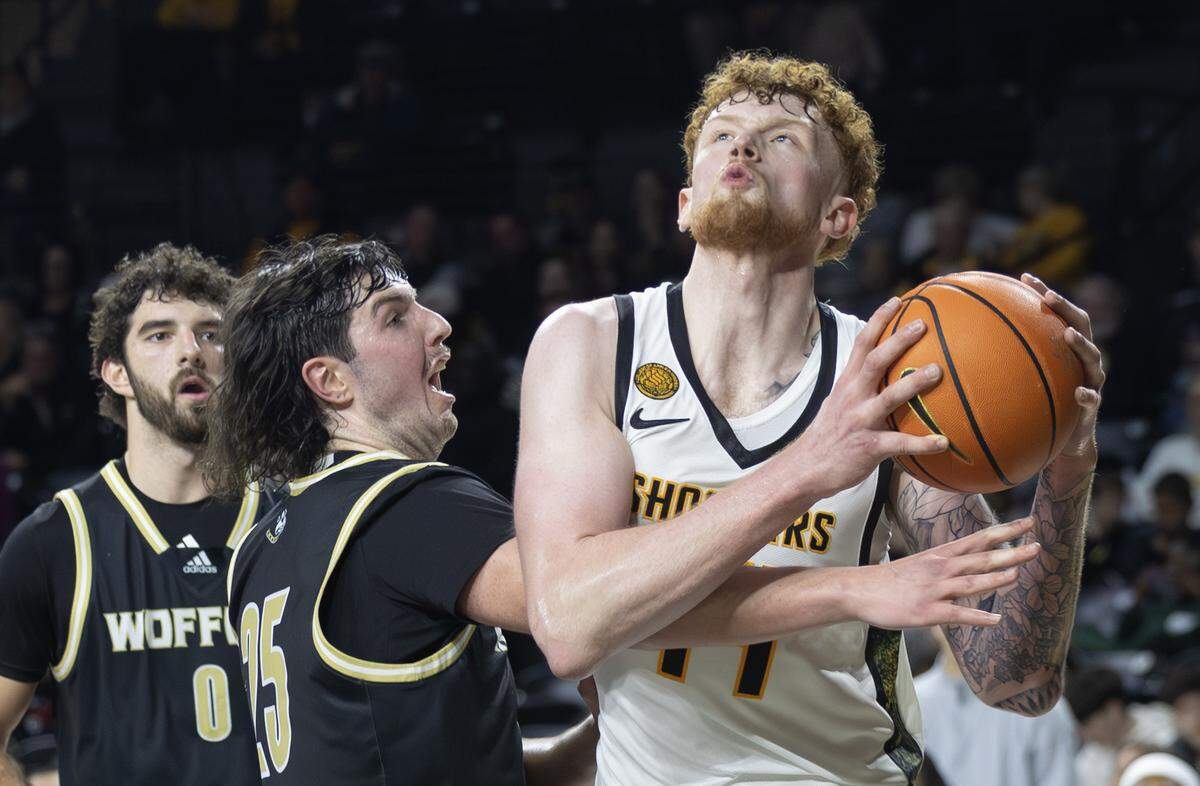
Many of those attempts come with defenders hanging off Berg’s arms, swiping at the ball and pulling him off balance. Some are frantic second and third efforts in crowds where space simply doesn’t exist. Others, admittedly, are clean looks that don’t fall — the ones that draw groans from the seats and fuel the debate around his game. According to CBB Analytics, his average 2-point attempt distance is just 2.9 feet, meaning nearly every shot is contested in the most crowded real estate on the floor.
“If people could see my arms after games,” Berg said with a laugh. “Sometimes I have to get subbed out of games because I start bleeding from my arms. I promise you, if I could go up and dunk it every time, I would. But I have three people slapping and scratching and pulling me.”
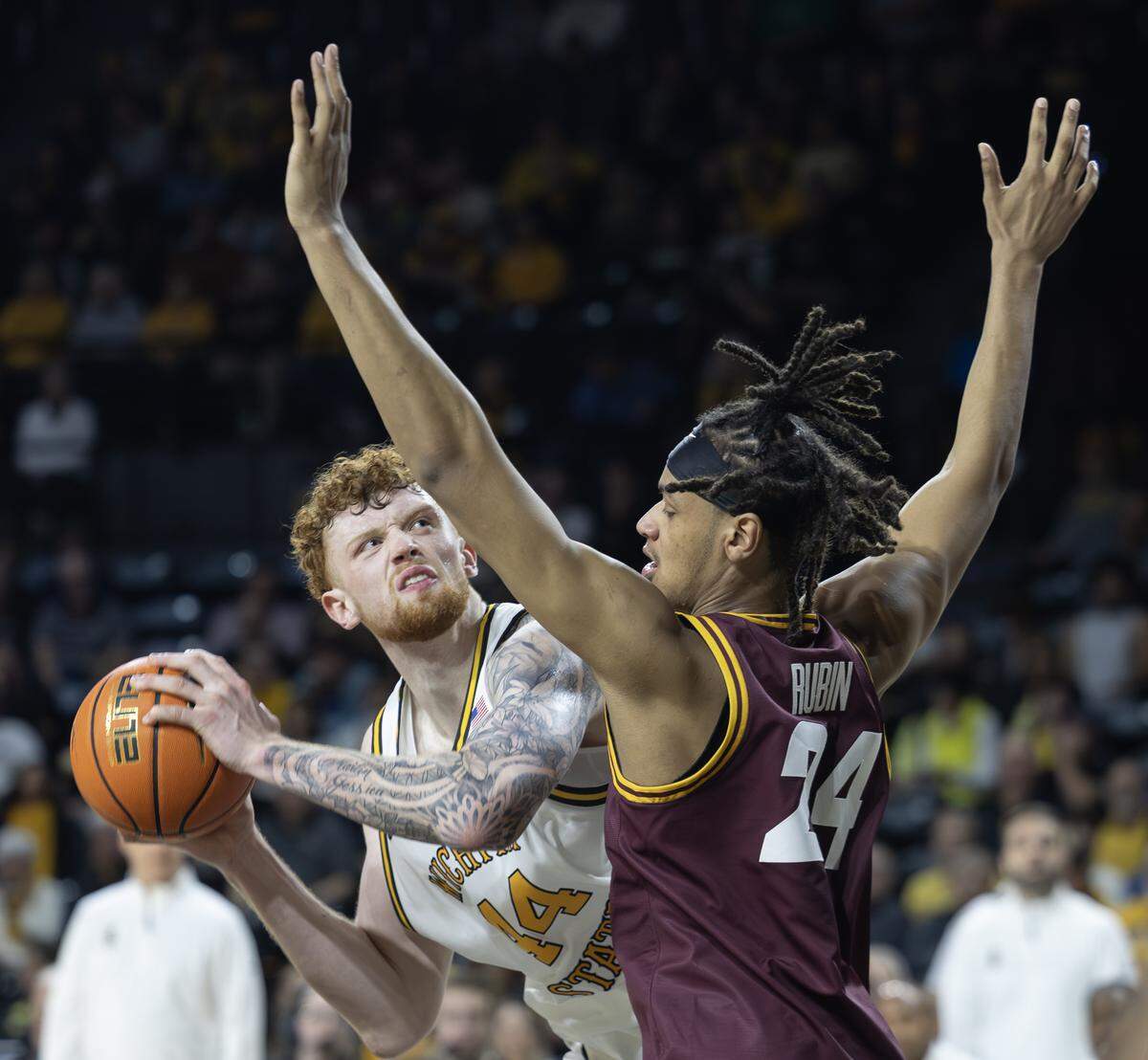
Despite the missed finishes, the impact is undeniable.
When Berg is on the floor, WSU’s offense scores 1.23 points per possession. When he sits, that number drops to 1.08. Defensively, the Shockers allow 1.02 points per possession with Berg playing, compared to 1.07 when he’s off. His plus-19.4 net rating per 100 possessions ranks in the 92nd percentile nationally and is by far the best mark on the roster.
“He really does care about the significance of every possession and the importance of it,” Mills said. “He impacts winning because he cares about impacting winning.”
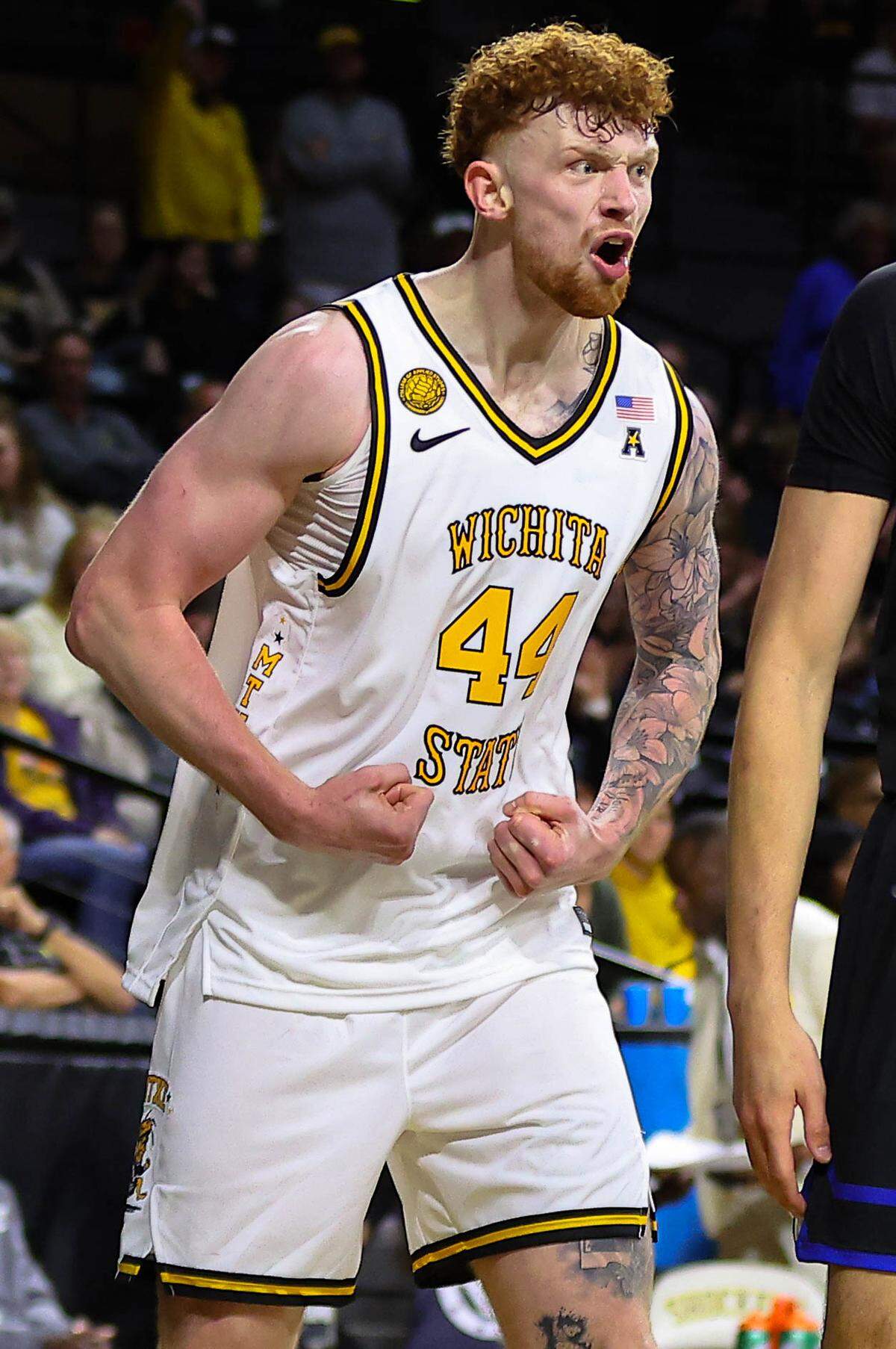
Berg’s value extends beyond what shows up as points. His size demands attention every time he rolls toward the basket, often forcing defenses to send extra help. His screens free guards like Kenyon Giles, whose shooting gravity warps coverage and opens rebounding lanes on misses.
“He has such a nice shot, a nice, high arc that the boards often go pretty high,” Berg said of Giles. “That helps me since I can jump up and grab them. And then defenses have to tag me with a guard and guards don’t really know how to board. That’s when big men do. That’s what we pride ourselves on.”
The Eagle recently found WSU is rebounding 45% of Giles’ misses, a staggering figure that speaks to how defenses are pulled away from the rim to challenge his shots. Berg is often the beneficiary. When he is on the floor, WSU collects 41.7% of its offensive rebounds, a rate that would rank third nationally. That number dips to 37.6% when he sits — still strong, but no longer elite.
Those extra possessions have produced some of WSU’s biggest moments this season. Berg has delivered multiple game-changing offensive rebound putbacks, including the basket that put the Shockers ahead for good in overtime at Northern Iowa, a late score that helped seal the road win at UAB, then another crucial putback in overtime at South Florida.
His role has also evolved over the course of the season. Early in the season, Berg struggled with foul trouble as a starter, picking up two first-half fouls in six of his nine Division I starts. Since returning from an ankle injury and moving to the bench, he has played more freely, even if the minutes remain roughly split with fellow center Emmanuel Okorafor.
The production reflects that comfort. As a starter, Berg averaged 7.4 points and 7.2 rebounds. Off the bench, those numbers have risen to 9.1 points and 8.9 rebounds, along with improved shooting percentages from the field and foul line.
“He continues to get better and better and better,” Mills said.
Mills also praised Berg as a teammate. Not only has Berg embraced the move to the bench after returning from injury, he suggested it to the coaches. During games, Mills said he will even urge coaches to keep Okorafor on the floor if he believes it gives WSU a better matchup. In a role often tied to ego, Berg has shown he’s comfortable putting the team’s needs ahead of his own minutes.
It’s a mature mindset from a player who is showing tangible growth the more time he spends on the floor. Despite three seasons at Purdue, Berg logged just 187 career minutes there, limiting the kind of real-game development that only comes through extended action.
WSU has given him that runway, allowing him to play through mistakes and learn in real time. The trust from his coaches and teammates is evident and that belief has fueled a growing confidence in his game.
Berg hopes it leads to continued improvement over the final two months of the season — and, yes, a few more finishes around the rim for fans along the way.
“This season, I’ve learned so much,” Berg said. “Being able to have the trust from the coaches and from my teammates to work through these things, I feel like that’s helping me get better every single day that goes by.”
This story was originally published January 28, 2026 at 5:02 AM.
.jpg)