
How even Kenyon Giles’ misses are helping Wichita State score
Kenyon Giles grabbed the handoff from Will Berg and drifted left, stretching the floor as if the basketball itself were pulling defenders toward him.
Berg, the 7-foot-2 anchor of Wichita State’s frontcourt, had just erased Giles’ on-ball defender with a thudding screen. South Florida’s center was forced to switch out, an uncomfortable matchup that set off a familiar chain reaction. As Giles sized up the shot late in overtime, the initial defender sprinted back into the frame. Two bodies lunged, arms flailing, desperate to contest the step-back 3.
The shot missed.
Wichita State scored anyway.
With the opposing big man pulled far from the rim, Berg dove uncontested to the basket. A 6-foot-2 guard was left hopelessly alone to block him out. Berg secured an offensive rebound and powered in the putback, a key moment in the Shockers’ overtime victory last week and a snapshot of a strange but increasingly powerful truth about this team.
Even when Giles misses, WSU often comes out ahead.
What’s happening has a name in basketball analytics circles. Kirk Goldsberry coined the term “Kobe assist” in a 2012 Grantland piece to describe missed shots that still create points by drawing so much defensive attention they lead directly to putbacks, tip-ins or follow buckets. Those plays can look lucky, but, as Goldsberry argued, they’re anything but.
At WSU, Giles has exploited this phenomenon as a natural byproduct of the attention he commands.
Fans already know Giles is in the midst of one of the most prolific scoring seasons the Shockers have seen in years. He’s averaging 21.4 points per game in American Conference play and is tied for third nationally with 70 3-pointers this season on a 42% clip, an entertaining shot-maker who regularly bails out WSU’s offense with deep pull-ups and daring fadeaways. On his shots alone, each Giles attempt this season has been worth 1.25 points — elite efficiency by any standard.
But the more surprising value shows up after the ball hits off the rim.
A typical Division I team rebounds about 31% of its own missed shots. WSU, already one of the nation’s best rebounding programs, ranks fifth nationally by tracking down 40.1% of its misses. When Giles is the shooter, the numbers surge even higher.
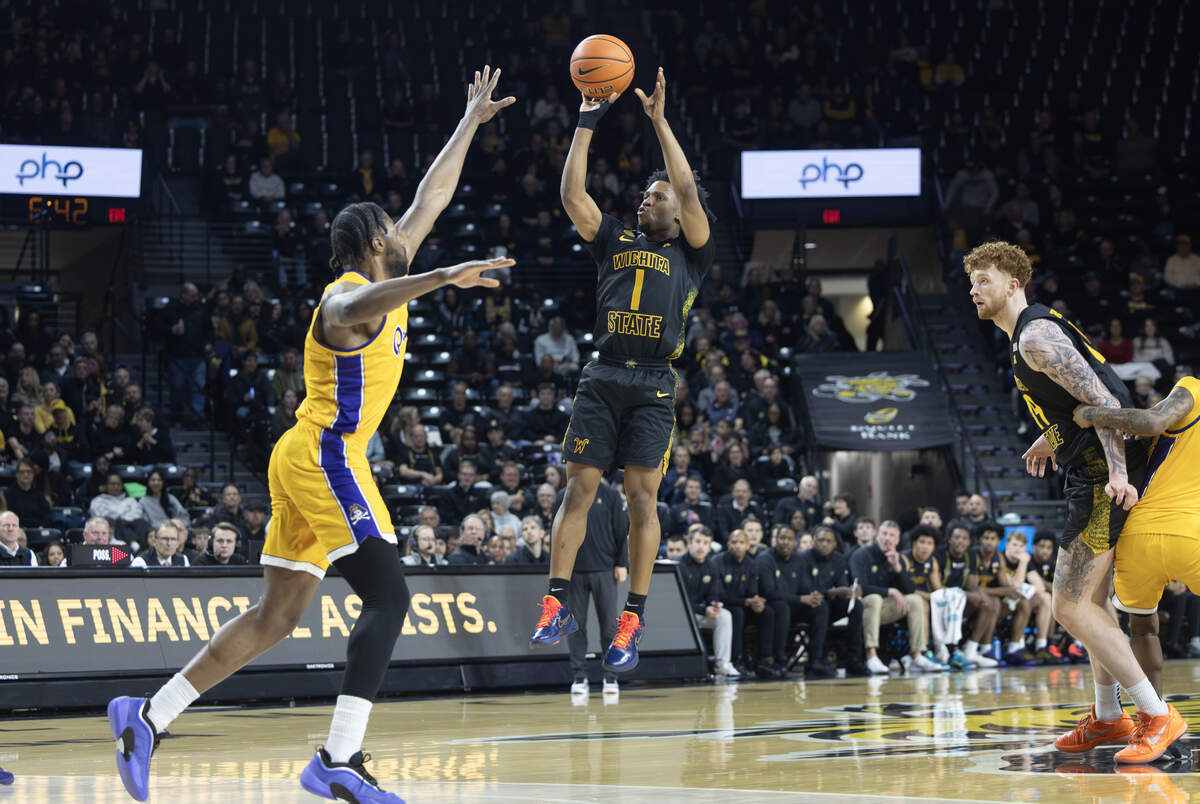
Giles has taken 295 shots this season and missed 166 of them. WSU has rebounded 75 of those misses — a staggering 45.2% offensive rebounding rate. If that number stood on its own, it would rank as the best mark in the country.
The rest of the roster, by comparison, has missed 514 shots, with the Shockers rebounding 190 of those misses for a still-strong 37% rate. But it’s worth noting that WSU rebounds its own misses eight percentage points better when the shot comes from Giles.
It’s not a coincidence. And those extra possessions aren’t just a statistical curiosity. They’re producing points.
On 35 of those 75 offensive rebounds off Giles misses, WSU has scored later in the same possession. In other words, Giles already has 35 plays this season where his missed shot still led to points — what could be called “KG assists,” a Wichita State spin on Goldsberry’s original idea.
More than 21% of Giles’ misses turn into second-chance points. More than 45% extend the possession.
Giles’ shooting range forces defenses into uncomfortable choices. His on-ball defender is often trailing after being wiped out by Berg’s screens. That usually leaves the opposing big man with a decision: stay home and risk an uncontested jumper or step out and contest.
Most choose the latter.
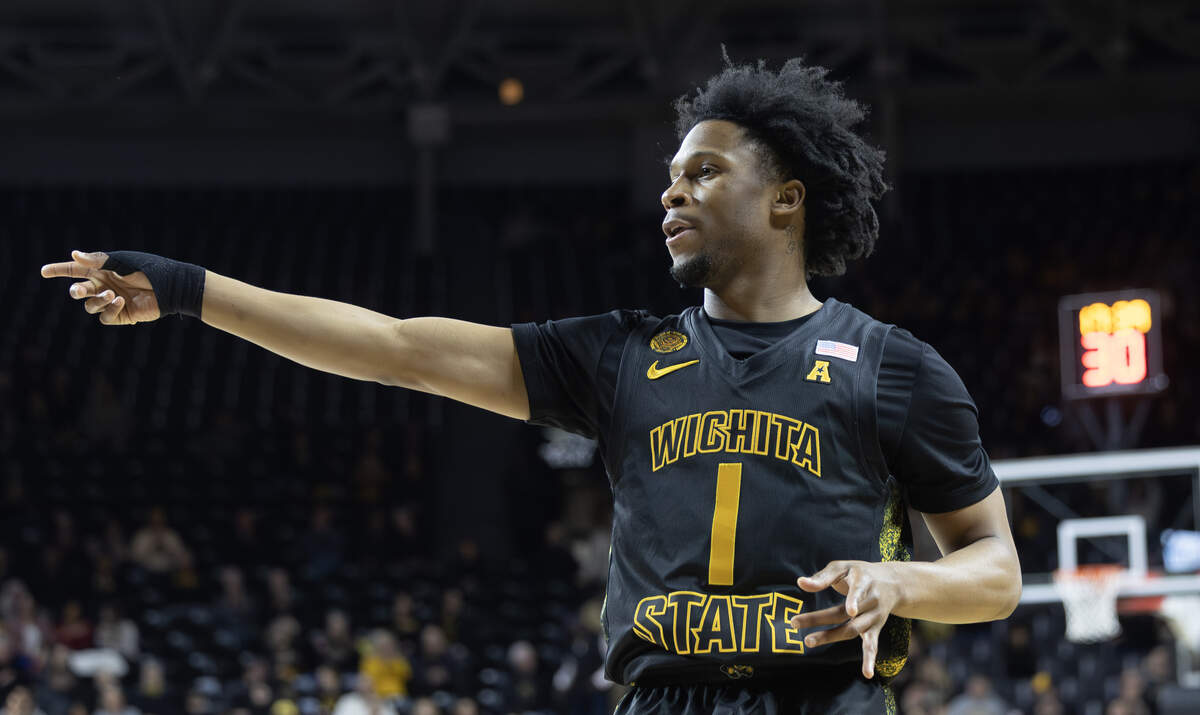
“What you see when he shoots is (opposing centers) have to go up,” Wichita State coach Paul Mills said. “So whoever is trying to be involved in the pick-and-roll coverage, they have to move up and be able to contest the shot on the account of the screen that took the guard out. Then what you’re seeing is our bigs get to the rim and be able to offensive rebound.
“Somebody has got to contest the shot because you don’t want to leave it uncontested. I think that’s what you’re seeing, more back-side offensive rebounds because of KG’s assertiveness.”
That effect is especially pronounced in the mid-range, where WSU is tracking down an absurd 49% of Giles’ misses. It’s an area of the floor where modern analytics often discourage, but Mills continues to encourage Giles to attack. Shorter misses tend to come off the rim closer to the basket and when Giles draws two defenders, WSU has a numbers advantage underneath.
It’s not just that Giles can make those shots. It’s that when he doesn’t, the Shockers are still punishing opponents.
There’s risk in crashing the glass this hard. Misses can turn into runouts for opponents. But WSU has largely avoided paying that price, ranking in the 74th percentile nationally in transition defense according to Synergy data.
Add it all together and the math becomes startling.
WSU has generated 75 second-chance points following Giles’ misses. Combine those with his own scoring and every time Giles puts a shot in the air, the Shockers are averaging 1.50 points per attempt.
A recent Wall Street Journal feature on offensive rebounding in the NBA captured the idea succinctly: a miss can be the start of the possession you really want. That perfectly describes the Shockers, a team that ranks first nationally in percentage of offense created by second-chance points.
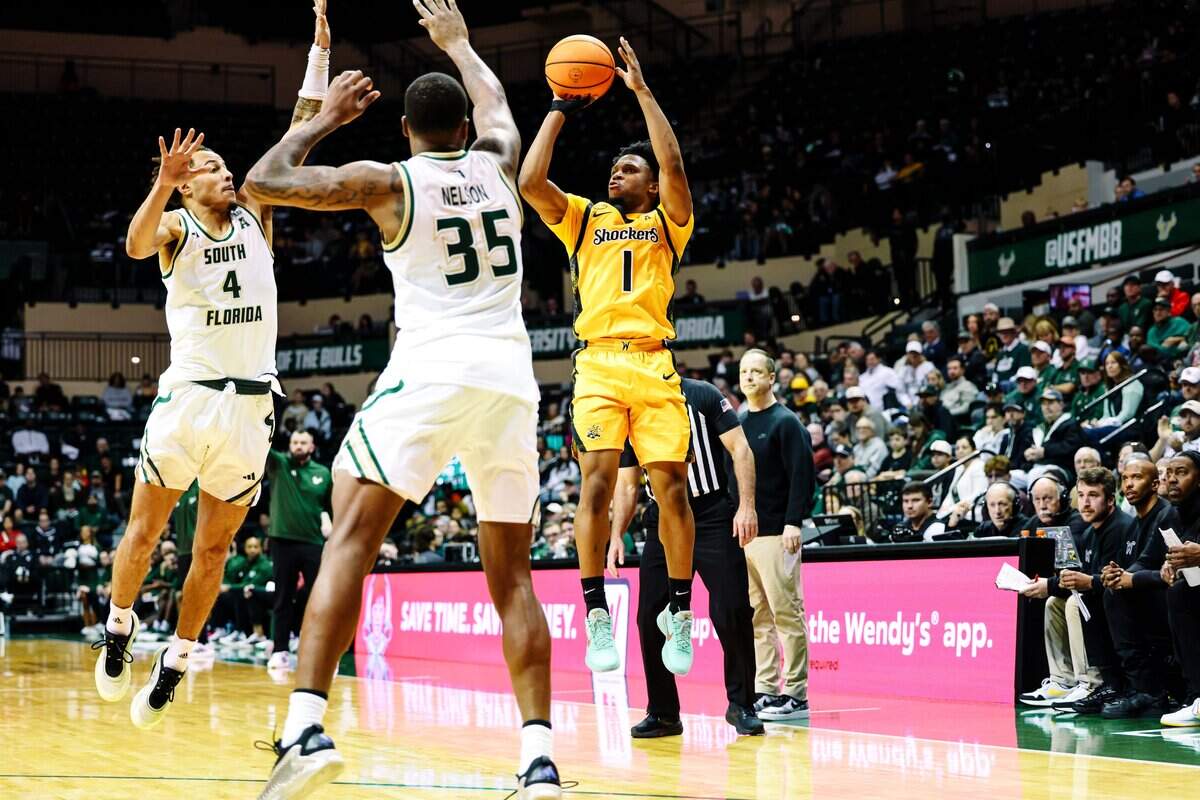
It’s a quiet reason WSU has become one of the nation’s most dangerous offensive rebounding teams — and a reason opponents dread seeing Giles rise into a contested jumper. Even when the defense survives the initial miss, the real challenge is only beginning: keeping Wichita State off the glass.
That dynamic could loom large Saturday at Koch Arena when WSU hosts Memphis at 3 p.m. on ESPN2. The Tigers rank No. 338 nationally in defensive rebounding percentage, among the worst marks in the country. Against a team that already feasts on second chances, the Shockers’ advantage could be decisive.
Against WSU, every Giles jumper comes with a second threat attached — the KG assist — turning what looks like a stop into another problem to solve.
.jpg)