
The troubling statement Wichita State basketball made in home loss to Rice
If Wichita State wanted to make any sort of statement about who it is in the American Conference, Wednesday was the night to do it.
The Shockers were coming off a gut-punch collapse at Charlotte. They were back home. And they were facing a Rice team that was 0-5 on the road, which included a 49-point evisceration at the hands of Tulsa just a week earlier and a 22-point loss to a Pepperdine team with only three Division I wins this season.
The Owls arrived in Wichita with a No. 254 ranking on KenPom with no obvious strength. They didn’t shoot it particularly well. They didn’t rebound it particularly well. They didn’t defend particularly well. In short, they were the kind of opponent a serious team uses to cleanse the palate at home.
Instead, Wichita State made a statement of its own in a 66-64 loss to Rice at Koch Arena — just not the one it wanted. It was a statement that the Shockers (9-7, 1-2 American) are not a team, at least right now, that is serious about contending for a conference title, despite how often that ambition has been voiced this season.
“I should have had these guys better prepared,” head coach Paul Mills said.
For a team that briefly inspired hope with a 16-point comeback win at UAB, the idea of contending already feels detached from reality on the floor just one week later. The Shockers squandered an 18-point lead in a double-overtime loss at Charlotte, then followed it by suffering one of the program’s worst home losses in decades against Rice — two teams widely projected to reside near the bottom of the league.
If WSU doesn’t fix its problems soon, it won’t be looking down at the league’s cellar. It will be occupying it.
Wichita State’s crippling inability to finish
Every underdog begins a game believing it can win. It is the responsibility of the favorite, especially at home, to dismantle that belief. The sooner, the better.
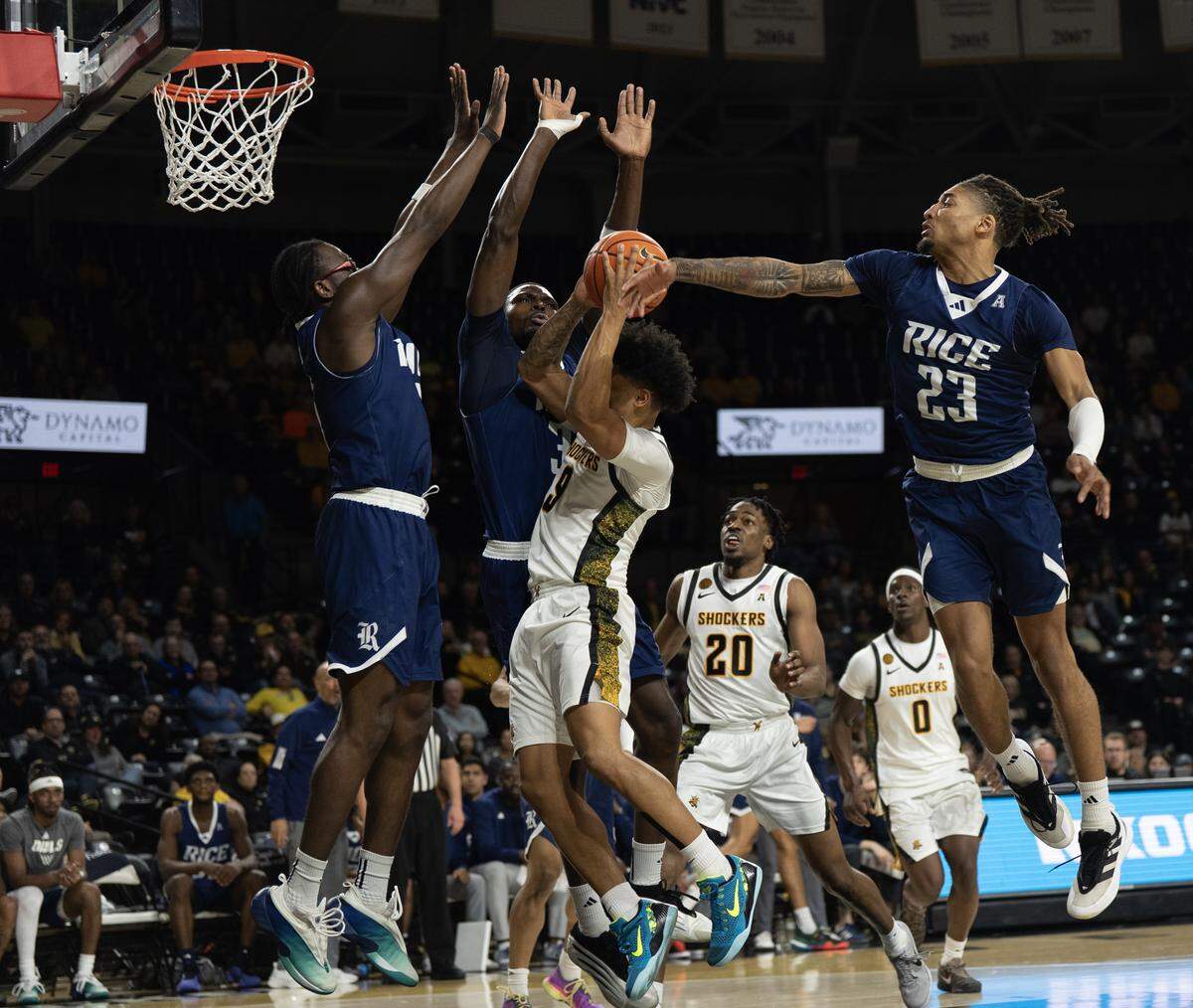
WSU never shattered Rice’s belief. Outside of a 13-6 start, the Shockers failed to assert themselves. Possession by possession, Rice’s confidence only grew as the night wore on, fueled by WSU’s mistakes and its persistent inability to finish shots.
Against one of the worst defenses in the American, WSU shot a season-worst 35.1% on 2-point attempts (11 of 35) and 29% overall from the field. Those numbers weren’t the result of one cold stretch, but many. WSU endured field-goal droughts of seven minutes in the first half and six minutes in the second, including a brutal span where it went 1-for-18.
“We just didn’t put a full 40 together,” Mike Gray Jr. said. “I felt like the first half, we were real flat. We came out and they punched us in the mouth.”
No flaw defines this WSU team more clearly than its finishing and Wednesday was the most glaring example yet.
The Shockers generated the shots they wanted. They just couldn’t make them.
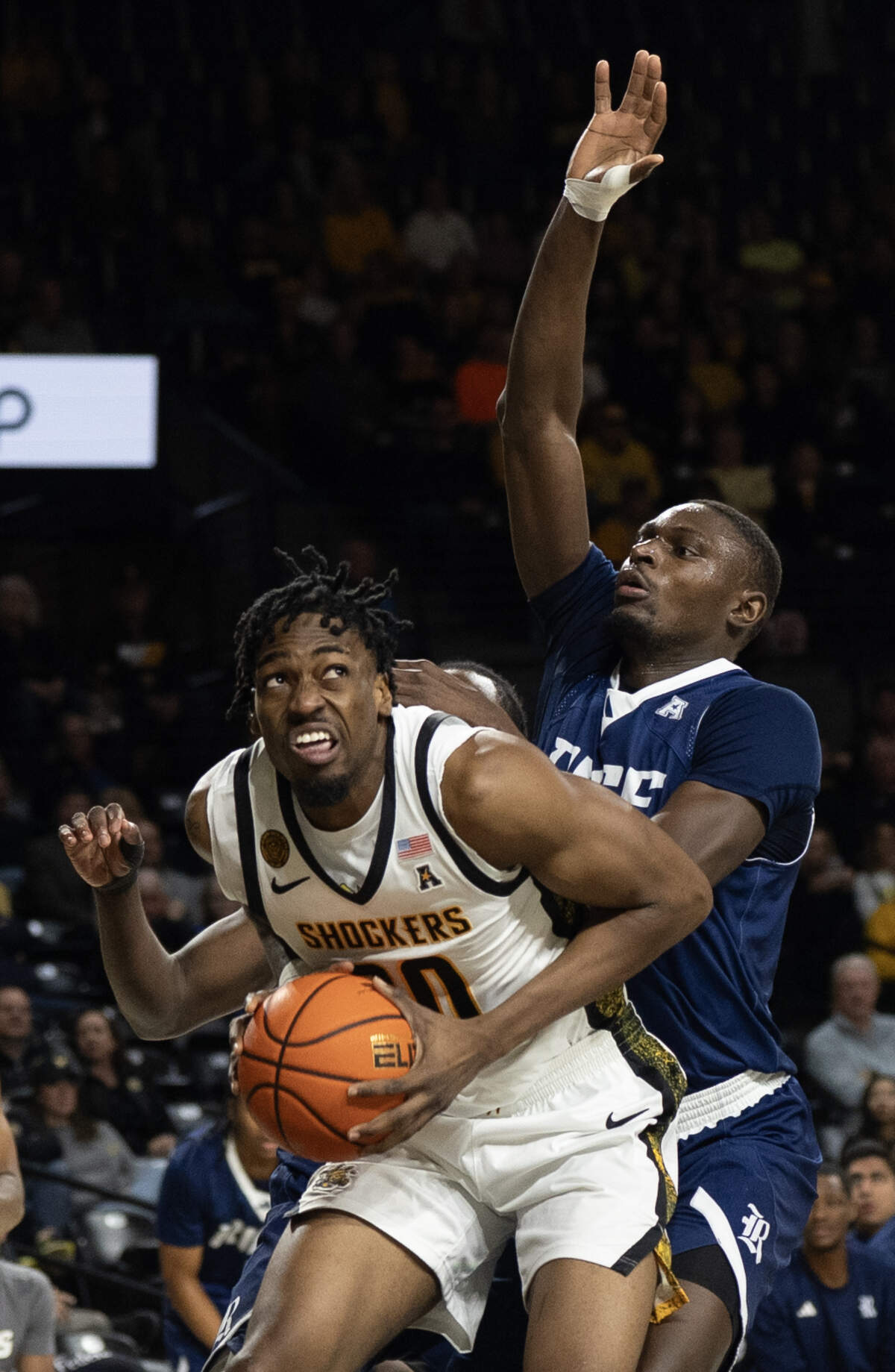
WSU shot 9-for-27 at the rim and 9-of-30 in the paint overall. The misses were spread everywhere: post feeds, dump-offs, drives, offensive rebounds. Karon Boyd and T.J. Williams combined to go 0-for-7 on 2s. Gray missed four shots at the rim. Will Berg, a 7-foot-2 center, went 1-of-4 around the basket.
“We had a number of shots around the rim, we just didn’t convert,” Mills said. “It’s not been a strength of ours all year. We do need to be able to convert some of those. You can’t keep the non-finishing. A number of players had shots at the rim that just didn’t (fall).”
That’s an understatement.
According to CBBAnalytics, the Shockers finish just 52.7% of their attempts within 4.5 feet, which ranks 350th in the country and is nearly 10 percentage points below the national average.
Here’s the cruel irony: WSU generates the 19th-most at-rim looks in the country. It’s elite at creating the shots every coach wants, but among the worst at converting them.
How coaching stubbornness cost Wichita State in loss
If shots aren’t falling, effort and physicality are supposed to remain constants. WSU prides itself on owning the glass, regardless of opponent.
But even that advantage never became overwhelming on Wednesday. The Shockers collected 15 offensive rebounds, good for a 32.6% rate — solid, but nowhere near dominant given the opponent. Those extra possessions produced just 10 second-chance points. Against a Rice team that struggled to rebound and defend, WSU wasted its leverage.
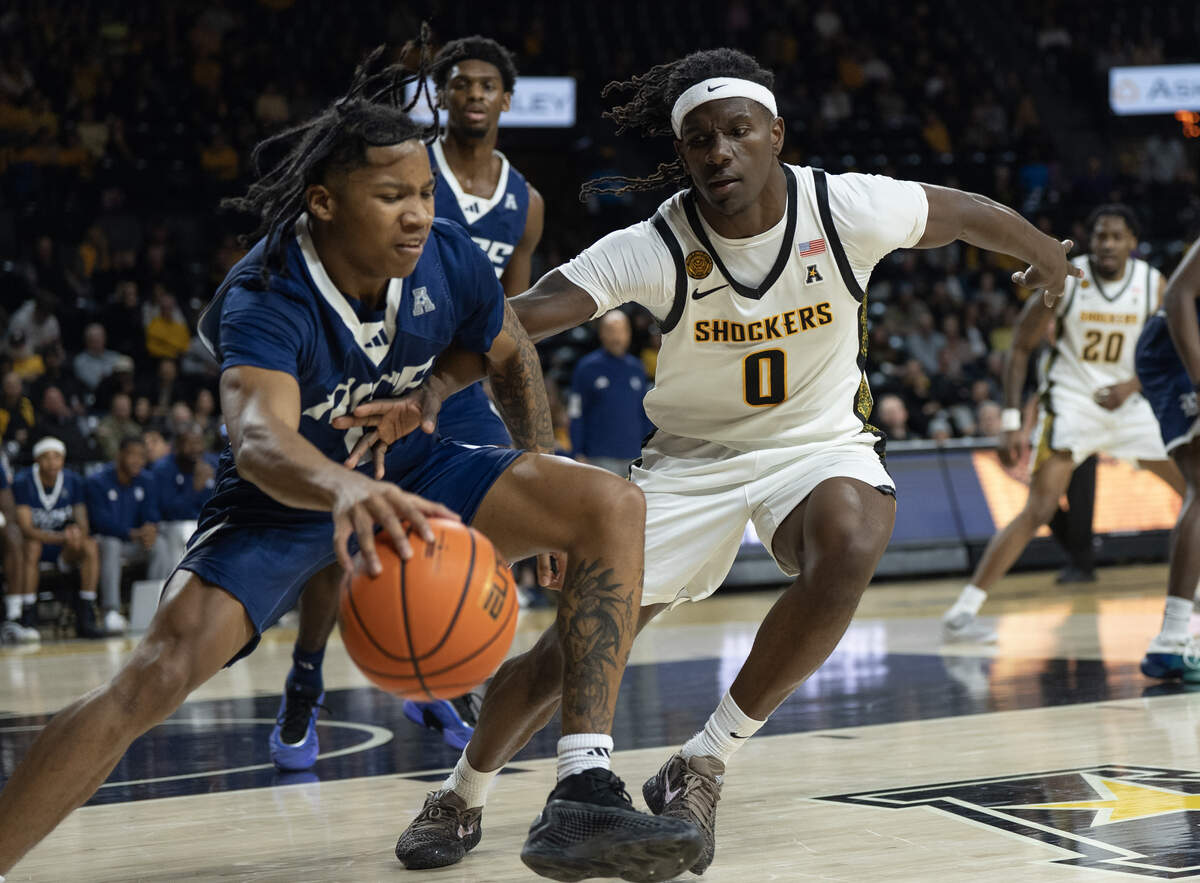
Defensively, Mills paid for his stubbornness and reluctance to adjust. He kept Boyd, his most trusted defender, on Rice scorer Trae Broadnax and left him largely on an island.
Time and again, Broadnax proved he was up for the challenge. He scored a season-high 22 points on 10-of-19 shooting, delivering several of the game’s biggest baskets in the second half by going directly at Boyd.
The criticism should not fall on Boyd, who played with effort but came up short. Even elite defenders lose matchups sometimes. The issue was that Mills watched the balance tilt the wrong way and never meaningfully changed the picture, never forcing Broadnax to beat anything other than straight isolation.
“We needed to double Trae Broadnax and do more,” Mills said. “If you can play through Karon Boyd, you’re a really good player. Not that we didn’t know that. It’s just that they were way more iso ball than they had shown in the previous games.”
That is an in-game coaching responsibility and it fits a broader pattern. Too often, WSU has looked reactive rather than proactive — waiting until a problem becomes undeniable instead of snuffing it out early.
Another example came after WSU fell behind by 13 points in the second half, then rallied to tie the game at 56 with 4:31 remaining. Then, after all that work, the Shockers undid it in less than a minute with defensive miscues.
Both breakdowns featured Gray and Emmanuel Okorafor involved in ball-screen coverage. One ended with Rice’s Cam Carroll reaching the rim too easily and dumping to Jimmy Oladokun for an uncontested layup. The next, after a turnover, was the kind of concession that has become a recurring wound: drop coverage that places the defense in a position where the ball-handler can walk into a clean jump shot.
After being burned by the same coverage in the double-overtime loss to Charlotte, WSU was burned again when Carroll strolled into a wide-open 3 to cap a 5-0 spurt that flipped the game for good.
“I’ve got to put our guys in a better position,” Mills said.
What kind of statement did the Shockers make
WSU should have played Wednesday like a team desperate to prove it had learned from the Charlotte loss — angry, urgent, focused.
Instead, the Shockers continue to make November mistakes in January. Defensively, they still lose shooters by ball watching, help unnecessarily off the strong-side corner and miscommunicate on basic ball-screen coverages. Offensively, spacing routinely collapses, sets break down before they reach the second or third side of the floor and guards are forced into late-clock decisions that lead to poor shots.
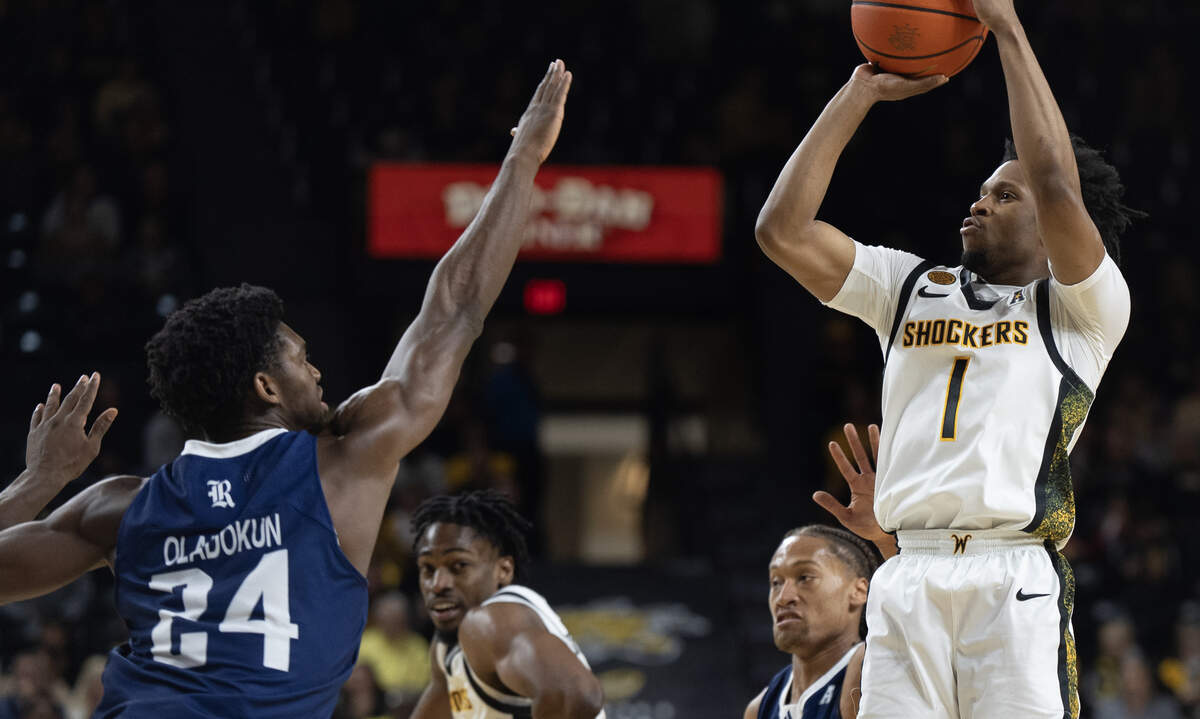
“I think it all started in the first half,” WSU star Kenyon Giles said. “We just didn’t come out hungry enough.”
That is the most troubling part of all. Hunger is the one variable that doesn’t depend on shooting variance or matchups.
This does not appear to be a talent issue, especially after athletic director Kevin Saal’s push to ensure Mills has the resources to field a roster that ranks in the top third of the conference. Instead, the problems seem more fundamental, the kind that are supposed to be ironed out before conference play begins.
Yet here in January, the Shockers are still wrestling with those same basics, a reality reflected in their 2-7 record in games decided by six points or fewer.
“You can’t say, ‘Well, we’re right there,’” Gray said. “We’ve been right there, a few different times before this. So we have to, at some point, get it together.”
WSU is far past the teaching moments in close losses. They are now becoming part of the team’s identity.
“We’ve just got to find a way,” Gray said. “There really isn’t much that coaches can say or we can go over in practice. At this point, it’s late in the season. We have to just buckle down and find a way to win.”
A troubling trend emerging for Paul Mills in January
Since the KenPom tracking era began in the 1996-97 season, WSU has lost just 16 times to teams that finished outside the top 200.
Four of those losses have come under Mills, including being swept by a Tulsa team ranked No. 267 last year, losing at home to Kansas City (No. 238) and now losing to a Rice team currently at No. 241.
January has become the fault line. Over three seasons, Mills is now 2-16 when the calendar flips.
“Trust me, there’s a lot of sleepless nights,” Mills said. “You don’t stop, you’re trying to figure out a solution here.”
To his credit, Mills did not shy away from accountability after Wednesday’s loss. It even led him to a moment where he reflected publicly on where he believes he has fallen short.
“Where I failed, I haven’t done a good job with this team explaining to them just how much people play through your chest in this league,” Mills said. “We went through this a lot last year and basically changed how we ran practice. We thought we’ve done a good job explaining it. I obviously haven’t done a good job conveying the message.”
The harsh truth, however, is that understanding cannot remain theoretical.
By January, teams are supposed to know how hard the league is going to play through their chest. By January, ball-screen coverages should not be recurring late-game crises. By January, a team is supposed to know who it is.
Instead, on Wednesday, it looked like Rice was the team finding itself and WSU was the team drifting.
There is still time to fix it, of course. But after losing to Charlotte and Rice, time is no longer the comforting part of the conversation. The schedule is not about to soften with North Texas is looming on Sunday, followed by a road swing to Florida Atlantic and South Florida.
“We do need to find a way to start winning these close games,” Mills said. “I’ve got to help our guys.”
If WSU is going to change its trajectory, it must do it with urgency, physicality and execution. Not with another rally that arrives after the damage is already done.
Because if the Shockers made a statement on Wednesday, it was this: the gap between who they want to be and what they currently are remains far wider than a two-point loss suggests.
This story was originally published January 8, 2026 at 6:02 AM.
.jpg)