
Three keys for Wichita State to pull off a signature win at Boise State
Wichita State travels to Boise on Tuesday with more on the line than just another early-season test.
The Shockers are chasing what could become their first Quad 1 victory of the Paul Mills era and the program’s first since beating Oklahoma State in Stillwater on Dec. 1, 2021.
To qualify, Boise State must finish inside the NET top-75, which hasn’t been a problem for the Broncos (average NET ranking of 36) the past five seasons under Leon Rice. But winning at ExtraMile Arena is a tall order, as Boise State has gone 87-9 in home non-conference regular season games under Rice.
And yet, the Broncos (3-1) remain something of a mystery. Picked third in the rugged Mountain West and returning a veteran core, they opened the year with a stunning home loss to Division II Hawaii Pacific. They have since stabilized with three straight home wins.
Tuesday’s meeting begins a home-and-home series between the schools and marks their first-ever meeting on the hardwood. The matchup presents a fascinating contrast in styles, especially on the glass, where WSU’s 15th-best offensive rebounding rate meets Boise State’s eighth-best defensive rebounding rate. That strength-on-strength collision could play a large role in determining a winner.
So how do the Shockers, underdogs of nearly 10 points, steal a win in a tough road environment? Here are three keys to the game:
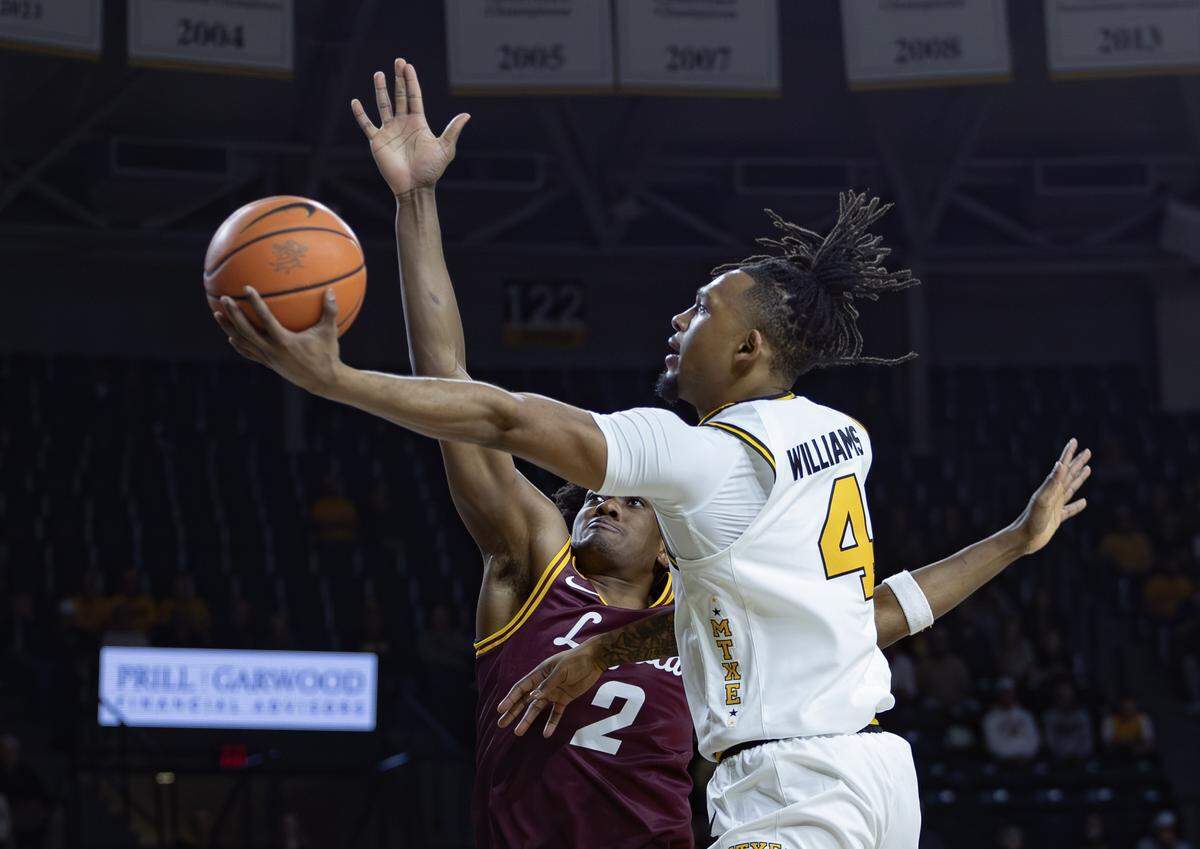
1. Wichita State needs to play fast as much as possible
Mills explained the benefits of the Shockers playing faster in Monday’s story in The Eagle, and those reasons make even more sense against Boise State.
It’s early, but the Broncos rank dead last — 365th out of 365 teams — in Synergy’s transition defense, allowing an astronomical 1.61 points per possession. So playing fast shouldn’t just be a preference for the Shockers on Tuesday, it’s actually the smartest way to attack Boise State’s defense.
When Boise State can get fully set in the half-court, its size becomes a wall. Passing lanes shrink, drives get funneled into help defenders and the Shockers are likely to be forced to take harder, more contested shots.
But that advantage disappears the moment the game speeds up. If WSU attacks in the first 10 seconds of the shot clock, the precision Boise State relies on won’t have formed yet and its defense will be much more susceptible.
It becomes much easier for Kenyon Giles and Mike Gray Jr. to shake free and spot up for clean transition 3s. Dre Kindell can push the pace and make quick, decisive reads to find the open man before the defense is set. And wings like Karon Boyd and T.J. Williams can turn simple rim runs into easy baskets, applying pressure with early cuts before Boise State’s size has a chance to get organized.
In simplest terms, running can take Boise State’s greatest strength (its size) and turn it into a weakness if the Shockers can execute with the precision they have at Koch Arena.
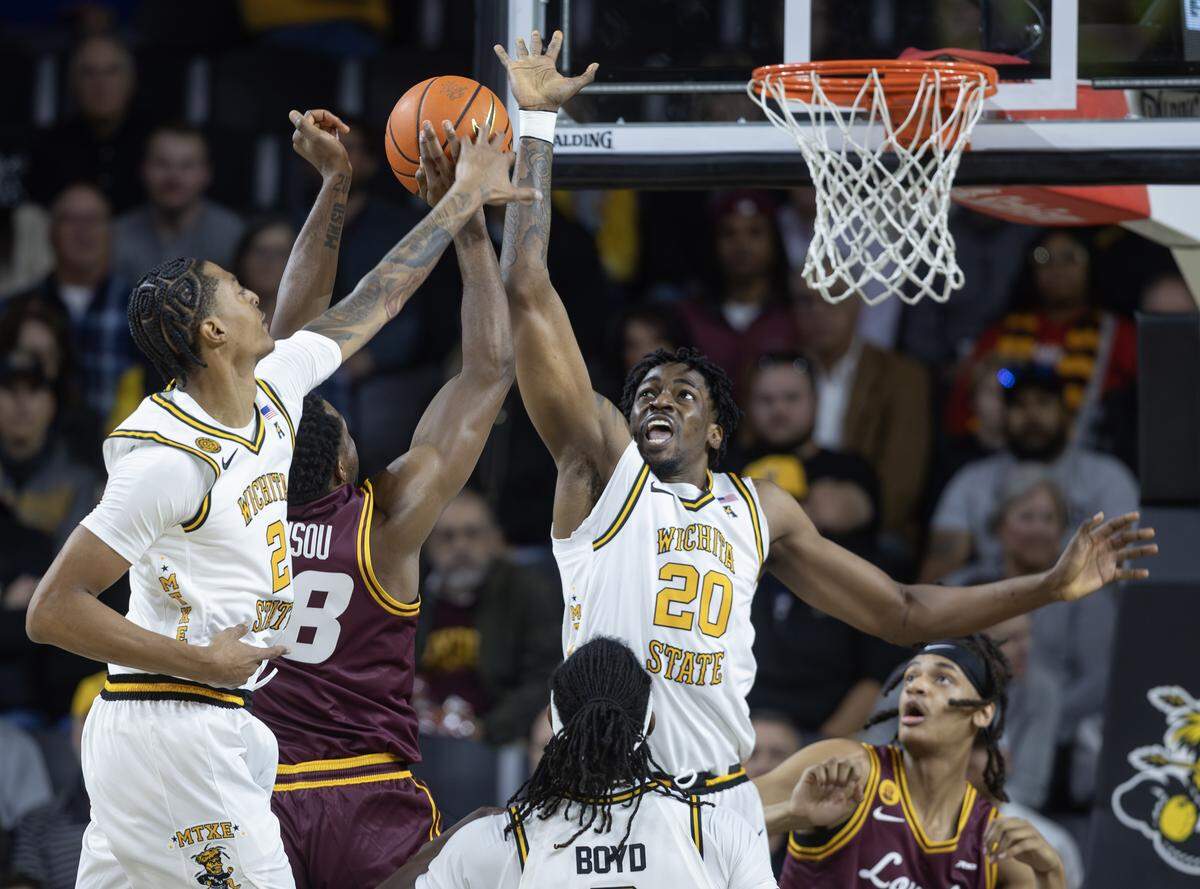
2. Shockers need to attack the rim and own the offensive glass
If there’s a battleground that could swing Tuesday’s game, it’s everything that happens around the rim.
Boise State looks imposing on paper with one of the tallest rosters in the country, anchored by a frontline where the top-four scorers stand 6-foot-7 or taller. The size helps them rank among the nation’s best defensive rebounding teams and is a big part of why opponents rarely earn second chances.
But dig a little deeper and a different story emerges.
Despite their size, the Broncos have struggled to stop dribble penetration and protect the rim. Opponents are shooting over 60% at the rim against Boise State, which ranks 313th in the country, per Synergy.
That should play in WSU’s favor, as the Shockers are elite on the offensive glass, ranking No. 15 nationally by tracking down more than 43% of their missed shots so far. They don’t need to hit a school-record 16 3s like they did against Loyola-Chicago to win if they continue to rack up the second-chance opportunities.
It will be important for WSU to see players like Karon Boyd, T.J. Williams, Jaret Valencia, Will Berg and Emmanual Okorafor rack up offensive rebounds.
If WSU wins the rebounding battle, it won’t need to outshoot Boise State to win. That will require the Shockers to outwork the hosts around the rim. Winning the physical battle underneath, especially against a team that’s built its identity on size and rebounding, could give WSU the extra possessions and momentum needed to silence a tough road crowd and bring home a signature win.
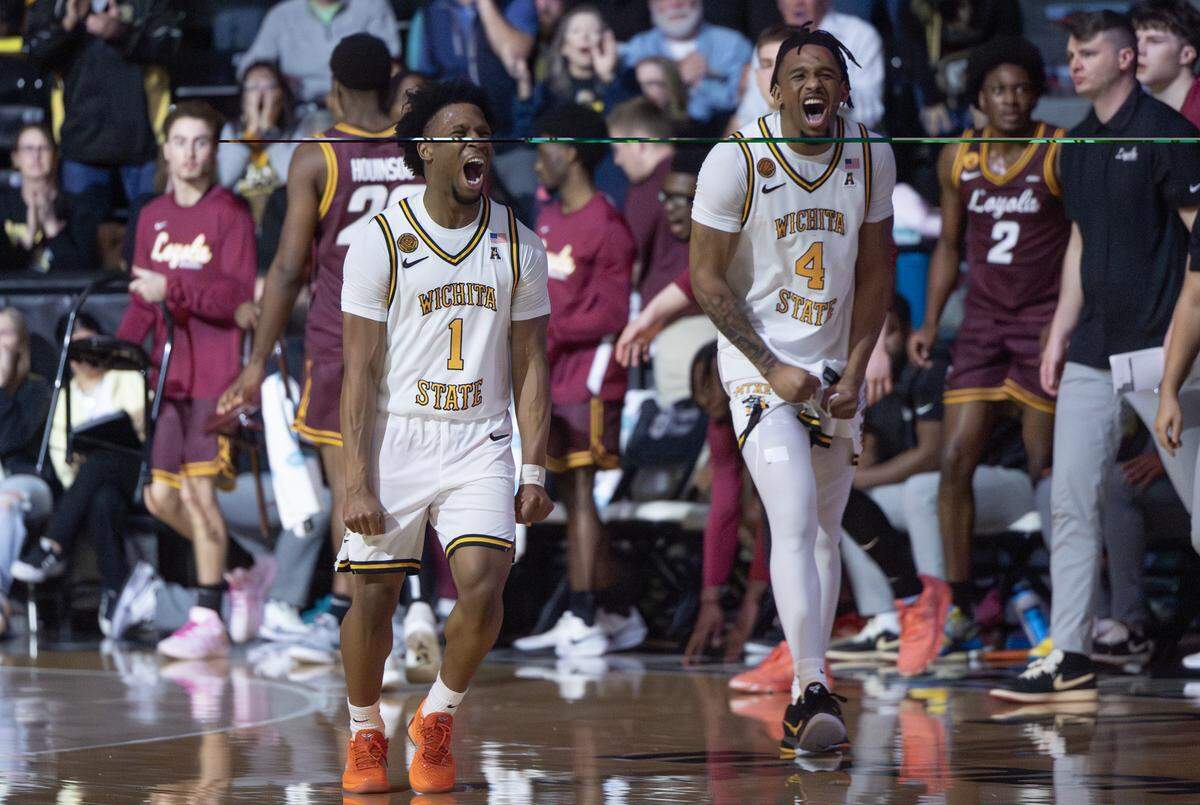
3. Why WSU needs to make Boise State guard in space
The most intriguing chess match in Tuesday’s game might unfold 25 feet from the basket.
Boise State leans heavily on a conservative drop coverage in pick-and-roll defense, preferring to keep its bigs parked near the paint to protect the rim. The goal is simple: Take away layups, funnel ball-handlers inside the arc and force opponents to beat them with jump shots.
But that scheme comes with a tradeoff — and it could play into the favor of WSU sharpshooter Kenyon Giles, who might be the most important player on the floor.
Drop coverage is vulnerable to confident, quick-trigger guards who can rise into a jumper before the big man can contest. Giles, who is shooting a blistering 63.6% on 3-pointers this season, fits that profile perfectly. When defenders go under a screen or retreat to protect the rim, Giles has shown the ability to punish them with rhythm pull-up 3s or mid-range jumpers. It’s the exact type of shot Boise State’s defense is designed to concede — and it’s the exact type that Giles thrives on.
If Boise State stays in its drop look, Giles will likely have multiple opportunities to step into clean shots early in the shot clock. If the Broncos adjust by bringing their bigs higher, the floor opens for drives, slips and rolls, where WSU’s athleticism can create advantages. Gills’ shooting is capable of forcing Boise State to choose between two uncomfortable decisions.
There’s another layer to the matchup that WSU might be able to exploit: cutting.
Boise State’s defense has struggled all season with movement away from the ball, giving up a high percentage on cuts to the rim. That’s an area where WSU has historically excelled under Mills. Whether it’s Karon Boyd, Jaret Valencia or T.J. Williams diving to the rim or Will Berg and Emmanuel Okorafor ducking in, the Shockers have a chance to turn cutting into a reliable source of high-percentage scoring.
Boise State’s length is imposing in static situations, but once defenders are forced to react to multiple actions — ball screens, dribble penetration, off-ball movement — their rotations won’t be as clean. The key is less about running complicated sets and more about forcing Boise State to guard multiple actions in one possession.
A single ball screen might not break them, but a ball screen that flows into a drive, skip or cut can cause the disciplined structure of their defense to bend.
If Giles can get rolling early and the Shockers continue to cut with purpose, Boise State’s defense will be pulled into situations it hasn’t handled well yet. That slight advantage could tilt the halfcourt battle in WSU’s favor on a night when every possession will matter.
This story was originally published November 18, 2025 at 6:57 AM.
.jpg)