
He ran in the dark to earn his spotlight. Thengvall awarded scholarship at WSU
Henry Thengvall used to watch those viral scholarship videos, the kind where walk-ons get mobbed by teammates after a surprise announcement.
“It’s something you see online happen to other walk-ons,” Thengvall said. “But you don’t think it will ever happen to you.”
Until it did.
At a recent Wichita State men’s basketball practice, the hometown kid who once sat in the stands at Koch Arena was called in front of the team. Coach Paul Mills handed him one of his signature “CARE” t-shirts, a nod to his work ethic, then delivered the news: Thengvall was on scholarship.
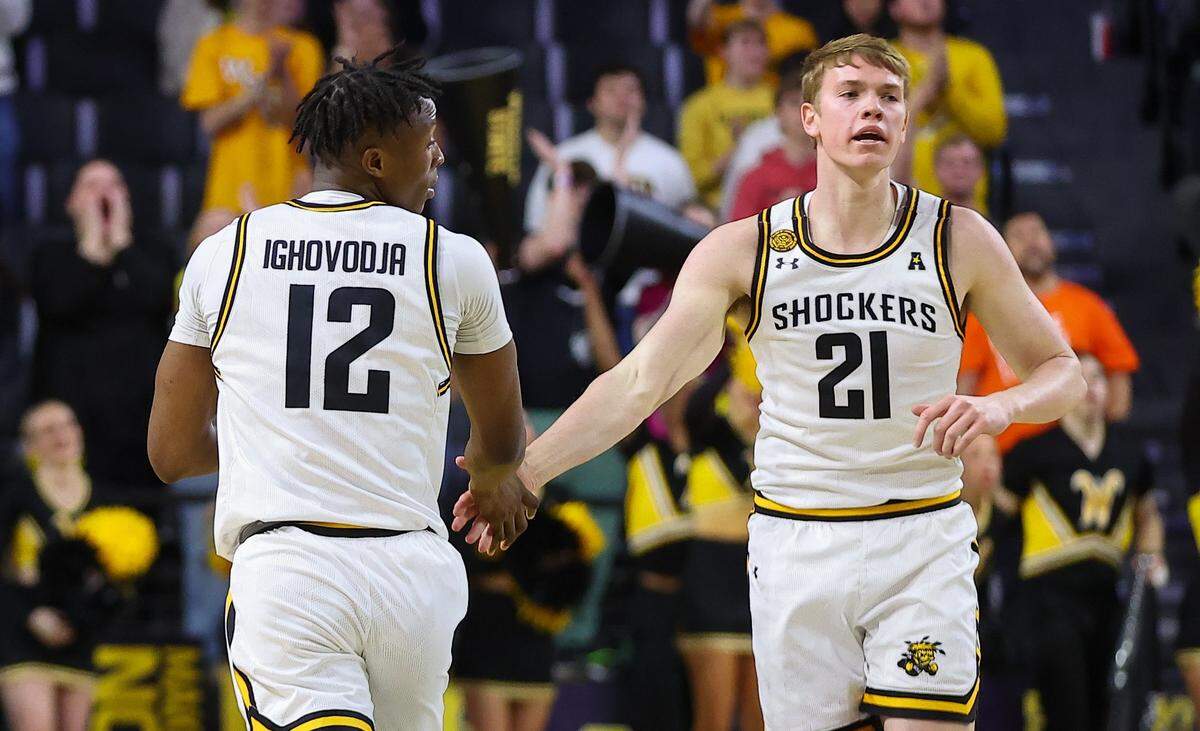
And just like the videos Thengvall used to watch, his teammates swarmed him in celebration.
“I’ve only known most of them for two months, so it meant a lot that they reacted that way,” he said. “I think we’ve grown really close. We’re a tight group. They all work hard and they’re great teammates. That really meant a lot.”
A dream rooted in Wichita
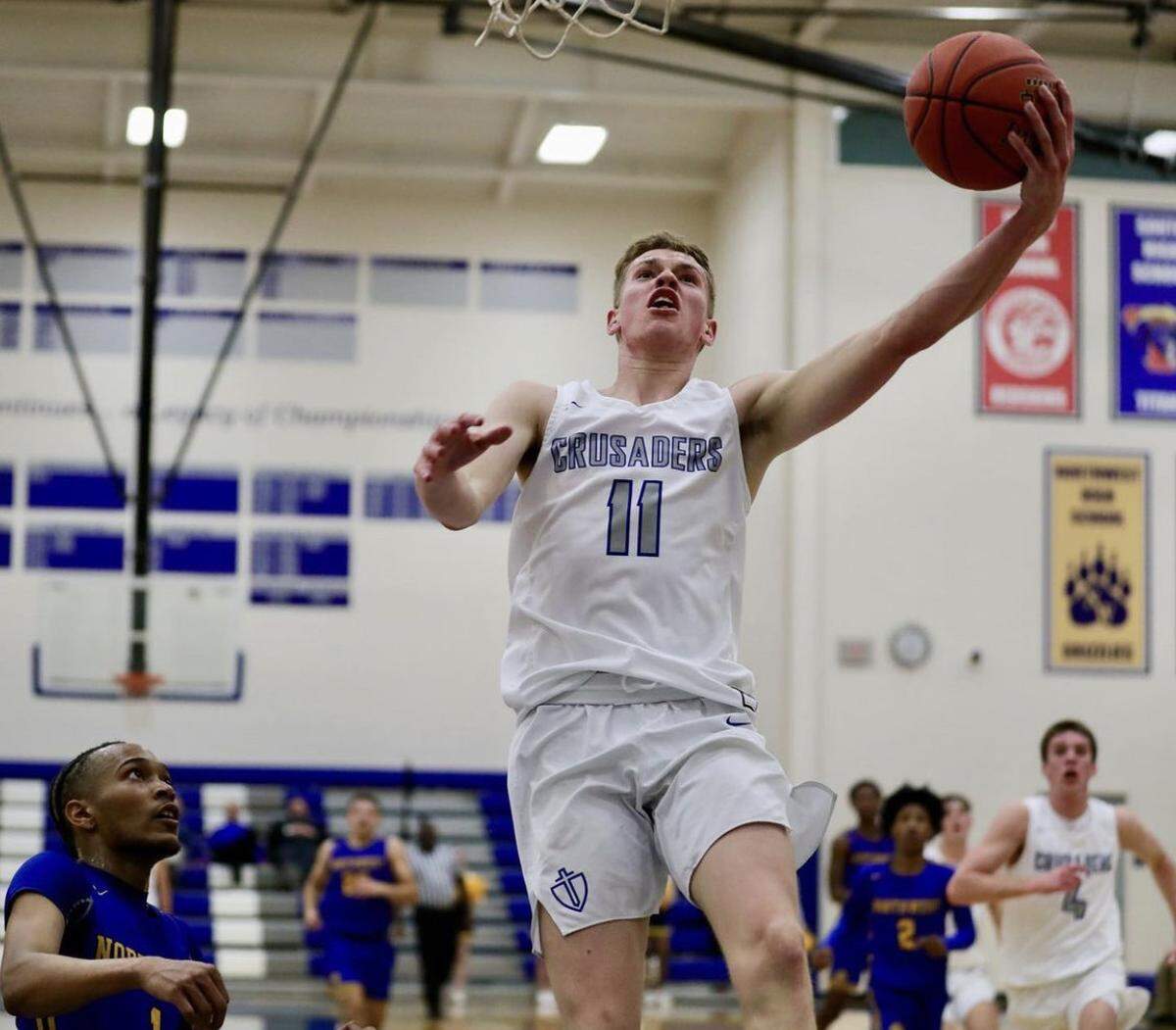
Thengvall wasn’t just any walk-on. He’s Wichita through and through, a 2022 Kapaun Mt. Carmel graduate who grew up idolizing the Shockers during the heyday of the Gregg Marshall era. He sat in the crowd at Koch Arena dreaming of putting on that jersey.
So even before the scholarship, just being a preferred walk-on felt like a dream realized.
“I’ve tried to repay that by working hard every single day,” Thengvall said.
He was one of the best high school players in Kansas his senior year, averaging 20.1 points to lead Kapaun to an undefeated City League title and earning top-five all-state honors from The Eagle. He also competed in track, as his middle-distance talent carrying over to basketball — Thengvall has clocked the fastest mile time on the team with a personal best of 5:01.
“I keep telling Henry if he breaks that 5-minute barrier, we’re going to send him over to coach (Steve Rainbolt) and put him on the track team,” Mills joked.
The Role Player Who Refused to Coast
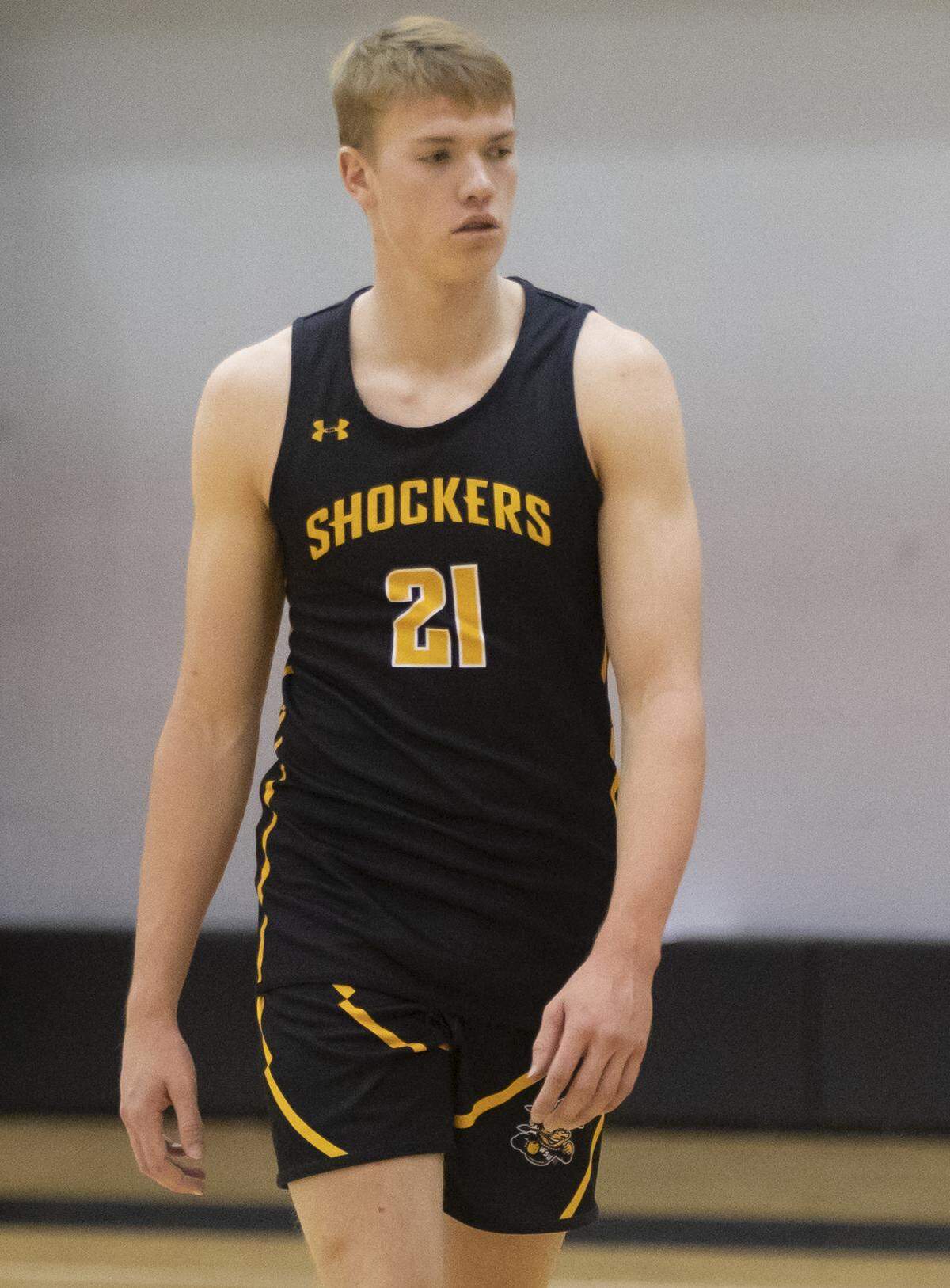
Thengvall’s impact has never been measured in points or minutes.
He’s appeared in just 11 games over the past two seasons. But inside the program, his presence matters.
“My biggest responsibility is being the best player that I can possibly be,” Thengvall said. “That includes coming here every day and working hard. Coach Mills, I’m very grateful that he has treated me the same as everyone else since he has gotten here. That’s been a big help. He’s held me to the same standard as everyone else and I appreciate that.”
Mills never coached Thengvall like a walk-on. He held him accountable like any scholarship player because that’s how Thengvall approaches his job — not as a benchwarmer, but as a competitor who makes those around him better.
“I’m a big believer in the most faithful win,” Mills said. “You may only see seven, eight, nine guys play, but you do not have a team without everybody in that locker room.
“I can’t tell you how difficult it is to show up every day to work, not really get much in the way of acknowledgment, do it for two years and your 500th day is no different than your first. Most people would have probably stopped because they want the attention. Henry just wants to do the job and he’s been faithful in it.”
Since arriving at WSU, Thengvall has transformed his body too, up from a lanky 6-foot-6 and 180 pounds to a sturdier 212 entering his fourth year.
A culture keeper in a new era
The House v. NCAA settlement is expected to drastically reshape college basketball rosters, effectively eliminating traditional walk-ons moving forward.
But becuase Thengvall was already on the roster, he could have been “grandfathered” in and kept on without counting toward the new 15-scholarship limit.
Still, Mills made the decision to reward Thengvall for his hard work.
“Let’s be really clear here: he earned this,” Mills said. “This is not charity. ‘Hey, we got one left.’ Henry 100% has earned this.”
For Thengvall, the daily grind never needed an audience.
He showed up early, stayed late and treated every rep like it mattered — even when no one was watching. There were no promises of playing time, no guaranteed recognition, just a deep-rooted belief that effort, over time, still counts for something.
Mills referenced a Muhammad Ali thought to sum it up: “I run in the dark to dance in the light.”
“Henry has done a lot of running in the dark the past two years,” Mills said. “I’m happy for him there’s a little bit of light shed on all that he does.”
This story was originally published July 24, 2025 at 7:03 AM.
.jpg)