
From tears to triumph: Destiny Masters’ unlikely rise to Wichita State great
It wasn’t that long ago when Destiny Masters, one of the most decorated track and field athletes in Wichita State history, used to drive home from practice in tears.
There were long, quiet drives home on Highway 254 to El Dorado, where Masters would sit across from her mother, broken down by doubt, disappointment and the crushing feeling that she wasn’t good enough.
“There were so many days I just wanted to quit,” Masters said. “But my mom would always tell me, ‘You don’t give up. You’re not going to give up on this.’”
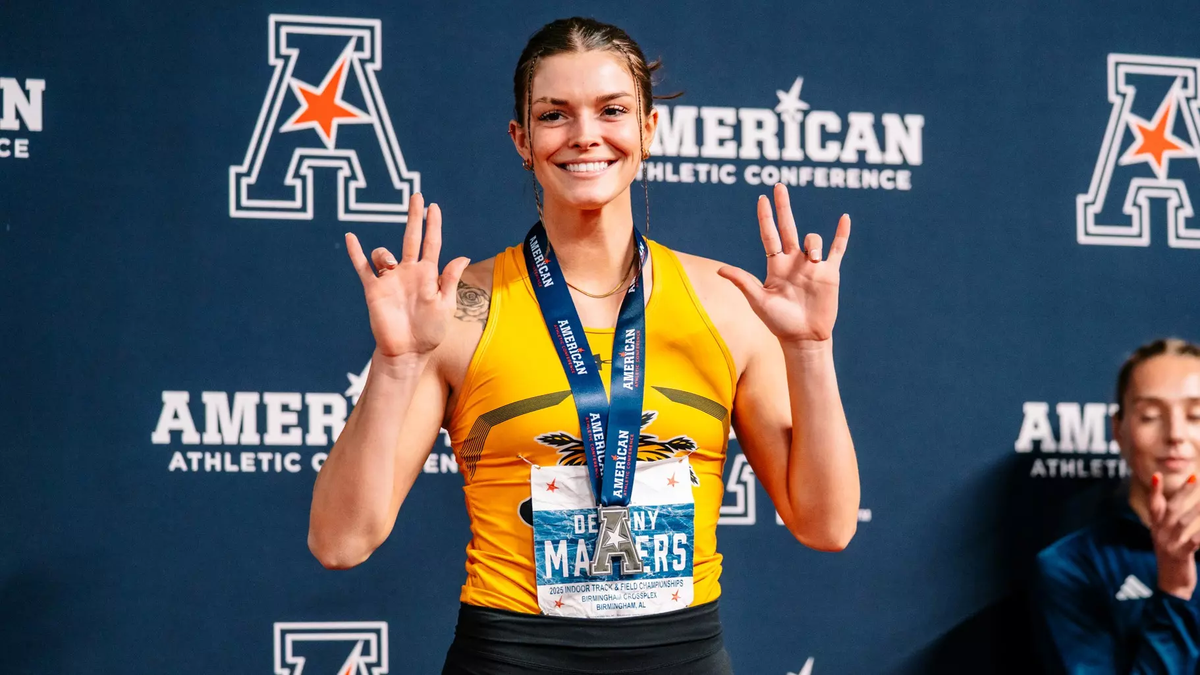
Just a few years later, Masters just put the final touches on a Shocker career that cements her place among the program’s all-time greats — male or female. Her six All-American honors are the second-most in school history. She owns the program record for the pentathlon and indoor high jump and ranks top-10 in five other events.
But to understand she got here — how an unheralded Class 2A athlete from Bluestem High School became a national-caliber multi-event superstar — is to understand the adversity that nearly derailed her long before the accolades arrived.
A father’s memory, a daughter’s drive
Masters’ fight began long before her first track practice at Wichita State.
In 2016, just before she began high school, her father, Jeff, died after a battle with melanoma and brain tumors. It was a loss that shook the family to its core.
“My mom definitely was in a dark place there for a few months, but you would never realize it because she was always there for me and my sister,” Masters said. “She was the rock for us. She did an absolutely amazing job as a single mother to make things work out.”
The grit that Masters would later use to become an All-American athlete also carried her through the hardest moments of her life. It was instilled in her from a young age by her mother, Jennifer Milbourn, who believed that independence and hard work weren’t optional in their family.
Masters was just 14 when she started her first job and held a waitress job throughout her WSU career when she was also racking up academic and athletic honors.
Milbourn was the steady hand guiding her daughter forward, even when her own heart was breaking.
“It was very painful to watch her come home defeated every day at something she wanted so bad,” Milbourn said. “She got her butt kicked every single day at practice, then would come home in pain, come home crying. She felt like a failure.”
But quitting was never an option — not in their household.
“I was never going to push her to do a sport, but once you make a commitment, you can’t quit,” Milbourn said. “When the going gets tough, you don’t get to quit. You have to stick it out.”
The underdog no one saw coming
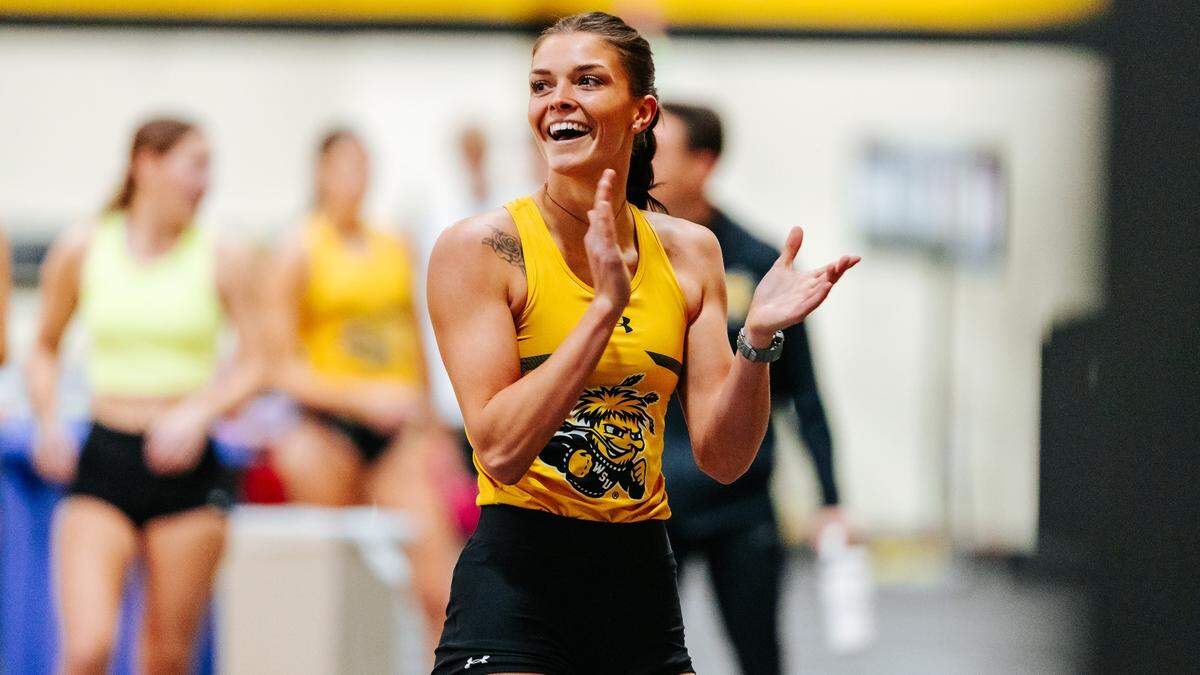
At Bluestem, Masters showed flashes of athletic ability — she holds the school records with a 5-foot-6 high jump and 17-foot-9 long jump — but no one foresaw what was possible.
“She was always very athletic, but I don’t think she had found the confidence to believe in herself at that time,” said Bluestem track coach Joe Burgardt. “But when I say she was a great athlete, I’m not going to tell you I saw any of this coming.”
Even WSU head coach Steve Rainbolt, renowned for his ability to turn small-town Kansas kids into stars, didn’t recruit Masters with grand expectations.
“I would love to be able to tell you chapter and verse about how I came to the conclusion that she might be really good at this, but it’s just not like that,” Rainbolt said with a chuckle. “It’s more about being a possibility thinker.”
It was WSU pole vault coach Pat Wilson, a Bluestem graduate himself, who showed the first belief that Masters belonged at the Division I level. Masters credits Wilson, who died from brain cancer in 2023, for planting the seed of belief when she couldn’t see it herself.
On her visit to WSU, Rainbolt suggested she should try becoming a multi-event athlete and compete in the grueling heptathlon and pentathlon disciplines that test speed, strength, endurance and mental fortitude. Without any other Division I interest, Masters figured she had no other choice.
The first two years in Wichita were filled with frustration. Masters was overwhelmed by Rainbolt’s famously tough multi-event workouts. Older teammates seemed light-years ahead. Her confidence cratered.
In private, the coaching staff considered whether Masters was cut out for Division I. Meanwhile, Masters herself considered walking away altogether.
But every time, the same voice called her back.
“My mom just kept telling me, ‘You’re not going to give up,’” Masters said. “She has no idea about sports, but she is fully for me and wants me to do my absolute best and pour my heart into it.”
What followed was a storybook rise.
A relentless pursuit of more
The transformation occurred during the summer between her second and third year at WSU.
Rainbolt knew she was struggling to keep up with the work load early in her career and rather than pile on, he adjusted. He broke down workouts into smaller chunks to help Masters mentally manage the load.
The coach didn’t realize it at the time, but Masters possessed what he calls “latent” talent — meaning she had untapped potential that emerged through a work ethic that was on display every day at Cessna Stadium.
Once she found her confidence, Masters uncovered a relentless desire to improve.
“I think I get that stubbornness from my dad,” Masters said. “If I don’t do something to the extent that I believe is good, then it’s just not good enough. I always want more.”
Even during her breakout 2023 season when she claimed her first All-American honor in the high jump, Masters was never content. In fact, she outwardly expressed more frustration than excitement.
“Somewhere deep inside of herself, she is always chasing perfection,” Milbourn said of her daughter. “There were times where she would win first place, but it was not good enough for her. She thought she should have done better, instead of enjoying the moment. I tried to tell her, ‘Destiny, be happy because so many people would love to be in your shoes.’”
Rainbolt worried that Masters was holding herself to an impossible standard and feared her relentless “never good enough” mindset would eventually take a toll.
“There came a time when I finally just accepted that somehow the anger worked for her to achieve her best performance,” Rainbolt said. “I talked to her about feeding off that anger. I stopped trying to settle her down and realized it was better to just fire her up and get her to use that.”
It worked.
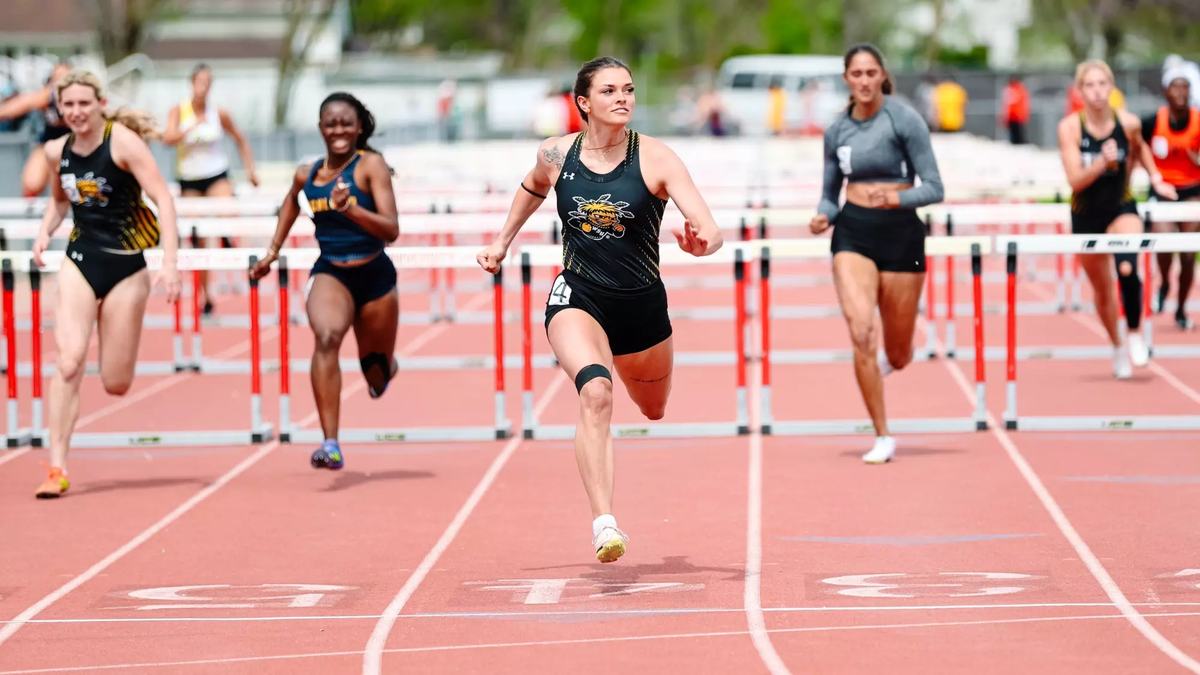
Masters capped her career with a personal-best 5,763 points in the heptathlon at the NCAA Outdoor Championships earlier this month — good for 10th place nationally and her sixth and final All-American accolade.
True to form, Masters wasn’t satisfied.
That relentless pursuit carried her to heights few could have imagined. She holds the highest pentathlon score ever by a Kansas native, according to Rainbolt’s research, and her name dots the WSU record books in nearly a dozen events.
But for Masters, the journey wasn’t just about medals and records — it was about honoring the people who helped her rise.
“There’s no way I would be here without all of the people I have had in my corner who have pushed me and helped me get to this point,” Masters said. “I hope everybody has a support system like mine. I don’t know how people would do it without it.”
Her next chapter begins at Butler Community College, where she will mentor young athletes as an assistant track and field coach — paying forward the lessons, heartbreak and belief that carried her.
For all that Masters has accomplished, perhaps her greatest impact has been on the person who has stood beside her from the very beginning — her mother.
“What my daughter has taught me is to always shoot for the stars because you can reach them,” Milbourn said. “No one thought she could get to where she is now. There was so much stuff that went against her, but Destiny showed that anyone can go from an underdog to the very top of the world.”
This story was originally published June 24, 2025 at 6:21 AM.
.jpg)