
‘It’s not OK’: How Wichita State’s offense is hurting its defense — and vice versa
A stingy defense used to be the bedrock of Wichita State men’s basketball teams.
But that hard-nosed identity is a thing of the past, at least for now, as the current Shockers are on pace for the program’s worst defensive season in decades following a 91-72 loss to South Florida at Koch Arena on Monday.
WSU has already surrendered 91 points three times in its first 15 games, the most 90-point games allowed in a season since 1993-94 during the Scott Thompson era. The Shockers are currently giving up 75.6 points per game, which is on pace to be the highest allowed for a WSU team since the 1978-79 season. The team’s 104.5 adjusted defensive efficiency, per KenPom.com, is the highest since the 2002-03 season.
“It’s not OK,” WSU head coach Paul Mills said bluntly after Monday’s loss.
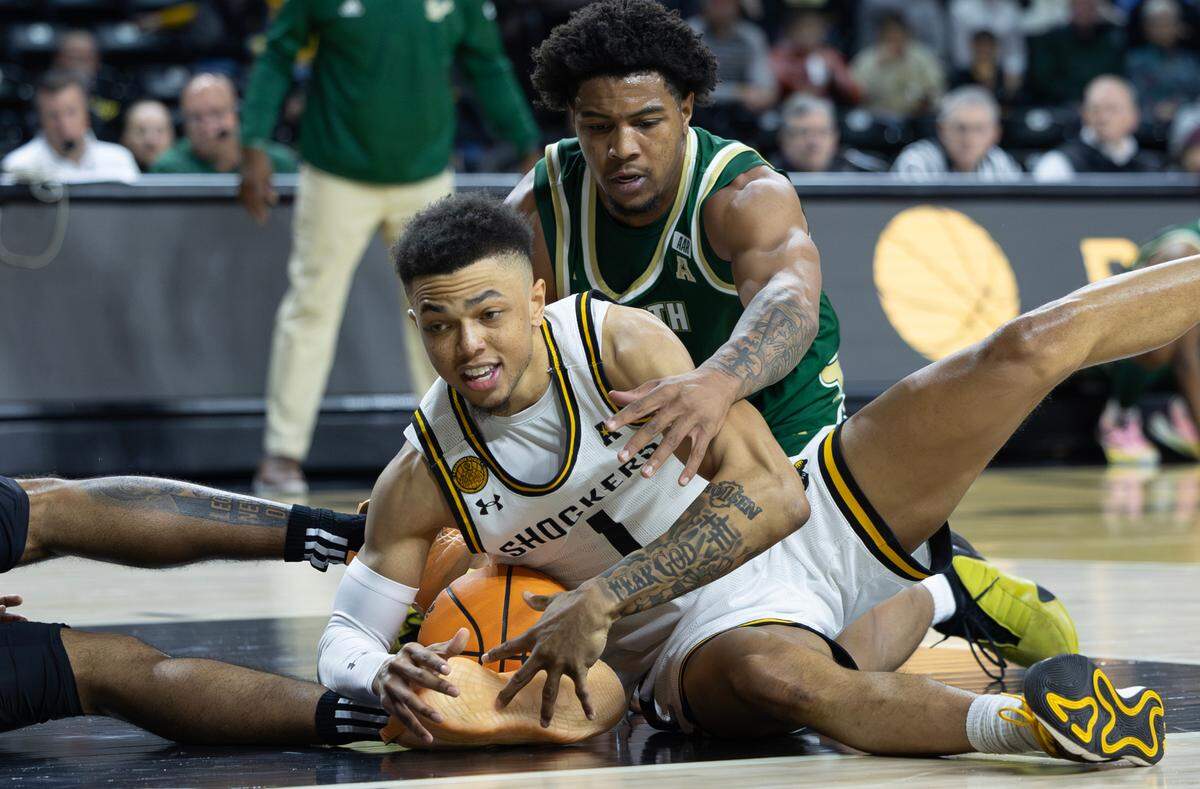
What made Monday’s performance even more troubling is that it came just three days after WSU gave up 91 points in a conference-opening loss at Temple. After that game, Mills made it clear his team’s defensive effort and intensity wasn’t up to the standard.
Given a chance at redemption, the Shockers instead gave up 16 points in the first four minutes against South Florida. In the first 30 seconds alone, they fouled a 3-point shooter, turned the ball over against the press and gave up another 3.
During the first media timeout, Mills was so upset with his team that he broke two clipboards in the huddle. Not even that fiery display could jolt the Shockers from their haze, as they went to the locker room down by 18 points at halftime.
“There’s some teams you can be nice with, there’s other teams that they need to be challenged more and this is probably way more of a ‘challenge’ team,” Mills said. “I’ve been around teams where you can talk through stuff and be nice with them. This is not that group. Unfortunately, it’s not really me, to be honest with you, to just constantly challenge you, challenge you. But that’s the reality of this situation.”
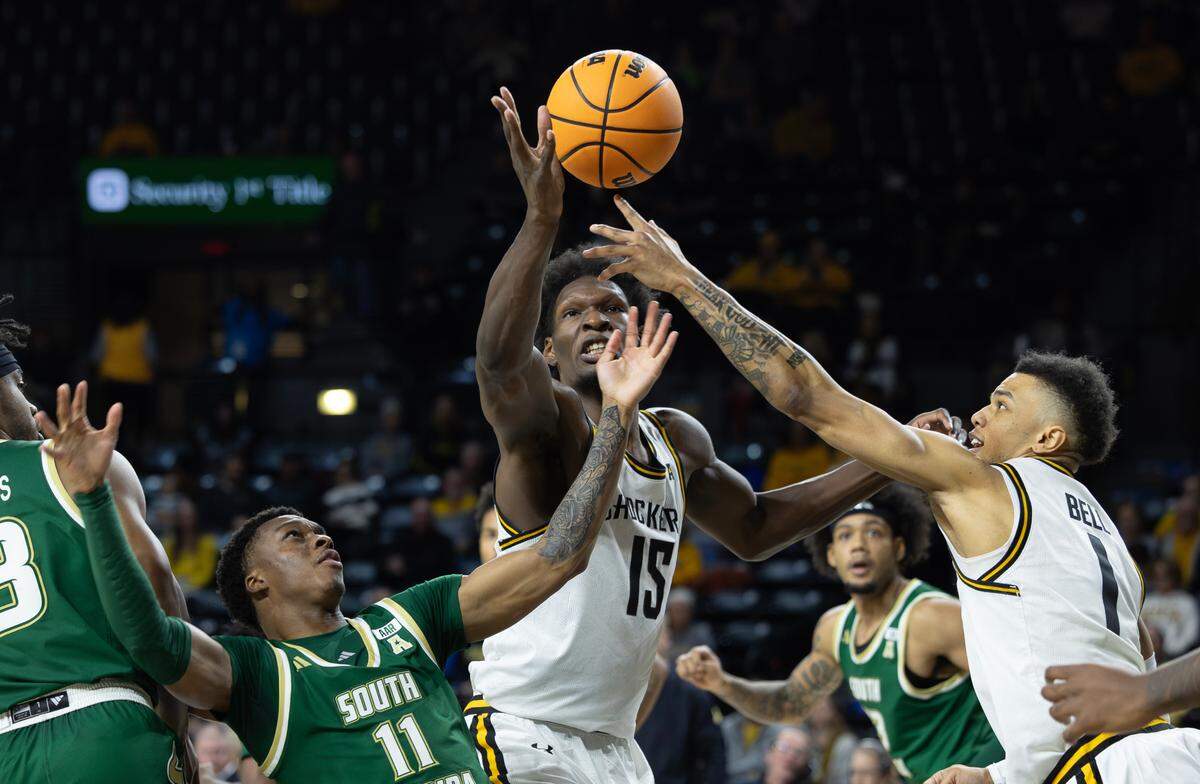
After the Temple game, where WSU consistently botched defensive coverages against star Jamal Mashburn Jr., WSU senior point guard Justin Hill told The Eagle that the coaches gave an accurate scouting report but the players failed to execute the game plan.
When the lack of attention to detail showed up again on Monday when USF scored a season high in points against a Division I opponent and beat the Shockers at Koch Arena for the first time in program history, senior guard Xavier Bell echoed Hill’s sentiment that it’s on the players to turn it around.
“We’ve got to individually look in the mirror and we’ve got to take pride in (defense),” Bell said. “We can’t come out and walk through a scout or be super casual in practice when we have a game coming up because this conference is a very tough conference. It’s a very physical and competitive conference. Every day you’ve got to show up, whether it’s against the worst team in the league or the best. It’s a grind. We’ve got to understand that. We’ve got to look at ourselves in the mirror and we’ve got to own what we need to own.”
In assessing WSU’s defensive struggles against South Florida, Mills said he thought it actually could be pinpointed on the offensive end. For the second straight game, Mills was disappointed in WSU’s overall shot selection — the type and location of shots generated on offense and the shots allowed on defense.
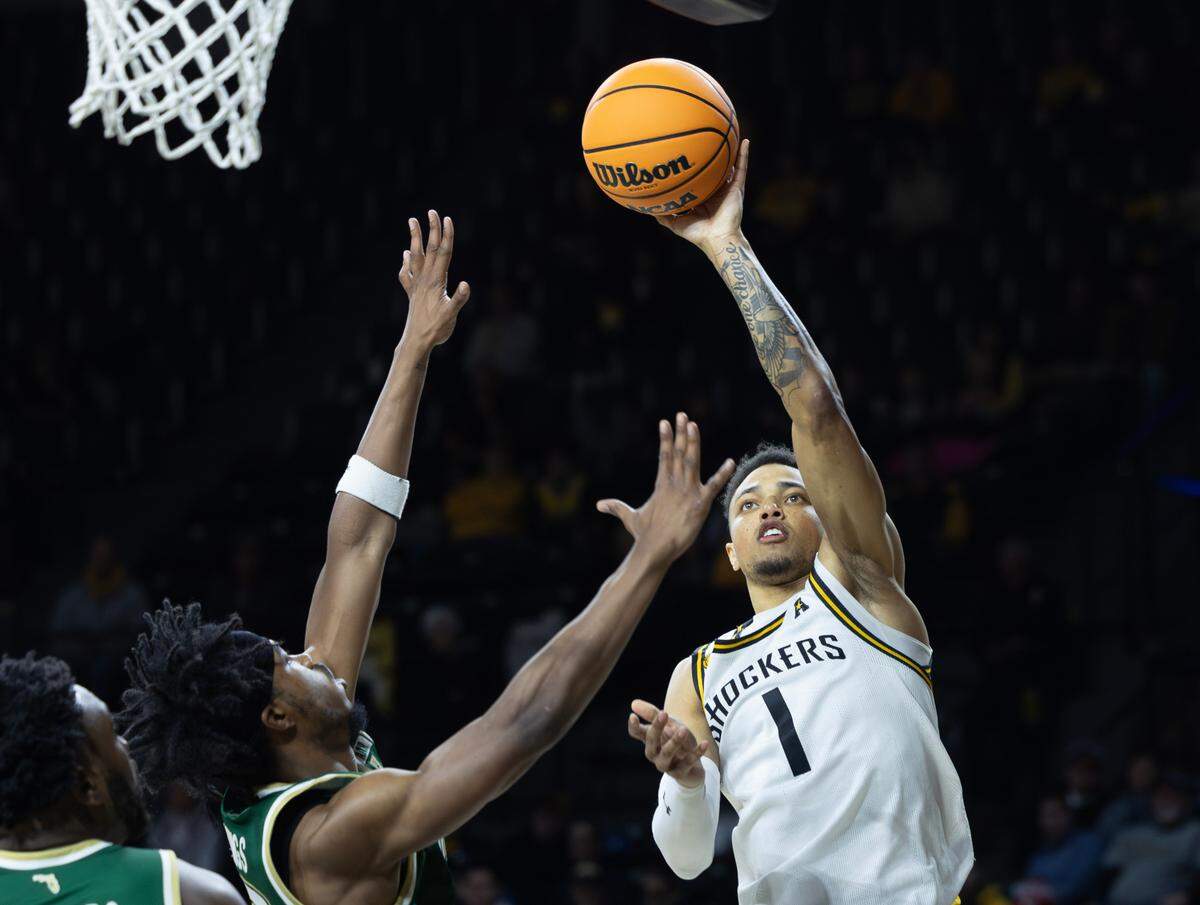
For example, WSU attempted 20 3-pointers against USF — a number far too high for a poor outside shooting team — and only made 3 of those looks. It became a compounding problem for WSU because not only did WSU’s offense come up empty 85% of the time when it shot from outside, but those long rebounds too often catapulted the Bulls, one of the best transition teams in the country, to their fast-break offense.
Of the 13 WSU 3-point misses that USF tracked down, USF scored 20 points on its ensuing possessions — the majority coming in the first 10 seconds of the shot clock.
“Our shot selection is putting us at a real disadvantage defensively,” Mills said. “This is a situation where you have good defense contributing to good offense and you have bad offense contributing to bad defense,” Mills said. “So we’re probably going to have to joystick this a little bit more than what we’re doing right now.”
The 0-2 start in American Athletic Conference play has been a vicious cycle: WSU’s lethargic half-court offense is hurting its transition defense, while its porous half-court defense isn’t sparking any transition offense.
There’s a path to efficient offense for WSU without relying on the 3-ball, but right now the Shockers aren’t following it.
“When you don’t have a group that has perimeter shot-making ability, in my mind, you’ve got to play a lot faster,” Mills said. “I thought in the first half (against USF) we weren’t playing at a tempo and speed, then the shots we were taking, we were just settling. That stuff comes back and gets you. Shot selection on both ends is such a critical part of basketball and we didn’t do either.”
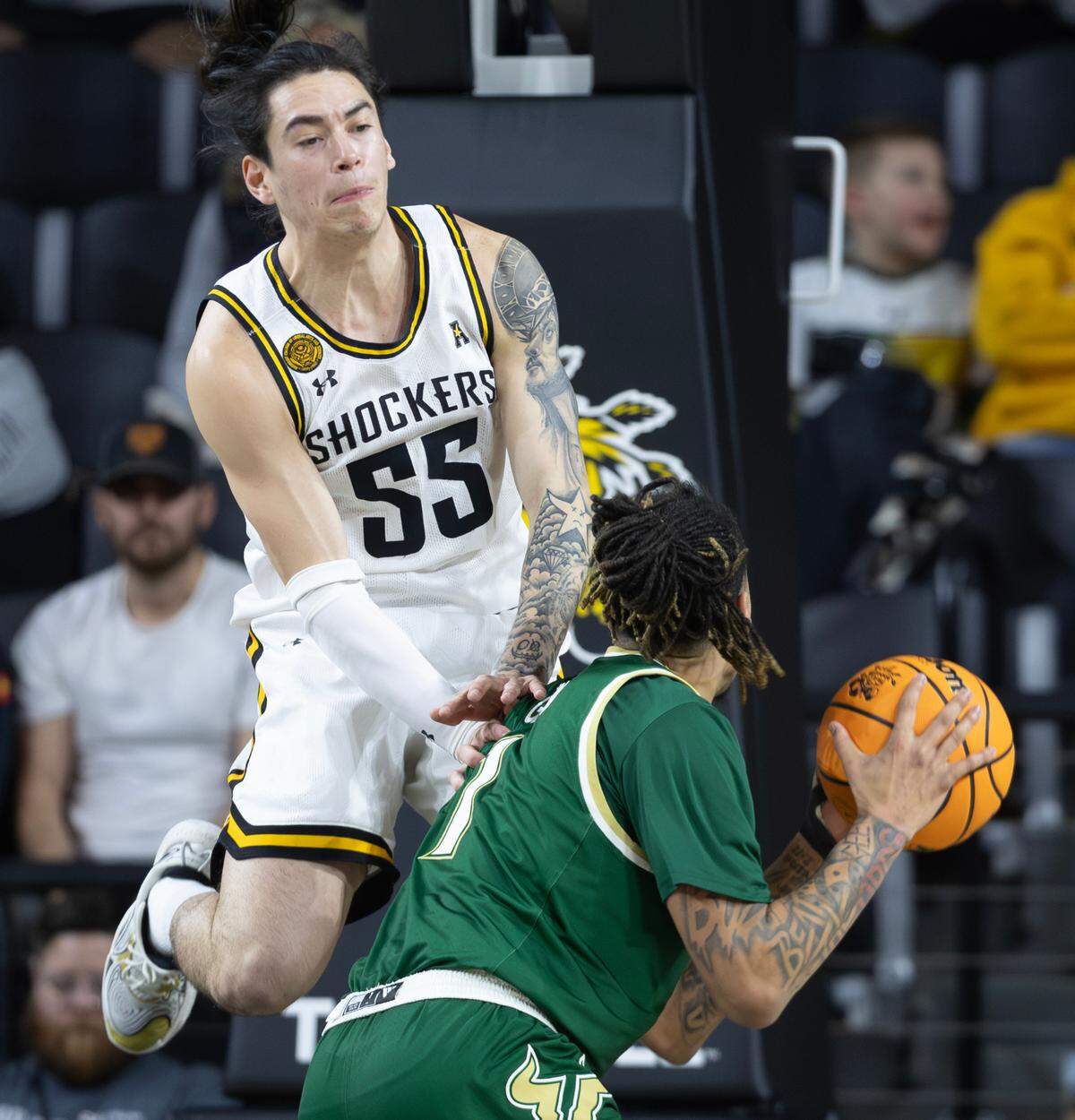
Bell said he believes WSU still has what it takes to be successful this season and avoid a spiral like last season. There’s still plenty of time with 16 conference games left on the schedule, beginning with a Saturday road trip to UTSA.
“I believe in this team,” Bell said. “I believe in every single person in that locker room from the head coach all the way down to the managers. I think we have something special and we’ve just got to continue to work and continue to fight.”
The nearing return of senior forward Ronnie DeGray III from injury should help, but one player won’t be able to solve a team-wide issue. The Shockers need better energy, better intensity and better execution to turn around their fortune.
“It’s not that the players don’t want to win. It’s not that. The guys in that locker room want to win,” Mills said. “It’s that we’re going about it the entirely wrong way. You have to approach this game a certain way. If you think this is offense-oriented, you are going to get tricked. If you don’t think there’s a tie-in between offense and defense, you’re going to get tricked. It’s understanding the correlation between those two. You have to go about it the right way and there’s an energy that’s required.”
This story was originally published January 7, 2025 at 1:08 PM.
.jpg)