
Wichita State pursuing ‘a game for March’ by targeting players with NCAA experience
In order to be successful at Wichita State, playing in the NCAA men’s basketball tournament is a necessity.
Once an annual tradition, it’s been three years since the last time the Shockers heard their name called on Selection Sunday and eight years since the last time they won in March Madness.
Earning an NCAA Tournament bid seems ambitious for the second season of the Paul Mills era, especially on the heels of a disappointing 15-19 campaign, but that is the mindset for everyone at 21st and Hillside. WSU is largely expected to make a jump this season in the American Athletic Conference, but an NCAA Tournament season? No one outside of the WSU locker room will predict that.
That’s perfectly fine with Mills, who is confident in the internal growth from five key returners and the veteran talent he plucked from the transfer portal and international scene this offseason.
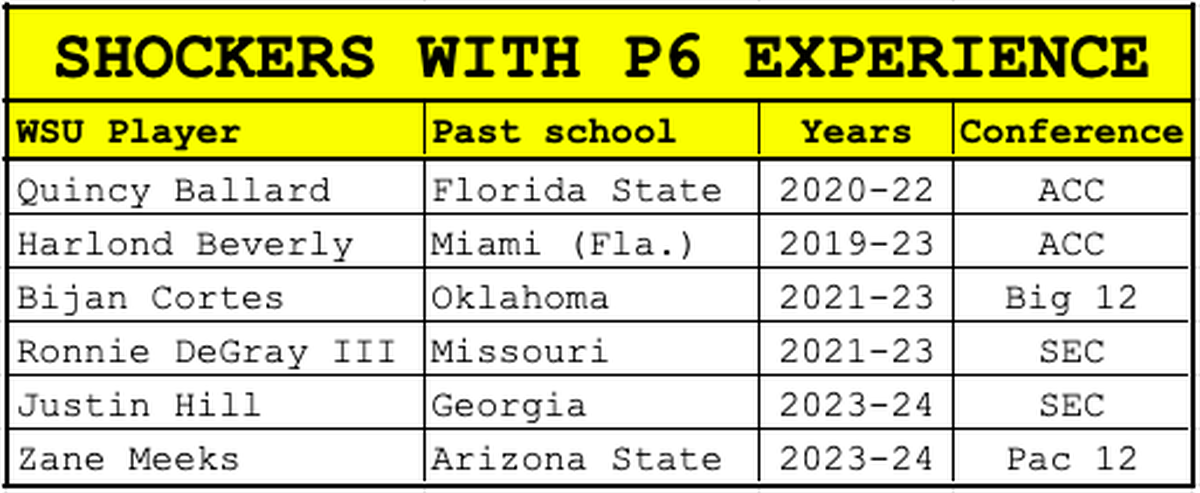
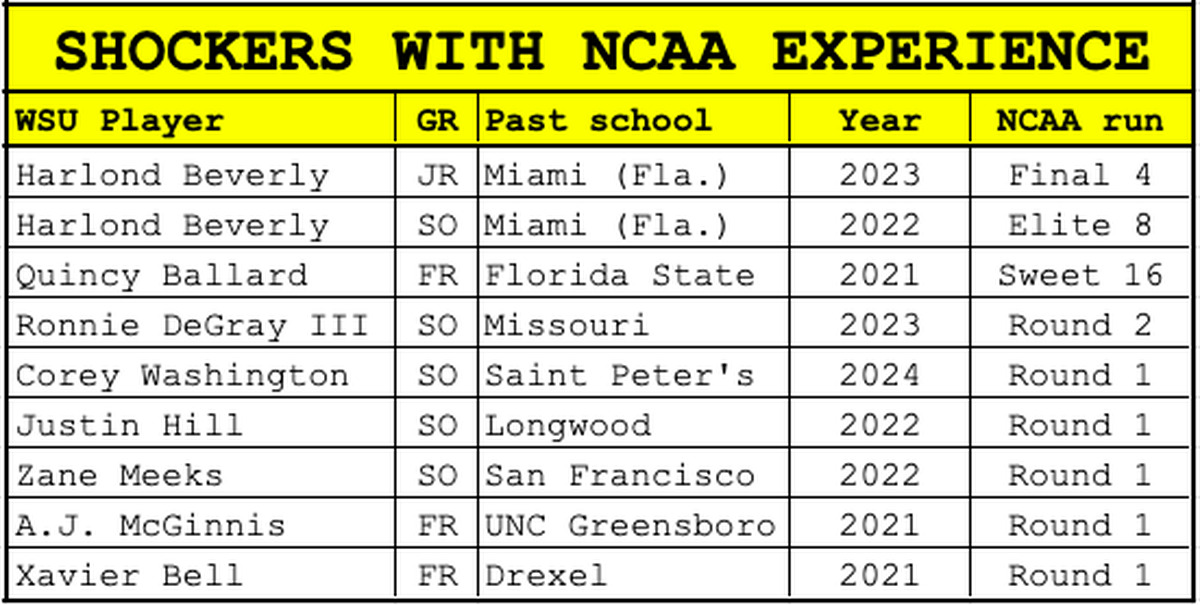
In the transfer portal era of college basketball, experience reigns supreme — and the Shockers have a ton of it. It’s a group with nine seniors, six transfers from major conferences like the Big 12, ACC and SEC and eight players with NCAA tournament experience at past stops.
Like all things under Mills’ attention, that’s all very intentional.
“We believe we’re a high-major program, so you have to have high-major guys,” Mills said. “We have guys who have experienced the NCAA Tournament and they know what winning looks like. You have to understand what a game for March looks like. And I think if guys have experienced that before, there’s kind of a dopamine hit that you know every March you want to experience.”
WSU guard Xavier Bell helped lead Drexel to the 2021 NCAA Tournament in his freshman season. Now a senior in his final year, the Wichita native would love nothing more than to help lead the Shockers back to March Madness.
Having been part of a championship team before, Bell knows what a locker room should look and feel like.
“There’s an understanding that it takes a whole team, it takes a whole locker room to buy into the process,” Bell said. “Everyone is on the same page that the most important thing is finding a way to win. You don’t care how it looks, just as long as you get the job done.”
Every team is different: Harlond Beverly’s Final Four squad at Miami featured elite guard play, Quincy Ballard’s Sweet 16 Florida Sate team was led by a future NBA star and Ronnie DeGray III’s Missouri tournament team excelled at the art of small ball.
But winning teams often share certain characteristics that the current Shockers try to carry with them to Wichita to lead their new team back to the Big Dance.
“You watch games in March Madness and every team plays different and every team has its own different identity, but the one thing that is always consistent is the player’s commitment to each other and to the coaches,” Beverly said. “So you understand what that needs to look like and feel like and I believe that this team has that level of commitment and understanding needed to win.”
The games are ultimately how the team is judged, but veteran players who are used to winning know the importance of practice. Mills often says there are no meaningless minutes on the practice court at Koch Arena, something players with tournament experience understand.
Every day offers a chance at a small victory. Accumulate enough of them in practice and it typically translates to wins on game days.
“What you do in the practice gym is what shows up in the games that everybody sees,” said WSU forward Corey Washington, who led Saint Peter’s to March Madness last season. “Nobody else is going to see what’s going on behind the scenes, but they can tell how it’s going with the results on the court.”
Mills also stresses the importance to his players of peer-to-peer leadership in the program. Coaches are there to correct in the film room, but Mills wants his players to take ownership in practice. When newcomers were having issues with terminology during summer sessions, the returners were there to fill them in. When freshmen struggled with certain drills, veterans showed them the way.
The preseason was designed to push, pull and tug at players to teach them how hard they have to compete just to have a chance at winning. Going through tough times together helped forge a bond between the players before they begin competing in games together.
“We were dead tired every single day and that’s because we were exhausted from leaving it all out there on the court,” Bell said. “There’s nothing like that brotherhood in the locker room after a hard practice. We come in every day, even when we aren’t feeling the best or some guys are injured, and we find a way to get through it and find a way to get better each day and hold each other accountable. There’s a strong sense of togetherness with this group.”
While his players have a year or two of experience playing in the tournament, Mills has been a part of March Madness for the past two decades. All of his assistants have also either played or coached in an NCAA Tournament. When Mills was an assistant at Baylor from 2003-17, the Bears reached seven NCAA Tournaments with two Elite Eight runs and four Sweet 16 appearances. As the head coach at Oral Roberts, Mills notched two NCAA bids in his last three seasons and became just the second coach in NCAA history to lead a No. 15 seed to the Sweet 16 in 2021.
Seven months before March, Mills was already obsessing over the details he believes are vital to winning in March. One of the first team meetings in August featured a slideshow that highlighted five ways Mills believed WSU could build “a game for March.”
The first bullet point centered on shot selection, which was lacking last season for a WSU team that ranked No. 228 in the country in effective field goal percentage. Mills had prepared charts and graphs examining every 30-win team from last season and the kind of shots they primarily took. Then he showed them what the shot charts looked like from the most efficient NBA offenses.
Mills holds players accountable by making sure every shot in practice is tracked and handing WSU players a sheet of paper with their shot chart for that week’s practices once a week.
“This is about building a game for March and making sure you can advance in March,” Mills said. “We start that process when they first show up. I bet if you ask anyone on the roster, they’ll be able to tell you about the value of taking certain shots. And it’s not just about what shots you take, but also the shots that you force the other team to take. That has a lot to do with whether or not you have a game built for March.”
With four months until March, there’s still plenty of time for the Shockers to steadily build toward their ideal postseason game. Monday’s season-opener on the road at Western Kentucky, an NCAA team last season with two-thirds of its production back, has the chance to feel like a tournament game in early November.
That almost certainly would have overwhelmed the Shockers from last season. But armed with more experience and talent, Mills believes WSU is ready for the challenge this season.
After so many players have experienced the NCAA tournament at past stops, this group of Shockers is ready to make their own March memories together in a WSU uniform.
“What I learned is that everything is in the details,” added WSU point guard Justin Hill, who danced with Longwood in 2022. “Details are what separate teams. Every team has talent, but it’s about what you’re willing to do and how tough you’re willing to be when it comes to the small stuff. The toughest teams usually always win.”
This story was originally published November 4, 2024 at 6:03 AM.
.jpg)