
‘You have to soak it in’: Four ways Wichita State basketball can learn from Temple loss
Not much is going right for the Wichita State men’s basketball team lately.
The offense has floundered for the past month, as the team has lost six of its last seven games. The Shockers are currently on a four-game losing streak with their next two games against No. 13-ranked Memphis at Koch Arena on Sunday and against No. 24-ranked Florida Atlantic on the road next Thursday.
Instead of trying to bury the problems that have plagued WSU, first-year head coach Paul Mills is making his team face them head-on.
“There are growing pains involved and I would like to eliminate the word ‘pain’ as part of our growth, but that’s the reality of the situation,” Mills said earlier this week on his radio show. “The truth is, you can learn a lot during these situations and you don’t want to waste them. I think too many people try to ‘flush it’ and move on. But you really have to absorb this, you have to soak it in. You do have to respond to it correctly because the reality is that you can learn a great deal, not only about your team and about yourself, but also learn the things that are required in order to get better. So you have to embrace it.”
Here are four things the Shockers can learn from their most recent game, a 68-61 road loss to Temple.
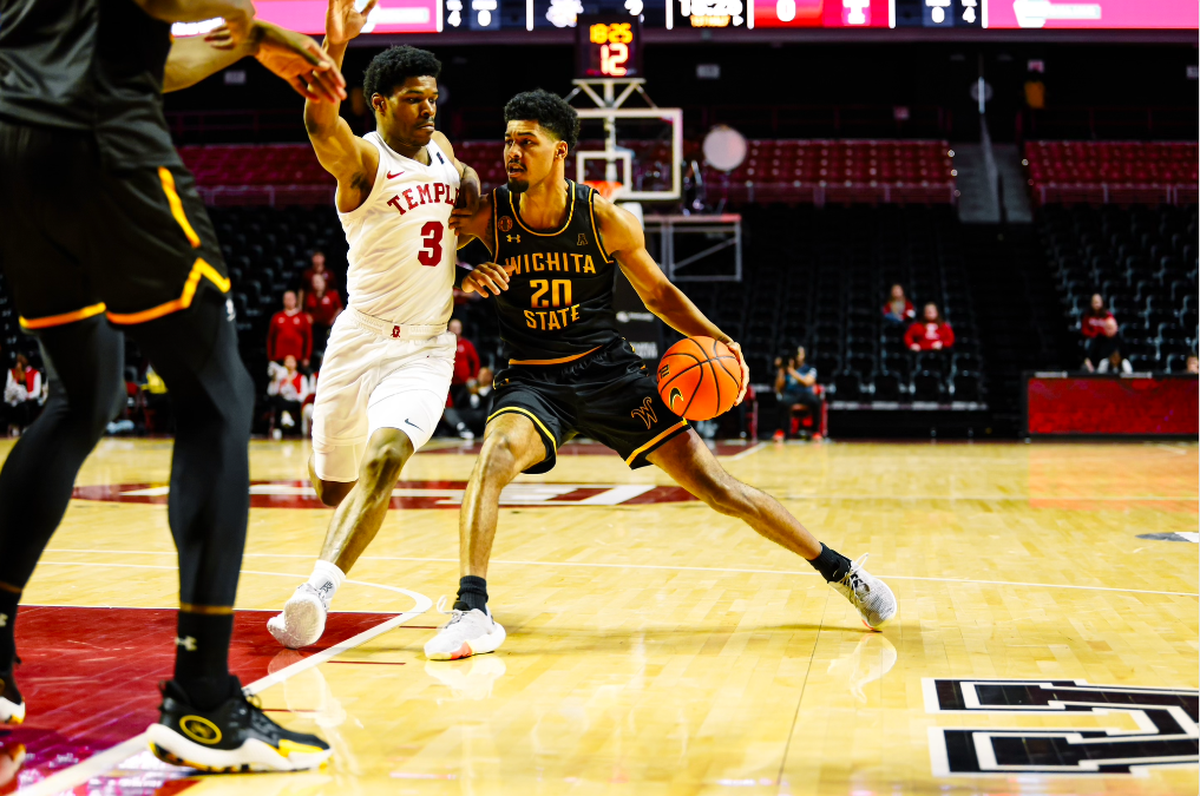
1. Wichita State’s offensive problems by the numbers
It’s obvious WSU has a shooting problem, but the numbers laid out through 15 games is still staggering.
The Shockers are on pace for their worst 3-point shooting season since 1998, as the team’s long-range accuracy has dipped to 29.5% for the No. 312 mark in the country.
The team is shooting 66.9% on free throws, which ranks No. 301 in the country and is also on pace for the program’s worst mark since 1998.
Most troubling, however, WSU is producing shots at the rim at the 15th-highest rate in the country, per CBB Analytics, but its shooting percentage at the rim is ranked No. 333 in the country.
“This isn’t something where I can go in and spend an hour and then all of a sudden I’m good at it,” Mills said of WSU’s shooting woes.
“Hope isn’t a strategy, so we’re not going to hope things all of a sudden change. We know what we have to clean up and we know what we have to get better at. This isn’t a situation where you can just add water and this stuff happens. It’s going to be a process.”
An idealized Mills’ offense spreads the floor to give players space to make plays. But WSU’s inability to knock down perimeter shots has taken its toll on the overall health of the offense.
Even when players are properly spaced along the perimeter, WSU’s offense rarely operates with ideal spacing because help defenders don’t have to give a second thought about leaving their man on the 3-point line to stave off drives to the basket. It has shrunk the areas on the floor where defenses have to respect WSU and that has led to a cascade of missed 3-pointers and even more forced shots around the rim.
Mills sees good intentions with WSU players attempting to make a play, but would like to see more dump-off and kick-off passes instead of forced shots. WSU assists on fewer than 43% of its made baskets and ranks No. 326 in the country in assist percentage.
“There’s got to be better trust,” Mills told The Eagle. “We don’t need to let the ball stick as much as we do. We can get rid of it. We’ve had some plays where a guy creates an opportunity and he’ll have some people around him and we see other people open but don’t make the pass. I feel like good players, they kind of burden themselves and want to put it on their shoulders. But we need to do a better job of sharing the basketball.”
It’s also common to see WSU run through a set play and if the first option isn’t available to revert to an isolation attempt or high ball screen to try to score. WSU averages 5.5 isolation possessions per game, which is tied for 42nd-most in the country.
“We work on the offense every single day. We’re not trying to be an iso-heavy team,” WSU guard Xavier Bell said. “We don’t want to try to carry the whole weight of the offense. We need to pick it up with the ball movement and player movement and do what coach stresses every day and try to implement it in games.”
To help solve a lot of WSU’s offensive issues, the easiest solution for the team is to be more selective with its 3-point shooting and to capitalize more often on those high-quality looks. A study by The Eagle showed WSU shoots just 37.2% on wide-open 3-point shots, a fine percentage for all 3-pointers, but far from great for the best-of-the-best looks. Hitting more of those would pull the defense further out, widen driving lanes and improve the shot quality around the rim for WSU.
For the rest of this season, shooting will be a top priority in practice. Mills said he has recently implemented an after-practice club that requires all players shooting 70% at the foul line to make at least 75 out of 100 free throws.
While those are the plans for the rest of this season, Mills hinted he could have plans after the season to help improve WSU’s weakness.
“Some of this is work, but some of this can get solved via recruiting,” Mills said on his radio show. “You can recruit better shooters and then some of it can be solved via work. So all of those things are on the table. It’s January 8th. This isn’t getting solved January 9th. We’ll see increments, but we have to embrace what we’re good at.”
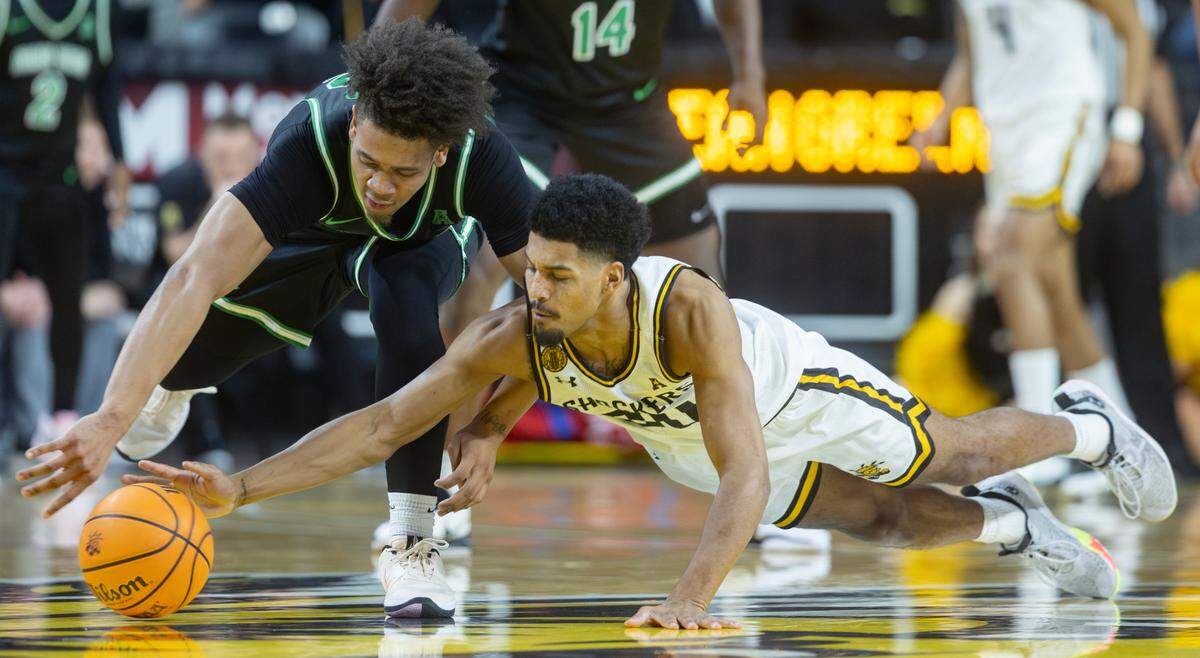
2. Where progress is being made with WSU’s defense
One encouraging aspect of Sunday’s game was WSU’s defense, which held Temple to 0.92 points per possession to snap an eight-game streak of allowing better than 1 point per possession.
Peel back the numbers further from Synergy’s tracking data and WSU’s defense limited the Owls to 0.70 PPP on 73 half-court chances, its lowest mark since holding Western Kentucky to 0.57 PPP in the half court in the second game of the season.
By Mills’ own tracking, WSU’s defense registered a 71% contest rate — below the desired goal of 80%, but trending in the right direction.
“One of the things we tell our players is if they’re dribbling, we’re probably doing things right,” Mills said on his radio show. “If they’re not dribbling, we’re probably doing things wrong. So we’re trying to contest a certain amount, but we also want a certain shot type.”
WSU’s players have also been drilled on which hand to use when contesting shots. Some have always closed out with their right hand regardless of which side they were on the shooter, a habit Mills is working on breaking. He wants the correct “stick hand” contesting the shot every time.
“If you’re looking at me and I’m right handed and you put up your right hand, you’re doing nothing to impact the shot,” Mills said. “I’m going to shoot it without much deterrence because your hand is on the wrong side.”
Progress was seen in the Temple game with WSU defenders using their left hand to better contest right-handed shots, but the team as a whole still isn’t executing the tiny details consistently enough.
The example Mills cited came in Sunday’s game with the score tied at 59 entering the final three minutes when Temple’s Sam Hofman buried a go-ahead 3-pointer over what appeared to be a solid contest from Kenny Pohto.
Pohto contested with the correct stick hand, so what was the issue? Mills revealed Hofman was labeled a “Hot” shooter on WSU’s scouting report, which meant Pohto should have met Hofman on the catch along the perimeter rather than lay back at the free throw line and lunge for a late contest.
“They get a top-of-the-key 3 from a ‘hot’ on a standard close-out,” Mills said. “You can’t close out like you would on a normal player on a ‘hot.’ Unfortunately, that stuff comes back and gets you.”
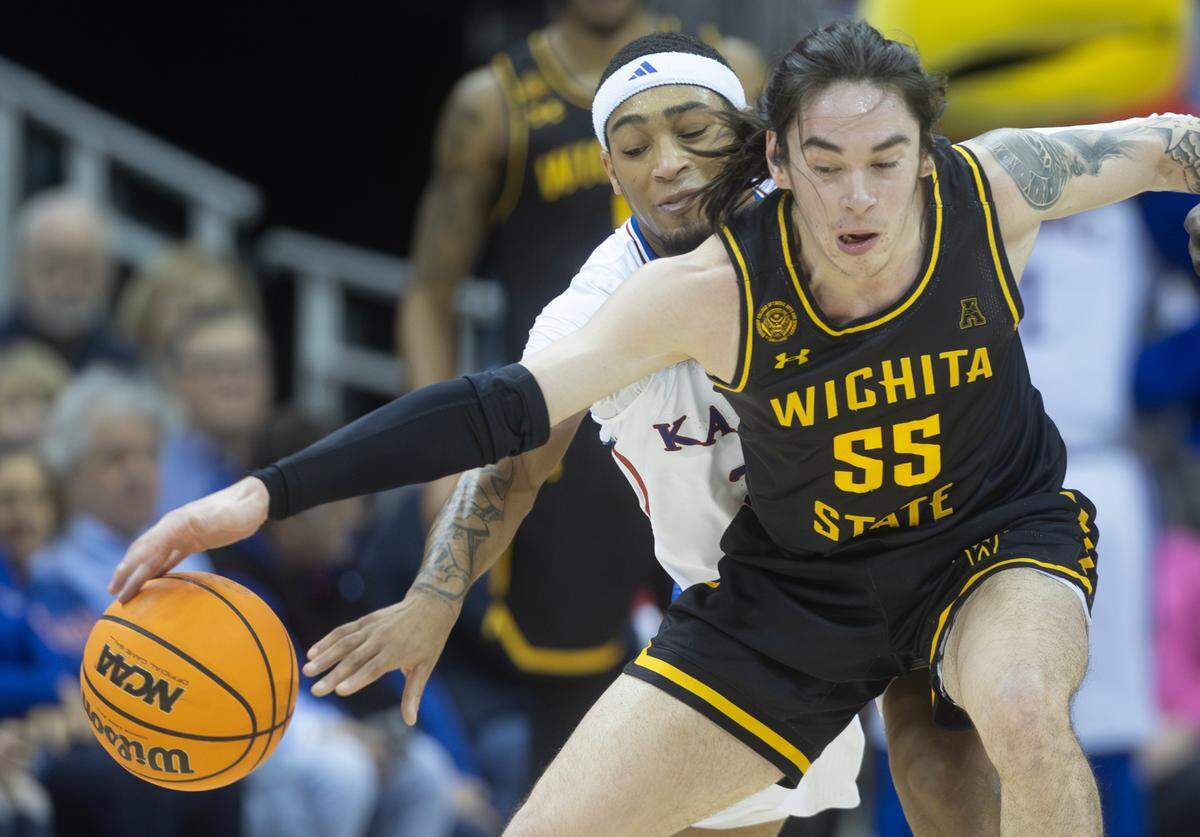
3. Where the Shockers still struggle on defense
The biggest drop-off in WSU’s play from the first eight games to its 1-6 stretch the last seven games has been its transition defense.
After ranking among the nation’s top transition defenses early in the season, the Shockers have plummeted down the rankings because their live-ball turnovers have skyrocketed.
The constant stream of turnovers and bad misses, which act as turnovers, have put WSU’s defense in compromising situations all too regularly. According to Synergy, WSU’s defense has allowed 1.12 points per possession in transition in the last seven games, a mark that would rank No. 316 in the country.
“I can promise you nobody is turning the ball over on purpose. Nobody is missing free throws on purpose,” Mills said. “When you have a group that cares about doing the right things on and off (the court), it’s usually an indicator that you’re dealing with a group that is going to fix whatever problem is out there.”
Not only would simply eliminating silly mistakes be an easy way for WSU’s offense to have extra cracks at scoring, it would also drastically reduce the chances of the opposition scoring in transition and allow WSU to set up its half-court defense.
The Temple game was no different, as the Owls netted 17 transition points on 12 chances — many of them directly following a WSU miscue.
“A lot of this is just teaching players how to win. What are the things that winning looks like?” Mills said. “It’s not fun having to go through (the process), but I do think our group is receptive and we grow every game.
“All of this sounds good, but getting it done is a different deal.”
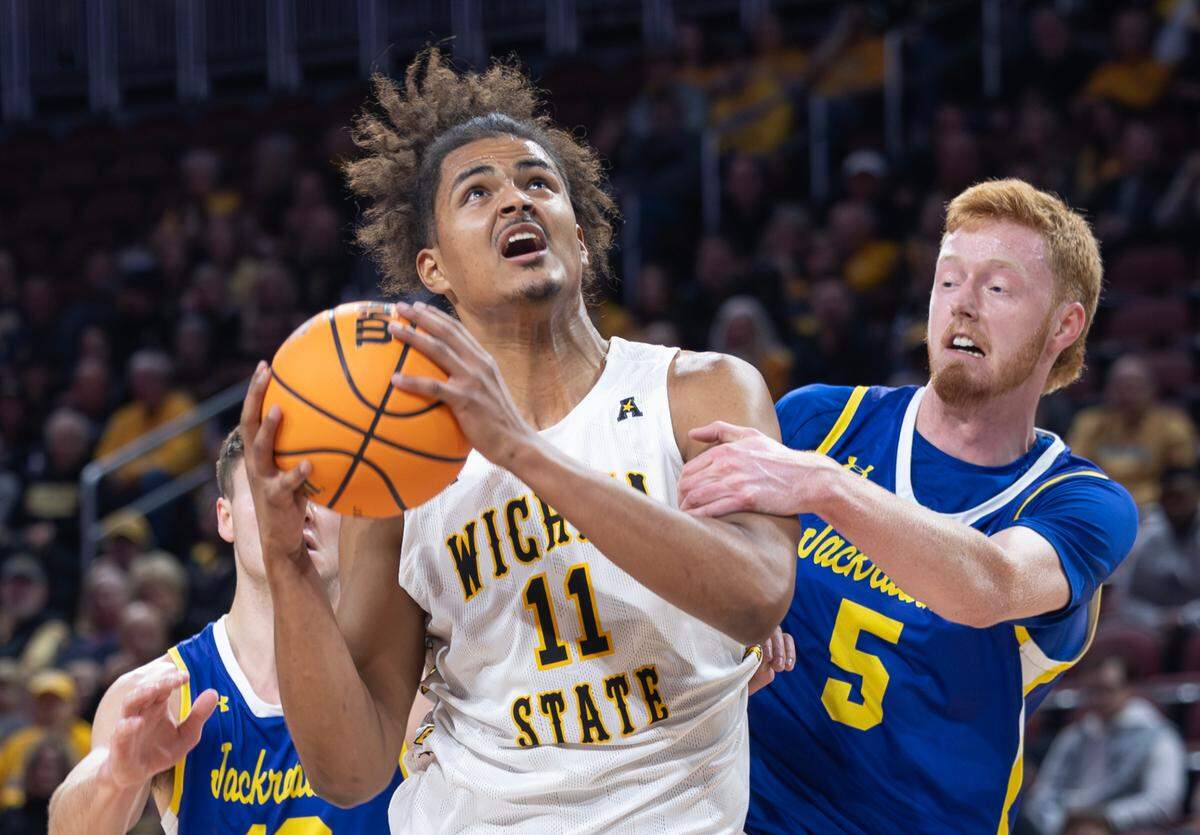
4. How Paul Mills solved two problems with one decision on Kenny Pohto
Mills may have solved two problems with one decision he made before the Temple game.
Two things had been true the past month: Kenny Pohto’s confidence was dipping and WSU’s bench was routinely being overwhelmed in its first call to action.
The solution, at least for Sunday’s game, was to bring Pohto off the bench for the first time this season. WSU outscored Temple by four points in Pohto’s 28 minutes, as the 6-foot-10 big man from Sweden scored a team-high 14 points with six rebounds, three assists, a block and two steals.
“Do not think of this as a demotion,” Mills said he told Pohto before the game. “This isn’t that at all. We need your help here and you can really make us a better team if you can come in and allow us to get better. We’ve gone to our bench recently and unfortunately, we’ve gotten worse. We need to get better when we go to our bench.”
It was far from a perfect game from Pohto, who still had a handful of close misses near the rim, but there were clear signs of his confidence returning. Like early in the second half when he sensed a smaller defender on him, ducked in to make himself available for an entry pass in the paint, then made an aggressive post move toward the basket that earned him two free throws.
He reserved his best for down the stretch when he helped WSU’s comeback with a pick-and-pop 3-pointer, then a slick pass to Ronnie DeGray III to tie the score at 59.
Even more telling, Mills put his trust in Pohto by running the same isolation play for him three times in the final five minutes. WSU would clear out the right side of the floor with only sharpshooter Colby Rogers spotted up in the right corner, which essentially took away Temple’s help defense and allowed Pohto to attack with a right-handed drive.
Pohto got the better of his match, Sam Hofman, each time. Without any flailing arms at the ball, Pohto was able to confidently dribble to his spot and score while being fouled with 4:03 remaining for a three-point play. Ninety seconds later, WSU ran the same play and Pohto was able to beat Hofman off the dribble again for two free throws. He was fouled again on the third time WSU ran the play, but Pohto missed the front-end of his bonus free throw.
“I’ve been struggling with a little slump, but everybody comes out of it at some point,” Pohto said. “It feels good to be able to see a couple buckets go down and get back on track a little.”
It’s also worth pointing out Sunday, WSU’s 15th game of the season, was the first game where Pohto did not play a single second alongside 6-foot-11 center Quincy Ballard.
Will Pohto continue to come off the bench to spearhead the offense when some of the starters come off the floor? Will WSU continue to rotate Pohto and Ballard at center or return to its two-big lineup? Did WSU finally figure out how to employ Pohto?
Those are questions with answers that remain to be seen early in the conference season.
.jpg)