
How can Wichita State catch up in college basketball’s unregulated NIL money game?
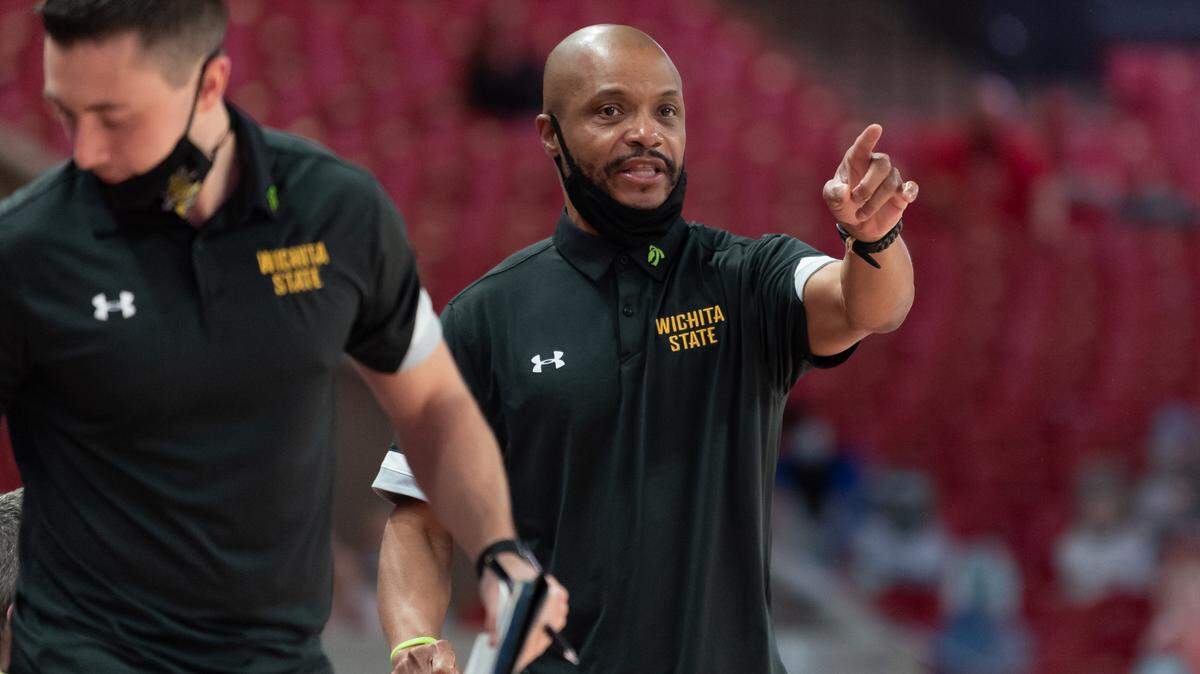
Wichita State is entering the wild, wild west.
With the launching of a collective last month, the Shockers have officially joined the rest of college basketball’s major players in the name, image and likeness game.
Those three letters — NIL — have taken over the college basketball world because they represent the players’ ability to make money under NCAA rules from previously impermissible activities such as sponsorships, signing autographs and selling memorabilia. To help facilitate these money-making opportunities, booster-led collectives are popping up all over the country.
Want to keep your best players? You’re going to need NIL money to offer. Want to attract top-tier recruits? You’re going to need even more. WSU found that out the hard way when it entered the offseason with no collective and no NIL money in place, which played a role in a total of eight scholarship men’s basketball players entering the transfer portal.
This isn’t the way the NCAA envisioned the NIL era playing out when it set its initial policy last summer that featured essentially just two rules: that NIL money cannot be pay-for-play and it cannot be used as a recruiting inducement. But the NCAA doesn’t appear willing or able to enforce its rules, a direct result of its power being neutered by a Supreme Court decision that sided with college athlete’s right to profit.
For years and years, schools have hoarded money to build the latest and greatest facilities to stay ahead in recruiting.
Facilities are so yesterday. The newest trend? NIL money.
“Look, you can almost halt the construction on some of this stuff,” a rival coach told The Eagle. “We’ve been told for so long that we’re all in the arms race for facilities. Nuh-uh. We’re all in an arms race for NIL.”
The Eagle conducted more than a dozen interviews with current and former players and coaches on the WSU men’s basketball team, coaches from around the country, a national college basketball analyst and the head of an NIL collective to try to capture the current landscape of college basketball.
The stories may surprise you.
“College basketball before NIL and after NIL,” ESPN analyst Mark Adams said, “is like the difference between a 4.0 earthquake and Yellowstone blowing up.”
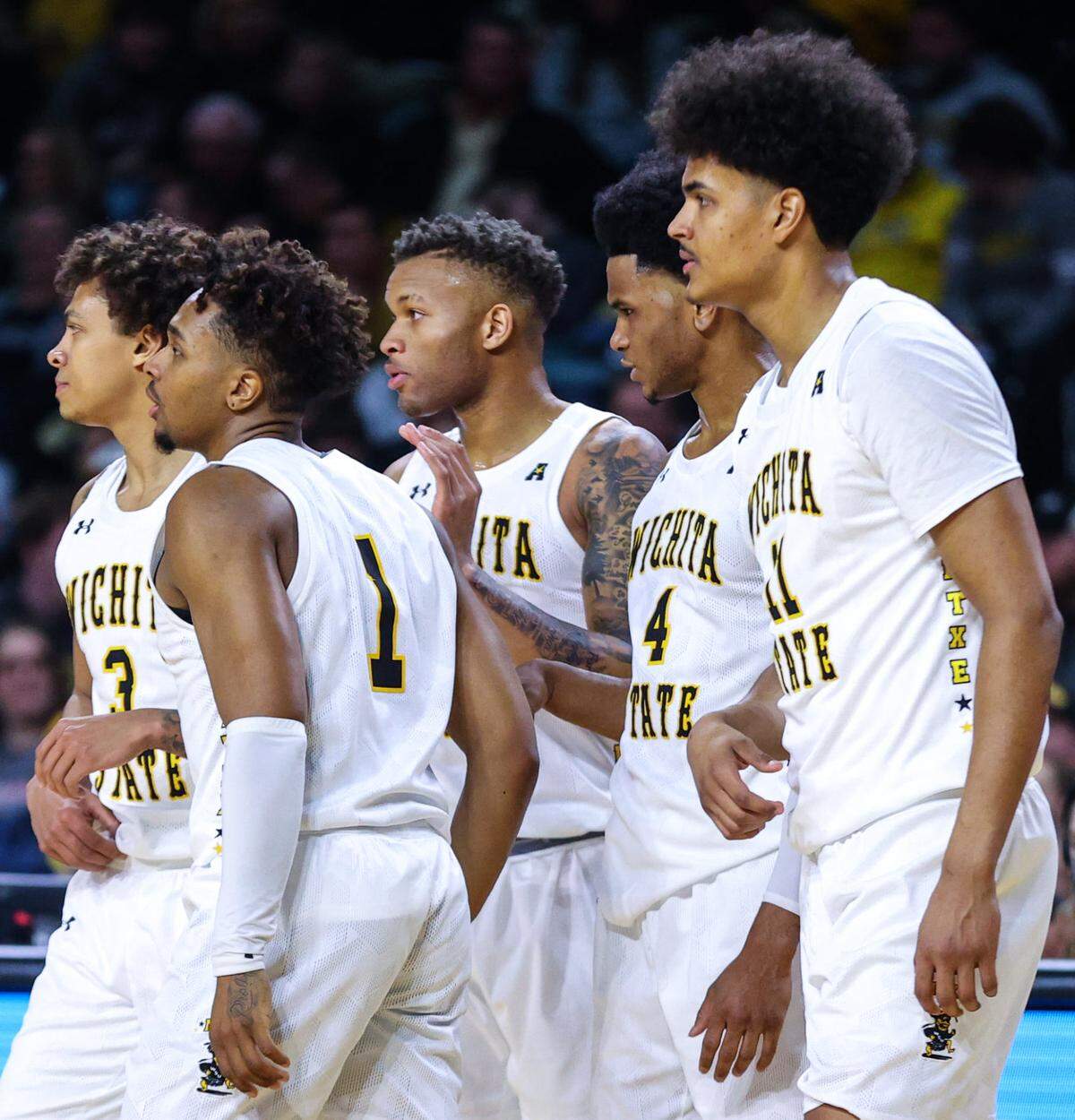
From WSU players: ‘A little money in my pocket won’t hurt nobody’
Anticipation would be the best way to describe how the players on the Wichita State men’s basketball team felt last summer when the NCAA announced student-athletes could begin profiting off their name, image and likeness.
After all, they were playing for the Shockers, the biggest show in town, and in a basketball-crazed city like Wichita. The players assumed there would be no problem cashing in.
Instead, no one in a position of power in Wichita seemed to realize the importance of NIL.
With no collective in place, there was hardly any NIL money to go around this past season, which played at least a role in eight scholarship players entering the transfer portal — sixth-most in the country and tied for the most in a program without a coaching change — and the firing of athletic director Darron Boatright on Wednesday.
Two of those players who entered the transfer portal gave their thoughts about the NIL experience this past season at WSU and how money, or rather the lack of it in Wichita, played a role in the decisions of many players leaving. The players were granted anonymity so they could freely express their thoughts about the situation to The Eagle.
“We figured with our support and the boosters in Wichita, we would probably be ahead of the curve,” one WSU player said. “We figured we would be getting tons of stuff during the season and there would be way more opportunities because we have such great support.”
Instead, the WSU athletic department failed to foresee the NCAA being unable, or unwilling, to enforce its own rules and how rapidly NIL deals would become a vital part of recruiting and retaining players.
When it came time to initially decide to stay or go, WSU had no collective in place to promise to deliver money-making opportunities to the players.
A repeat scenario from last season was untenable for many of the players. How much exactly did one notable WSU player make in NIL money this past season?
“Not a penny, not a dime,” he said.
Some players were able to make some money with sponsorships from local businesses like Carlos O’Kelly’s, Supplement World and Peace, Love & Pie, but one player said they “doubt” any player at WSU made much more than $1,000 from NIL deals this past season.
During the player exit interviews with the WSU coaching staff in mid-March, many players brought up the topic of NIL opportunities. Would next year be any different?
At that point, all the WSU coaches could say was that they hoped things would improve. They had no way of promising something that was out of their control.
To be clear: the lack of NIL money was far from the only reason why eight scholarship players wanted to transfer. For many, it was some combination of disagreements with the coaching staff centering around playing time, positional fit and playing style to go along with the frustration of a disappointing win-loss record.
A handful of WSU players who entered the transfer portal would have left regardless, determined to find a better fit. But WSU being unable to answer the NIL question during the exit meetings ultimately doomed the Shockers in at least a handful of cases.
“Why would you stay here when you can go somewhere else and make some money?” one player said. “I know Wichita has a great tradition, great fans and winning basketball, but with this coming age, I don’t think players are really going to care about any of that anymore. They’re going to want to make money, just like everybody else. That’s the truth.”
“We were told they hoped things would change, but we never saw anything change,” the other player said. “I think a lot of my teammates were tired of being sold a dream of nothing actually happening.”
Of course, the players heard the whispers during this past season that highly touted freshman Emoni Bates made $1 million to play at Memphis. And they’ve since heard the NIL deal that has dominated national headlines: the two-year, $800,000 NIL contract Nijel Pack signed with LifeWallet after transferring to the University of Miami.
But when asked by The Eagle how much money they were reasonably expecting, the players said nowhere near a six-figure deal. Some walking-around money, maybe a car, a little free food were the things mentioned by the players on their wish list.
Both players emphasized that they genuinely enjoyed playing for a tradition-rich program like Wichita State, but they also pointed out in the new NIL age, players are going to want to feel appreciated — like they are being taken care of.
“It’s not like I was asking for a million dollars,” one player said. “But there’s gotta be something out there for us. Wichita is a big basketball city. Everybody is behind us. It shouldn’t be that hard to generate some money through boosters and companies. Putting a little bit of money in my pocket won’t hurt nobody.”
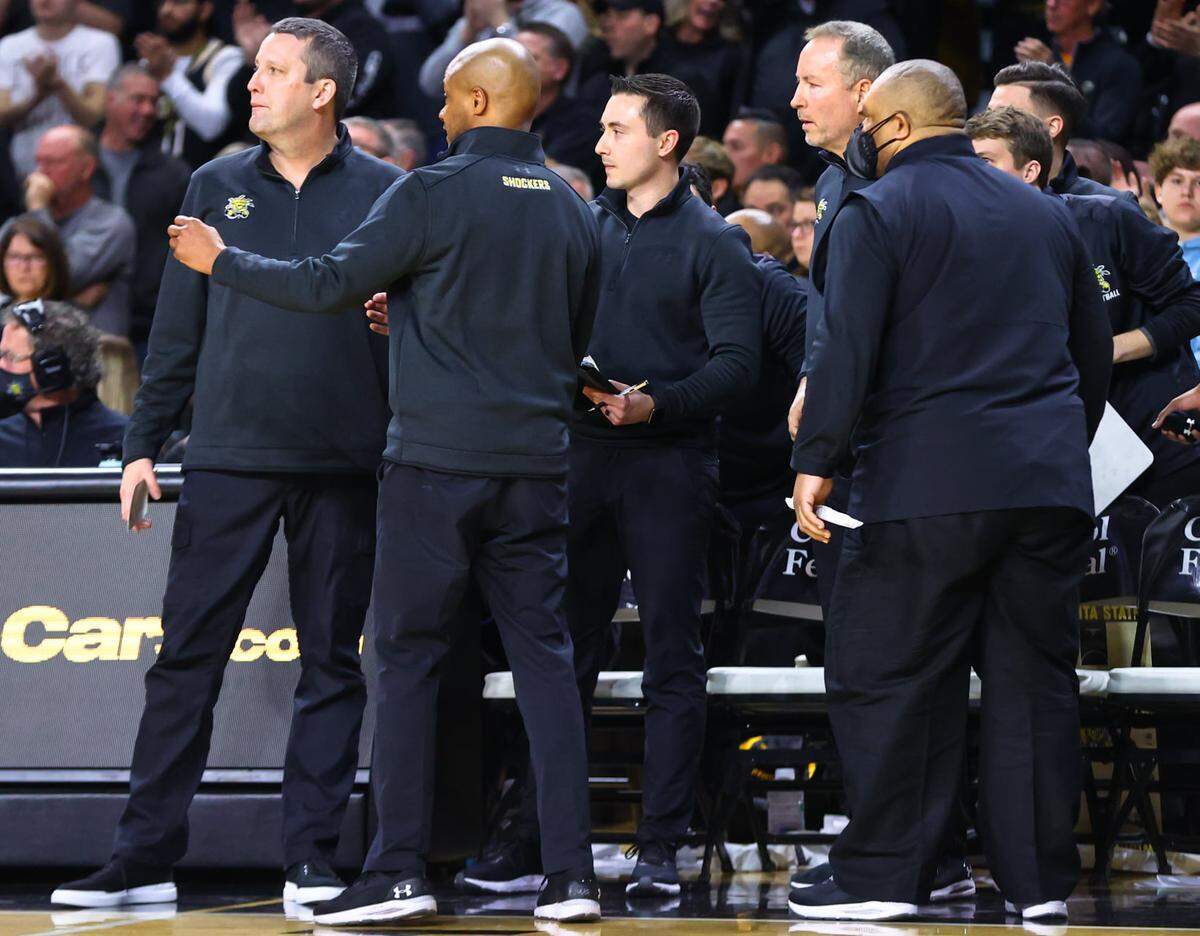
From a WSU coach: ‘(NIL) absolutely destroyed us’
Helpless was the only way to describe how the Wichita State coaching staff felt when the calendar flipped over to April.
They felt good about the core of talent they could return with players like Dexter Dennis, Morris Udeze, Craig Porter and Ricky Council IV. But they had a major problem: WSU had no collective in place to help retain players with NIL agreements.
It was like bringing the proverbial knife to a gunfight.
“Three of our marquee guys came to us and said, ‘If you guys can come up with a good NIL package, we’ll probably come back,’” said a WSU staff member, given anonymity so he could speak freely on the subject.
“One of them said, ‘Can you get me $40,000 in NIL?’ This guy has big-time schools throwing him a lot more money than that. How do I stop a kid from taking that kind of money when I know where he comes from? He could make more than what his parents make. How do we top that when we have no NIL money to offer?”
The falling dominoes were depressing to watch for the coaching staff: Dennis and Udeze entered the portal together on April 6. Two weeks later, Council announced he would explore his options in the portal. The very next day, Porter joined him.
It was the second mass exodus at WSU in three years, as the Shockers had 92% of their production from last season in the transfer portal at one point. Following a disappointing 15-13 campaign in which it missed the NCAA Tournament, criticism mounted of second-year head Isaac Brown. Behind the scenes, the staff was even more frustrated.
“The fans didn’t understand what we were going through and what we were up against with this NIL situation,” a WSU staff member said. “It absolutely destroyed us not having the financial backing in NIL to keep some of our key guys. They really didn’t want that much, but after we let them linger, they started hearing and seeing what these other kids were making. They hear NIL this and NIL that, so they figure they might as well try it out too.
“We do things the right way here. We recruit our players based on relationships with these young kids and their families. But now that’s not always enough. Now it’s, ‘You believe in me? Well, show me the money.’ That’s the mentality sometimes. It’s strictly business.”
The staff member fears the combination of the one-time free transfer rule paired with the NIL money high-major programs can throw around will make it near impossible for programs outside of the power six conferences in college basketball to retain their best players.
“If you’re in a mid-major league and your two best players make all-league, there’s a 90% chance they won’t be there next year,” the WSU staff member said. “The big boys are going to come calling and give them an NIL package they can’t resist and they’re going to leave. If you have any kind of stats, a program that’s got money will have first dibs.”
With so many handshake deals happening to lure mid-major prospects into the transfer portal, it’s inevitable a few players will be left out in the cold.
“There’s going to be a lot of empty promises,” the WSU staff member said. “You’ve got a lot of bad people who are telling kids anything to get them in the portal and then it turns out that dollar amount they promised them is not the truth. I guarantee you kids are going to start walking away from teams later this year because they didn’t get what they were promised.”
The start of this offseason was disheartening, but momentum has swung back in WSU’s favor since the debut of Armchair Strategies, WSU’s first NIL collective. On the collective’s very first day, it was able to put together an NIL package to convince Porter to exit the transfer portal and return to WSU. Those inside the program find it hard not to wonder what could have been if the NIL money was ready to go as soon the season ended.
Now that the fan base can see the immediate power shift an NIL collective can bring to recruiting, the coaching staff hope the Wichita community will rally behind Armchair Strategies.
“It’s hard for old-school coaches to adjust and adapt to this, but we don’t have a choice,” the WSU staff member said. “People need to understand how important NIL is right now to these kids who don’t come from much and are being hit up by AAU coaches, agents, friends in other programs.
“I really believe Wichita is a city that has a chance to be great at this NIL. We just have to all come together.”
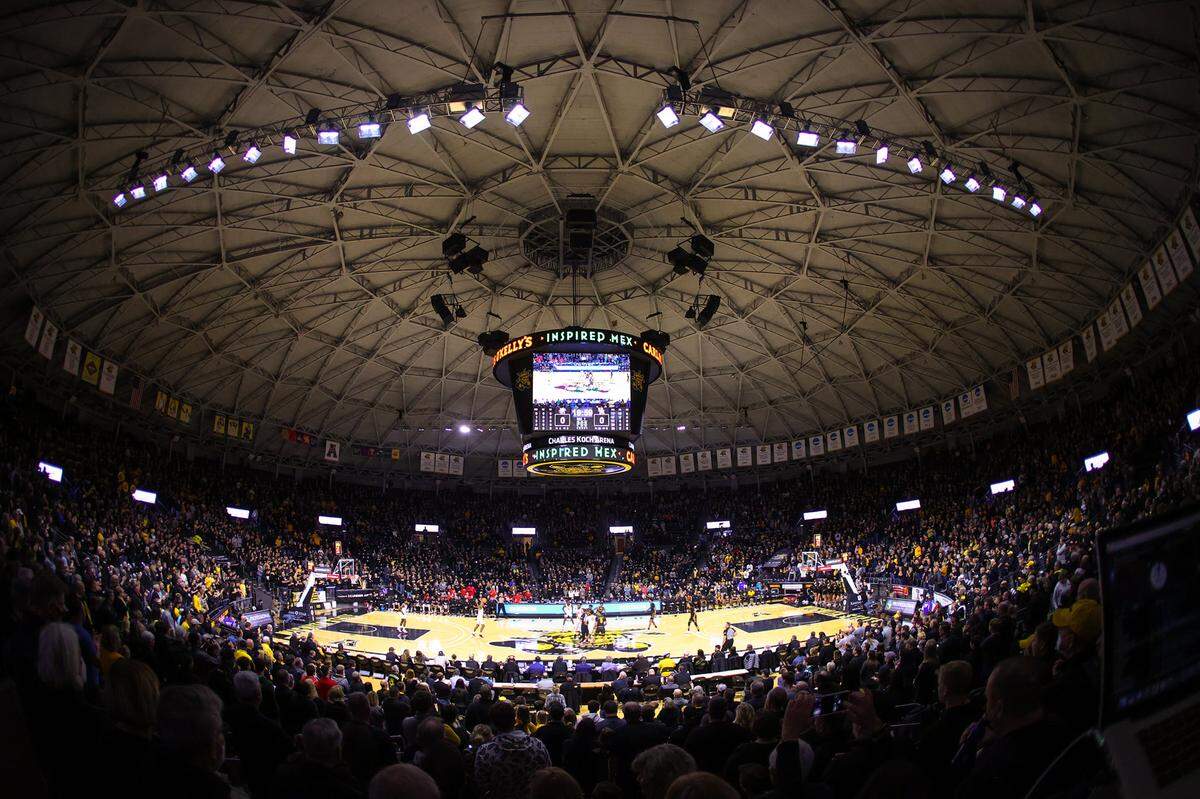
From an outside coach: ‘(NIL) has a prostitution feel to it’
While Wichita State has not been operating in the high-stakes world of the transfer portal this offseason, an assistant coach from a rival school who spoke to The Eagle on the condition of anonymity has.
It’s common for outsiders to label what’s happening right now in college basketball as the wild, wild west. This coach says that doesn’t even do it justice.
The coach compared the tiers developing in the transfer portal as blackjack tables you find at a casino: there are $5 tables, $25 tables and $100 tables. Your NIL bankroll determines which tables you can play at.
If you want to sit at the high-roller table, the coach says your total NIL bankroll better be north of $1 million with a minimum of $100,000 to offer a high-level player in the transfer portal. From there, the haggling begins.
“It honestly has a prostitution feel to it,” the coach said. “The first thing you ask is, ‘How much are you looking for? What’s your price tag?’ They name their price and if that’s a dance worth dancing, then you start your spiel for why they should accept your $150,000 and not the $150,000 somewhere else.
“NIL needs to be the very first question you ask when recruiting. You can save yourself a whole week if you know the kid has already been offered six figures.”
When given the hypothetical situation of trying to retain and attract worthwhile talent without any NIL bankroll, the coach shuddered at the idea.
“I can tell you that I would not want to be trying to flip momentum if you don’t have some considerable resources at your back,” he said. “You’re going to get lost in the wake of this deal. You better have some resources at your back because you are going to have the fight of your lives on your hands to retain your current guys.”
When told that was the situation WSU was in earlier this offseason, the coach was taken by surprise.
“Wichita State should be a beast at this,” he continued. “You always hear about the pride and passion that community has about its team. For years and years, you heard Wichita State was one of the only mid-majors that chartered everywhere. They didn’t get bought for buy games.
“Candidly, I would have thought they would have been one of the first schools to really bite down on this and have something in place, ready to rock and roll. They should have an army that is just waiting to be utilized. The way I look at it, this is the best way to kill that mid-major stigma. This is finally their time to step forward with two feet and show people that they belong. This is their time to prove it.”
The coach had some advice for WSU as the Shockers dive head-first into the NIL world.
“What we have found is that it’s extremely important to be cognizant and mindful of not having new guys walking through the door making way more money than your guys already in the program,” the coach said. “You’re asking for an absolute mess on your hands if you do that.”
A perfect example is currently playing out at Miami, where booster John Ruiz publicly announced high-profile transfer Nijel Pack signed a two-year, $800,000 NIL deal to play for the Hurricanes. It didn’t take long for Isaiah Wong, the best player from last season’s Elite Eight team, to become unsatisfied and threaten to transfer if his NIL agreement wasn’t increased.
That scenario is the one another assistant coach at a high-major program told The Eagle he was worried about.
“The last thing you want is NIL money messing with your chemistry and your locker room,” the coach said. “What we’ve tried to do is make sure our guys have equal access to opportunities. But this is unchartered territory, so we’re all just trying to figure this stuff out as we go.”
According to the NCAA rules, coaches are not allowed to be involved in the NIL process and collectives are not allowed to use NIL money as pay-for-play or a recruiting incentive.
The rival coach said no one is following those rules: coaches work closely with their boosters or NIL collectives on the amount of NIL money offered to players, while it is standard practice for NIL money to be used as a recruiting incentive.
The rival coach said he knows a handful of mid-major programs who are choosing to focus on retention rather than recruiting, as they are making sure 100% of their NIL money is being allocated to players who stay year-over-year in the program.
He also knows of a top-tier program which has decided to bow out of any bidding wars for the best players in the transfer portal and plans to split its NIL funds equally: $100,000 to all 13 scholarship players.
“If you can get everyone to the same amount, then the hope is you can get back to unity and go back to the culture and camaraderie and chemistry if everybody is eating good,” the coach said. “And then anything that anybody makes after that is truly on their name, image and likeness.”
But more times than not, star players are going to be making significantly more NIL money than role players and sometimes even over other starters. There is concern all over the country among coaches who can already foresee some of the problems that could develop during the season.
“If you pour all of your money on five starters, then you better hope one of those five guys doesn’t get hurt,” the rival coach said. “What if that backup takes over that starting spot during the season and plays well? They’re going to come to you and be like, ‘Why is this guy still getting this monthly salary when I’m the one producing in his role? I want his level of money now.’”
The rival coach said programs better make sure their collectives are stockpiling NIL money for the short-term because he doesn’t believe this current model is sustainable.
“There will be a market correction at some point,” the coach said. “Most of these schools aren’t going to be able to continue to make these kinds of payouts. Some will, but most won’t. There’s a famous business school saying, ‘Don’t let a good crisis go to waste.’ Any time there’s a national crisis, somebody is making millions of dollars and right now the players benefiting like none other.”
While others have blamed the NCAA and president Mark Emmert, who recently announced he plans to step down by the summer of 2023, the rival coach said the blame should be directed at school presidents across the country.
“It’s totally 100% ridiculous that the school presidents accepted this massive, $6 billion TV media deal and the gladiators themselves don’t see a dime of it,” the coach said. “A lot of fans say, ‘What about their scholarships?’ I’m pretty sure Fred VanVleet and Ron Baker generated way more dollars and cents for Wichita State than what their scholarships were worth.
“What you’re seeing now is finally people are realizing the NCAA only has perceived power in these spaces. It was never real power. People finally started to realize we can take them to court and we’re going to win. So now when the NCAA is merely asking us to follow their guidelines, no one is listening.”
So if the current NIL age is unsustainable, where does the coach predict college basketball is headed?
“I think what you’re going to see is this is going to lead to a players’ union and eventually there is going to be a collective bargaining agreement between the players and the NCAA,” he said. “The players will be able to unionize and the next time the TV rights are signed, they are going to have a voice, but they’re also going to have to give something up. They might have to give up these collectives. They might have to give up the one-time transfer rule. And in return, I think the NCAA is going to provide players some kind of a base salary of sorts. I really do think that is where this thing is headed. I don’t think this is a rudderless ship headed for the abyss.”
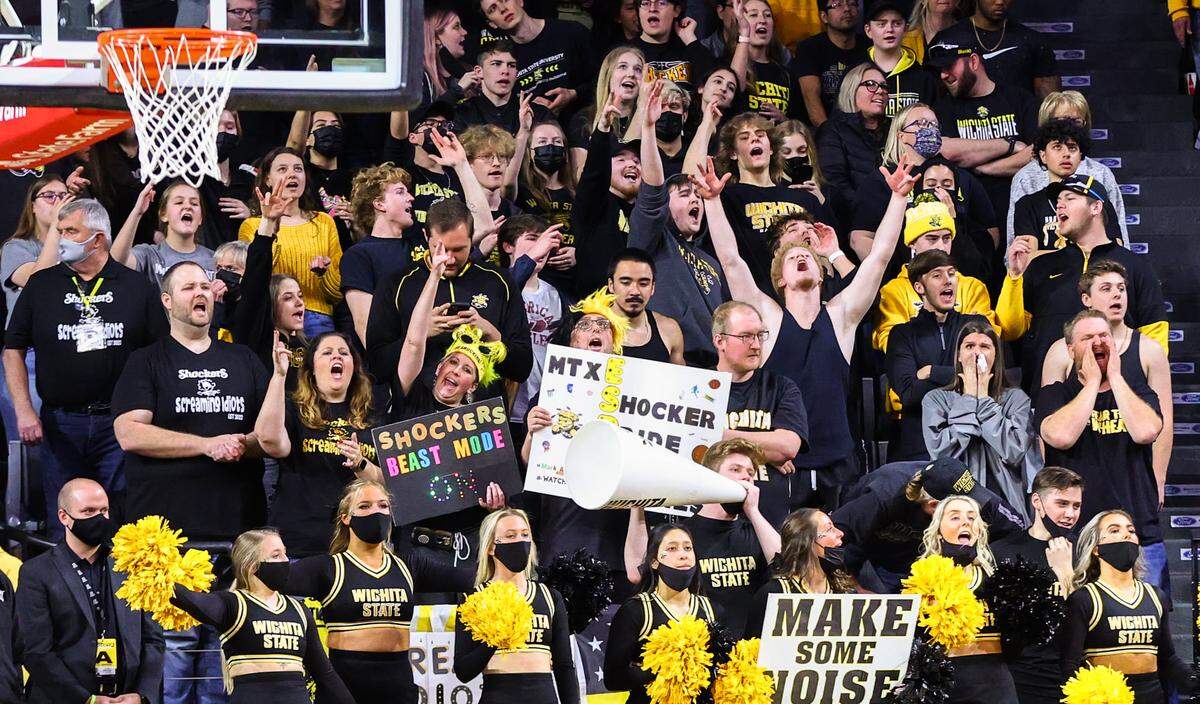
From a NIL collective: ‘People are doing whatever they want’
June 21, 2021 was the date college sports were forever changed, the result of the U.S. Supreme Court’s unanimous decision in ruling the NCAA was violating antitrust laws by limiting benefits to athletes.
“Nowhere else in America can businesses get away with agreeing not to pay their workers a fair market rate on the theory that their product is defined by not paying their workers a fair market rate,” Justice Brett Kavanaugh wrote. “The NCAA is not above the law.”
You won’t find name, image and likeness mentioned anywhere in the case, but that is essentially when the NIL age was born, when the Supreme Court set the precedent of siding with the athletes.
It’s important to remember that context when you fast forward to today and wonder why the NCAA is not enforcing the only two rules — that NIL money cannot be pay-for-play and it cannot be used as a recruiting inducement — it adopted in its initial NIL policy last summer.
A total of 28 states have passed their own NIL law, but many are already reconsidering or repealing their self-imposed restrictions. The state of Kansas is one of the 22 states that currently does not have an NIL state law in place.
“It really has become the wild, wild west right now and there is so much activity that’s arguably questionable at best,” said Curry Sexton, a Kansas City sports attorney. “There are no regulations because the NCAA is gun shy after that decision came down from the Supreme Court. People are looking at that lack of regulation and taking advantage because they understand the NCAA doesn’t have much of a palate for challenging any of this activity. Basically people are doing whatever they want.”
Sexton, a former Kansas State football player, has experience running his own collective: he was part of a group that launched The Wildcats’ Den, the first K-State NIL collective that debuted last month.
He believes collectives have the potential to be “game-changers” for programs, essential for retaining top talent already on the team and also for attracting new talent.
The NCAA strongly discouraged schools from being involved in NIL money in any way and the majority have followed those guidelines. Collectives shield the schools from being directly involved in the NIL fundraising, but Sexton said collectives keep athletic departments in the loop of what they’re doing and have open communication with the school’s compliance office.
Sexton also says there’s an easy workaround for collectives trying to abide by the NCAA rules to not use NIL deals as pay-for-play and recruiting inducements.
“Say you have a premier player on a team who is making $100,000 in NIL deals,” Sexton said. “Not only is that great for retention because that player is now unlikely to leave, but it’s also huge for recruiting because the coaches can say, ‘Here’s what this player made last year.’ That’s not a recruiting inducement because that’s not promising they’re going to make the same amount. It’s saying, ‘If you come to our school and become a bona fide player, then you could potentially be making that kind of money.’ So establishing those early deals can work to your advantage in a number of ways.”
For the last two decades, the name of the game in recruiting was facilities. Now Sexton says the biggest question every coaching staff has to face is what kind of NIL money-making opportunities can they offer to prospective recruits?
“Schools who can’t articulate that are going to really struggle,” Sexton said.
An unintended consequence has been the awkwardness created by the introduction of these NIL collectives, which are essentially competing for the same money from the same pool of donors as the fundraisers for the school’s athletic department.
The way Sexton sees it, the athletic departments have no choice in the matter.
“It’s either get on board or get lost in the dust,” Sexton said. “I think they have to coexist because people are going to want to give money to continue to support their university and support their athletics and I think they see NIL as an extension of that.
“If schools are going to be guarded about it and are not going to encourage or enable these collectives and this NIL activity, then I think that is going to backfire. They can have as much money and as great of facilities as they want, but if nobody is out there helping these athletes from an NIL perspective, what is that beautiful facility going to look like without top-level talent? At the end of the day, administrators have to be a little more forward-thinking.”
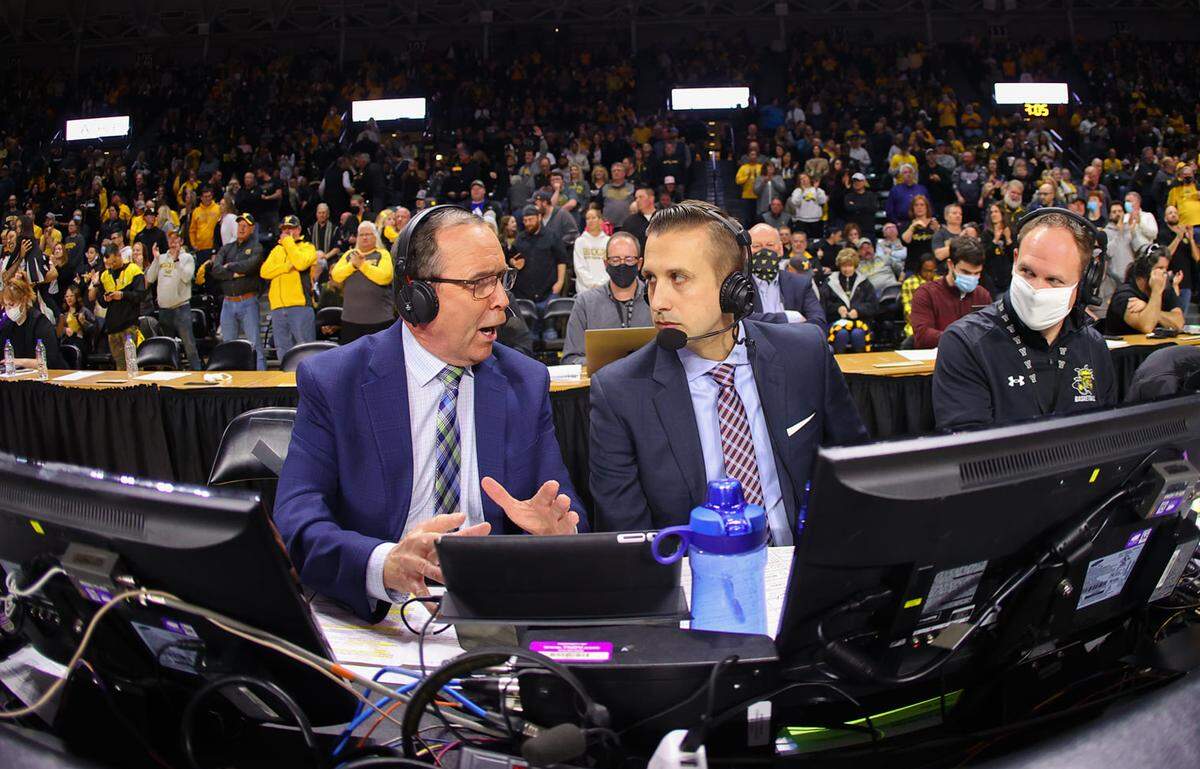
From an ESPN analyst: ‘I would secede from the Union’
Every time his phone buzzes these days, Mark Adams can safely assume it’s a college basketball coach with the latest complaint about the world of recruiting in the NIL age.
“I can’t even tell you how many coaches, current and former, have reached out to me with just pure disgust of the place college basketball finds itself right now,” said Adams, a former college basketball head coach who has transitioned into a career as a college basketball analyst for ESPN. “You can no longer build a program. You can now only build teams. That’s the reality of it.”
Adams has long fancied himself a champion of the underdogs who operate outside of the college basketball structure. Right now those programs find themselves under assault, as their best players are being lured into the transfer portal with promises of big pay days at high-major programs.
He can rattle a dozen stories just off the top of his head from what he’s been hearing from his coaching friends all over the country the past month.
“I know a specific example of a kid at an Atlantic 10 school that told his coach he was absolutely not leaving and that he was happy there,” Adams said. “A really good kid, by the way. And literally the next day, he was in the transfer portal. It’s because he heard his market value was somewhere around $200,000 to transfer.
“I had another coach tell me he sat down with a player they were recruiting and the first question the player asked was what his earning potential was at that school. The coach felt very uncomfortable with that question. There are a lot of old-school guys such as myself who are still coaching and I can tell you we didn’t get into this industry to negotiate salaries with players.”
Should athletic departments have seen this development coming? The savvy ones did and found themselves ahead of the game, reaping the benefits with collectives up and running well before the transfer portal heated up.
The athletic departments that took a cautious approach and heeded the NCAA’s warnings, like Wichita State, are now playing catch up in the NIL game.
There was no such confusion in the coaching industry, according to Adams, who said every coach who he spoke to in New Orleans at the men’s Final Four was able to predict exactly how NIL money would be weaponized in the transfer portal.
“The coaches clearly understood the ramifications of what was going to take place over the next few weeks,” Adams said. “And it happened exactly how the coaches saw. Any school that for whatever reason didn’t understand how this was going to work hard to be in denial.”
Adams believes the beginning of the NIL age officially kicks off the “complete fracture of the haves and have-nots” in the sport.
He’s been predicting this fate of college basketball for six years now, dating back to when he was sitting in on a scheduling meeting with Conference USA coaches, listening to them brainstorm creative ways to schedule like high-major teams without operating with high-major budgets.
“They asked me what I would do in their situation and I paused and said, ‘I would secede from the Union,’” Adams said. “No one laughed. Everyone was nodding their heads.
“This issue has set back hundreds of college basketball programs and I don’t think it’s going to be long before the haves say, ‘Why do we need to share revenue with the have-nots?’ How long before they break away from the NCAA?”
This story was originally published May 4, 2022 at 5:00 AM.
.jpg)