
Being Black in America: former Shockers share their experiences on racial injustices
PJ Couisnard didn’t know George Floyd personally, but in some ways, he did.
Both came from the Third Ward section of Houston. Couisnard coaches Floyd’s nephew’s basketball team. His father knew Floyd and his mother knew Floyd’s mother.
So when Couisnard, a former Wichita State basketball player, saw the video of a white Minneapolis police officer kneeling on Floyd’s neck for eight minutes, 46 seconds, resulting in Floyd’s death on May 25, it felt personal.
That could have been Couisnard. Or any of his friends and family from the Third Ward.
“I’m just tired, tired of everything, and I think Black people as a whole are tired and fed up,” Couisnard said. “The line has been drawn now. Either you are against racism or for it. There’s no more in between, no more middle ground. If you’re white, then you’ve got to use your voice and speak on it. Because there’s no more just sitting back saying, ‘Well, I’m not a racist.’ That’s not good enough.”
The Eagle reached out to a handful of prominent Black Wichita State basketball players from different eras for their thoughts on the Black Lives Matter protests, their own experiences with racial inequality and how white people can be allies during this time.
While each talked glowingly about how he was treated by the community during his playing days in Wichita, all spoke, too, of racism faced before and after their days as Shockers.
“When you walk in a room and you’re Black, you feel like you automatically have something to prove,” Couisnard said. “There is stuff that is so deep-rooted that it’s become the norm. As a black person, I shouldn’t have to feel awkward or out of place when I walk in a mostly-white room. A lot of people don’t even realize that’s how it is and I think a lot of people are beginning to wake up to the fact that this stuff is happening.
“We have to break the norm before we can improve anything. If we want positive change, then we are going to have to change the norm.”
‘Different than the rest of them’
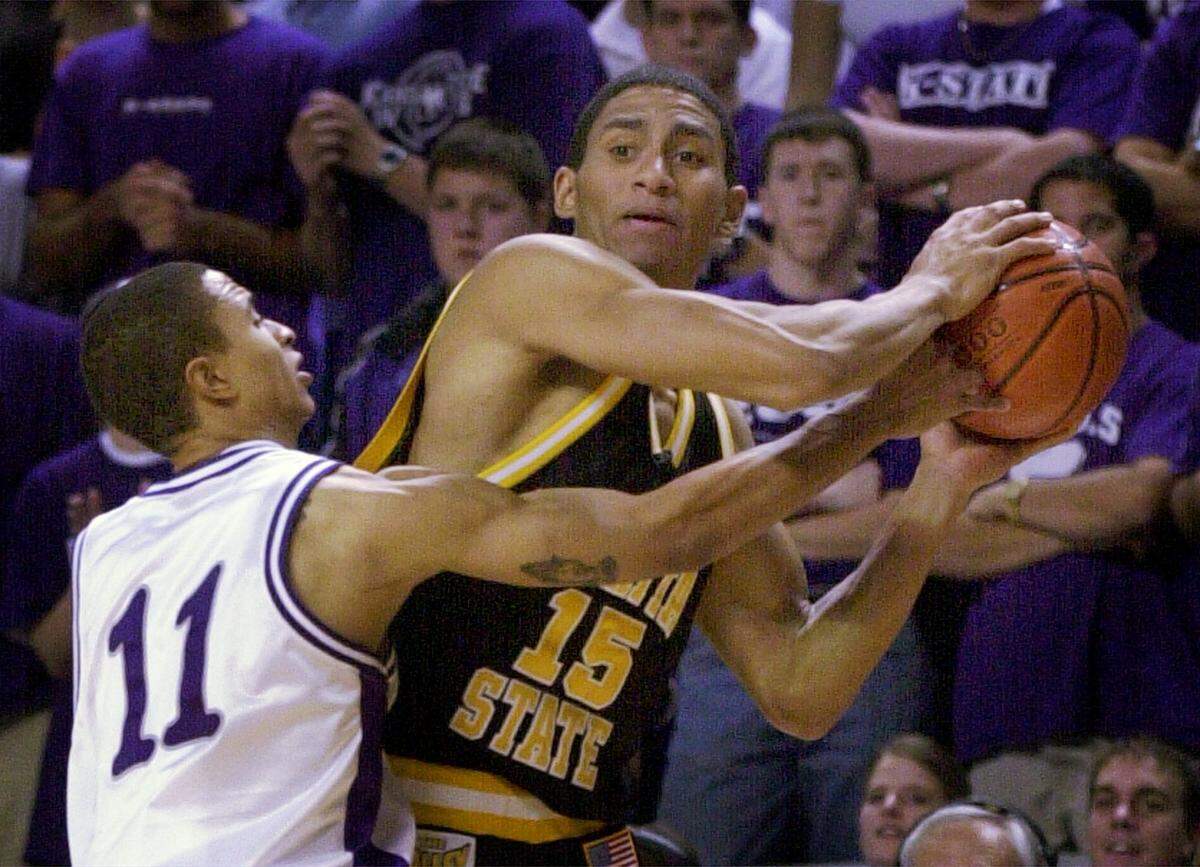
Since graduating from Wichita State in 2002, after three straight seasons of averaging double-digits for the Shockers, Terrell Benton has enjoyed a successful career in the health and wellness industry.
Benton, now the branch director of the downtown YMCA in Wichita, is a popular figure with an outgoing personality, booming voice and infectious smile. It doesn’t hurt that he’s a former Shockers standout who looks like he could still be playing. He’s a people-person, someone everyone likes.
But that hasn’t made Benton immune to racism.
“I can’t tell you how many times I’ve been told, ‘Wow, you’re so much different than the rest of them,’ because of the way that I speak,” Benton said. “When I was younger, I was more docile and I would let it roll off and go with the punches and placate them. I told myself it was because they didn’t know any better. But as I’ve grown older, I’ve become less inclined to accept that.
“Now I try to help people understand how racist something like that really is. It’s a dangerous thing to believe that your existence is the sole existence and anyone or anything acting outside of that frame of reference can’t be deemed right or socially acceptable.”
That’s why Benton’s number one suggestion for how white people can be allies is to listen.
“Right now there are people becoming fearful of this particular movement because it infringes upon their comfort level,” Benton said. “My advice would be to just listen and understand that there are other realities that do exist, whether they have been your reality or not. Try to have empathy and be loving and be kind and be a good listener to people who have faced racism.”
Benton is optimistic that real change is coming to America.
“We’ve never reconciled things as it pertains to race relations and equality,” Benton said. “And it’s not just Black people. It’s all minorities and it’s women. There are a lot of groups that suffer inequality and I think this is a tipping point, as we begin to navigate how to effectively create equal opportunities and an environment where everybody feels like they are cared for.”
‘I believe hearts will be touched’
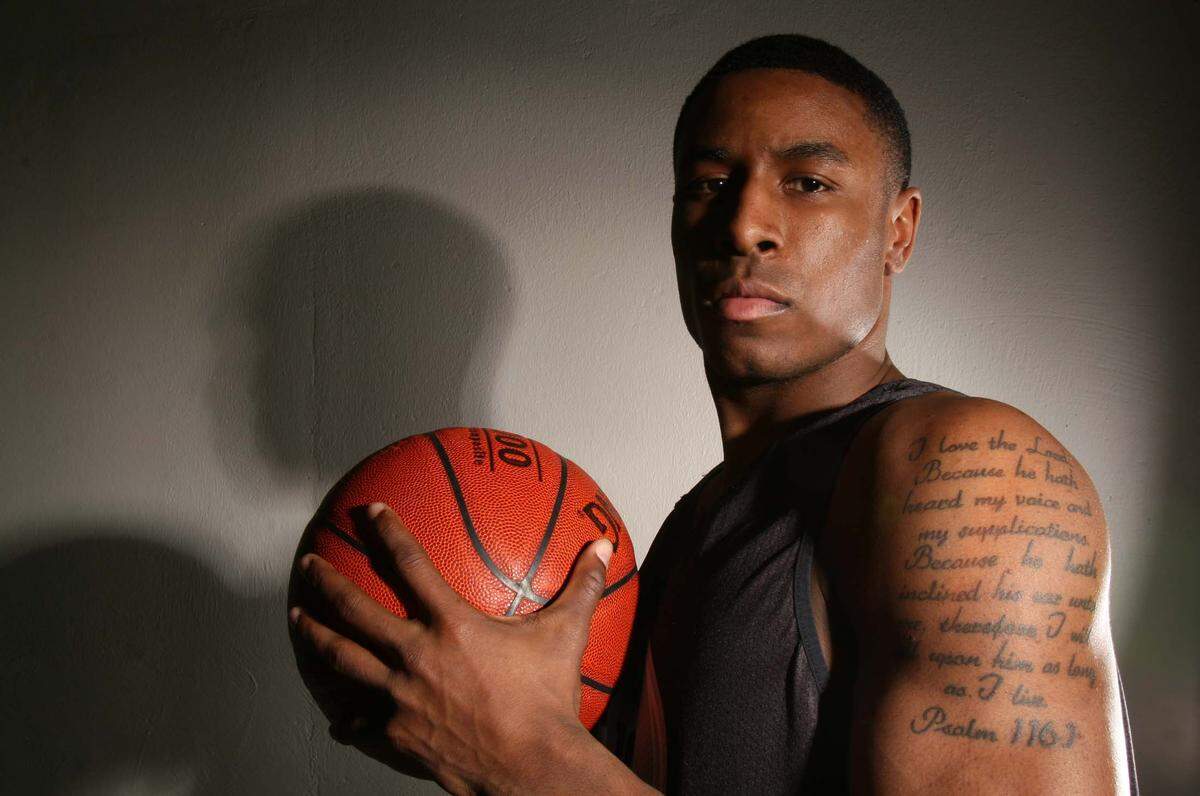
It’s a not an uncommon sight to see Karon Bradley, who played for WSU from 2005-07, running through his Houston neighborhood.
Running a mile in his hometown should be a thought-clearing exercise. Instead, as a Black man, Bradley feels he must be constantly vigilant about how he’s perceived in his mostly white neighborhood.
“Whenever I see someone outside of their house when I’m running, I automatically slow down. Every single time,” Bradley said. “And the reason is I don’t want to make it look like I’m the Black guy that’s running from someone. It’s weird how I have that feeling, but that’s a real thing that I go through every day.”
Bradley hopes one day that won’t be a concern. He believes the peaceful protests happening across the country will spark change for the better.
“I believe hearts will be touched and if we stay consistent, and I’m not just talking about Black people, I’m talking about everybody, then I really do believe we will see change,” Bradley said. “But it can’t be just this week or next week. That’s not enough. We have to continue having these tough conversations, not just about George Floyd, but about all issues.”
In order to have those conversations, Bradley encourages white people to not just speak with other white people, but also with minorities of any race.
“Intentionally try to make an effort to get to know someone of a different race, of a different background, of a different ethnicity,” Bradley said. “I really do believe a lot of racism stems from people who don’t realize how similar we really are. We may seem different because of our skin color, but at the end of the day, we all bleed the same color.”
‘I had real identity problems’
When Zach Brown was in middle school, his family moved from a mostly minority neighborhood to a mostly white suburb of Houston.
Brown, who played for the Shockers from 2014-18, would grow up to deliver the defining ‘Play Angry’ moment of WSU’s emphatic 2015 NCAA Tournament victory over Kansas. But back then, growing up in Houston, Brown looked different than his peers and says he was treated differently.
“I had real identity problems back then,” Brown said. “Not thinking I was good enough. Not thinking I deserved to be in the same room as them, based on how they treated me. I felt like since I was different, I was ugly. No matter what I did, I was usually just a very, very lonely kid growing up.”
Even today, Brown still struggles with these things. He is beyond frustrated by the number of people who have already put him in a box before ever talking to him.
“Based on my experiences, being a 6-foot-7, 235-pound African-American basketball player can be an intimidating thing for a lot of people,” Brown said.
What those people sometimes miss is someone who is kind, gentle and has a heart so big that he’s already planning on using the money he earns from playing professional basketball to help others, once his career is finished.
“I want become a leader in this world and help build things with my voice,” Brown said. “But it’s hard to do that when a lot of people take one look at you and don’t think you’re smart enough to sit in a room and hold a conversation with them. You try not to let it get you down, but it’s disappointing because I am so much more than what some people think I am.”
He encourages white people to listen to people who look like him before judging them.
“The number one thing is to listen,” Brown said. “Listen because Black people are very, very, very, very tired of having to deal with this. People need to educate themselves and listen and learn, then go out and help and be the change.”
.jpg)