
Cleveland hosts Midwest Regional without a strong following for the college game
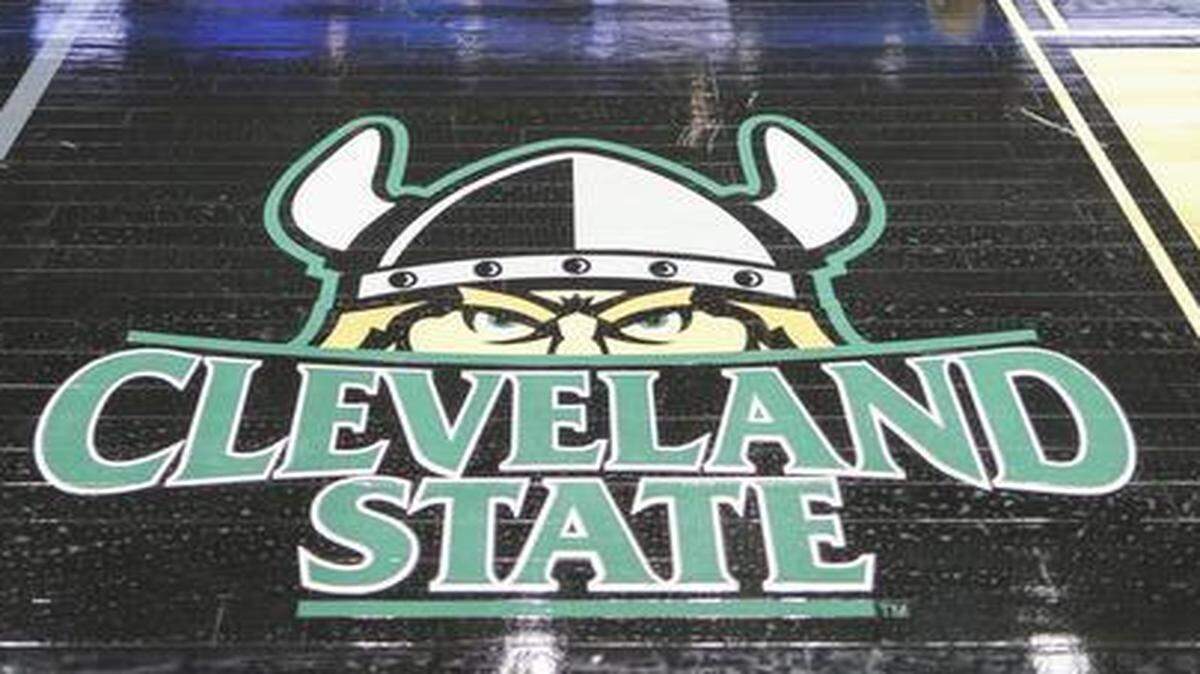
CLEVELAND – This week, Cleveland will once again offer a memorable college basketball experience to a team that doesn’t have ‘Cleveland’ on its jerseys.
While the history of Cleveland State, the city’s only Division I basketball team, has been clouded by NCAA probation and few postseason games – albeit some remarkable ones – some schools have reached benchmarks here.
Cleveland is hosting the NCAA Tournament for the fourth time since 2000 and second at Quicken Loans Arena, which opened in 1994 and houses the NBA’s Cavaliers. The city has also hosted conference tournaments and the women’s Final Four in 2007.
Michigan State began its run to the national championship in Cleveland in 2000, and one of the tournament’s most thrilling games was played at Cleveland State’s Wolstein Center between Wake Forest and West Virginia in 2005. Wisconsin-Milwaukee won two games in Cleveland to reach the Sweet 16 as a No. 12 seed the same year.
“This is a town that gets behind an event,” said Bill Livingston, a columnist for the Cleveland Plain Dealer. “The tournament, they’ll bang it out. It’s an event city, but I really think not having a powerhouse (college) basketball program hurts the synergy that there should be.”
Livingston wrote this week that the West Virginia’s 111-105 double-overtime win over Wake Forest in the NCAA Tournament second round was the best college basketball game ever played in Cleveland.
While Wichita State, Notre Dame, Kentucky and West Virginia look for good vibes in Cleveland this week, Cleveland State will continue its pursuit of good vibes anywhere.
Gary Waters, the Vikings’ coach since 2006, has come as close as anyone to turning Cleveland State around for good. He has five 20-win seasons in nine years and has led CSU to five postseason appearances, but 2009 has been the Vikings’ only NCAA Tournament appearance under Waters.
Waters has faced the same roadblocks as his predecessors – fan interest for CSU is spotty even though the result of success during the 1980s was the 13,610-seat Walstein Center on campus, and Ohio’s top players would often rather attend Cincinnati, Ohio State or Dayton.
“It’s not a college basketball city, it really isn’t,” Waters said. “It’s really a professional (sports) city. When I came in, it was a very important thing for me to change some views. … All you have, literally, here is that if you win, they’ll come out. We don’t have (many) die-hard fans that are committed to the program.”
Cleveland State seems to force its way onto the national radar every two decades or so. Fenn College became Cleveland State in 1965 and the new school’s first coach was John McClendon, the first black basketball coach at an integrated college. McClendon, from Hiawatha, attended Kansas and learned under then-athletic director James Naismith.
The Vikings didn’t reach the NCAA Tournament for the first time until 1986, but they made it last. Cleveland State became the first No. 14 seed to advance to the Sweet 16, earning wins over Indiana and St. Joseph’s before a one-point loss to David Robinson and Navy.
That was Cleveland State’s best team, a group of misfits that weren’t recruited by the likes of Ohio State – Clinton Ransey’s brother, Kelvin, played for OSU – or couldn’t last there. Clinton Smith, a Cleveland State forward in 1986, left OSU after his freshman season.
“What was really special about that team was that each player on that team was underrated coming out of high school,” Ransey said. “We didn’t have any five-star athletes coming out. We were all underrated for what we could do. We started off with a little chip on our shoulder. We wanted to prove ourselves.”
Cleveland State’s greatest team was followed by its worst era. Forward Paul Stewart died later in 1986. Recruiting violations led to NCAA probation beginning in 1987. Three years later, coach Kevin Mackey was fired in 1990 after a drug-related arrest.
Two coaches, including Rollie Massimino, who led Villanova to the national championship in 1985, couldn’t correct Cleveland State before Waters was hired away from Rutgers in 2006 by athletic director Lee Reed.
“He called me, and said, ‘Coach, I need you to do me a favor,’” Waters said. “He said, ‘This program is on its last legs. It’s so on its last legs that we’re thinking of taking it away. It had reached that low point.’”
Waters has rescued it from those depths. Norris Cole, who played on the 2009 team that defeated Wake Forest in the first round, was a first-round draft pick that summer and won two NBA championships with the Miami Heat, bringing more exposure to his college team.
“For most athletes, they have to see it to believe it,” said Earl Boykins, who played high school basketball in Cleveland and later 12 NBA seasons but wasn’t offered a scholarship by CSU. “What Norris did at Cleveland State was an example that you can make it out of Cleveland State onto the NBA.”
Usually, though, the only stop in Cleveland for future NBA players is the NCAA Tournament. Waters may not change that, but he wants Cleveland to be known more for his players and less for those at other schools.
“It’s good for the city of Cleveland and for Cleveland State,” Waters said. “To get it back competing every year, that’s a positive thing. Now we need to take it another step and make it a constant.”
This story was originally published March 25, 2015 at 4:39 PM with the headline "Cleveland hosts Midwest Regional without a strong following for the college game."