
KU evacuated its football complex for a bomb threat Monday. Why not the rest of campus?
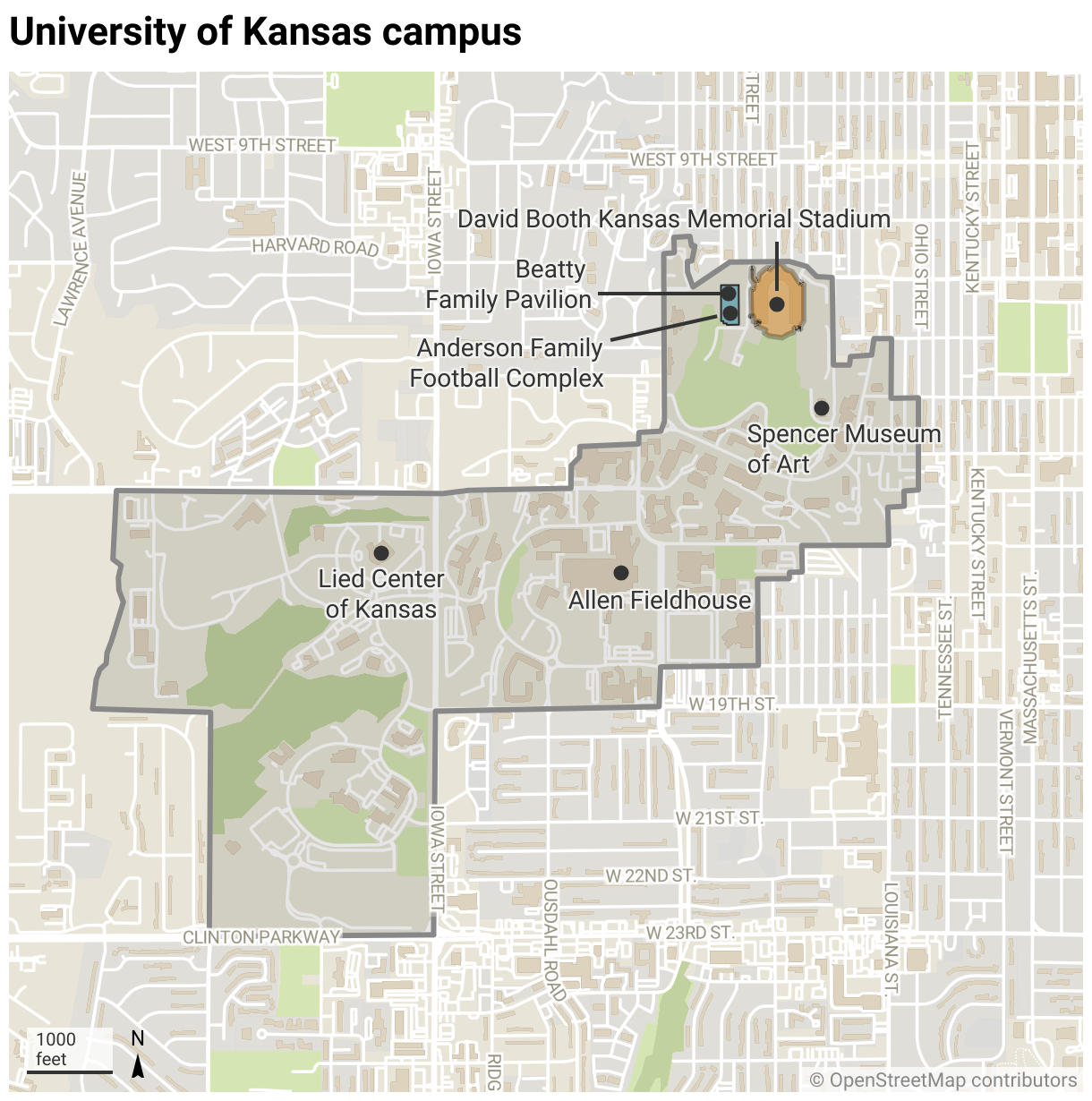
On Monday evening, University of Kansas campus police evacuated the school’s football complex, pavilion and stadium after a bomb threat was reported at the KU football facilities.
But the rest of the campus was not evacuated, even though it took campus police and Kansas Highway Patrol troopers hours to determine that there were no explosive devices on site.
And KU appears not to have issued a wider warning to students and faculty through its KU Alerts system, which uses text messages, emails, social media and other channels to push out information about public safety threats. The university’s official online platforms, including Facebook, Instagram and X, formerly known as Twitter, do not show that there was a campus-wide alert.
Although most classes are out of session for the summer, KU still has other activities including sports and summer classes which might bring students to campus.
Why didn’t KU issue a wider warning and evacuate the campus while the bomb threat was investigated?
KU Police Department Deputy Chief James Druen said Thursday that the decision to evacuate other parts of the campus depends on a number of factors, including the specificity of the threat and how big of a bomb could be involved.
“There would be a lot of stuff that would go into that determination of how much we would evacuate,” Druen said. “It would depend on what knowledge we have [about] the possible explosive and what the range of that explosive could be.”
Druen said he could not provide a copy of the university police department’s policy on bomb threats. When asked if the university issued a campus-wide alert about the bomb threat, Druen referred questions to the university’s public affairs spokesperson, who was not immediately available for comment.
Police on Monday evening issued an “all-clear” for the Anderson Family Football Complex, Beatty Family Pavilion and David Booth Kansas Memorial Stadium. A KU football player was arrested and charged with making a criminal threat.
What happens when KU receives a bomb threat?
Druen said that, when a bomb threat is made on campus, the first step is to immediately evacuate the area of the suspected threat. In this case, police evacuated the football complex and the surrounding area.
Officers will then investigate the scope of the threat by interviewing the person who called in the bomb to figure out how realistic the threat is or if they need to widen the evacuation.
In addition to assessing the threat and interviewing others at the scene, officers will walk through the building to see if they find anything suspicious. Druen said that officers will only issue a wider evacuation notice if they find evidence that the threat is severe.
“It would depend on what knowledge of what type of explosive that we’re possibly dealing with and what the blast range is,” Druen said. Another example of a threat that might lead to a wider evacuation is an active shooter, Druen said.
“If there’s an active shooter and we already know that they’ve moved buildings, we would evacuate a lot wider area knowing that the person is active not just in one area.”

Campus police also work closely with surrounding agencies like Overland Park Police Department and the Kansas Highway Patrol to assist in their response to bomb threats, Druen said. On Monday, the highway patrol brought a bomb dog to KU’s football complex before campus police issued an all-clear Monday night.
Campus police will then take that information to an on-duty supervisor, who will make the determination if a building should be evacuated.
What should students do if they receive a bomb threat?
The University of Kansas’s emergency management procedures consider every bomb threat to be real until proven otherwise, according to campus policy.
To determine if the threat is serious, the university encourages anyone who receives a threat to alert the police and follow The U.S. Department of Treasury’s bomb threat checklist for interviewing the person who has called in the threat.
So if someone calls a student’s phone with a bomb threat, they should stay calm and keep that person on the line and try to gather as much information as possible.
The checklist includes questions like “Where is the bomb going to explode?” and “What does the bomb look like?”
Someone receiving a bomb threat over the phone should listen closely to the caller’s voice and any background noises, according to the checklist.
KU football player charged
Kansas football offensive lineman Joseph Krause appeared before a Douglas County judge via Zoom Tuesday, charged with making an aggravated criminal threat, a felony.
Krause had been arrested Monday afternoon, after the bomb threat was reported.

He is accused of “unlawfully, feloniously, and with the intent to place another in fear, or to cause the evacuation, lock down or disruption in regular, ongoing activities of any building, communicate a threat to commit violence,” according to charging documents.
Krause could face more than 11 years in prison and could see up to $300,000 in fines with two years of post-release supervision.
He was released on bond Tuesday afternoon after posting $10,000 bail. The student’s next court date is set for 9 a.m. Wednesday.
The Star’s Shreyas Laddha contributed to this report.
This story was originally published July 27, 2023 at 5:39 PM with the headline "KU evacuated its football complex for a bomb threat Monday. Why not the rest of campus?."