
Before the Final Four, Brad Underwood learned how to coach in Dodge City
Brad Underwood stood on the court moments after the biggest victory of his life and let his mind drift back to where it all began.
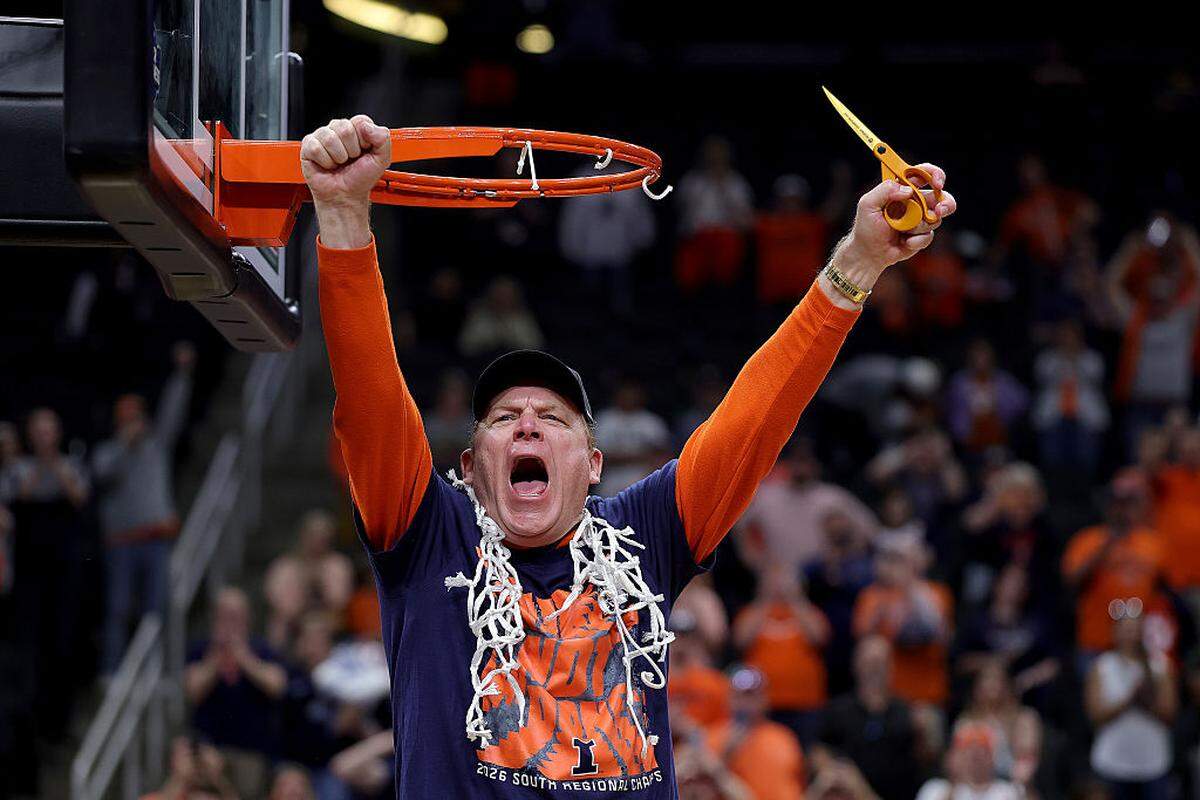
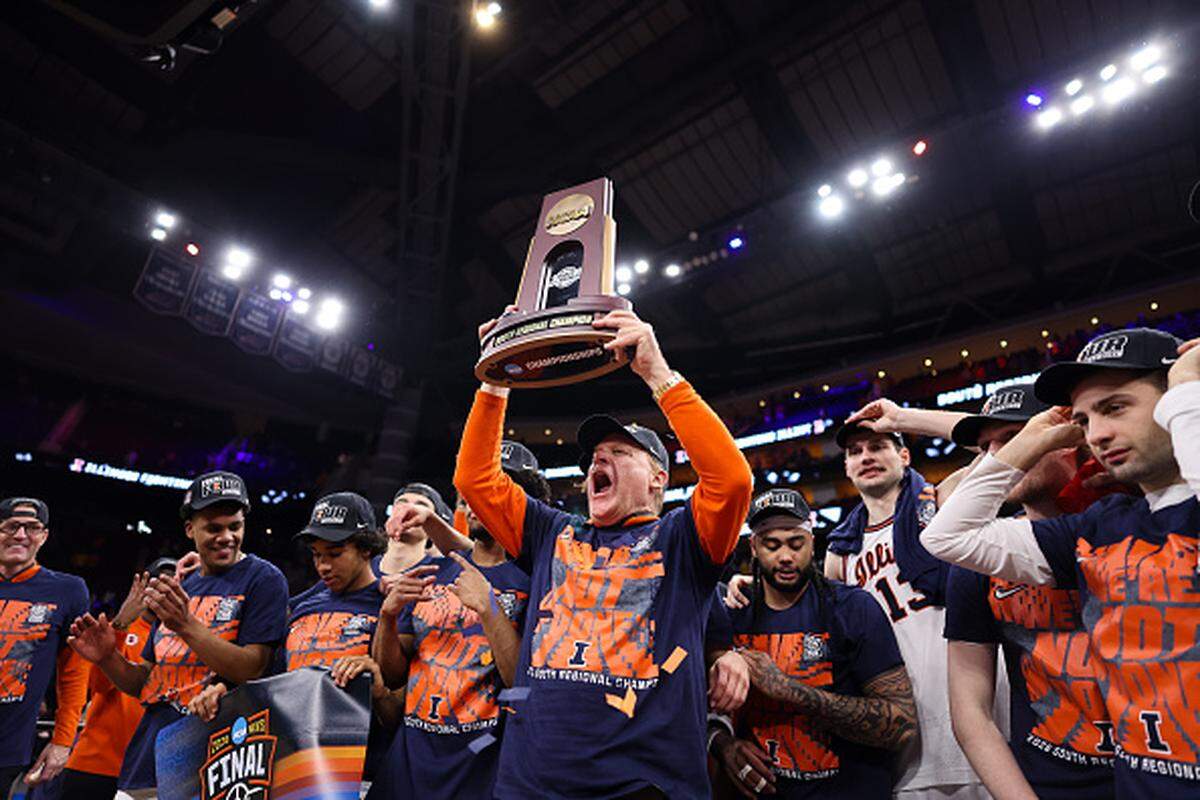
Illinois had just beaten Iowa 71-59 to punch its ticket to the Final Four, the place every coach imagines and so few ever reach. Underwood was there at last, 62 years old, the head coach at one of college basketball’s giants, two wins from a national title. But when the CBS microphone found him, Underwood framed the moment not through where he is now, but where he came from.
“Here I am,” he said, “an old JUCO ball coach from Kansas, going to the Final Four.”
In the biggest moment of his career, his mind went back to the first-time head coach driving 16-passenger vans across Kansas.
Because for all the success that followed — the 26-year grind before he finally became a Division I head coach at Stephen F. Austin, the stop at Oklahoma State, the dream job at Illinois and now a Final Four date with Connecticut on Saturday night — the coach Underwood became was shaped long before the lights got this bright. He was shaped in western Kansas, where he arrived in 1988 as a 24-year-old assistant at Dodge City Community College, was promoted to head coach a year later and spent the next four seasons learning how to coach, recruit, lead and, most of all, outwork people.
More than three decades later, that “old JUCO ball coach from Kansas” still feels like the truest version of who he is.
“I got hired in Dodge City and I thought I had all the answers, and truly didn’t have many of them,” Underwood told The Eagle. “But that’s where I learned how to work, how to coach, how to grind. That’s where I became a coach.”
Trial by Jayhawk
The Jayhawk Conference was both a classroom and a proving ground.
Underwood revered the league growing up. As a McPherson kid, he was close enough to Hutchinson, the mecca of JUCO basketball in America, to understand the place junior-college basketball held in Kansas. He went on to play at Independence Community College, where he was the leading scorer on a team that played for the 1984 NJCAA national championship in Hutchinson.
But nothing could have prepared him for what it would be like to try to win in that world as a first-time head coach.
He walked into one of the hardest jobs in the conference at one of the hardest times.
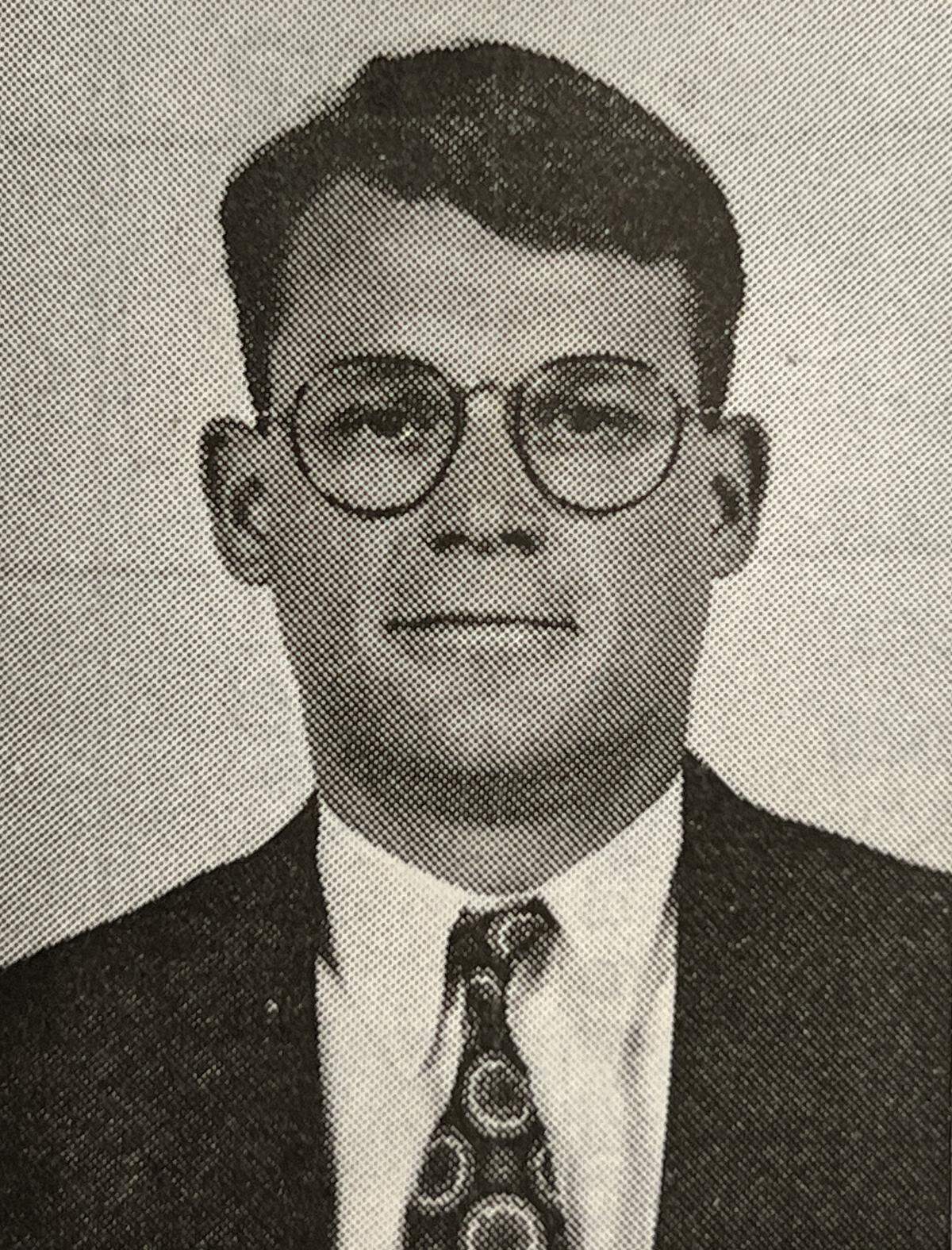
Keith Tifft was fired following the 1988-89 season after Dodge City finished 0-12 in the Jayhawk. But losing was only part of the mess. Budget issues and recruiting violations had left the program on probation. The school’s top administrator later resigned after being convicted on six counts of misappropriating school funds. Attendance had cratered. The booster club had nearly disbanded. The program had become an afterthought in the community.
One Dodge City player told The Eagle at the time, “Basically, they’re going to be hurting next year. All the in-state players are signed and nobody from out of state is going to want to come into this kind of situation.”
Underwood was hired a week later.
Maybe that is one of the first clues to understanding him. He has never seemed intimidated by bad odds. Long before he was trying to slow down Dan Hurley’s precision machine at UConn, he was looking at a program in western Kansas that had gone winless in league play, was on probation and had lost its connection to its own community — and deciding it could be done.
“We were out in western Kansas and you’re so far away from everything,” said Neil Elliott, the first assistant Underwood hired at Dodge City. “Then we’re on probation and there’s just a lot of negativity around the program with all of the losing. And we’re in the Jayhawk West, trying to compete with all of those juggernauts. It was a major uphill battle, but I could tell right away that Brad had a high level of confidence that it could be done.”
The Jayhawk West in that era was loaded with some of the best coaches and deepest talent in junior-college basketball. Jim Carey at Garden City was a former Division I head coach and future NJCAA Hall of Famer. Dan McGovern at Barton County built a national power. Butler had Randy Smithson, who would go on to become Wichita State’s head coach. Hutchinson had David Farrar and then Steve McClain, both future Division I head coaches. And the talent base across the league was so strong that Underwood’s first season included 35 players who would move on to Division I the following year.
“During this era, prep schools were not nearly as prevalent and you had stricter academics to get into high-major schools,” McClain said. “So the pool for high-level players was really deep for us in junior college. You would have Jayhawk teams with four guys who were going to play in the Big Ten or Big 12.”
It was the kind of league that could sharpen a young coach or swallow him whole.
“You think about the high level of play, the high level of coaching, the high level of interest, it really felt like being in a high-major conference,” McClain said. “It was where all of us grew as coaches because we all felt that pressure before we ever left JUCO basketball. Everybody was trying to win the national championship.”
Underwood had to figure all of that out while operating with recruiting disadvantages unique to Dodge City.
The program was farther west than many of its rivals, which mattered in a league where geography helped drive recruiting. Barton, Butler and Hutchinson were all positioned closer to major population centers. And then there was the facility. While some league rivals played in modern venues, Dodge City played at the Civic Center, which had bleachers on one side of the court and a stage with curtains on the other.
“It felt like you were at a musical,” McClain said with a laugh. “Not a basketball game.”
Dodge City was a tougher sell to recruits than most of its rivals. That reality got even tougher because Jayhawk teams were allowed only five out-of-state players. The rest of the roster had to be made up of Kansas natives, which meant that every coach in the league was fighting over the same pool of in-state talent.
Underwood now has to navigate in today’s transfer portal and NIL-fueled world, but he says none of it compares to the blood sport of recruiting in the Jayhawk back then.
“The hardest, most competitive recruiting I have ever done to this day was for in-state kids in the Jayhawk Conference,” Underwood said. “You had to outwork people. You had to do something to try to separate yourself, especially back then when you’re up against Barton and Hutch and Butler.”
Almost every Tuesday and Friday, he got in his car and drove from Dodge City to Wichita to catch a City League game, because that was where so much of the state’s best talent played. Those trips were five hours roundtrip. Kansas City meant closer to 10. Sometimes the target was a star. Sometimes it was a player who might become the 10th man. Even then, all that driving only bought a chance.
“You would sit there for an hour, an hour and a half after every game just so you could talk to the young man,” Underwood said. “And it’s not like that drive from Dodge to Wichita is a short one. All of that just to hope you got a visit.”
Those drives became part of Jayhawk folklore. Show up at the best City League game on a given night and the stands would be filled with Jayhawk coaches, all chasing the same handful of players.
“You would hear about a player, talk to their coach and get their schedule,” McGovern said. “Then you would show up to the game and you walk in and it’s like, ‘Wait, is this a Jayhawk West coaches meeting?’ There would be a half-dozen of us at every game and that even happened at some practices too.”
Because in-state players were well aware of Dodge City’s struggles, Underwood leaned heavily on his five out-of-state spots for his first two seasons. He sold recruits with a Sports Illustrated article that described the Jayhawk as one of the best junior-college conferences in America. If Dodge City was a difficult sell, the league’s reputation was not.
Even when Dodge City was at a talent disadvantage, McGovern could see from the opposite bench what kind of coach Underwood was.
“There were so many rock star coaches in the Jayhawk, but I always thought Brad Underwood, hands down, was the best coach of all of us,” McGovern said. “Now his record may not reflect that, but that was because he was operating at a disadvantage. No disrespect to the manure farms and the feed lots and the 40 mph wind, but getting recruits to come to Dodge City was not easy. Every time we played, I always felt like that guy was just 10 times a better coach than I was. He was just handcuffed.”
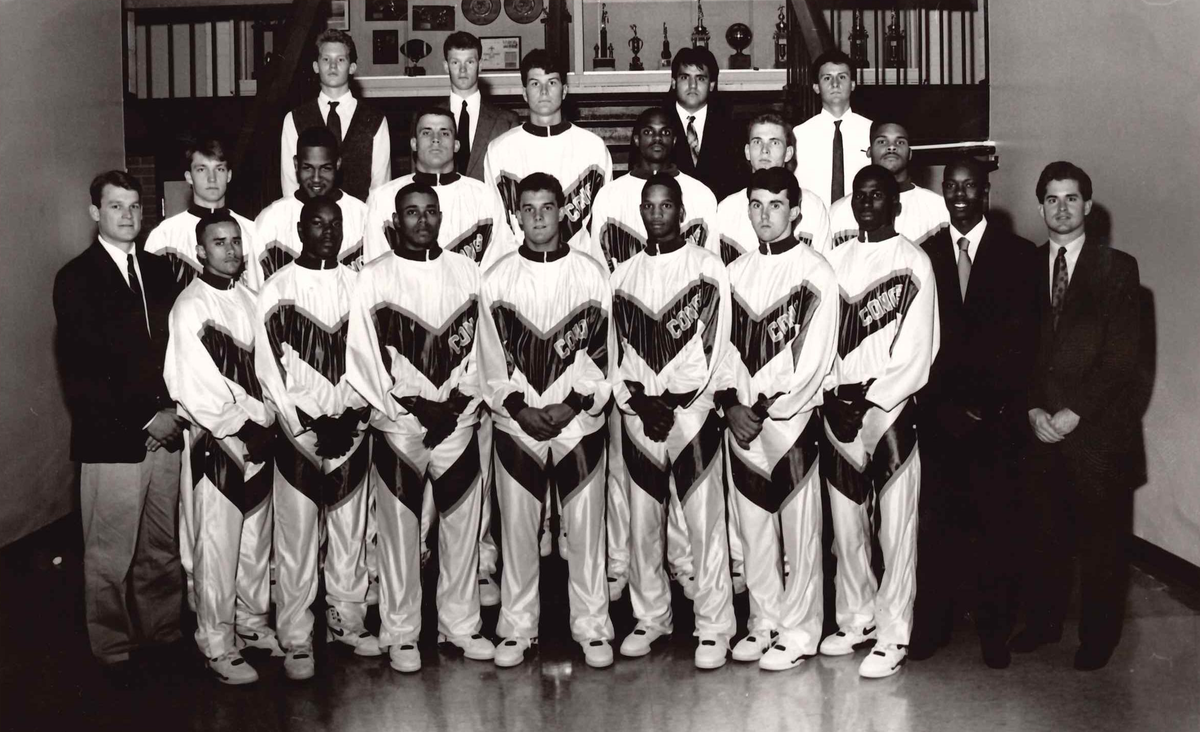
Underwood’s four-year record as head coach at Dodge City was only 57-63, a line on paper that reveals almost nothing. His first two seasons were spent climbing out of the crater. But by Year 3, Dodge City won 20 games and reached the Region VI semifinals after six straight years without even qualifying. Fans were being turned away from sold-out games in the 2,500-seat Civic Center. The next season, the Conqs entered the year ranked No. 13 nationally. The booster club grew to 10 times its size from the time Underwood arrived.
He had not merely coached a team back to relevance. He had convinced a town to care again.
“One of the great compliments you can give a coach is if you call them a dog, especially if you spell it ‘dawg,’” McGovern said. “And make no mistake, Brad Underwood was a dawg.”
Whatever was needed
Before Illinois’ Sweet 16 game against Houston, Underwood was asked if he had a gripe about playing the Cougars in their hometown.
“I drove 16-passenger vans,” he said. “I drove from Dodge City, Kansas, to Mesa, Arizona, for a basketball tournament in a bus. If you would have told me back then that I’m getting to coach basketball in the Sweet 16 and play Houston, I would crawl to get there.”
Back then, Underwood made $25,000. Today, that is roughly what he earns in two days on his $4.4 million contract. But the money never defined those years for him. The work did.
Coaching alone didn’t pay enough, so Underwood picked up extra work on campus to help support his family. One of those assignments brought him into an unlikely partnership with Beverly Temaat, a college employee on the academic side. Dodge City had accepted federal grants for equipment, which meant someone had to physically track down computers, printers, copiers and audiovisual machines all over campus, record serial numbers by hand and attach the proper color-coded labels so the school had a paper trail for audits.
“It was an incredible task,” Temaat said. “It was worth doing, but it was just very tedious … and time-consuming.”
So Underwood and Temaat shared an office and spent their mornings — before their primary duties began — walking the campus with asset sheets and hunting down equipment one by one. When they were apart, they communicated by pager. Between them, they estimate they were responsible for more than 1,000 devices, a job that took months to finish.
“It wasn’t the most fun job I’ve ever done,” Underwood said. “But it paid the bills. Back then, my coaching didn’t. So I was going to do whatever I had to do to make sure there was a paycheck coming in.”
What stuck with Temaat was not simply that Underwood did the work. It was how he did it. He would get back from recruiting at 2 a.m. and still show up early the next morning for the grant work before shifting into basketball mode around lunch.
“He’s the hardest worker I’ve ever seen,” Temaat said. “That’s why I told people back then that he would be a D-I coach someday. You just knew it because he worked harder than any coach I’d seen. And I’d seen a lot of them over the years. He put in the time and he paid his dues.”
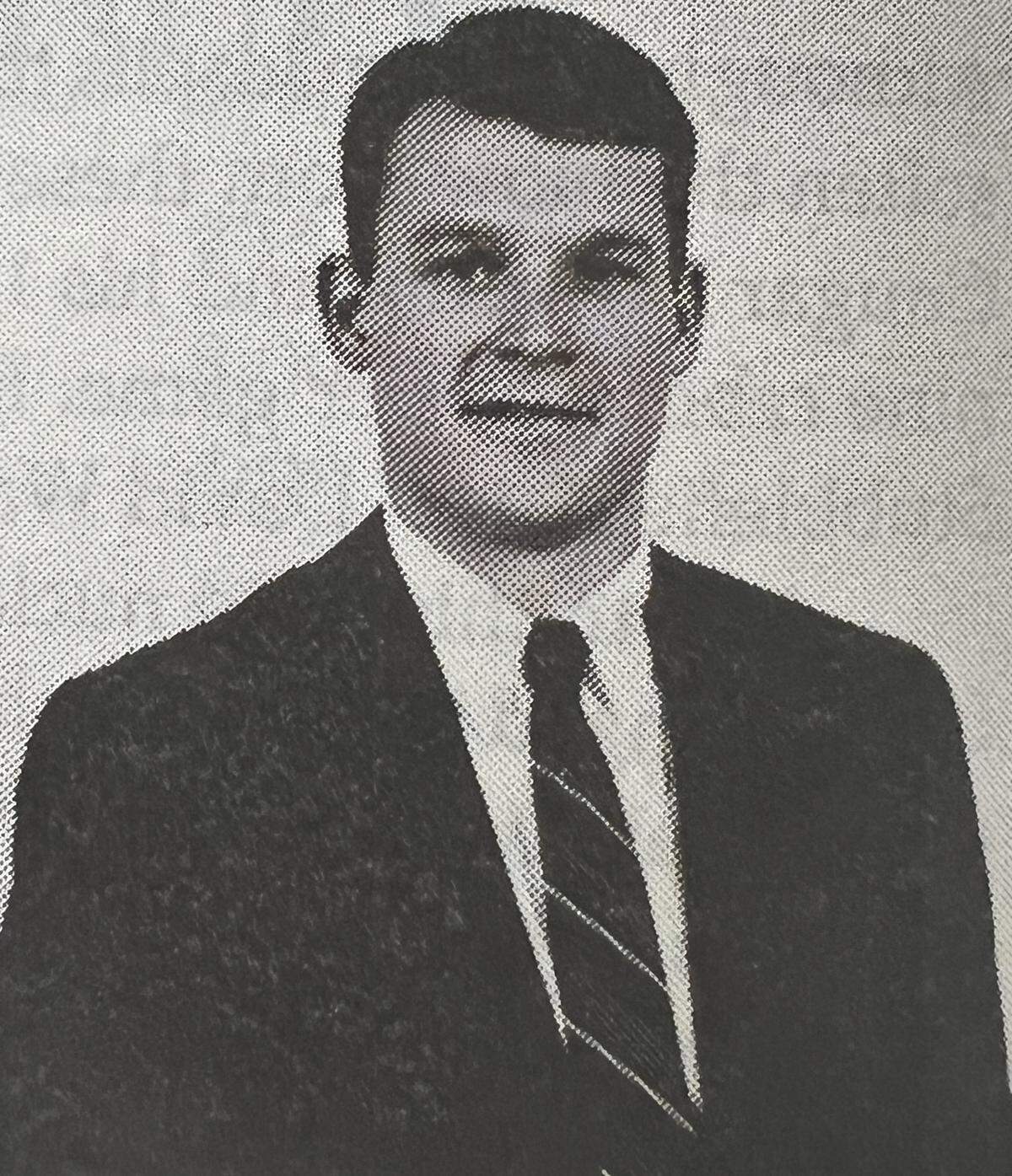
That work ethic extended to every corner of the job. Underwood was not just the coach. He washed practice gear, swept floors, worked in the weight room, monitored study hall, handled logistics and drove the vans. In Dodge City, he functioned as a small department.
“Whatever was needed,” Underwood said, “we did.”
The road life was a grind of its own. Cafeteria-packed sandwiches before games. McDonald’s on the way home. Motel 6 on the rare overnight trips. Coaches prayed their car’s heater wouldn’t give out in the winter. Underwood remembers that after midnight in western Kansas, radio stations would fade, so he relied on cassette tapes. Those recruiting drives are where he developed his love for country music and sunflower seeds.
“You could have added two zeroes to my salary back then and I was still going to do whatever it was going to take to be successful,” Underwood said. “Pretty inspiring times. To be honest, I’ve never forgotten it. I believe part of the reason for the success I’ve had comes from learning how to do it in the JUCO ranks.”
Underwood never saw Dodge City as a limitation. He saw a community worth investing in.
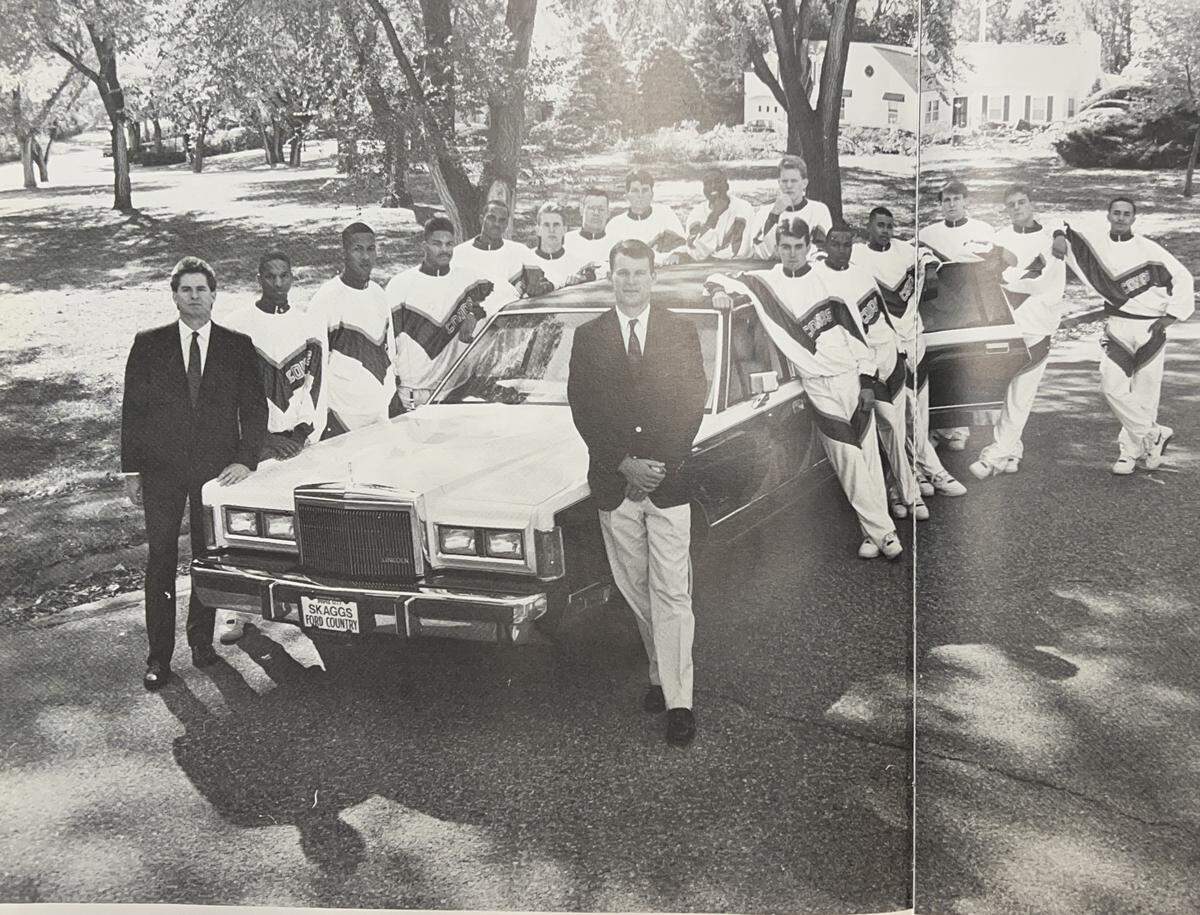
One of his best ideas came with the team’s schedule poster one year, a big deal in the days before cell phones made every schedule instantly accessible. To help the program stand out around town, Underwood had the team pose around a limousine. Mention that photo to anyone from that team today and their face lights up.
“There weren’t very many limousines running around Dodge City,” Underwood said. “So yeah, that was a pretty big deal.”
The part of him that never changed
The grind explains a lot about Underwood, but not the most revealing part.
The more revealing truth is his feel for people.
“I just enjoy getting to know people,” Underwood said. “I enjoy meeting people. I enjoy building relationships. It’s something that has always been fun for me.”
From the start, Underwood moved through campus with an ease that stood out.
“The thing that I noticed about him right away was that he was very good at building relationships,” Temaat said. “And it wasn’t just in the athletic department. He was building relationships with everyone on campus. He seemed to be a natural at it.”
Underwood made it a point after games to come back out into the stands and visit with fans who had stayed behind, thanking them for coming and making himself available. He attended other sporting events on campus and often brought his players with him to support their fellow student-athletes. He got out in the community and played golf with boosters. He talked to people. He listened.
One story from Temaat may explain him best. There was a beloved faculty member on campus who had once been a rabid basketball fan but had grown so disenchanted by the losing that he quit going to games and dropped out of the booster club. When Underwood arrived, he did not avoid the criticism. He sought it out. He took the faculty member to lunch, asked why he had given up on the program and asked what needed to change.
The man unloaded. He gave the new coach a long list of issues. Underwood went back to his office and wrote them all down. Then, according to Temaat, he met with the man once a week to check on how the program was doing and how the changes were being perceived from the outside.
It didn’t take long to win him back.
Steven Hastert, who transferred to Dodge City in 1992 to play golf, wound up helping on the women’s basketball team in an emergency staffing situation and remembers traveling on doubleheaders with the men’s team. When they arrived early, he and Underwood would sometimes play Around the World or HORSE before games. Looking back, Hastert says what stood out most was how Underwood, already a head coach, treated him like an equal.
“You get around coaches like that and they can act like they’re better than you,” Hastert said. “But he was never that way. He treated everyone with respect.”
Then came the moment Hastert never forgot.
Nearly two decades later, after Hastert had moved to Topeka and was working at Topeka Country Club, legendary Washburn coach Bob Chipman walked in with two Kansas State coaches: Frank Martin and Underwood. Chipman was about to introduce them when Underwood stepped in first, shook Hastert’s hand and greeted him by name.
It stunned him. Nearly 20 years had passed and Underwood still remembered the student golfer he had once shot baskets with in Dodge City.
“He was just a nice, normal guy from Kansas, to be honest,” Hastert said. “A real down-to-Earth guy. He liked to laugh and BS with you and just chew the fat with people. I always respected the way he treated us. Because we were nobodies. But he was nothing but great to us.”
It was a small moment, but it captured something important about Underwood. His gift for building relationships is not just recruiting charm or a polished trait he turns on when it serves him. He remembers people because they matter to him.
“Sometimes when guys climb the ladder and get that high, they don’t have as much time for people from their past,” said Elliott, his former assistant. “But he’s never once blown me off. He’s always taken my call. We text on a weekly basis. I’ve appreciated that so much because we’ve maintained that friendship over a long period of time and a lot of distance between the two of us. It means a lot to me.”
After leaving Dodge City, Underwood spent 11 seasons as an assistant at Western Illinois, then returned to the junior-college ranks as a head coach at Daytona Beach. That path eventually brought him back to the Big 12, where Bob Huggins hired him at Kansas State. He later followed Frank Martin to South Carolina before finally earning his first Division I head coaching job at age 49 at Stephen F. Austin.
Underwood has said he is forever grateful for his junior-college head coaching experience because it helped open the door at SFA.
“Everybody’s race is run a little bit different,” Underwood said. “Even though you get impatient and you want things when you want them, that time in the Jayhawk … it prepared me.”
That race has now brought him to the Final Four. But if you listen to Underwood, or to the people who knew him when he was still driving vans and tagging federal-grant equipment and chasing recruits across Kansas, the rise did not really change him. It only revealed how much of that old version of him was still there.
From McClain’s view, the climb never altered Underwood’s core.
“He still coaches the same way at Illinois as he did back in Dodge City,” McClain said. “He demands kids do the right things. So many guys, when they move up, they change and I’m not sure why. When you look at him today, that’s who he was back then. And I think that’s a big reason why I think Brad is so successful today at Illinois.”
When Underwood reached the biggest stage of his career, he did not reach for a tidy version of his own backstory. He reached back to the part of himself that was formed before the fame, before the money and before the big-time job. Back to the league that taught him to coach, the town that taught him to grind and the life that taught him to treat people like they mattered.
“Isn’t that what it’s all about?” Underwood said. “Life is about relationships.”
On Saturday night, millions will watch him on the sideline in Indianapolis, one of the best coaches in college basketball, leading Illinois on the sport’s biggest stage. They will see the version the wider world knows.
But in the biggest moment of his career, Underwood told everyone exactly how he still sees himself.
As an old JUCO ball coach from Kansas.
And more than 30 years later, that still seems to explain everything.
.jpg "The_Wichita_Eagle_1992_11_01_88 (2).jpg")
This story was originally published April 2, 2026 at 7:00 AM.
.jpg)