
Big 12 hopes to finalize future scheduling format, divisions ‘in the next few weeks’
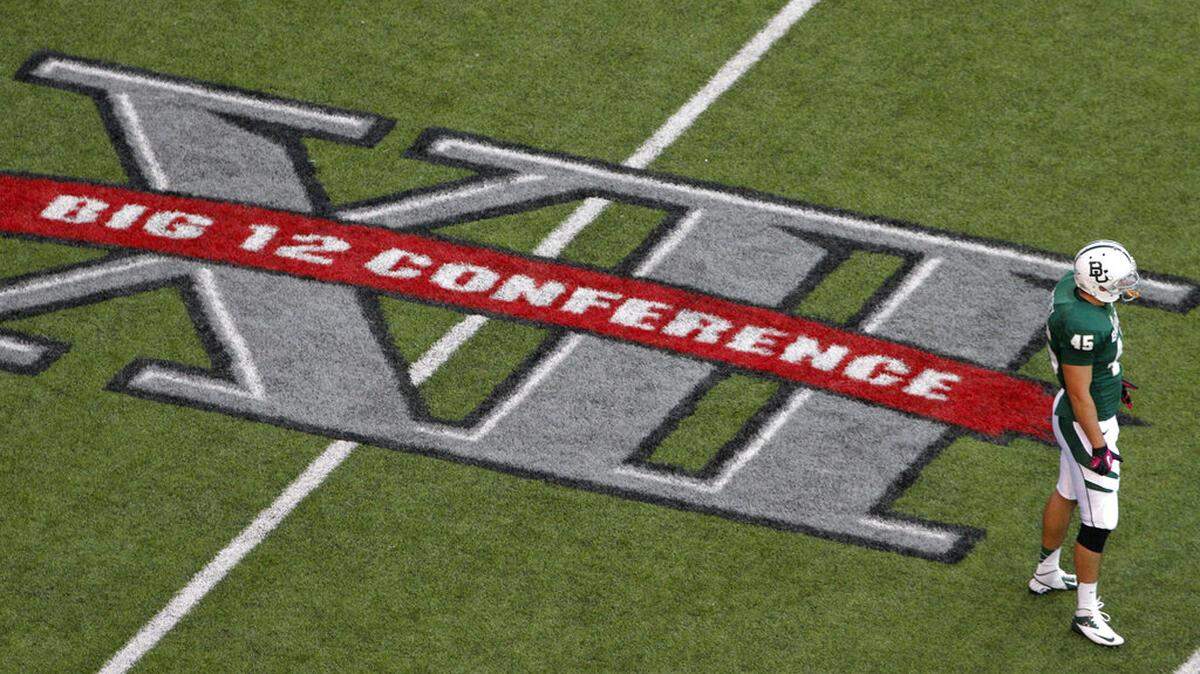
In the next few months, the Big 12 will grow to 14 schools when BYU, Cincinnati, Houston and UCF join the conference.
In the next few years, the Big 12 will shrink to 12 members when Oklahoma and Texas depart for the SEC.
Who knows what happens after that. The Big 12 could remain stable for the foreseeable future or new commissioner Brett Yormark could expand west and turn the league into a super conference that features 16 universities.
All those moving parts have made it difficult for Big 12 leaders to decide on future scheduling formats for all sports and the possibility of bringing back divisions for football. But some clarity on those issues is expected in the near future.
“We have been kind of waiting, primarily to see what Oklahoma and Texas were going to do,” K-State athletic director Gene Taylor said. “It’s starting to look more like they’re going to be here through the 2024-25 season. I won’t say that is 100%, but it looks like that is going to happen more so than a few months ago. Our goal is to have something put together here in the next few weeks. We will finalize all of that.”
If the Longhorns and Sooners honor their commitment to the Big 12 until the end of the 2024-25 athletic season, the Big 12 will need to figure out how to adjust its scheduling format for 14 teams in a way that can easily be changed to accommodate just 12 teams moving forward.
It won’t be as easy as the current round-robin scheduling format, in which everybody plays everybody.
For football, that could mean a divisional split like the conference used to have in the old North/South days. But there is no clear and obvious way to divide 14 teams spread across the country from Provo, Utah to Orlando, Florida.
Oklahoma and Texas have always been in the same division. Should the Big 12 honor that tradition for two more seasons? Or should they split them up to avoid the headache of realigning divisions again in 2025 after they both leave for the SEC?
Of course, there is no longer a rule that requires the Big 12 to have divisions in football. The conference could also decide to designate a few annual rivalries for all of its teams and then have them play the others on a rotating basis.
“It goes back and forth,” Taylor said. “Right now, I would say it is about 50-50. Some guys that like divisions now don’t want them. Some guys who didn’t want divisions are now in the divisional camp. Everybody has got great points. At the end of the day, we have to figure out what is best for the conference.”
Big 12 leaders looked at several different options last March when they met at the Big 12 basketball tournaments in Kansas City. But nothing close to a consensus was reached.
“We have had good conversations about all the what ifs,” Taylor said. “Now it is time to put some concrete stuff together.”
College basketball reporter John Rothstein shared on Wednesday that the Big 12 has already decided to designate yearly rivals in basketball. He reported that K-State and KU will continue playing each other twice each season even with Oklahoma and Texas still in the conference.
That is another sign that the Big 12 expects Oklahoma and Texas to stay put for another two years.
When it comes to football, Yormark and Big 12 athletic directors have a few key factors to consider before setting anything in stone. The playoff intends to expand from four teams to 12 in the near future. In the past, the goal for every conference was to maximize its chances of sending one representative to the playoff. Now, perhaps they need to consider how to best send two or three.
“What’s the best chance for us to put our two best teams in the Big 12 championship game?” Taylor said. “What’s the best chance for us to get the most teams into the expanded playoff format? All those things have been added into the conversation and that’s why it has taken us a little longer than expected to get to the final answer.”
This story was originally published October 13, 2022 at 11:43 AM.