
Ten years ago, historic batch of Wichita recruits led K-State football to new heights
Remember when the Kansas State football team won its last Big 12 championship? How about the time it beat Miami with a goal-line stand? Or the time it defeated Texas A&M in four overtimes? Or the time it out-dueled Baylor and then Heisman Trophy winner Robert Griffin III in an epic shootout?
Those were good moments for the Wildcats. So good, that it’s hard to believe all those thrills happened over the course of just two seasons.
It’s been 10 years since K-State fielded its two best teams in recent memory, but their legacy endures today. Here’s a quick synopsis: In 2011, the Wildcats won 10 games, joined the top 25 and played in the Cotton Bowl. The following year was even better. They won 11 games, claimed a conference championship and briefly sat atop the college football world as the No. 1 team in the Bowl Championship Series rankings.
Many remember those teams for the coaching wizardry of Bill Snyder and the quarterback play of Collin Klein, but there was something simpler at the core of those teams that powered them like a nuclear reactor — some of the best local recruits the Sunflower State has ever produced, including a whopping 17 players from the Wichita area.
Their purple pride showed. When K-State fans rushed the field at Snyder Family Stadium to celebrate their Big 12 championship in 2012, five-star linebacker Arthur Brown (Wichita East) was one of the first to hoist the trophy. Current NFL offensive lineman B.J. Finney (Andale) was right behind him.
Many of the friends they grew up playing with or against roared in approval on the field below. Talented receiver Chris Harper (Wichita Northwest), clutch kicker Anthony Cantele (Kapaun Mt. Carmel), dependable linebacker Jonathan Truman (Kapaun) and many other City League products were pivotal players on that team.
And even though they weren’t there that night, stars from the 2011 team such as safety Tysyn Hartman (Kapaun) and running back Bryce Brown (Wichita East) also cracked a smile while they played in the NFL.
It’s easy to overlook Wichita as a football town, but there was a time when the largest city in Kansas produced enough talent to make the Wildcats national championship contenders.
This is the story of how it all happened, told one decade later by those who lived it:
High School Reunion
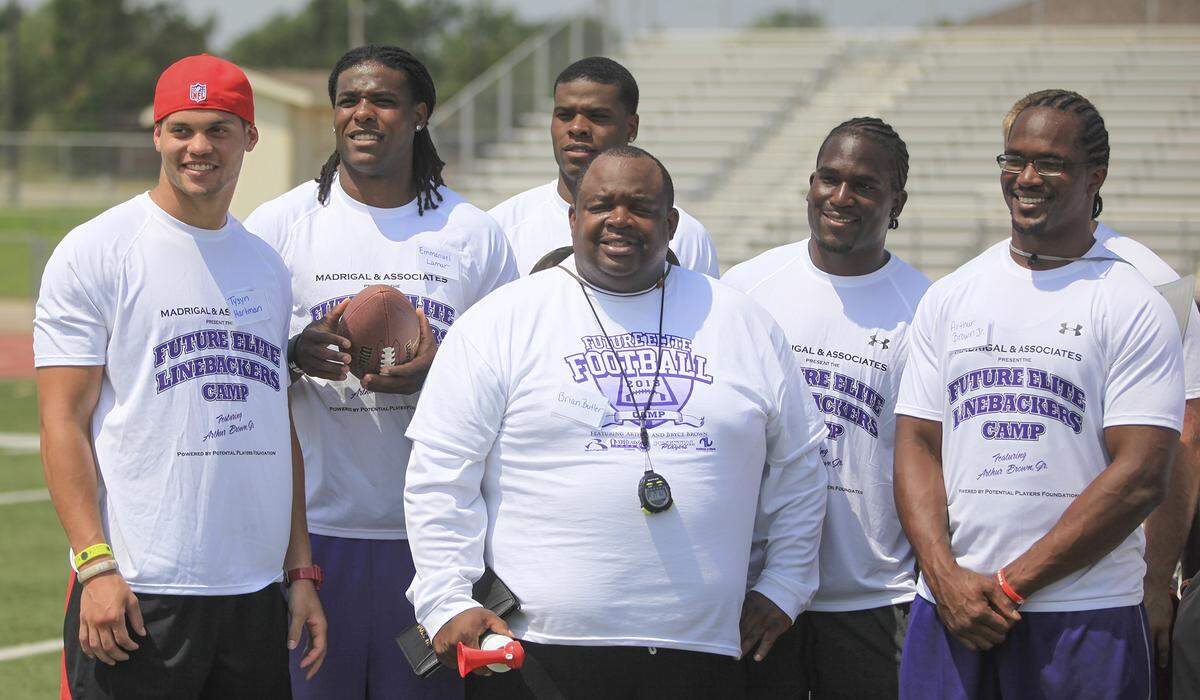
Anthony Cantele (K-State kicker 2010-12): One of the coolest things about those teams was that we had so many Wichita guys. We grew up as rivals, constantly trying to beat each other, and then all of a sudden we were on the same team, working toward the same goals. But we still had high school memories to talk about. It made it fun.
Jonathan Truman (K-State linebacker 2011-14): We all had Wichita pride. At K-State, our teams were filled with guys from different walks of life and different area codes. But we were repping the 316.
Chris Harper (K-State receiver 2010-12): We have all known each other forever. Me, Arthur and Bryce literally started playing football together on the same youth team.
Tysyn Hartman (K-State safety 2008-11): I’ve been trash talking with Chris for as long as I can remember. Our friendly rivalry carried over into college, and that was great. The only thing that would have made it better was if we had Chris (Oregon), Arthur (Miami) and Bryce (Tennessee) the whole time. It was great to add them later as transfers, because they were so talented. But it would have been unbelievable to play with them for four full years.
Recruiting Harper and the Brown brothers was a Herculean task. Schools from every power conference, plus Notre Dame, wanted Harper in 2008. Arthur Brown was a top-25 recruit nationally that same year. Bryce Brown was on an even higher level as the nation’s top high school prospect in 2009. Things got so hectic for the Browns that they asked Brian Butler, a longtime athletic trainer and mentor for Wichita athletes, to manage their recruitment.
Brian Butler: There were times when it felt like I was at the center of the universe with Arthur and Bryce. They were both the No. 1 ranked recruits in the country at one point. There was so much interest. They kind of put Wichita on the map and paved the way for future recruits. My comment to them at the time was, “Let me be the bad guy.” There has to be a bad guy in recruiting, because only one school ends up happy with your choice. Everyone else is (peeved).
Hartman: I hosted all three of them on visits, and, apparently, I didn’t do a good enough job because they all ended up going elsewhere. But I eventually got some bragging rights when they came back. I can say I was undefeated recruiting those guys.
Harper: My choice was nothing against Tysyn. I was super familiar with K-State, and I had a great relationship with (then quarterbacks coach) James Franklin. I really wanted to play for him, and that’s why K-State was in my top five. But when he left for a different job (at Maryland), there was no way I was going there. The facilities didn’t compare to the other schools I was looking at. I went on a visit to Oregon and it felt like I was in a movie. Everything there was amazing.
Butler: It’s hard not to like Oregon. When you’re 17 or 18 years old, Nike and all their uniforms are a pretty attractive deal. But, as we can see, that stuff fades quickly.
Harper: After a year at Oregon, I decided I wanted to transfer and play somewhere in Kansas. I wasn’t going to KU. Mark Mangino didn’t recruit me, Arthur or Bryce very hard. I guess he knew they weren’t going to get us. K-State was the only choice.
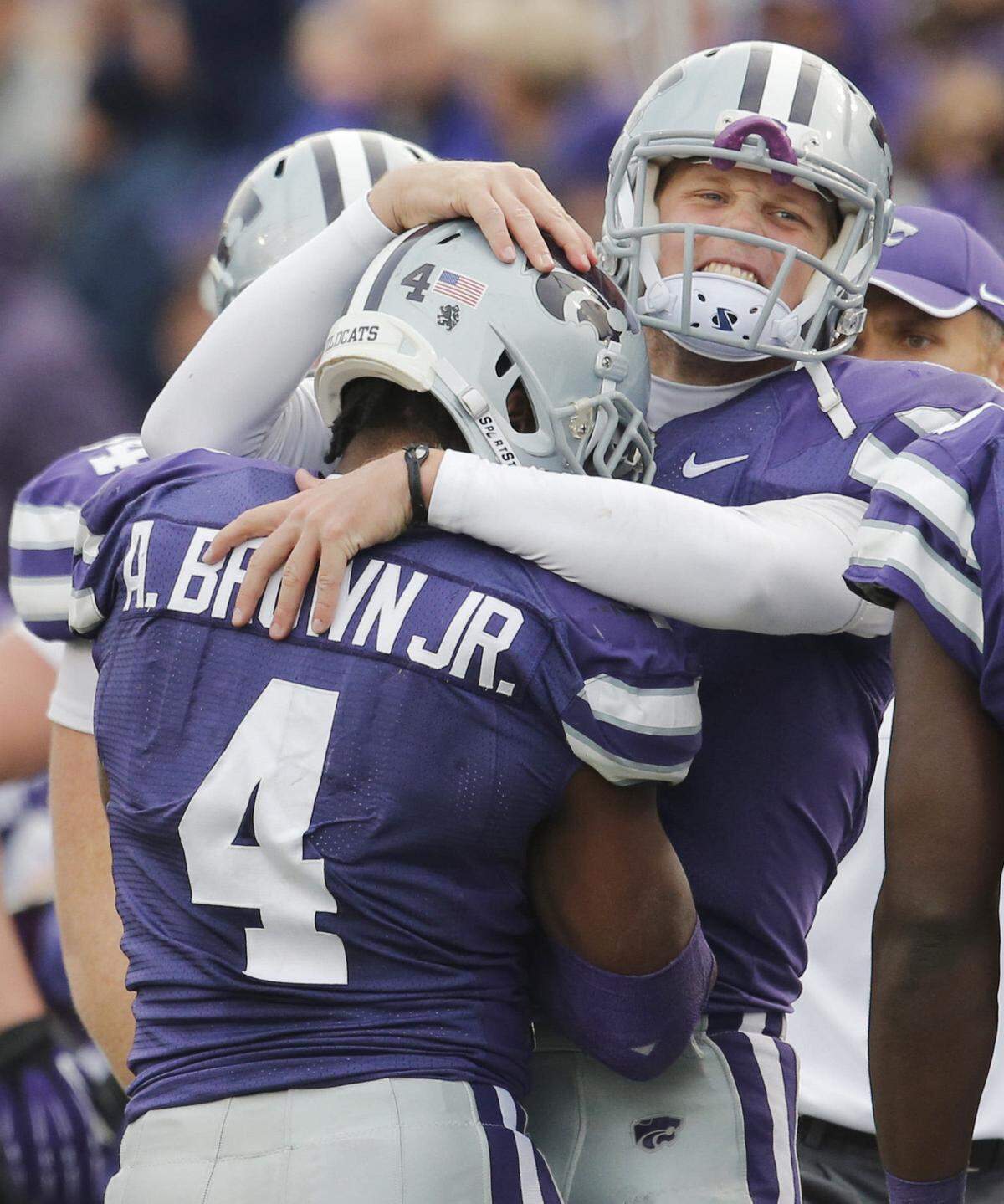
Arthur Brown (K-State linebacker 2011-12): Going to Kansas State and playing for Coach Snyder was one of the best decisions I ever made. Some of my favorite football memories happened there.
Butler: For Arthur, it was all about being at home and being around family. Truthfully, he really liked it at Miami. But when it came to football there were just some things going on there that made his father and myself think he would be a better fit somewhere else. Home was also a big pull for Bryce. He was on his way to winning the Heisman at Tennessee, and I told him that. But his comment to me was, “What’s the purpose of winning the Heisman if I don’t have anyone here to share it with?” I learned something that day. If you have a big support system at home, it’s best to stay close to home for college.
Cantele: When those guys transferred to K-State, everyone was like, “Let’s go!” We were adding five-star players that had the same work ethic as all the walk-ons and overlooked recruits already on our roster. And we grew up with them. We knew they could help us take that next step.
Truman: But first they were playing with me on the scout team while they sat out as transfers. We were competitive. We held our own against Collin Klein.
Hartman: There was an offensive lineman on our team who liked to say he played against the best linebacker in the Big 12 every day in practice, and he was referring to Arthur Brown. He was not exaggerating. Having Arthur and Bryce on the scout team was almost unfair. They were so disruptive at times that coaches told them to get off the field, because our starters couldn’t do anything against them.
Harper: When I got to K-State and I had my redshirt year, we were terrible. We were so bad that I really questioned what I was doing there. I said that to Coach Snyder. But then we got a good amount of transfers and guys started to develop. Everything came together at the right time. I remember heading into that 2011 season thinking, for the first time, we’re going to be good.
That confidence was tested in the 2011 season opener when the Wildcats needed a 33-yard touchdown pass from Klein to Harper with 1:39 remaining to beat Eastern Kentucky 10-7. K-State did not seem poised for a national championship push.
Cardiac Cats
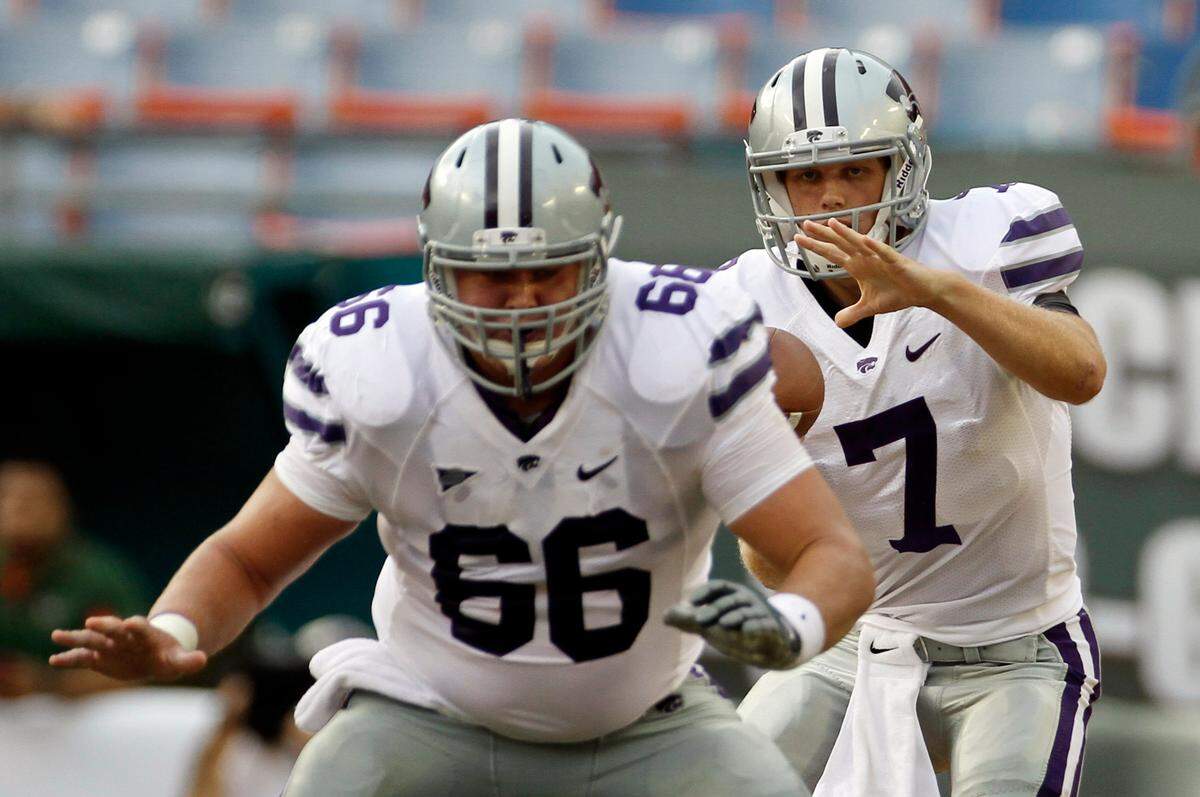
B.J. Finney (K-State offensive lineman 2011-14): There’s a reason why they called us The Cardiac Cats.
Hartman: The goal in that first game was to run up the score and give younger guys an opportunity to get on the field. But we started slow and we had a gut-check moment right away. Fortunately, the schedule makers blessed us with a bye the next week and we got back to the grindstone.
K-State won its second game 37-0 against Kent State and then hit the road for a much-anticipated game against Miami.
Hartman: That was one of the games that we marked on the schedule. We had Arthur, who just came from Miami, and we really wanted to win for him. That game was personal for me. I really wanted to beat Miami and tell Arthur that he made the right decision. I’m sure he was motivated for that game. They’ve got all those Florida boys down there with all the talent in the world. We wanted to prove something against them.
Finney: There was a pivotal moment in that game. It was second-and-27 and we were backed up because I had two false starts as a center. I couldn’t hear Collin or the snap count. It was a major problem. The coaches were getting mad. Of all plays we could call next, we call Quarterback Power. Not for a second did anybody believe that we weren’t going to get those 27 yards. We were like, “All right. Coach called Power, let’s run Power.” We thought, “This ought to work. They aren’t expecting it.” Well, we got 35 yards and a first down. Years later, a couple of teammates of mine out in Pittsburgh who played on that Miami team asked me, “Why did you guys call Power on second-and-27?” I said, “You weren’t expecting it were you, now?”
Hartman: Of course, Tre Walker had the play of that game. I remember Miami had first-and-goal in the final minutes and it was up to us to win on defense. We stopped them on first down, stopped them on second down, stopped them on third down and then Tre tackled their quarterback (Jacory Harris) right at the goal line. That was our first major play as a unit. Everybody showed up. Everybody knew their responsibilities, and enough people beat their man that we kept them out of the end zone.
Truman: I remember yelling so loud I couldn’t hear the crowd. It’s not very often you see an offense get stopped four downs in a row from inside the 5.
Harper: Winning that game really boosted team morale. We didn’t know how good we were before that. I knew we were good, because I had played for another amazing team and had seen USC up close. I could tell we were on that level. Our guys just needed to realize it, too.

What can Brown do for you?
K-State earned some national respect after that game, but the Wildcats didn’t crash the top 25. They once again had to prove themselves the following week when No. 15 Baylor and Robert Griffin III came to Manhattan.
Hartman: That Baylor game was the best win I can remember. People ask me all the time what it was like to play against RG3. I feel like they miss out on the fact that Baylor was a lot more than just him that year. Look at his receivers. He was throwing to three NFL guys — Kendall Wright, Terrance Williams and Tevin Reese. Think about a Heisman winner distributing the rock to those guys. Their speed was off the charts. It was almost like he recruited all his old track buddies to come score touchdowns with him.
Griffin was as good as advertised, throwing for 346 yards and five touchdowns. But the Wildcats held Baylor scoreless in the fourth quarter, thanks in large part to a pair of clutch plays from Arthur Brown.
Hartman: A star was born that day. I remember RG3 entered that game with more touchdowns than incomplete passes. He hadn’t thrown a single interception. Then Arthur picks him off and Anthony gave us the lead in the fourth quarter. They still had a chance to win on their last drive, but Arthur chased RG3 down on the sideline for a sack as he’s trying to scramble. Here’s a QB with world-class speed getting run down by a linebacker. It was incredible.
So much so that Brown, who was notoriously emotionless in a K-State uniform, broke out some dance moves on his way off the field.
Brown: That was a big stand for our defense, a great opportunity against a great team and really just a chance to identify who we are as a defense. My energy from that last play came from me seeing enjoyment from my team. When you have that energy and emotion around you, you’re definitely going to get involved.
Hartman: That really showed Arthur’s range and what he could do by making two massive plays like that. Arthur is the best linebacker that I’ve ever played with. Not just one of the best, the best. I say that as someone who played with Derrick Johnson for the Kansas City Chiefs.
Marathon game
K-State won its next three games to start 6-0 and climb to No. 8 in the national rankings, but its dream of an undefeated season ended with a 58-17 loss to Oklahoma, followed by a 52-45 defeat at Oklahoma State. The Wildcats bounced back with a thrilling 53-50 win over Texas A&M that lasted four overtimes.
Truman: I can’t remember when that game started, but it felt like it ended around midnight.
Cantele: That was an intense game. I had two big pressure kicks. One from 44 yards to tie in the fourth quarter and another from 38 to send the game to a third overtime.
Finney: We won by running a quarterback sneak on the final two plays. We had second down on about the 4-yard line, ran a quarterback sneak and got 3 yards. Everybody is wondering what are we going to do now? We’re standing in the huddle waiting for the play to be relayed in and I said, “We should just run sneak again.” All the linemen were like, “Yeah, let’s do it.” So our entire offensive line turns to the side, and we were all like, “Come on, Coach. Let’s run it again. Let’s win this thing.” Coach believed in us, we ran it again, we scored and the whole place went nuts.
Hartman: We trailed in nine games that season and came from behind to win just about all of them. There was something about our team, especially on defense, that allowed us to make a play when we absolutely needed one. Everyone stepped up at some point. We were unselfish. How many guys changed positions for the good of the team? I changed from quarterback, and so did Ty Zimmerman. Emmanuel Lamur went from safety to linebacker. David Garrett moved inside and became one of my favorite people to play with at nickel. There were no egos, just guys who understood the chessboard and how all the pieces fit together.
Finney: I’ve had NFL players tell me they used to underestimate Kansas State, but after seeing how hard we played that year they realized they didn’t want any part of Finney’s team.
The Wildcats closed out the regular season with victories over Texas and Iowa State to finish 10-2 before falling to Arkansas in the Cotton Bowl. With the majority of their roster returning, expectations skyrocketed ahead of 2012.
Championship push
It wasn’t all good news for K-State’s nucleus of Wichita players, though. Bryce Brown abruptly left the team after playing sparingly early in 2011. The former top-rated recruit gained a grand total of 19 yards in a purple uniform.
Butler: There were some other things he felt like he needed to do at that time, so he made the decision to quit college football. I didn’t agree with it. I told him to stay. But one thing I admire about Bryce is that he is a man of his word. He worked his (rear) off and still made it to the NFL. Then he came back and got his degree from Kansas State. I respect him for that.
Hartman: It’s unfortunate things didn’t work out for him at K-State. Anytime we lost a guy from Wichita, it hurt because we had such a great competitive bond. But he’s a guy I still love to this day. We were all happy for him when he got drafted. At the time, we had the longest active draft streak in the Big 12, and he kept it alive.
K-State didn’t appear to miss him the following year, as the Wildcats won their first 10 games. Only this time, their victories were blowouts instead of nail-biters. The Cardiac Cats were no more. Early wins over Missouri State (51-9), Miami (52-13) and North Texas (35-21) set up a conference opener that had championship implications at No. 6 Oklahoma.
Harper: Believe it or not, I was disappointed with the way we played in 2011. I didn’t think those games should have been close. The only team that was better than us was Oklahoma. I thought we were an underachieving team. There was so much more we could do.
Truman: We all knew we had a special season in front of us if we did everything the right way. We were confident going into every game and felt like we were supposed to be beating these teams. It was no longer a question of, could we win a close game? Now it was, this shouldn’t even be close. Let’s take it to ‘em. None of us understood why we were underdogs against OU, and I think beating them (24-19) proved that we were the real deal.
Harper: The other game I remember was at West Virginia. Everyone was talking up Geno Smith as a Heisman candidate, but we destroyed them (55-14) and Collin stole all his attention. It’s too bad (Klein) never got a NFL shot. He could have been a backup somewhere, easy. But he had an unorthodox throwing motion and on top of that he was injured. I don’t want to disclose the actual injury, but it was worse than most people think. You’re not supposed to play quarterback and throw with what he had going on. I wish he would have been more vocal about it and checked out of some running plays, but he stayed with them because he thought that was best for the team. That was commendable, but it made NFL scouts label him as a runner. There were a lot of things working against him.
Truman: You can’t look at those teams without talking about Collin Klein. He found ways to win, whether it was with his arm or with his legs or just his mental and physical toughness. He was also a great leader off the field. Everybody looked up to him.
Cantele: I used to have a joke with my dad that I was his second favorite player on the team behind Collin. He deserved to win the Heisman. He probably would have if we had beaten Baylor.
Everything went wrong
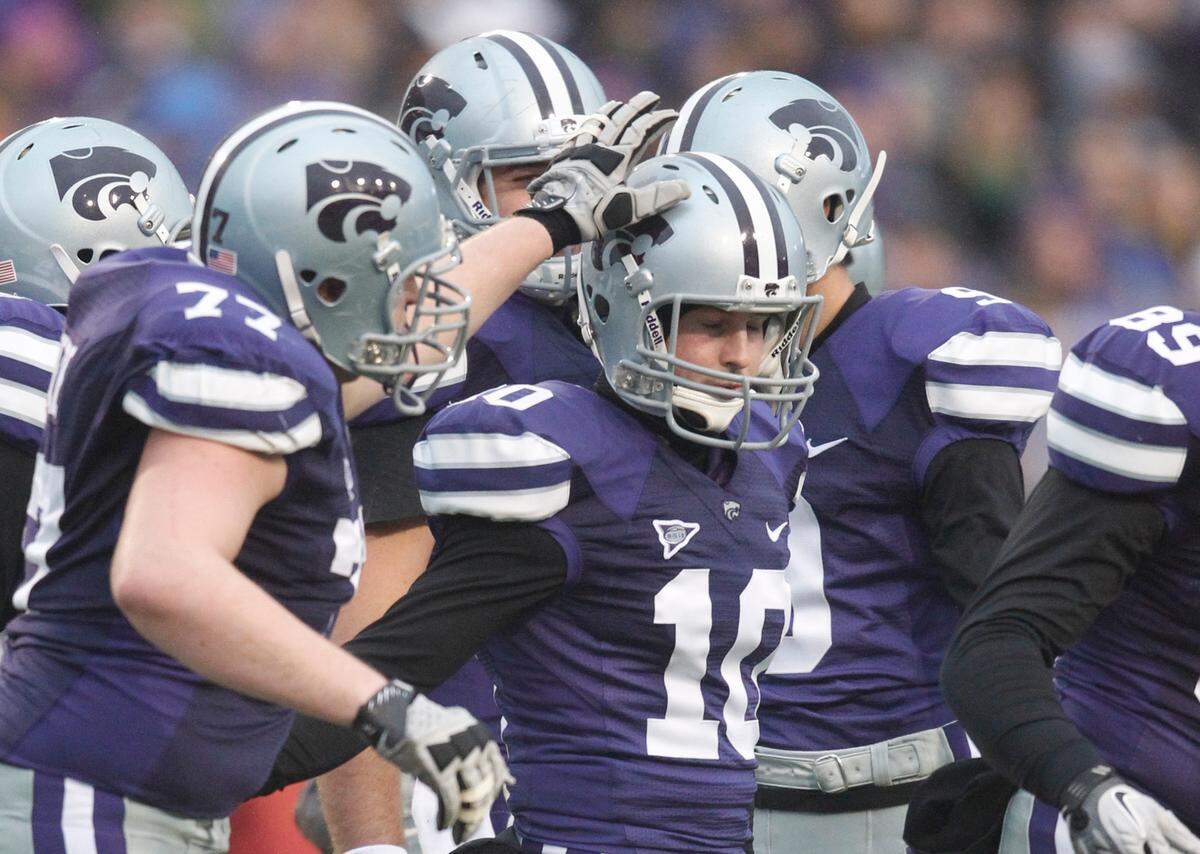
Indeed, the stars seemed to align for both Klein and K-State after it defeated TCU 23-10. The Wildcats were 10-0 and No. 1 in the BCS rankings. They were favored to win their final two games and seemed destined to play for a national championship. But that dream was derailed the following week against Baylor. The Bears not only upset the Wildcats, they won convincingly 52-24.
Harper: Everything went wrong that game. Ty Zimmerman got hurt, and Dante Barnett had to play as a freshman. He was a great player, but he wasn’t ready. We had some injuries on the defensive line for that game, too. Their main running back (Lache Seastrunk) had 185 yards on us and then they had another guy (Glasco Martin) go for 113.
Cantele: Something felt really off beforehand in the locker room. We almost didn’t feel prepared. Baylor was sixth in the Big 12 at the time and not a team that, on paper, we should have lost to. Then the game starts and everything we prepared for was thrown out the window. I remember talking to guys on the defense and they said it was like Baylor had come up with a brand new playbook for that game.
Truman: We didn’t have an answer for a lot of what they were showing us. They were giving us brand-new looks on both sides of the ball that we really weren’t expecting, and that gave us all kinds of fits. I don’t know if they had us circled on the schedule or if they just came out red hot that night. But they had our number.
Harper: One of the biggest things was we were down 11 at halftime, and we came out and went no huddle. I will never understand why we did that. We went into panic mode and we didn’t have to. We were running the ball well. But we come out in the second half throwing, going three-and-out and putting the defense back on the field. We had co-offensive coordinators that year, which is basically a disaster waiting to happen. When you don’t have defined leadership, things are going to break down. Who makes the decision? That was bad. It didn’t get exposed when we were winning like we were winning. There were no big decisions for anyone to make, because we were destroying people. But then you get in a situation like that and you don’t have agreement.
Truman: We obviously didn’t handle being ranked No. 1 very well. I think we were a mature team. We didn’t agree when the polls ranked us at 22 or 25, so we tried not to put too much emphasis on them when we were No. 1. I don’t think we got caught up in that too much. We definitely didn’t overlook anyone or think we can put in cruise control. In hindsight, though, there was something different about it. I can say we didn’t handle it well and we had a bad week.
Harper: This will sound bad, but I don’t think we had aspirations to win a national championship. It was never talked about. When we got to No. 1, everybody was so happy about it that that was like our national championship. We talked about the Big 12 championship, but never anything more than that. When I was at Oregon our goal was to win the national championship. That was our stated goal, so everybody knew what we were working towards. That was never talked about at Kansas State. We had no defined end-of-season goal. I think that really bit us, because if we had that goal when we got to No. 1 we would have known our mission wasn’t over yet. We kept things simple and talked about winning the next game, but once we were actually in the running for the national championship no one knew what to do. We weren’t prepared for that.
What might have been?
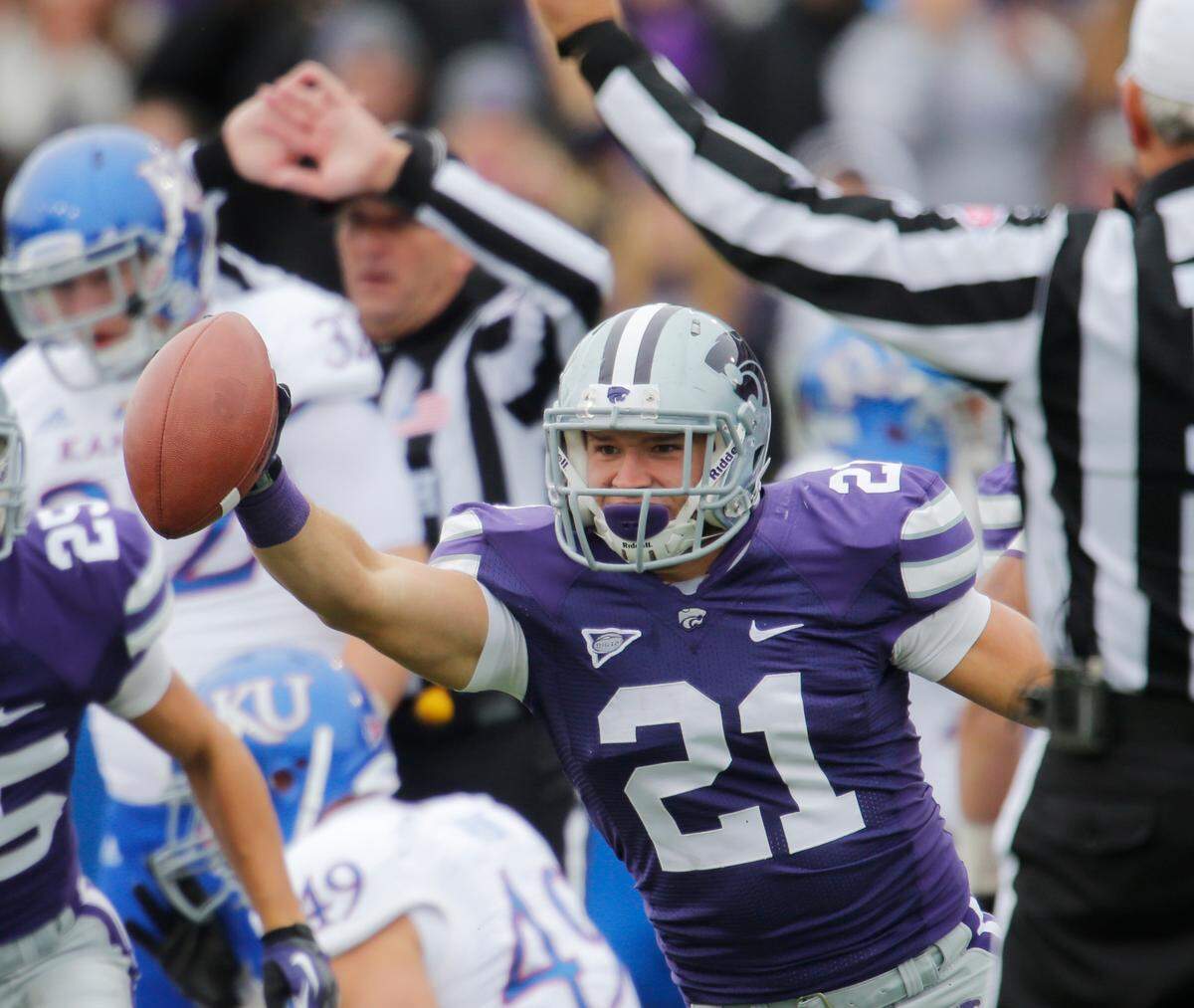
That one loss knocked K-State out of national championship contention, but the Wildcats bounced back the following week to beat Texas and win their first conference title since 2003. Everyone celebrated and began preparing for Oregon in the Fiesta Bowl, but it was hard for them to move past just how close they came to playing Notre Dame in the BCS championship game.
Harper: We would have killed Notre Dame. I know some of the players that were on their team, and I told them that when we were together in the NFL. They weren’t good. I’m surprised Alabama didn’t beat them by more (42-14). Had we won that game against Baylor, I can definitively say that we would have won the national championship.
Truman: I think we beat Notre Dame, for sure. That year, the two best teams were pretty clearly Alabama and Oregon. But the way things played out, it was going to be us and Notre Dame in the national championship game. And we probably beat Notre Dame. It’s a painful thing to talk about.
Cantele: That Baylor game is still hard to look back on, which is unfortunate because it’s the game I get asked about the most. One of my students literally brought it up this morning, and it’s almost 10 years later. I guess we’re all still thinking about what might have been.
Hartman: Outside of that one game, you couldn’t dream of a better season.
Harper: It was a “tough” loss, with “tough” in giant quotation marks, but I don’t lose sleep over it anymore. I prefer to think about us winning the Big 12 championship instead. Not many teams in Kansas can say they’ve done that. We were a historic team.