It’s OK to leave cringe-worthy books — and old game shows — in the past | Opinion
For a somewhat random reason — brainstorming scripts for the next Wichita Gridiron show — I’ve been watching old episodes of “Family Feud.”
We’re talking about the ones with Richard Dawson from the 1970s and early ‘80s, when the top answer for the question “Who should be the next president of the United States?” was Ted Kennedy.
And they are, in a word, cringe-worthy.
Not because of the dated president question — for which top answers also included Gerald Ford, Howard Baker and Jerry Brown — but because Dawson kissed and groped female contestants, and for the blatant racism and sexism that pervades the show.
In one episode, Dawson repeatedly mocked an Indian immigrant’s accent. In another, he told a Black woman, “I’m gonna need to see some ID” to prove she was a member of a mostly white family.
In others, questions included, “The age that a woman is ready for marriage” and “The age a woman should start moisturizing her skin.”
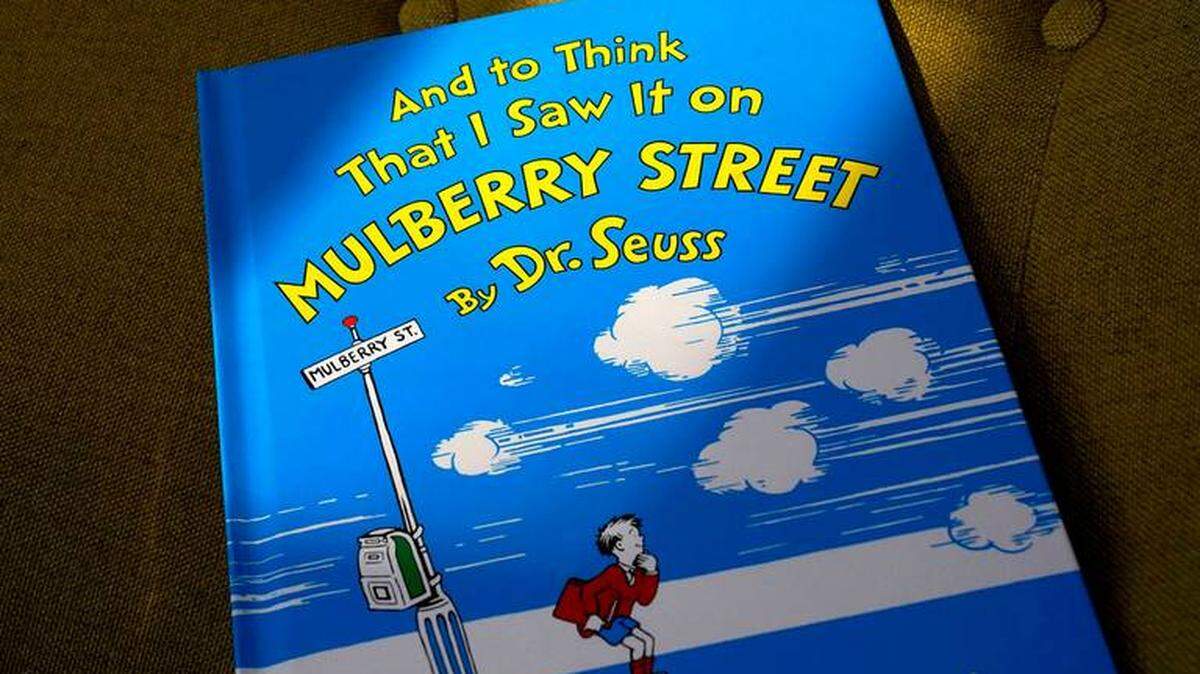
My journey back through retro television coincided with news this week, on what would have been Theodor Seuss Geisel’s 117th birthday, that the company that controls his works will cease publication of six Dr. Seuss books because of their racist imagery.
The announcement prompted screams against cancel culture and book banning, though of course it was neither.
It was a recognition that some books by the children’s author, though beloved by some, “portray people in ways that are hurtful and wrong.” And a modern-day publisher shouldn’t continue circulating or profiting from them.
It’s thoughtful editing, not cancellation. And it’s past due.
In “And to Think That I Saw It on Mulberry Street,” a white man is shown using a whip on a man of color. In “If I Ran the Zoo,” African characters are drawn to look like monkeys, with potbellies and grass skirts. “If I Ran the Zoo” also features a white boy holding a large gun while standing on the heads of three Asian men.
While many Dr. Seuss works delight readers with playful illustrations and tongue-twisting rhymes, others have been called out for their racist depictions of people of color.
The books named in this week’s announcement were published between 1930 and the late 1970s, when diverse characters or voices were hard to find in children’s literature — but there were stereotypes aplenty.
I grew up reading and loving Dr. Seuss, including several of the books that will no longer be published: “If I Ran the Zoo,” “And to Think That I Saw It on Mulberry Street,” “McElligot’s Pool” and “On Beyond Zebra!”
I read the books to my children, who are now in their 20s. None of us recognized the racist illustrations that are so clearly shocking and troubling today.
Neither did I notice, as a young girl watching “Family Feud,” that the host stopped just short of propositioning young female contestants, or that families of color were sometimes mocked and insulted.
Now, thanks to Buzzr TV’s collection of “vintage game shows,” you can stream those old episodes right to your Smart TV and wince away.
The material has not aged well. Modern television networks wouldn’t dream of airing some of the stuff that once passed as wholesome family entertainment. Why shouldn’t book publishers also recognize past wrongs and pledge to do better moving forward?
Ann Neely, a professor of children’s literature at Vanderbilt University, recently told NBC News: “We must evaluate books for children by today’s values, not on our own nostalgia. Children need to see themselves, and others who may be different from them, in an accurate and positive way.”
Stopping publication of some Dr. Seuss books doesn’t erase history any more than canceling a TV show or removing a statue from a public square. It merely acknowledges a shameful, hurtful past and says we can — and should — be better.
This story was originally published March 3, 2021 at 1:44 PM.