Trump sacks commission that protected Kansas voting rights from Kobach | Opinion
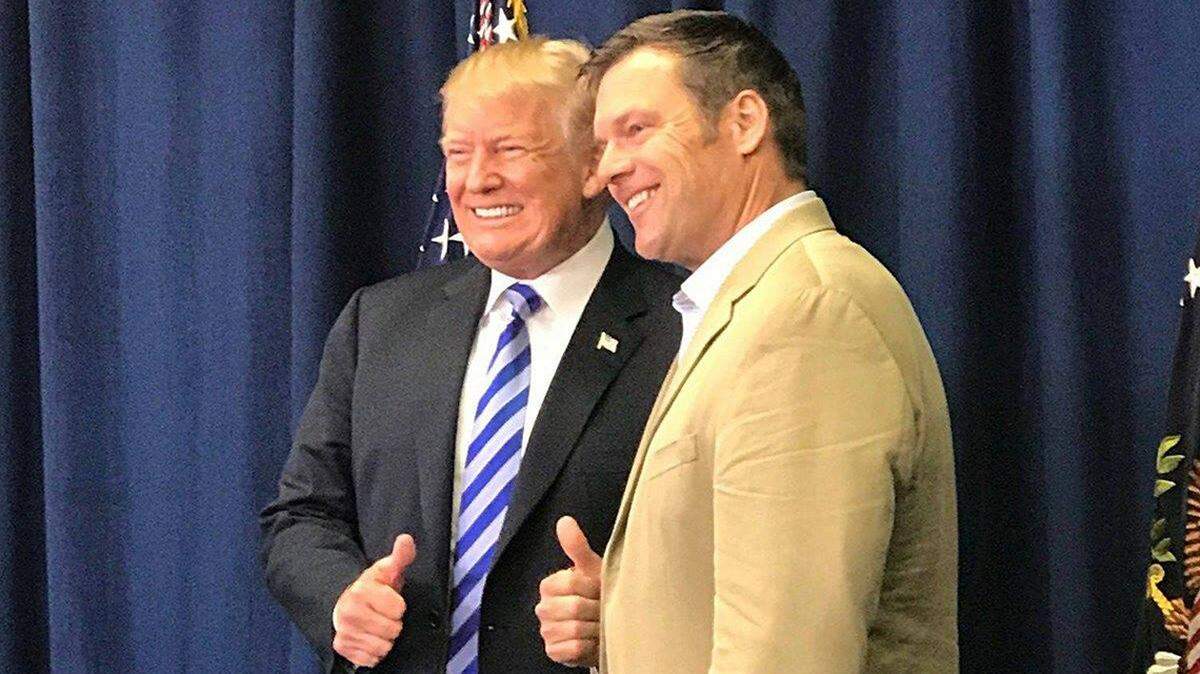
In the Gettysburg Address, President Abraham Lincoln uttered the immortal words “government of the people, by the people, for the people, shall not perish from the earth.”
Abraham Lincoln never met Donald Trump.
The United States of America made it to its 250th birthday as a representative democracy, a beacon to the world for free and fair elections.
That changed on Friday, when Trump ousted all three members of the Election Assistance Commission, a bipartisan board set up by Congress to keep our elections secure and accessible to all eligible voters.
The two Democrats were reportedly informed by email that they’d been fired. The Republican member was allowed to resign. The fourth seat, reserved for a Republican, was already vacant.
The now-memberless Election Assistance Commission has had a bigger effect on your life as a Kansan than you probably realize.
Twelve years ago, after the Kansas Legislature passed a law placing onerous restrictions on the right of Kansans to register to vote, I traveled to Denver for a hearing on it at the federal 10th Circuit Court of Appeals.
I was there to watch then-secretary of state and now Attorney General Kris Kobach try to defend that law, which he wrote and shepherded through the Legislature.
Called the SAFE Act, It required prospective voters to provide a passport or birth certificate to prove citizenship to be allowed to vote. Women who had changed their name due to marriage were also required to provide certified copies of marriage licenses and in some cases, divorce decrees.
The provisions are virtually identical to a bill Trump’s been pushing at the federal level, called the SAVE Act.
Kansas’ checkered history on voting rights
I’m going to take you into the weeds here, so stay with me.
After the SAFE Act was passed, Kobach demanded that the Election Assistance Commission add Kansas-specific instructions to the federal voting registration form, requiring Kansas voters to comply with his rules on proof of citizenship.
At the time, the commission had no members, because all their terms had expired and the Republican-controlled Senate was refusing to confirm any nominations by then-President Barack Obama. The commission executive director denied Kobach’s request, so he sued.
The appeals court ruled that Kobach couldn’t force the Election Assistance Commission to change the federal form, and the agency’s defiance was the beginning of the end of the SAFE Act.
We went through a very weird period after that.
Organizations that ran voter registration drives started using the federal form, instead of the state form that required the extra paperwork.
Kobach responded by trying to set up a two-tiered system for voting — registrants using a state form could vote in all elections, but those using the federal form would only be eligible to vote in federal elections for Congress and the presidency.
It was a mess.
Ultimately in 2020, nine years after the Legislature passed the SAFE Act, the 10th Circuit court struck it down, noting that it stripped voting rights from more than 31,000 legitimate citizens, and ruling that it violated the federal Motor Voter Act and the 14th Amendment to the U.S. Constitution.
It’s not really about ‘illegals’
The national voter registration form requires that prospective voters swear under oath that they are citizens. People lying on the form are subject to federal prosecution and 10 years in prison.
That’s a big deterrent, and few would risk those consequences to commit a crime with no tangible benefit to themselves.
Kobach himself is Exhibit A showing that the system works fine as it is.
He got the SAFE Act through the Legislature on scare tactics, claiming “thousands” of illegal immigrants were voting in Kansas elections.
He’s had prosecutorial power over voting crimes for more than 10 years, and has squandered probably millions of your tax dollars on his bogus quest to find those illegal voters.
He’s never caught an undocumented immigrant voting. He’s caught a total of three legal immigrants who voted, all of them more confused than criminal.
But it’s pointless to even point out that record of failure.
The Kansas SAFE Act, and Trump’s proposed SAVE Act, have never been about catching illegal voters.
They’re about power and control. Suppressing the 31,000 voters Kobach suppressed — and the millions who would be suppressed by the SAVE Act — has been the point all along.
Kobach and Trump know that the more hurdles they can erect to voting, the fewer people will vote.
And the disenfranchised will be mostly working-class — especially women — who lack the money and time to track down the required government documents, often across state lines. It’s a group that leans Democratic.
Courts won’t save us
To Kobach and Trump, elections aren’t a sacred trust. They are a means to an end, to keep them in control of levers of power that we never should have let them anywhere near in the first place.
Complaints will be made, lawsuits filed, and in the end, Trump will do whatever he wants, regardless of the damage to the republic.
That’s his track record of the last year and a half, and there’s no reason to think it’s going to change now.
Don’t expect the courts to save us.
The Supreme Court enabled this seizure of power and castrated congressional oversight when it ruled that independent commissioners, like the members of the Election Assistance Commission, serve at the will of the president, and that he can hire or fire them as he sees fit, regardless of what the law says.
Trump will appoint his usual cadre of cronies and toadies who will do whatever he tells them to and poof — fair elections become a relic of the past.
Eight score and two years ago, when Lincoln said “government of the people, by the people, for the people, shall not perish from the earth,” he was right.
It won’t perish from the earth. Just here.