Wichita can’t get enough Banana Ball. But is it the real deal? | Opinion
As a 65-year-old second baseman and a bit of a baseball purist, I’ll admit I was a bit skeptical of Banana Ball at the start.
But after seeing it for the first time on Thursday night at Equity Bank Park, I’ve decided it’s different, but it ain’t wrong.
It’s a road show, front and center. Entertainment and fan experience is the name of the game.
The teams traveled with about 24 players, and 16 entertainers who pump up the crowd in the pre-game and between innings. The first thing you notice when you get near the stadium is the music, a mixtape of classic hits that never stops.
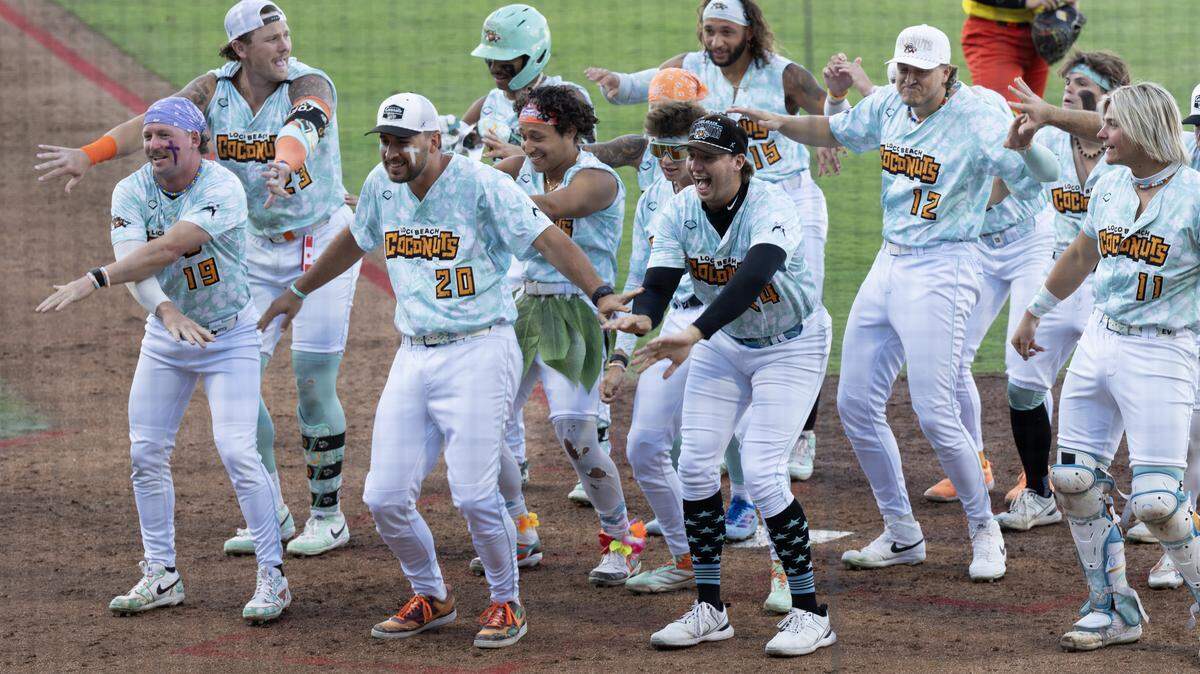
Players sing and dance and exhort the fans to join in. The capacity crowd at the ballpark — about 12,000 strong — was only too happy to participate.
In 28 years in Wichita, I’ve been to many baseball games — pro, college and NBC tournament — and can attest that this was the loudest and most boisterous crowd I’ve ever seen here.
‘I love this life’
Before the game, Brett Carson, who plays outfield, first base and pitcher for the Loco Beach Coconuts, (and scored the first run Thursday), told me how he got there.
He played collegiate baseball at Marrietta College, a tiny Division 3 program in his native Ohio — and then bounced around to three teams over two seasons in minor-league ball. He was invited to a tryout for Banana Ball, where he was evaluated for his baseball skills, creativity and dance moves.
“I love this life,” he said.
Why not? Every night’s a sellout, it’s fewer games, it pays better and there’s a lot less long-distance bus-riding.
Banana Ball consists of a six-team league. Half are loosely tied to geographic locations (it all started in Georgia with the Savannah Bananas). The other teams are theme-based.
The two teams that squared off in Wichita on Thursday were the Firefighters, who represent (as you may have guessed) firefighters across the country. They were the home team and their opponent was the Coconuts, representing the sand life of coastal America.
In regular baseball, showboating is discouraged — it leads to errors and errors lead to losses.
In Banana Ball, showboating is required.
Teams can earn an extra point if they win the battle for the most trick plays in the game — like catching a ball behind the back or volleyballing a fly ball to a teammate to catch it for an out.
Notice I said “point” and not “runs.” Banana Ball uses a unique scoring system that keeps all the games close.
In regular baseball, if your team breaks out for a 10-run inning, it’s a lot of fun to watch in the moment, but it’s essentially game over after that and everybody starts heading for the parking lot.
In Banana Ball, each inning is a game within the game. The closest analogy I can think of is match-play golf, where players win by winning individual holes, not by their overall score.
Teams get a point for each inning they win, plus potentially the aforementioned trick-play bonus.
So on Thursday, the Coconuts, with a two-run lead on the scoreboard, entered the decisive ninth inning (the only inning where each run counts as a point) with a narrower 3-2 lead. They held off a late rally attempt by the Firefighters to win the game by that score.
Is Banana Ball for real?
Because of its showy elements, Banana Ball is often compared to the basketball Harlem Globetrotters or professional wrestling.
And there are some similarities, but the analogy only goes so far.
Globetrotters games and pro wrestling are scripted and choreographed — and the winner is determined in advance.
All the Banana Ball players I talked to before Thursday’s game swore up and down that despite all the on-field showmanship and palling around with the opponents before the game, when they get between the white lines, they’re playing hard and they’re playing to win.
What really convinced me that winning matters was talking with Tanner Allen, the 2021 Southeastern Conference player of the year at Mississippi State, who played 3 1/2 years in the Miami Marlins organization before going bananas.
He’s an outfielder and his signature trick play is to bounce the ball up with his glove and catch it in the straw cowboy hat he wears in lieu of a baseball cap. I asked him if there was any significance to the orange bandana he had tied around the hat.
He said it’s not his regular hatband, but he’d worn it in the last two games and the Coconuts won them both, so he decided to keep wearing it to try to keep the winning streak alive.
One simply does not tempt the baseball gods by faking a superstition. That way lies disaster.
I can relate to this friendly but competitive baseball.
I play old-time vintage base ball (it was two words back in the beginning) for the Bull Dozers, one of two teams affiliated with the Old Cowtown Museum. We wear replica uniforms of covered-wagon-era Wichita teams and play by the rules as they existed in the 1860s and ‘70s.
The primary mission is to entertain visitors and show them what baseball was like back then.
But we also play to win.
We have three team rules: No. 1, have fun; No. 2, beat Topeka; No. 3, when playing Topeka, forget Rule 1.
I watched the Banana Ball game from a platform in a camera well next to the dugout on the third baseline, because there wasn’t an empty seat in the place, and even the outfield berm and standing rails were packed.
When I ducked into the dugout to get some post-game comments, Coconuts Head Coach Mark Crocco (who came to Banana Ball after coaching several college teams), came up and told me that he had noticed how intently I had been watching the baseball part of the action.
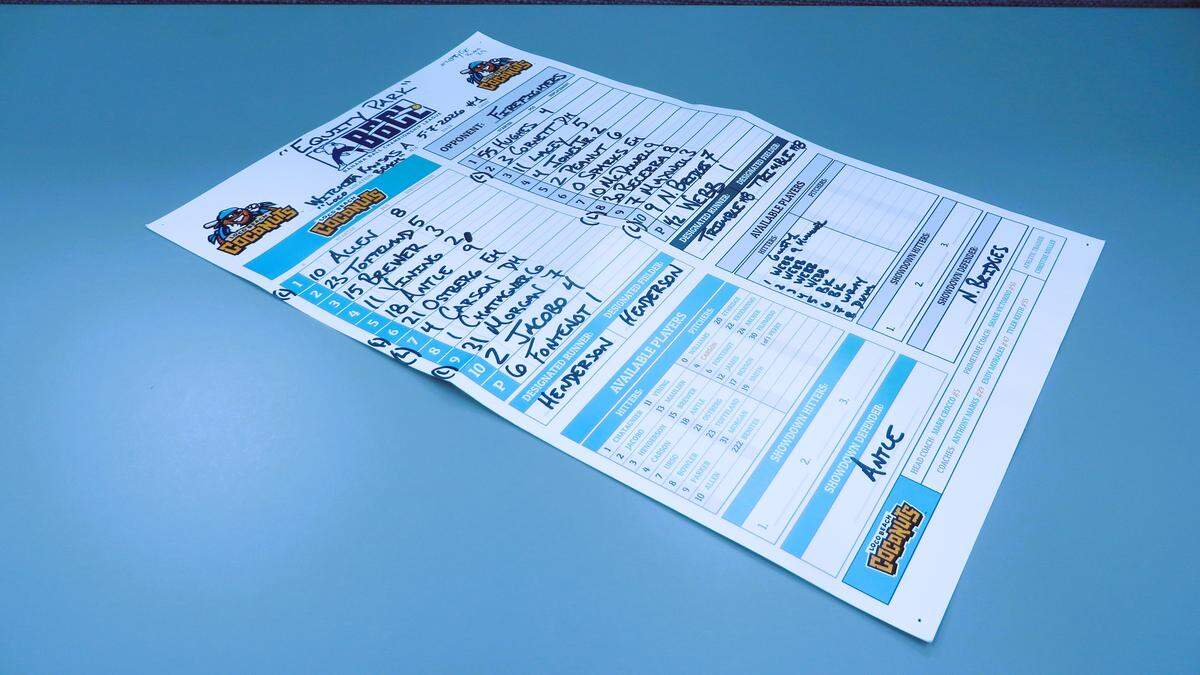
“I want you to have this,” he said, and handed me his lineup card.
So now I have the official lineup card from the winning team of the first Banana Ball game ever played in Wichita.
That’s going up on the wall here at the office.