Sheriff Easter outlines his plans for dealing with ICE and immigration | Opinion
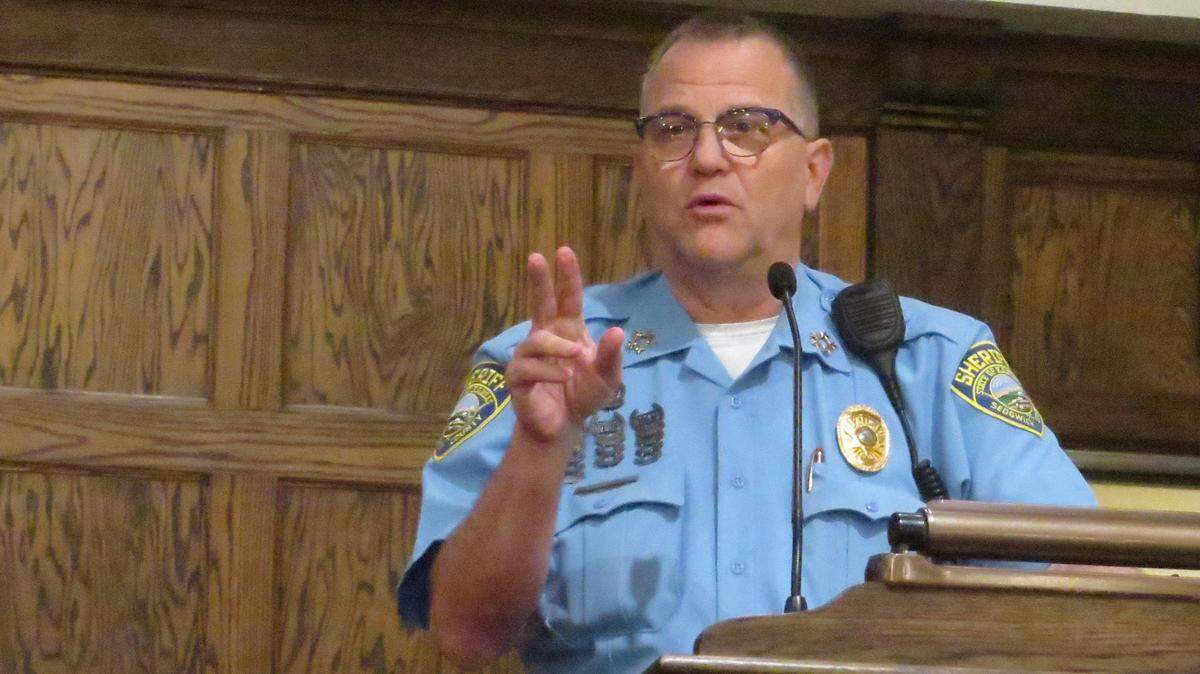
Sedgwick County Sheriff Jeff Easter wants you to know that if you’re a victim of a crime, you can call for help and his deputies won’t turn you over to ICE, whatever your immigration status may be.
The Trump Administration’s ongoing crackdown on unauthorized immigration has complicated matters for local law enforcement on several fronts, but the biggest is that it’s eroded trust between police and the communities they serve, especially in minority neighborhoods with larger percentages of migrants.
“That creates issues for local law enforcement, because we’re here to serve victims,” Easter said. “If you don’t think that folks that are here illegally are victimized, you’re wrong. They get victimized more than anybody else, because they’re not going to report it, because they don’t want to be taken back to their home country, plain and simple . . . As a local law enforcement officer, we don’t care about your immigration status because we can’t enforce it.”
Ditto for traffic stops.
“We don’t check your immigration status when we stop you on a car stop,” Easter said. “You know why? Because we can’t, plain and simple.”
At a meeting with congregants at East Heights United Methodist Church on Wednesday night, Easter outlined how his department is interfacing with the U.S. Immigration and Customs Enforcement agency during this period of ramped-up immigration raids across the country — and what he intends to do going forward.
The Sheriff’s office runs the county jail, and the primary way it cooperates with ICE is through a process known as “detainers.”
What that means is that when a person is arrested and jailed on local criminal charges, they’re fingerprinted and the prints, by federal law, are sent to a federal database. ICE has access to that database and if the agency has cause to believe that a suspect is in the country illegally, they file a detainer affidavit for the sheriff’s office to hold that person for 48 hours. That allows time for a case to be filed in an immigration court, which is a civil, not a criminal court.
“So if they are released on local charges by a judge’s order, or they receive bond and they’re bonding out, they’re held for additional 48 hours, and ICE can come pick them up,” Easter said. “If ICE does not pick them up in 48 hours, they’re released.”
It’s a process that’s been in place for many years without much controversy.
What’s different is that in the past, ICE generally only filed for detainers on suspected felons, but now is routinely filing for misdemeanor suspects, Easter said.
The sheriff’s office has agreed to participate in a federal program where local deputies can serve ICE paperwork on inmates in the jail. But it hasn’t volunteered to take over checking immigration status of inmates, or have its personnel deputized as ICE agents to go out and make immigration arrests.
“Not interested at all, because we’ll make mistakes,” Easter said. Across the country, “there’s been mistakes made where people were actually U.S. citizens (and improperly detained by local sheriffs) and now they got sued.”
Wichita has yet to experience the kind of turmoil surrounding the often violent and occasionally deadly federal immigration crackdowns in Minneapolis/St. Paul, Los Angeles, Chicago and other major cities.
In fact, immigration enforcement may have been reduced somewhat here as some of the handful of agents usually in Kansas were temporarily redeployed to the big-city sweeps.
“What’s convoluted this issue is, when you have the different politicians talking about ‘We’re just going after the criminal element’ — that’s not been true,” Easter said. “They have encountered people that overstayed the work visas or were here illegally, that were not on any type of criminal charges. And did they get picked up in those sweeps? Yes, they did. I can tell you that I’m not aware of any of that taking place in Wichita.”
But what has taken place in Wichita is a lot of confusion.
People spot routine law enforcement activity — like local officers serving arrest warrants or participating in training exercises — and immediately take to social media, fueling false rumors of ICE sweeps.
And the state Legislature didn’t help matters much with a new law passed last week that purports to establish a 25-foot bubble around law enforcement officers responding to calls — the underlying purpose of which is to prevent journalists and protesters from making closer videos of ICE raids, should they occur.
It’s no coincidence that those kinds of videos, taken by protesters, exposed the lies in the Trump administration’s official accounts of the fatal shootings of two anti-ICE protesters in Minnesota — proving the shootings questionable at best and murders at worst.
Easter’s not a fan of the bubble-zone legislation, largely because law enforcement has always had the authority to arrest anyone who actually interferes in an arrest.
“I don’t know what the 25-foot rule really is, other than I’m going to have to do some more training with our deputies,” he said.
He said the message of that training will be to avoid this scenario: “You’re on the sidewalk, and you said some things (that a deputy didn’t like), so you got to back off 25 feet, and then we get sued for First Amendment violation.”
“I talked about the sidewalk, right? That’s public property. You have the right to be on public property. You have the right to say whatever it is you want to say. You have the right to videotape us . . . To be honest with you, my message is it’s not really changed for us, because we still have to protect First Amendment rights.”
Easter’s been in law enforcement since 1989 and rose through the ranks of the Wichita Police Department. A Republican, he was first elected sheriff in 2012 and re-elected three times since.
He knows his stuff.
I came away from Wednesday’s meeting reasonably confident that despite everything that’s going on, he has a solid plan for dealing with current events and things to come.
Easter’s plan represents a balance to continue fighting crime and maintaining order, while avoiding political overreaction, racial discrimination and the infringement of constitutional rights.
We could use a little more of that kind of thinking in Topeka and Washington these days.