Wichita sales tax proposal crashes and burns, so what’s next? | Opinion
It’s hard to imagine a more disastrous outcome in an election than what we saw Tuesday night in the Wichita sales tax vote.
The tax proposal billed as “Watch Wichita Win” went down in humiliating defeat — 9,100 “yes” votes to 41,000 “no” votes.
We probably won’t need a recount.
You could take the facts of this case and write a book called “Lose an Election and All Civic Credibility in Just 90 Days.”
The proposal was too big — a 1% tax to raise $850 million for a disparate list of projects including public safety, homeless and housing services, convention facilities upgrades, property tax relief and a public-private performing arts center.
The proposal was too vague — while the “buckets” of money were defined into general categories, there were few specific details on how the funds would be spent. The City Council wasted hours of its and the public’s time establishing “guardrails” for spending the money — but only after it ordered up the election. By then, it was too late.
The process was too rushed — three local CEOs created the proposal, which was announced to the public only a couple of weeks before the City Council voted to put it on the ballot as submitted. To meet the deadline for a March 3 election, there was no time for any sort of meaningful public input, or for city staff to vet the plan. The whole thing reeked of the council bending over backward to accommodate the will of a handful of wealthy and connected individuals, some known, some unknown.
The election was an egregious waste of public funds. The council committed the collective taxpayers of Wichita to a $170,000 special election, based on the theory that such elections draw lower turnout and are thus easier to win. In the event, the special election drew a 20% turnout, compared to just 12% in our last regularly scheduled general election for City Council and school board. Had we rolled the tax vote in with either the August primary or November general ballot, it would have been free.
The “yes” campaign was an insult to our intelligence. Bombarded with wall-to-wall commercials that were so frequent and so redundant, voters didn’t just get tired of them — they got angry. The campaign was essentially over the day that the pro-sales-tax group Wichita Forward started airing a commercial accusing opponents of being hammer-and-sickle Soviet-style communists.
While we don’t have any way to hold the CEOs who started it accountable, we need to make sure the City Council members understand this vote for what it is: a resounding message from the residents of this community that they need to clean up their act, pronto.
And that goes for all seven of them, who voted unanimously to put this atrocity on the ballot in the first place.
City Council’s work, according to exit polls
It didn’t have to be this way. It shouldn’t have been this way. And now, it’s up to members of the council to clean up the mess they made.
Wichita still has problems that need to be addressed.
The way forward is charted in exit polling done Tuesday by Wichita Documenters.
They’re affiliated with the Wichita Journalism Collaborative and the Kansas Leadership Center, and their regular responsibility is to attend meetings, take notes and distribute summaries of what’s going on in the myriad advisory committees that ultimately shape city policy on everything from planning to plumbing.
Tuesday, the Documenters spent the day surveying voters outside six polling locations, collecting and assembling data on why the people voted the way they did.
Some fascinating trends emerged.
The biggest reasons that people voted in favor of the sales tax were to alleviate homelessness and housing issues, which had 72% support, and public safety improvements, at 70% support.
The Documenters also asked those who voted “no” what they were most opposed to in the proposal.
Only 9% of the voters surveyed cited public safety spending as a reason for their opposition, and only 12% said they had issues with putting money into housing and homeless services.
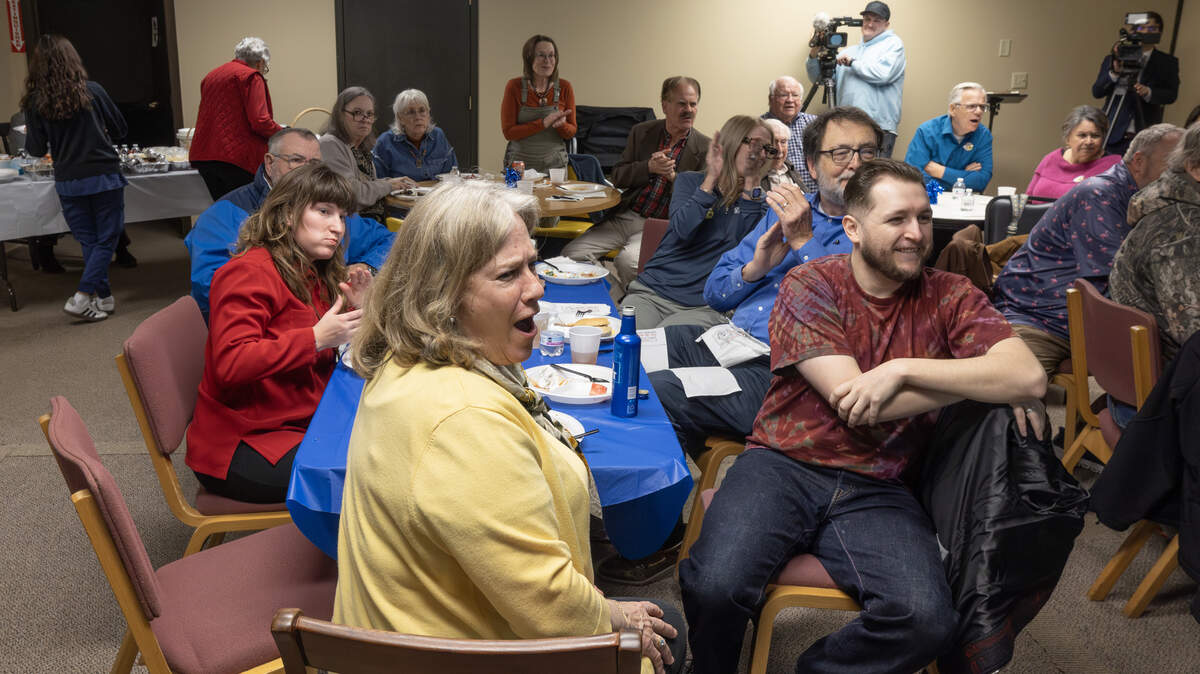
I dropped by the “no” side’s election night celebration.
And what I heard from just about everyone there, including top leaders of the “no” campaign, was that they could support enacting a sales tax if it were smaller, limited to public safety and homelessness, and had a clear spending plan with oversight and accountability for the money.
They actually openly discussed going back to the voters in the general election with a pared-down sales tax proposal to fix what needs fixing, without the excess spending on non-essentials and the “property tax relief” that would have been little more than a transfer of wealth from the renter class to the business class.
My takeaway is that most of the people who voted “no” on Tuesday aren’t opposed to community improvement, or paying for it.
They just want their money’s worth.
This story was originally published March 4, 2026 at 4:50 AM.