Ukraine and Russia are fighting a new kind of war. Can we keep up? | Opinion
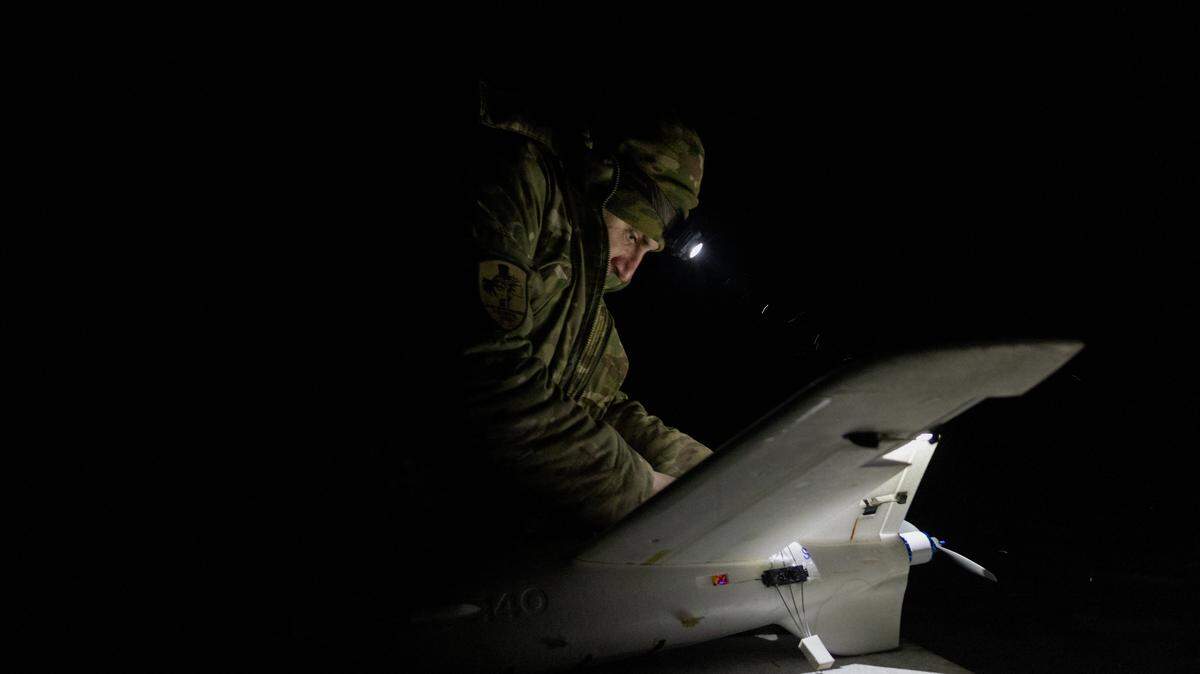
The war between Russia and Ukraine is a different kind of war, a kind we’ve never seen before, and a kind we’re ill-prepared to fight.
That was my main takeaway from an interview I did this week with an expert on Ukraine and Europolitics in general, retired ambassador and 33-year Foreign Service veteran George Kent. He was here for speaking engagements with the Wichita Committee on Foreign Relations and international affairs students at Wichita State University.
He knows Ukraine inside and out. He was deputy chief of mission in the capital, Kyiv, from 2015 to 2018; deputy assistant secretary of state for European and Eurasian Affairs from 2018 to 2121; and ambassador to the Baltic Republic of Estonia from 2023 to 2025. His daughter, a journalist, lives in Ukraine.
His analysis of the ongoing war there is chilling.

While most Americans mark the start of the war with Russia’s full-scale invasion of Ukraine in 2022, Kent says it really began in 2014 on a more limited basis.
“Russians have been killing Ukrainians and trying to occupy territory for 12 years now, and I think it has become a war of attrition in some extent, which is tough for a country like Ukraine, which is between one-fourth and one-fifth the size of Russia,” he said. “But it’s also become a modern war, an information driven war with drones and increasingly use of AI (artificial intelligence), the likes of which no other country in the world has fought . . . The innovations in drone warfare mean that there’s not so much a front line as there’s a kill zone.”
He said the Russians are grinding forward, but they haven’t made any strategic breakthroughs or taken large swaths of territory lately.
To a large degree, it’s because Ukraine has embraced and advanced military drone technology, expanding the battlefield and disrupting logistics well back from soldiers with rifles.
“They call these FPV (first-person view) drones, Kent said, “essentially suicide drones that can be operated with cameras as if it’s a video game, and they just go in and blow up whatever they’re going after, whether it’s personnel or equipment and tanks.”
Last summer, the Ukrainians demonstrated their drones’ versatility and effectiveness when they loaded them on trucks and smuggled them into Russia, setting up a coordinated surprise attack that destroyed dozens of strategic bombers on the ground at airbases across the country.
As Americans, we tend to see ourselves as the smartest and most advanced people on Earth — especially when it comes to military capability. This time, we may not be as ahead as the average American thinks we are, Kent said.
“This is a type of warfare that at this point, only Ukraine and Russia have the capacity to fight,” he said. “There’s not a single NATO country that can fight (like they are).”
Some countries have caught on to the change, particularly Denmark and Estonia.
“(They) have their mil tech startup companies on the ground working hand in glove with Ukrainians,” Kent said. “It’s very different than the big American prime defense contractors who are looking for multi-year fat contracts, and they want to dictate the terms, as opposed to let the battle dictate it.
“So I think there’s actually a real sort of potential opportunity being lost by the U.S., not just that we’ve stopped giving the Ukrainians the support we did up until 2025, but in terms of next generation technology.”
Among military planners, there’s an ever-present danger of trying to fight the next war using the tactics of the last one.
The classic example is World War I, where troops on horseback found themselves ineffective against the power of the machine gun.
Battleships with big guns ruled the waves until World War II, when they proved vulnerable to carrier-based aircraft. They’ve since disappeared from the world’s navies (although President Donald Trump has announced plans for a new class of battleship with updated weaponry, named after himself).
Speaking of the Trump administration, visiting with Kent heightened a concern I’ve had for some time now about the direction of the military under Secretary Pete Hegseth.
While Ukraine and Russia are developing new ways to fight at a distance, Hegseth seems to be going for style points.
He renamed the Department of Defense the Department of War, to try to look tougher. He’s mandated training and fitness standards favoring physical strength to disadvantage female soldiers, and he’s gotten rid of promotion boards that evaluated candidates for higher command ranks based on factors like intellect, behavior, and personality.
So as the Ukrainians and Russians demonstrate the need for 21st Century cyberwarriors, we appear to be stuck recruiting for Caesar’s legions.