Wichita sales tax flap shows who’s really the boss at City Hall | Opinion
So, despite a 4-3 vote Tuesday not to hold a special meeting on moving the upcoming sales tax vote from March to August, the Wichita City Council is going to have one anyway.
As it turned out, Mayor Lily Wu can call a special meeting whenever she wants, with or without a council majority. And she did — noon on Wednesday at City Hall.
But that’s not what this column is about.
Today, I’m going to write about one small fraction of Tuesday’s longer discussion.
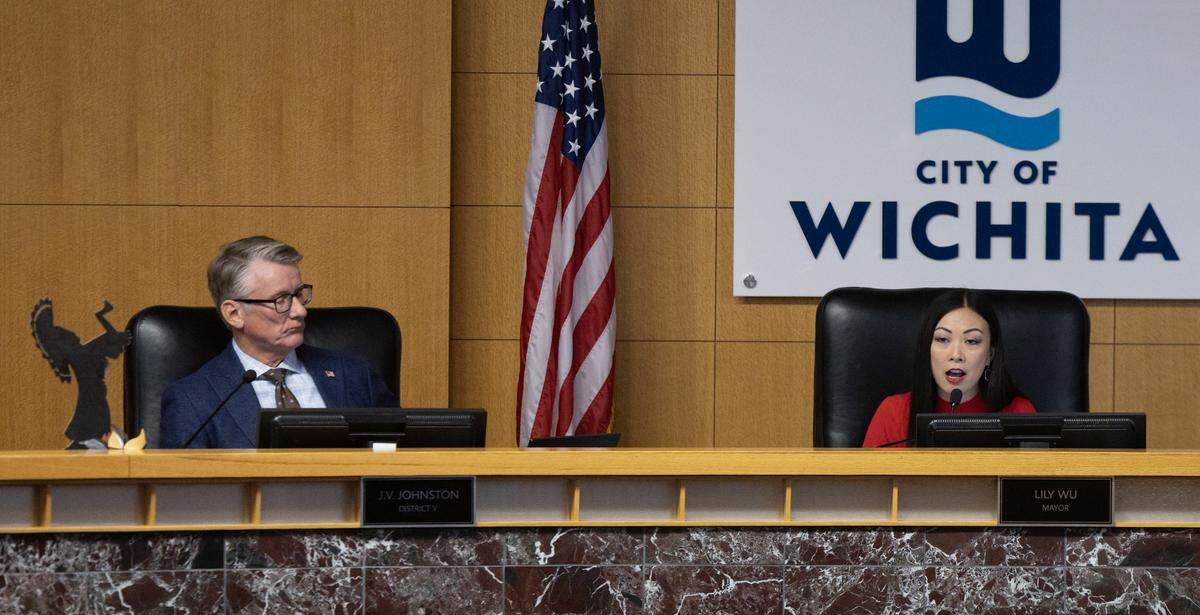
Council member J.V. Johnston said the quiet part out loud, illustrating how powerful people in this community can manipulate City Hall to do their bidding. And I think that deserves a column of its own.
First, a bit of background.
The reason to consider moving the election to the August primary is simple. It costs essentially nothing because there’s already an election scheduled for state offices, so it’s simply a matter of adding another line to the ballot.
Instead, proponents of the tax want it to go in March, in an off-schedule special election likely to bring lower turnout.
The estimate for that was $150,000. It rose to $170,000 last week, after election officials discovered they’d have to move several polling sites because the buildings wouldn’t be available for a March 3 election date.
That means 26,000 voters would have to vote somewhere they’re not used to.
Ordinarily, it isn’t that big a deal because we’re mostly smart enough to find the right polling place. I’ve voted in five different places since I moved to Wichita 28 years ago, and I haven’t missed an election yet.
But it does mean that each of those 26,000 moving voters has to be officially notified, by U.S. Mail, that their polling site is changing — hence the additional $20,000 cost.
Johnston’s reasoning for not moving the election had me floored.
“We did not bring this proposal forward,” Johnston said. “A separate group brought this proposal forward. We passed it.”
Do go on, councilman.
“They’ve already spent a lot of money. So I think if we do reset the vote, then . . . people lose trust of government. We’re wishy-washy.”
Wow. A lot to unpack here.
Let’s start with the part where he said this wasn’t a council-generated idea, they just passed it.
The first inkling of a sales tax vote came on Nov. 25, when Wichita Forward, a group the general public had never heard of, announced it would ask the council to put a 1% sales tax before voters to raise $850 million.
Leaders of the club were three prominent CEOs: Aaron Bastian (Fidelity Bank), Jon Rolph (Thrive Restaurant Group) and Ben Hutton (Hutton Corp., formerly Hutton Construction).
Two weeks to the day later, the council put it on the ballot, just in time to make the election office deadline for a March 3 special election — almost like it was planned that way.
There was practically no time for any meaningful public input, and city staff put the measure to the council virtually unvetted, as submitted by Wichita Forward.
That’s the kind of service with a smile you get at City Hall when you fly business class.
So let’s talk about Johnston’s comment on people losing trust in city government.
By “people,” he obviously meant the CEOs who run Wichita Forward. But there are other people who have a stake in this — about 400,000 of them.
If one of those 400,000, who don’t have the letters CEO next to their name, walked into City Hall and proposed an $850 million tax election, they wouldn’t get past the public lobby — much less have the council vote to spend $150,000 to advance the plan 14 days later.
The 400,000’s trust level would be a lot higher if the City Council spent more time worrying about them than the big suits.
So thanks to council member Johnston for letting us know whose trust really matters at City Hall — even if he didn’t intend to.
This story was originally published January 14, 2026 at 4:30 AM.