Democracy’s under fire in Oklahoma and they’re still better off than we are | Opinion
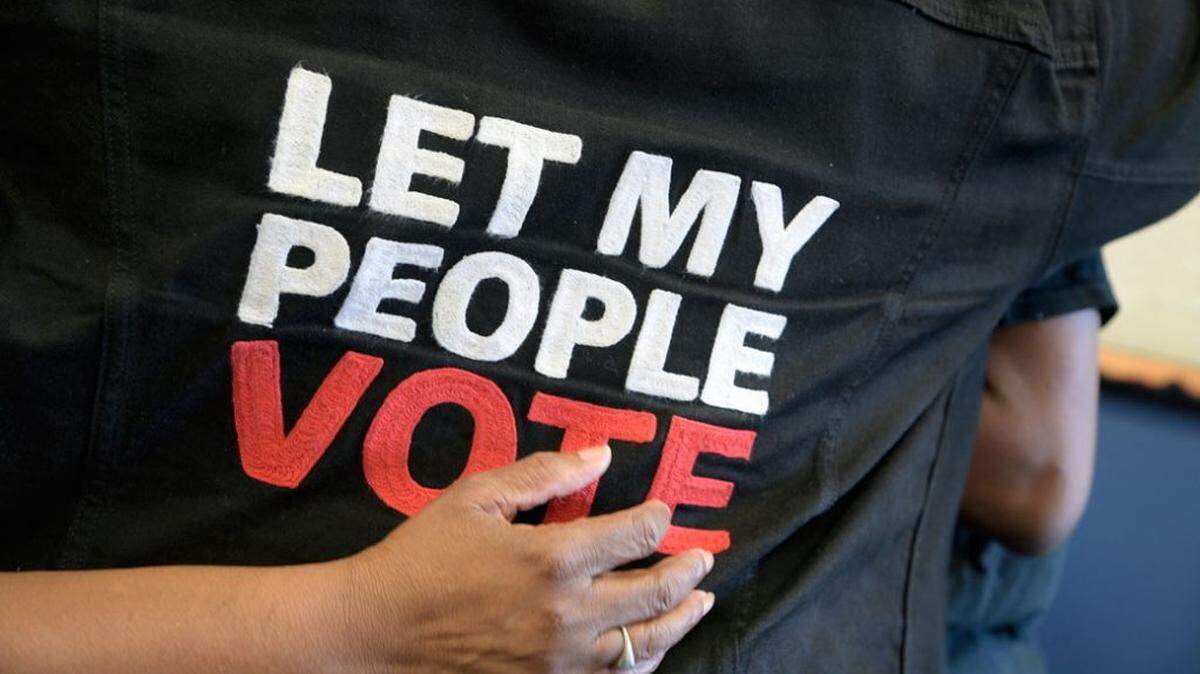
Oklahoma politicians are in court trying to defend a new law they passed to gut their citizens’ rights to put initiatives on the ballot, which allows the people to take action on matters where the Legislature refuses to act.
The funny thing (as in strange, not ha ha) is that even if Oklahoma’s Supreme Court upholds the new law, Oklahomans seeking to propose some of the laws they live under will still be better off than Kansans.
More on that in a minute, but first, let’s take a look at what’s going on with our south-of-the-border readers.
The new Oklahoma law would still allow citizens to circulate petitions to put issues to a public vote. But it cripples the process by capping the number of voter signatures that can be counted from the state’s two large metropolitan areas, Oklahoma City and Tulsa.
The new law “establishes that no more than 10 percent of the total number of signatures required for an initiative or referendum petition be from legal electors of a county with a population of 400,000 or more and that no more than four percent be from legal electors of a county with population less than 400,000” according to the legislative summary.
Oklahoma has only two counties over 400,000 population, Oklahoma County, which includes Oklahoma City, and Tulsa County, which, as the name implies, incudes Tulsa.
The politicians’ argument is that signature caps on voters in those two counties ensure that rural Oklahomans have more of a voice in what initiatives get on the ballot. Let me translate that: Some Oklahoma voters deserve more political power than others, based on where they choose to live.
For example: Oklahoma has slightly more than 4 million people and 20% of them live in Oklahoma County. That means proportionally, a petition signature from OKC would carry about half the weight of a signature from a rural county. That’s not to mention the logistical difficulty of having to collect about 173,000 signatures in 90 days, while excluding tens of thousands of eligible voters in the places that have the most voters.
But as unfair as that may be, it’s still better than Kansas.
We don’t have any way to bring a law or constitutional amendment to the ballot. Only the state Legislature has that power.
So issues that a majority of Kansans would like the opportunity to vote on — like decriminalization of marijuana or expanded Medicaid to cover the working poor — go unaddressed year after year after year.
Whenever I cover something at the Kansas Capitol, I pass by a sign on the way to our office in the building saying “All political power is inherent in the people.” And every time I see it, I think “and their names are Ty Masterson and Dan Hawkins.”
The Senate president and House speaker control the agenda and see to it that any legislation that doesn’t suit their fancy never comes to a floor vote.
Rank-and-file Republican members who don’t walk in lockstep behind them are routinely punished by another power perk belonging to the Senate president and House speaker. Dissenting legislators get stripped of committee chairmanships and assignments, which really only punishes the voters who sent their lawmakers to Topeka to represent them, not Masterson and Hawkins.
Two weeks ago, Hawkins removed several lawmakers from committee chair and vice-chair positions because they declined to sign a petition for a special session to redraw congressional district boundaries. It’s part of Donald Trump’s scheme to maintain GOP control of the U.S. House by altering districts before the 2026 election — and the Kansas part of the national plot targets Rep. Sharice Davids.
Masterson did the same thing as Hawkins three years ago to senators who didn’t support his legislative maps then, which were also designed (but failed) to prevent Davids’ re-election in 2024.
Theoretically, Kansans can bring initiatives to the ballot for strictly local measures.
Reality argues otherwise.
It’s been attempted twice in Wichita. Both times, the Empire struck back and whipped the pants off the Rebel Alliance.
There was that time in 2015 when residents gathered enough signatures and voters voted to relax municipal court penalties for possession of small amounts of marijuana.
Despite assurances from the relevant city and county officials that proponents had dotted every i and crossed every t to qualify for the ballot, the Kansas Supreme Court overturned the initiative based on what amounted to a stapling error — a requirement that the proposed ordinance be attached to the petition when the signatures were turned in to the city clerk.
And then there was the Save Century II campaign of 2020. In the midst of the COVID-19 pandemic, C-II supporters gamely gathered more than enough signatures to qualify an initiative to require a public vote when City Hall wants to tear down historically significant public buildings.
But nobody ever got to vote on that, because the state courts ruled that the initiative was “administrative” in nature. That decision essentially set the precedent that initiatives are fine and dandy, unless they make the city government actually have do something meaningful.
The pandemic and public outcry saved Century II for now, but it still sits on prime riverfront land coveted by developers who have way more influence at City Hall than the commoners ever get.
So best of luck, Oklahoma. Do everything you can to protect voter-led democracy in your state.
If you need to see why, look north.