With Bob Dole gone, who’s going to fix Social Security now? | Opinion
Where are Bob Dole and Tip O’Neill now that we really need them?
Or more accurately, where will we find the next Bob Dole and Tip O’Neill, in our angry, politically fractured country where compromise is perceived as weak or woke?
That, friends and neighbors, represents the “You Are Here” sticker on the map to saving Social Security. It’s not a good place to start.
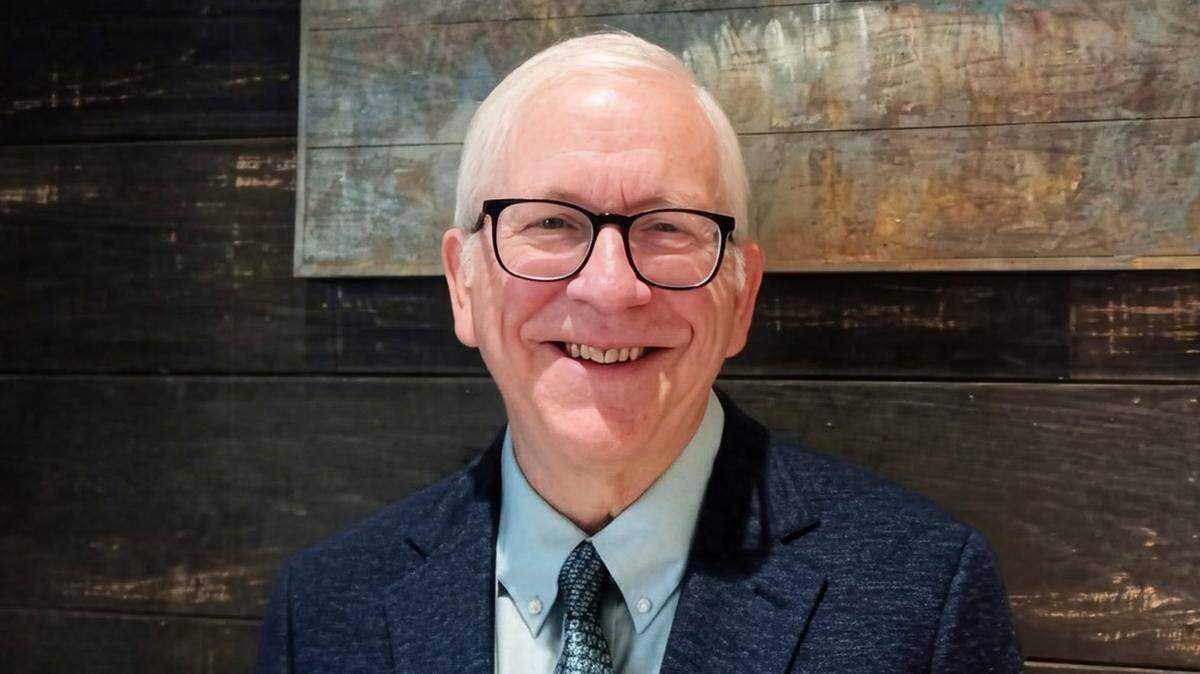
This conclusion crystallized for me this week after an interview with a national expert on the politics of senior citizen benefit programs, Dan Adcock, government relations and policy director with the National Committee to Preserve Social Security and Medicare.
I caught up with Adcock at Eisenhower Airport as he passed through Wichita on his way to Salina, to serve as keynote speaker at the Sunflower Fair, an annual social and educational event for seniors sponsored by the North-Central-Flint Hills Area Agency on Aging.
Running out of time and money
The Social Security Trust Fund is projected to run out of reserves nine years from now, in 2034, according to this year’s report from the fund trustees.
So what would that mean, Dan Adcock?
“There’s still tax revenue coming into the program, which means that if Congress did nothing between now and 2034, there’d have to be about a 24% cut in benefits” to retired and disabled participants, he said. “I think there’s a lot of members of Congress who probably don’t want to let that happen.”
But so far, they’re not willing to take the risk of fixing it, because politics.
“The solutions to fixing it are either raising revenue, cutting benefits, or doing a combination of both of those things,” Adcock said. “It’s easier to extend Social Security solvency if you enact solutions sooner rather than later. But there’s a wide disagreement in DC about the best way to do that.”
Basically, the divide is this:
Democrats favor raising more revenue by raising the cap on Social Security tax payments, which currently cuts off at $167,000 a year in annual income, Adcock said. In addition, “most of them support not only using that money from making people who are more wealthy pay their fair share to extend solvency, but also to improve benefits for the growing tier of Americans that need all or most of their Social Security for retirement.”
Republicans, meanwhile, “speak highly of Social Security because they understand how popular it is, regardless of party affiliation or age,” he said. However, “they’re not willing to raise taxes, meaning they’re not willing to raise the cap on Social Security payroll taxes.”
Adcock thinks Congress will come eventually come to an agreement, facing the prospect of millions of angry voters who’ve had their Social Security payments cut by one-fourth.
I hope he’s right, but I’m less optimistic. Congressfolk haven’t been all that responsive to the public lately, so I could easily see both parties running Social Security into a ditch while trying to blame the other side.
A familiar tune
We’ve seen this movie before. The trust fund was about to run out of reserves in 1983.
Sen. Dole (a Republican who had yet to become the revered Kansas icon he is today) and then-House Speaker O’Neill, a Massachusetts Democrat, got together with President Reagan, which led to a framework that saved the system for the next four decades’ worth of retirees.
I actually remember this, and I even did a bit of coverage on it as a 22-year-old reporter in Reagan’s home state of California. At the time, I felt like I was getting royally ripped off, because the centerpiece of the deal was to gradually raise the retirement age from 65 to 67.
People of my birth year, 1960, received the signal honor of being the first cohort to have to wait all the way to 67 to retire.
It ultimately turned out OK for me, because I love my job and the change gives me at least two more years before having to contemplate turning in my laptop. But I say that while fully recognizing that I’m the exception, and it probably bites for most of my fellow 1960 babies, who’d just as soon wrap up the career this year instead of in 2027.
People, especially younger adults, were different in 1983.
We’d been shaped by wrenching events that threatened to tear our country apart, including the Vietnam War, strife over civil rights, Watergate and the energy crisis. Our parents fought Nazis and Imperial Japan in World War II and North Koreans and Chinese troops in the Korean War, and survived the Cuban Missile Crisis and Sen. Joseph McCarthy’s Red Scare terrorism.
By 1983, we’d had our fill of political infighting. I never heard anyone accuse Dole or O’Neill of treason, or bowing to fascism, or being a Marxist for working across party lines to solve a common problem — they were applauded for it.
Sadly today, the average voting-age American lacks that kind of perspective.
Our socio-political culture, driven by likes and shares on in-your-face memes, has taken on an ugly tone that will take years to recover from — if it ever does.
Can Ron Estes save Social Security?
If only there was someone in Kansas who could follow in Dole’s footsteps and take leadership in fixing Social Security.
Oh, wait, there is. Rep. Ron Estes of Wichita chairs the House Social Security Subcommittee.
But so far, he’s no Bob Dole.
Early this year, Estes got drawn into the ridiculous antics of Elon Musk and his Department of Government Hyperbole Efficiency, when the DOGE boys got their Old Navy boxers in a bunch over the non-issue of incomplete death records in the Social Security database.
Musk and the Trump Administration crowed that it was evidence of fraud and waste, which got them a lot of likes and shares on X, but was totally bogus.
The auditors all knew that the people on Elon’s list had been dead for decades and had long since ceased getting benefits, and Social Security had decided it wasn’t worth spending tax dollars fixing a spreadsheet that no one would ever have any use for.
In fairness, Estes has done a couple of good things lately.
He’s made some progress toward rule changes to make it easier for people with disabilities to work without having to risk losing all their benefits. And he’s introduced legislation to make it easier for seniors to recover forgotten pension benefits left behind when they changed jobs years ago.
Both those initiatives are praiseworthy. But they’re also more about customer service, and not bringing us a millimeter closer to solving the solvency crisis.
Here’s hoping that Ron Estes, or some other Republican, can find their inner Bob Dole — and that some yet-to-be-determined Tip O’Neill emerges from the Democratic huddle.
Nine years isn’t that far off, and it will be an unprecedented and unmitigated disaster if Congress can’t fix Social Security in time.
That is, unless we all kill each other off in the meantime, and then we won’t need to worry about retirement benefits after all.