Update: Sedgwick County delays gutting job protection for employees | Opinion
Update:
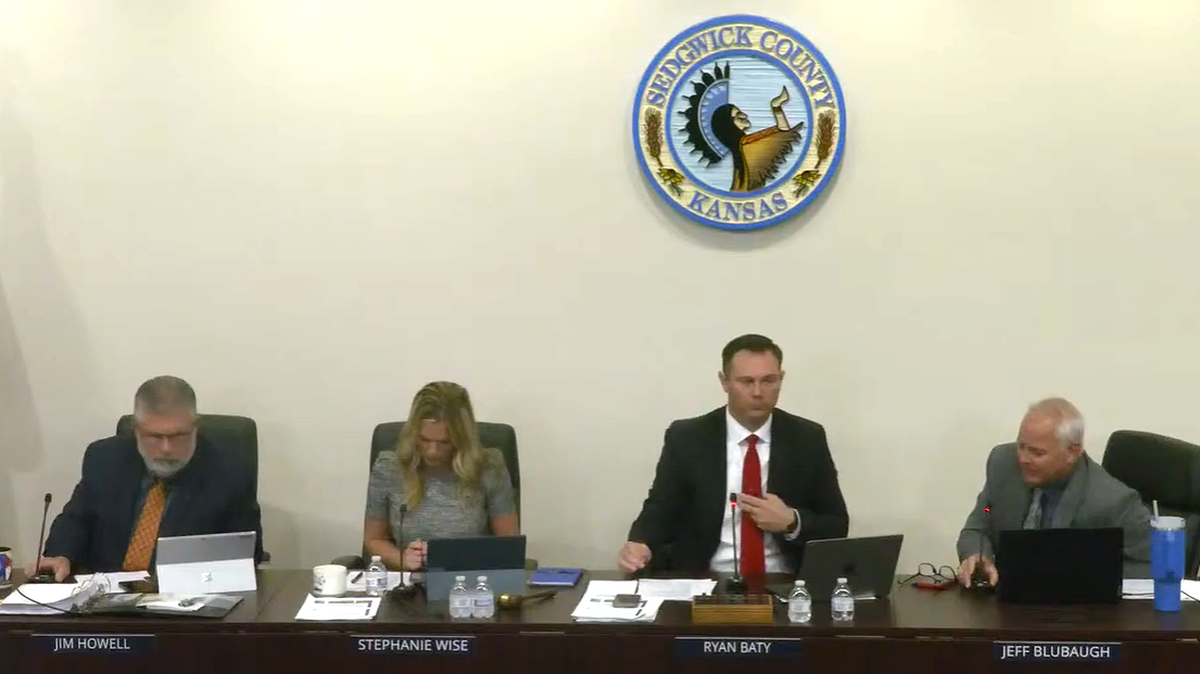
Sedgwick County commissioners voted unanimously Wednesday not to rescind the county’s policy for employee grievances for now.
Instead, they voted to give staff until early November to meet with various stakeholders and revise the due process policy to accommodate independently elected county officials — including the county treasurer, clerk and register of deeds — who have their own authority to hire, fire and discipline employees in their departments, independent of the county manager and County Commission.
It was revealed at Wednesday’s meeting that the county’s grievance policy is being reevaluated because one of those independent elected officials disagreed with a decision by the county Grievance Board on a matter of employee discipline. The board can order reinstatement of an employee and/or back pay if it decides after a formal hearing that the employee was disciplined inappropriately.
County Manager Tom Stolz said Grievance Board proceedings are rare, with three cases in his seven years on the job.
“The process has worked for years, until we have recently had a matter regarding a situation in an elected office where we tried to apply county policy to an employee,” Stolz said. “The elected official in the office did not agree with the policy issue, in this case involving the grievance policy, which has caused us to re examine the organizational grievance policy.
“Independent elected officials have much autonomy regarding how they handle matters in their own offices, independent from my office, the manager’s office, and even the BOCC oversight. We are presently working to resolve the employee matter. But the situation has exposed problems within the grievance policy and the employee rights within those offices.”
Commissioners expressed concerns that rescinding the grievance policy outright would send the wrong message.
Commission Chairman Ryan Baty noted that as recently as 2022, some departments were understaffed by 30% to 40%, which “really impacted our efficiency to perform services,” and that the county has added roughly $88 million in spending since then to attract and retain employees.
“We have to fix this policy, but we also want to do that with the protections of our staff in place to make sure our staff hears loud and clearly that we very much care about the morale, their capacity to operate, and the stability of our staff,” he said.
Original column:
Sedgwick County is headed towards a big mistake when it comes to employee relations, and commissioners should think twice before they rubber-stamp it.
On Wednesday’s commission agenda is an item to rescind the county’s employee grievance policy, established in 1988 and updated several times since.
Rescinding this policy would strip employees of a key job protection they have against capricious or vindictive management decisions.
It would send an unmistakable message that the boss’s opinion is the only one that matters.
And that’s the wrong message to send.
Kudos to Commissioner Jim Howell, who noticed the item on the consent agenda during Friday’s agenda review meeting and got it pulled into regular business so it can get fully discussed at Wednesday’s meeting.
“My point is that the county is a big organization and we need to be professional,” Howell said. “If someone has a personal beef with somebody in the workplace, it should not impact employment at all, ever, and if it does, there (needs to be) a way for them to remedy this. The Grievance Board provides that option, and that’s a good thing.”
Under the current grievance policy, employees who feel they’ve been wrongly disciplined with an unpaid suspension, demoted or terminated can appeal to a board of five fellow employees — one appointed by the county manager and four elected by the rank-and-file. The elected members cannot be supervisory employees.
The policy also specifies a hearing procedure that outlines the employees’ right to obtain legal counsel and present witnesses and evidence in their defense. The burden of proof is on the employee, and the board’s decision is final.
That kind of seems like the least the county can do, given that commissioners have for decades blocked their workers from forming a union, like their publicly employed counterparts who do the same kinds of jobs at Wichita City Hall.
Let’s remember, it was not that long ago that the county had a reputation as a terrible place to work, due largely to the dictatorial management style of retired Army general and former county manager Michael Scholes.
Scholes’ arbitrary system of rewards and punishments sent morale spiraling down the sewer and the county hemorrhaged employees — crippling important public services — until the commission majority shifted and commissioners finally got rid of him.
For at least the last 10 years, county government officials have been lamenting their difficulty in hiring and retaining quality employees.
News flash: Quality employees are attracted to quality organizations. And part of what makes a quality organization is having systems in place to protect employees from personality conflicts and unfair discipline.
Scholes’ successor, Tom Stolz, made a valid point in the agenda review meeting that the county is a complex operation with multiple independent elected officials, judicial officials and appointed officials having their own powers to hire, fire and discipline employees.
“When you try to sweep all 3,000 employees under one umbrella, it gets very difficult,” he said.
To an extent, that’s true.
But it’s also true that no matter where people work for the county, they deserve the protection from abuse on the job that a well-thought-out grievance policy provides.
If there are problems with the existing system, then it’s incumbent on the manager and commissioners to talk them out, in public, and figure out a way to solve them.
Simply rescinding the policy is not the answer. Commissioners need to hit the brakes Wednesday, and then get to work.
They owe it to the employees, and they owe it to the rest of us who rely on county services.
This story was originally published September 3, 2025 at 4:08 AM.