Beretta and Bass Pro can’t be sued in Kansas college football shooting. Why not? | Opinion
So, the next time someone tells you the Kansas Supreme Court is packed with liberals, you can reply “What about that time that Emporia State football player shot his teammate, and the justices let Beretta and Bass Pro off the hook?”
On Friday, the Supreme Court overturned a decision by the Kansas Court of Appeals that would have allowed the shooting victim, Marquise Johnson, to sue gunmaker Beretta and gun seller Bass Pro Shops Outdoor World under product liability law.
The court probably made the right decision based on product liability law as written. It’s still a miscarriage of justice.
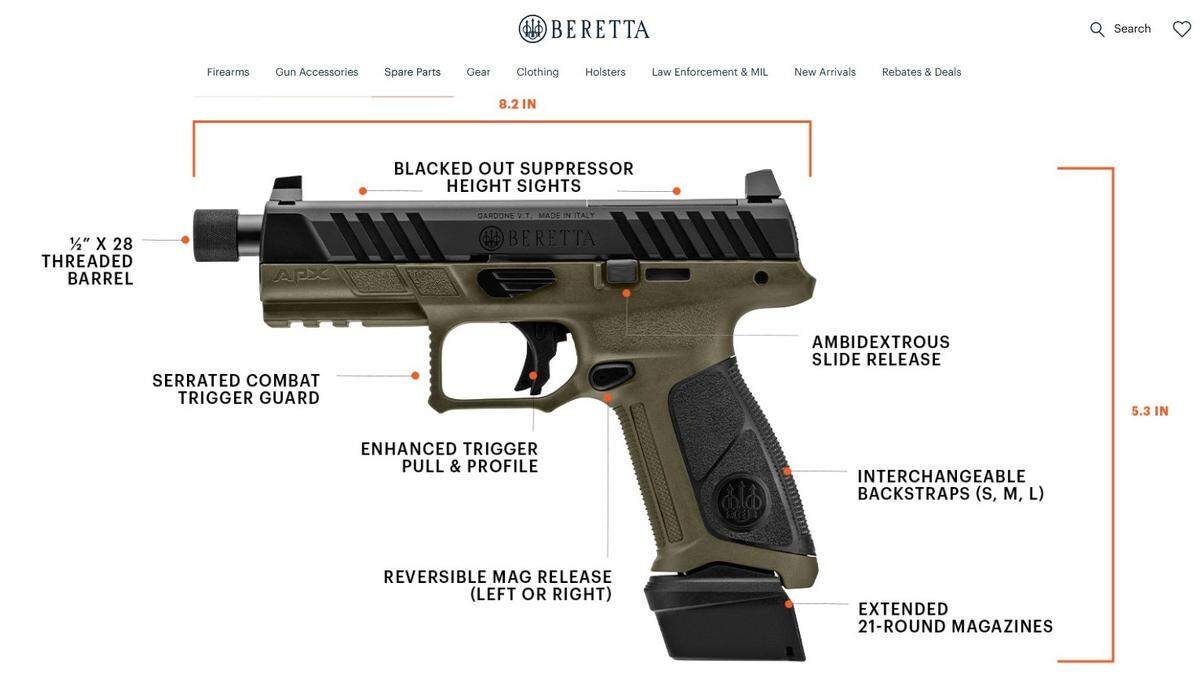
Johnson’s Emporia State teammate, André Lewis, then 21, bought a Beretta APX 9mm handgun at the Bass Pro Shops store in Lenexa in February of 2018, according to court records.
“Several months later (in August), Lewis was driving some of his football teammates home from a team dinner,” the court opinion said. “While stopped at a red light, Lewis pulled the Beretta APX out from under the driver’s seat where he stored it. Johnson, who was in the front passenger seat, asked to see it. Lewis removed the magazine and handed the gun to Johnson. After looking at the gun, Johnson returned it and asked Lewis if he knew how to disassemble it.
“Lewis said he could take the gun apart in ‘2.2 seconds’ and proceeded to demonstrate while the gun was pointed at Johnson. Based on his experience using handguns, Lewis thought he needed to pull the trigger to remove the slide. And he mistakenly believed the gun would not fire without the magazine. But the gun had a live round in the chamber. So when Lewis pulled the trigger, it discharged the live round, striking Johnson in the legs.”
As a result of the shooting, Johnson had to undergo two amputations. The first surgery removed his left leg below the knee, the second above it, court records show.
In a Lyon County court, Johnson sued Beretta and Bass Pro, alleging that the APX lacks sufficient safety features to prevent accidental shootings.
“This tragedy resulted from the negligent, reckless, unnecessarily and unreasonably dangerous actions of defendants Beretta and Bass Pro, including their design, manufacturing, marketing, distribution, and sale of a handgun without a magazine disconnect safety, effective loaded chamber indicator, effective warnings, or other safety features that would have prevented it from being fired by defendant Lewis,” the lawsuit said. “Any one of these feasible features would have prevented the shooting that injured Marquise Johnson.”
Then-Lyon County District Court Judge Merlin Wheeler dismissed the case before trial, ruling that Beretta and Bass Pro were shielded from liability by the Protection of Lawful Commerce in Arms Act, a federal law designed to prevent lawsuits against gunmakers and dealers by people shot by criminals.
The Court of Appeals reinstated the suit, ruling that the PLCAA didn’t apply because the shooting was an accident, not a criminal act.
The issue comes down to the language of the PLCAA, specifically how to interpret a section that bars product liability suits when “the discharge of the (gun) was caused by a volitional act that constituted a criminal offense,” Justice Kenyon “K.J.” Wall wrote in the Supreme Court opinion.
Even though Lewis had no intention of firing the gun, he deliberately pulled the trigger, a volitional act. And because he did it while stopped at a traffic light, it violated a Kansas law against discharging a gun on a public street, making it a criminal act, the ruling said.
“Under Kansas law, this is a strict-liability crime,” Wall wrote. “It does not require a party to act with a culpable mental state. So under the unique facts of this case, any dispute about Lewis’ mental state cannot save Johnson’s lawsuit from the PLCAA’s immunity provision.”
So a young athlete loses his leg, the gunmakers and sellers skate, and Beretta and Bass Pro can continue to sell a pistol that doesn’t have a traditional safety lever, but relies on a trigger safety, which is really a “safety” in name only because all it is is two triggers side by side that you pull at the same time.
Our problem lies not with our courts, but with our laws.
Congress bent over backward for gun manufacturers and dealers to protect them from the consequences of the products they sell.
And the Kansas Legislature bent over backward for the National Rifle Association, with a “constitutional carry” law that allows a 21-year-old to legally stuff a loaded gun under the seat in his car and drive around with it, with no permit or safety training required. And so have 28 other states.
So if you ever wonder why about 30,000 Americans get accidentally shot per year, now you know.
This story was originally published April 25, 2025 at 2:19 PM.