Farewell to free-flowing streets: New bike plan escalates Wichita’s war on cars | Opinion
There’s a culture war brewing in Wichita, and it’s not the one you’re thinking about.
The battle is between those who drive cars to work and those who don’t want you to — including your city government, which is doing all it can to inconvenience motorists and turn ever-increasing parts of the street system over to bicycles and electric scooters.
The city’s long-term vision is that one day, you’ll be able to leave your horrible car in the driveway and get to work by other means.
Lets say you work downtown and live about 8 or 10 miles away. Your perfect commute, by the city’s reckoning, goes something like this:
▪ You ride your bike to the nearest bus stop (from my house near Maize and Kellogg, it’s about a 20 minute ride to Tyler and Central).
▪ From there, it’s half an hour on the bus to the Transit Center, now conveniently located downtown a block south of Douglas on Topeka — and soon to be inconveniently located in the parking garage for Riverfront Stadium.
▪ At the Transit Center, you transfer to what city planners call a “shared micromobility device” (better known as a rental scooter), to complete your “last mile” to work.
No doubt you’d arrive feeling fresh and rested to begin your work day. If all goes well, the commute that currently takes you 15-20 minutes by car will only take an hour or so by alternative transportation.
I’m not making this up. I don’t think I could. And even if I could, I know I couldn’t deliver it as a serious plan with a straight face.
But it’s all there in living color in the city’s new “Draft Wichita Bicycle Plan.” Unfortunately, we’re the ones being drafted, for a city-sponsored social experiment in traffic congestion and how to encourage it.
When it passes — non-passage doesn’t seem to be among the credible outcomes — drivers can look forward to losing major downtown thoroughfares including Broadway and Douglas, which will be narrowed to one car lane in either direction. Ditto for large stretches of 21st Street, 13th Street, Lincoln, Harry, Meridian and Seneca.
Right now, the plan is in the “public input” period, which is city-speak for “We’ll listen carefully to anyone telling us to do what we’ve already decided to do.”
City Hall claims the changes are needed for bike safety. But according to the bike plan itself, Wichita averages about 90 bike injury accidents and one fatality per year — and even those small numbers are declining.
Bear in mind, the city doesn’t require cyclists to wear helmets or protective gear. Why not?
Weather ignored
It’s hard to see who will be served by the bike plan, except for a noisy cadre of cycling activists — who take umbrage at the suggestion they could just as easily ride on non-thoroughfare streets, some of which already have bike lanes.
The underlying theme of the plan is that there are scads of potential cyclists out there, if only the city would get rid of all the nasty cars and create the bike-pedestrian utopia.
But as anyone who’s lived here more than a year and given it more than a minute of thought could tell you, there are four significant obstacles to developing a robust bicycle culture here: winter, spring, summer and fall.
Wichita has four seasons: the ice season (look outside); which gives way to severe storm season, the hotter than Hades season and ultimately October, the only decent month we have.
The bike plan has one reference to weather: “Comfort also includes providing a smooth riding surface that is well maintained with adequate lighting and landscaping to limit negative weather impacts.”
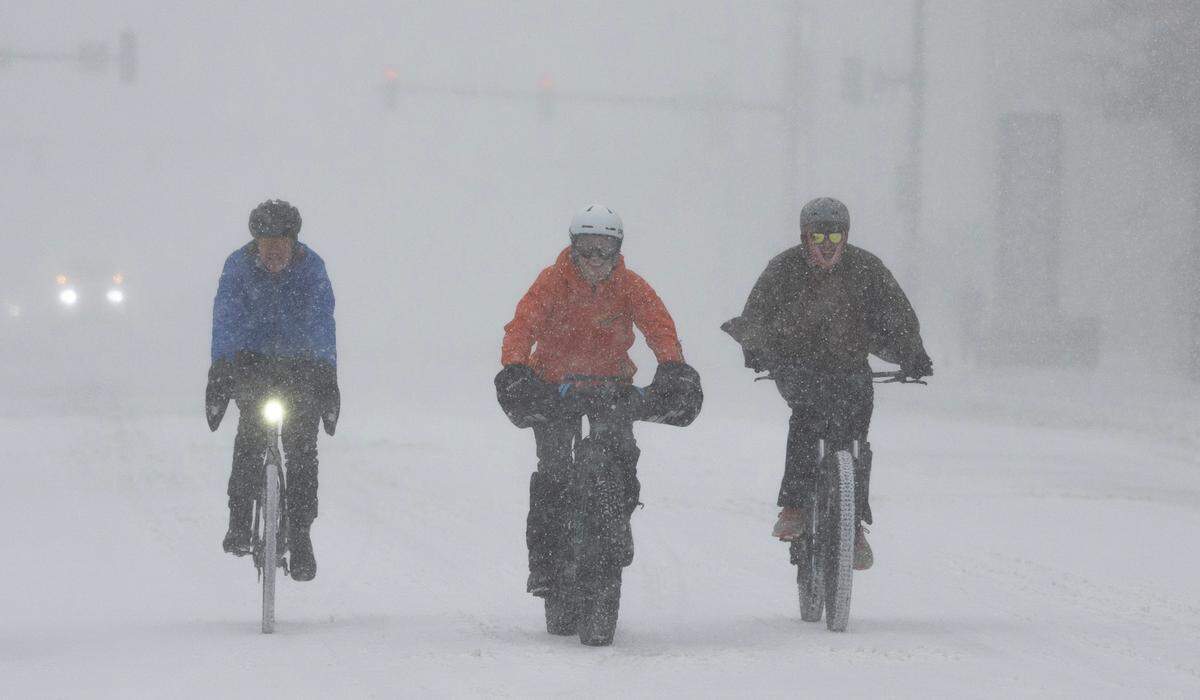
I’ve been downtown on a daily basis for more than 26 years. Occasionally, you’ll see a helmeted, determined cyclist on their way from someplace to someplace, or maybe a casual recreational rider or two puttering around Old Town.
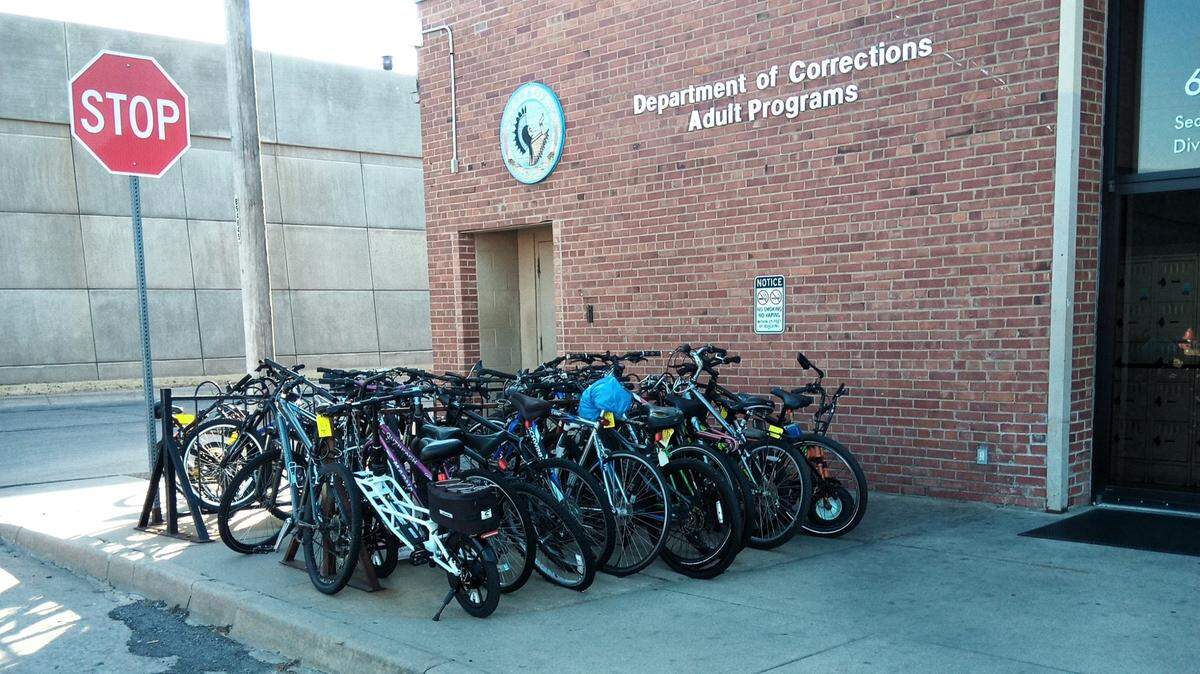
But the truth is, cycling downtown is overwhelmingly dominated by two groups: The homeless, who ride wherever they want without regard to bike paths or rules of the road, and small-time offenders who got their drivers’ licenses yanked for DUI and have to report to Sedgwick County Corrections — the only public facility in downtown Wichita with a consistently full rack of bikes.
Time to pay up
As we were more or less constantly reminded by City Hall during the recent kerfuffle over paid parking downtown, “free parking isn’t really free.”
Well, neither is bicycling. But the city plans to spend millions of dollars and give it away for free.
Cyclists don’t have to pay gas tax, or license fees, or property tax on their transportation. So if they demand equal treatment on street use, it’s time for them to pay their fair share.
During the paid-parking flap, city officials said they need to make $400 per space per year to cover operating and maintenance costs.
Let’s apply that to bike lanes.
I went out and measured the parking spaces on South Emporia. They were 21 feet long.
The city’s bike plan calls for construction of 80 miles of new bike paths. So if we multiply 80 times the number of feet in a mile (5,280), it comes out to 422,400 linear feet of pavement. Divide that by 21 feet and you get 20,114 parking-space equivalents.
Now, bike paths are about half as wide as a parking space. So let’s say the maintenance and operating cost for each 21 feet of bike lane would be $200 (half the cost of M&O for a parking space).
If we multiply the 20,114 parking-space equivalents times $200, we get $4,022,857 per year.
That’s an obviously ludicrous example — but no more so than the numbers City Hall claimed it needed for parking costs.
In the parking plan, the city decided to charge motorists in two ways — paid parking at a dollar an hour in most of downtown, or an add-on 2% sales tax on food, booze and merch if you go to Old Town.
Sadly, there’s no practical way to charge bikes for parking, because clever riders can stash them just about anywhere.
But I’d sure be up for an additional tax on Spandex shorts, garish colored jerseys and shoes with pedal cleats.
Fair’s fair.
This story was originally published January 7, 2025 at 5:08 AM.