Oppose paid parking and pricey Portland privies, but Wichita DOGE is a terrible idea | Opinion
The Wichita City Council often leaves you shaking your head, but this week, you’re lucky if you don’t need a neck brace.
The council and staff spent four hours Tuesday night pleading poverty as they debated how (not whether) to implement widespread paid parking in now-free lots and streets downtown.
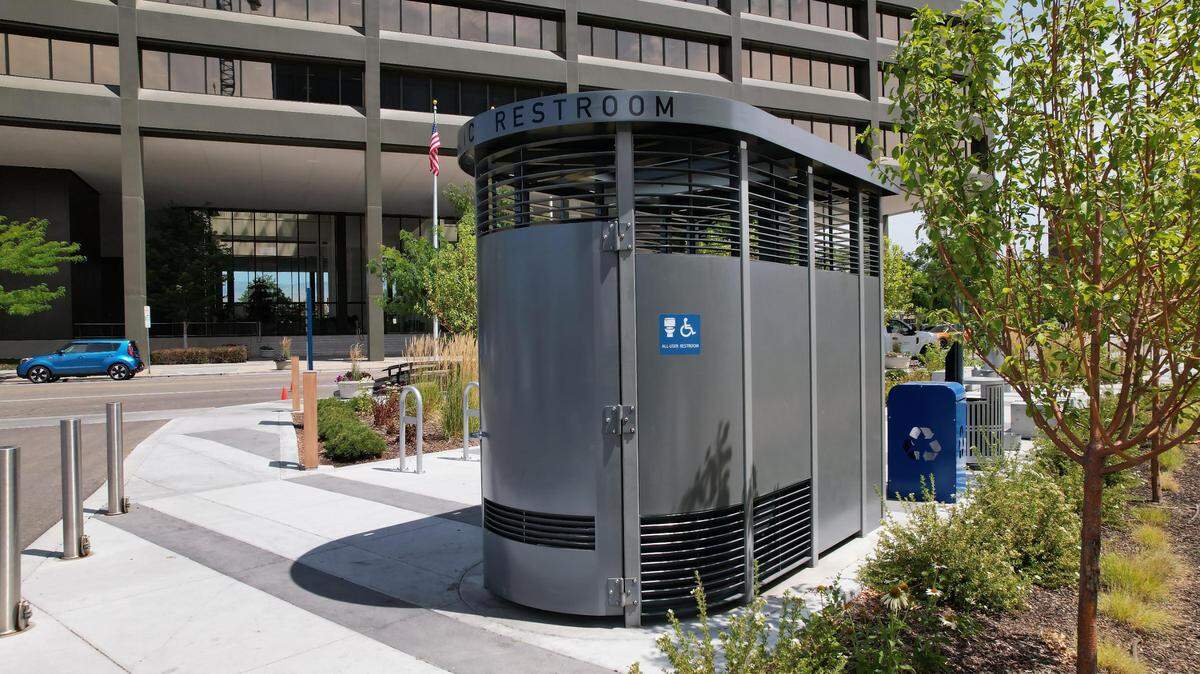
Then, a few minutes later, they spent another hour deciding to spend more than half a million dollars on two high tech outhouses for Naftzger and A. Price Woodard parks.
And since the meeting, council member Dalton Glasscock, who opposed the potty project, has announced plans to tear a page from Donald Trump’s playbook and appoint his own personal DOGE (Department of Government Efficiency), which is a spectacularly bad idea for reasons I’ll get to in a minute.
But first, let’s talk downtown parking.
City staff wants to charge for it, desperately. So do some downtown development interests, who have their eye on land that’s now used for parking lots that they want to buy on the cheap for new projects, which would require their own set of city subsidies including (but not limited to) more city-funded parking garages.
Unsurprisingly, the vast majority of Wichitans who go downtown are opposed to paying for what they now get for free. They’re also not happy with the idea of the city hiring a private company from Idaho to write more tickets.
Also unsurprisingly, they’ve been pushed aside.
While the council can’t agree on a plan, there’s apparently unanimous agreement that we’re going through with a massive exercise in extracting money from people with cars. Only the details are to be worked out — to be continued on Dec. 10.
If you’re angry about this, you have every right to be.
Squishy numbers
What I’m most angry about is that the numbers used to justify paid parking keep changing.
The city’s mantra has been for months that the fund for parking operation and maintenance has been losing money since 2018.
Then, an annoying local newspaper columnist did some addition and subtraction and pointed out that if you take away the two COVID-19 years of 2020 and 2021, when business shutdowns brought downtown parking virtually to a halt, the city actually made a little money on the parking fund.
City staff now says the numbers they’ve been showing in public meetings for months are wrong and that a $53,000 profit last year was really a loss, because of unspecified bills that were paid late, or something.
And then there’s the issue of “deferred maintenance” of city-owned garages, some of which serve the general public and others that are technically kind of open, but essentially serve as private parking for nearby businesses, including the Drury Hotel, River Vista Apartments and King of Freight.
In September, Assistant City Manager Troy Anderson, City Hall’s point man for paid parking, said there’s $8.3 million in deferred maintenance needed on the garages.
In two months, that figure has blossomed to $18 million.
The list of projects needing to be done? There isn’t one, although Mayor Lily Wu has requested that one be prepared.
I can’t wait for that list to come out so I can walk the garages and see what really needs work, what are the “wouldn’t it be nice?” items and what’s just make-believe.
Wu has expressed her displeasure that the council may have to divert other money in its capital improvement plan to backstop deferred maintenance on the garages.
I would gently suggest that the city scrap another plan of questionable popularity and utility, the ongoing “road diet.”
This consists of turning one-way streets downtown back into the two-way streets they originally were, while reducing car lanes and adding bike paths that hardly anyone’s going to use. That’s about $8 million right there.
Toilets of steel
Speaking of boondoggles, let’s return to the case of the pricey privies.
City staff recommended and the council approved the purchase and installation of two “Portland Loo” compact outdoor restrooms at a cost of $531,878.
They’re made of specially coated stainless steel, so it’s relatively easy to remove paint or Sharpie graffiti (or replace a panel if someone scratches graffiti in it).
And they have blue LED lighting, which makes it harder for intravenous drug users to find a vein.
But the signature feature of the Portland Loo is that it has louvers at ground level so interested bystanders can count the number of feet in the stall, to detect possible conduct of a sexual nature taking place inside.
In addition to being expensive to buy and install, most cities that have them report cleaning and repair costs of about $11,000 to $20,000 per unit per year — although Wichita City Hall is saying they know a guy who can do it for $5,000.
If it were up to me, I’d just put out a couple of regular porta-potties and see how it goes.
Paint the inside with a graffiti-resistant coating to deter vandalism and let some local art students decorate the outside and call it public art.
Quite honestly, if someone’s desperate enough to shoot up or have sex in an outdoor toilet, I’d categorize that as none of my business, and I really don’t even want to know.
No to local DOGE
Glasscock, once a fairly midstream Republican, is the business guy for national right-wing commentator/radio host/podcaster/influencer Todd Starnes, so he has to ride the Trump train to wherever it may lead.
And mimicking Trump’s example, Glasscock is proposing to set up a DOGE, a quasi-governmental group to comb through the city’s books and tell him where to cut spending and who to fire.
While on the surface it sounds like a worthy endeavor, such groups almost always consist of “concerned citizens” who are mainly concerned with how they can make bank off inside information and influencing government decisions.
We’re already seeing it in Washington’s version of DOGE, headed up by billionaires Elon Musk and Vivek Ramaswamy, with support from Georgia Rep. Marjorie Taylor Greene, America’s Worst Congressperson (tm).
Since the election, stock in Musk’s Tesla car company has gone up from $242.84 a share to $353.92 at this writing. Tesla buyers have been getting $7,500 tax credits to buy Musk’s cars for years, but now that his company dominates the electric vehicle market, he wants to eliminate the tax credits to keep the competition from catching up, Autoweek reports.
Even the name DOGE was calculated to put more money in Musk’s pocket.
The acronym’s a free plug for Dogecoin cryptocurrency. Musk has said he owns “a bunch” of Dogecoin — and it’s doubled in value since Election Day.
So I agree with Glasscock that the Toilet of Steel is a waste of money that could be better spent elsewhere.
But on the upside, a Portland Loo would be the perfect place to stick Glasscock’s plan for a DOGE of his own.