You think Kansas license plate controversy’s something? You should see Oklahoma’s. | Opinion
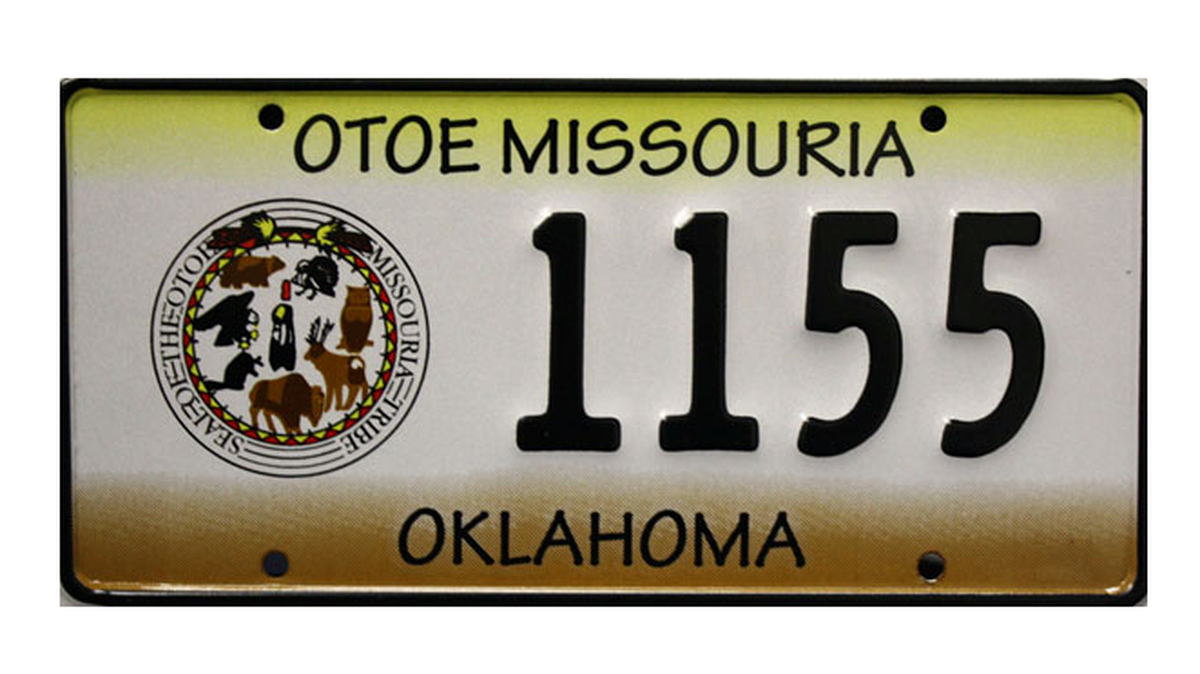
If you think we’ve got a problem with license plates, be glad you’re not in Oklahoma.
The Kansas story of the week has been the outcry over a proposed gold-and-black license plate design that’s been panned by just about everyone. Gov. Laura Kelly scrapped the design and we’ll be having some sort of competitive public process to choose our new plates, which should keep us stirred up for months to come.
But then along comes Oklahoma and says, “Hold my Prairie Artisan Ale.”
While we’re arguing over background colors and typefaces, they’re turning license plates into a potential constitutional crisis, pitting the power of the state against the sovereign rights of Native American tribes within the state.
It started when an Oklahoma state trooper pulled over Crystal Deroin near Enid about three weeks ago.
In addition to ticketing Deroin for speeding, the trooper cited her for failing to pay state motor-vehicle taxes, because she has Otoe-Missouria tribal plates on her car. She’s a member of the tribe and lives near Enid, about 45 minutes west of Otoe-Missouria tribal lands.
The whole case seems rather bizarre, because you can’t drive 20 minutes in Oklahoma without spotting tribal plates.
But the state‘s taking the position that only the members of a couple of tribes that have a compact splitting registration fees with the state can roam freely using tribal plates. Holders of of other tribes’ plates can be cited if they don’t “principally garage” their cars on tribal land.
The Otoe-Missouria area of tribal jurisdiction lies a few miles south of the Kansas state line, off I-35 between Wichita and Oklahoma City. If you watch Wichita TV, you’ve probably seen frequent commercials for the Seven Clans Casino, which is owned and operated by the tribe.
State police ticketing one of their members on suspicion of tax evading didn’t sit well with the tribal government.
“After over 20 years of cooperation between the State and Tribes regarding vehicle tag registration, it appears the State has altered its position of understanding concerning tribal tags,” Otoe-Missouria Chairman John Shotton said in a statement. “This change was made without notice or consultation with all Tribes that operate vehicle tag registration. We are concerned about this change and are reviewing all legal options to address this issue. Once again, consultation and/or diplomacy with the tribal governments prior to this policy implementation would have been helpful to avoid this difficult situation.”
By now, you’re probably asking why the state didn’t just tear up the ticket and let everybody get on with their lives.
But “consultation and/or diplomacy” is not in Oklahoma Gov. Kevin Stitt’s playbook.
A proud member of the belligerent wing of the Republican Party, Stitt’s gone out of his way to antagonize his state’s tribes.
Shortly after he took office in 2019, he announced via a guest column in the Tulsa World newspaper that he intended to renegotiate the compacts that divide casino revenue between the tribes and the state. In August, The Frontier, a nonprofit news organization, reported that Stitt has spent $1.9 million of the state’s casino income pursuing gaming litigation against the tribes who run the casinos and generate the money.
He’s fought with tribes over tobacco taxes, discounts they get on hunting and fishing licenses — and this year he even vetoed a bill to allow high-schoolers to wear tribal regalia to graduation.
Of course, the history here goes back long before anyone ever heard of Kevin Stitt.
The Otoe-Missouria people once roamed the area where Kansas, Nebraska, Iowa and Missouri come together.
You’ve probably already gathered that we named one state after them, but it’s actually two. Nebraska was anglicized from two Otoe-Missouria words, “Ni Brathge” meaning “water flat.”
In 1856, the Otoe-Missouria were confined to a reservation on a 25-mile by 10-mile strip straddling the Kansas-Nebraska border. Over the next 25 years, Congress sold off chunks of the reservation to speculators and in 1881 relocated the Otoe-Missouria to the area of Red Rock, Oklahoma, where the tribal headquarters remains to the current day.
Given that history, you can understand why the tribe is touchy about infringement on its sovereignty and its revenues.
Crystal Deroin’s $249 ticket will probably end up in federal court, and possibly the U.S. Supreme Court, before all’s said and done.
I wish her and her tribe the best. May they get the justice their governor seems determined to deny them.
And now, returning to Kansas news, I think our new license plates should be light blue.
This story was originally published November 30, 2023 at 10:00 AM.