Millions spent on Wichita public parks to benefit private interests. What can we do?
In 1990, as the Wichita City Council contemplated stripping its Park Board of most of its autonomy and authority — which it did — Susan Osborne penned a letter to The Eagle.
The issue of the time involved a commercial disc golf course that had been put in Riverside Park “at the urging of a City Council member, the city manager and the course’s sponsor,” much to the dismay of people who lived nearby and used the park. The Park Board, which then actually ran the parks, moved disc golf to other locations, making the players and the neighbors happy.
“This incident is an example of why the park board should maintain its current semi-independent status and why it should not be directly linked with commercial/political concerns as is the City Council,” Osborne wrote. “Though some City Council members have indicated their surprise that the public would think them capable of commercializing or compromising our parks, the independence of the park system has been protected until now (1990) because of that very concern.”
In Greek mythology, the gods gave Cassandra the gift of prophecy — and the curse that no one would believe her, even though her prophecies were true.
On parks, Susan Osborne was Wichita’s Cassandra.
Her prediction of increased commercialization of city parks has not only come to pass, it’s been practically an article of faith in Wichita’s park building for years.
Across the city, millions of dollars have been spent building or rebuilding parks with an eye toward benefiting developers, commercial businesses, and/or private-sector facility operators.
And if City Hall doesn’t want to build and run parks for the ordinary citizens of this community, maybe it’s time to find somebody who will.
Osborne went on to serve 10 years on the Planning Commission and is now a retired college professor. She said she wishes she’d been wrong 32 years ago.
“Wichita has a low number of parks and park space for a city our size,” she said. “And what’s happening is they’re taking more of it away and new parks aren’t being built like they should be in the outskirts. They’re saying well, in every (new) commercial development and neighborhood we’re putting in little open spaces so we don’t need to look at new parks. And some of the parks that have been around have become ever-so commercialized. Naftzger Park is a good example of that.”
The park, at Douglas and St. Francis, was rebuilt at a cost of $5.2 million in 2018-2020, largely to facilitate construction of a commercial/office complex at the park’s east edge and a 41-unit apartment conversion in the former Spaghetti Works building.
Of that, $1.4 million was donated by electricity provider Evergy, which got its name on the bandshell and the video board that are the park’s most prominent features. Programming and alcohol sales at the park are now controlled by the Wave Venue under contract to the city.
Parks or business deals?
Many of the biggest park deals of the past decade have, like Naftzger, been done with private interests at top of mind:
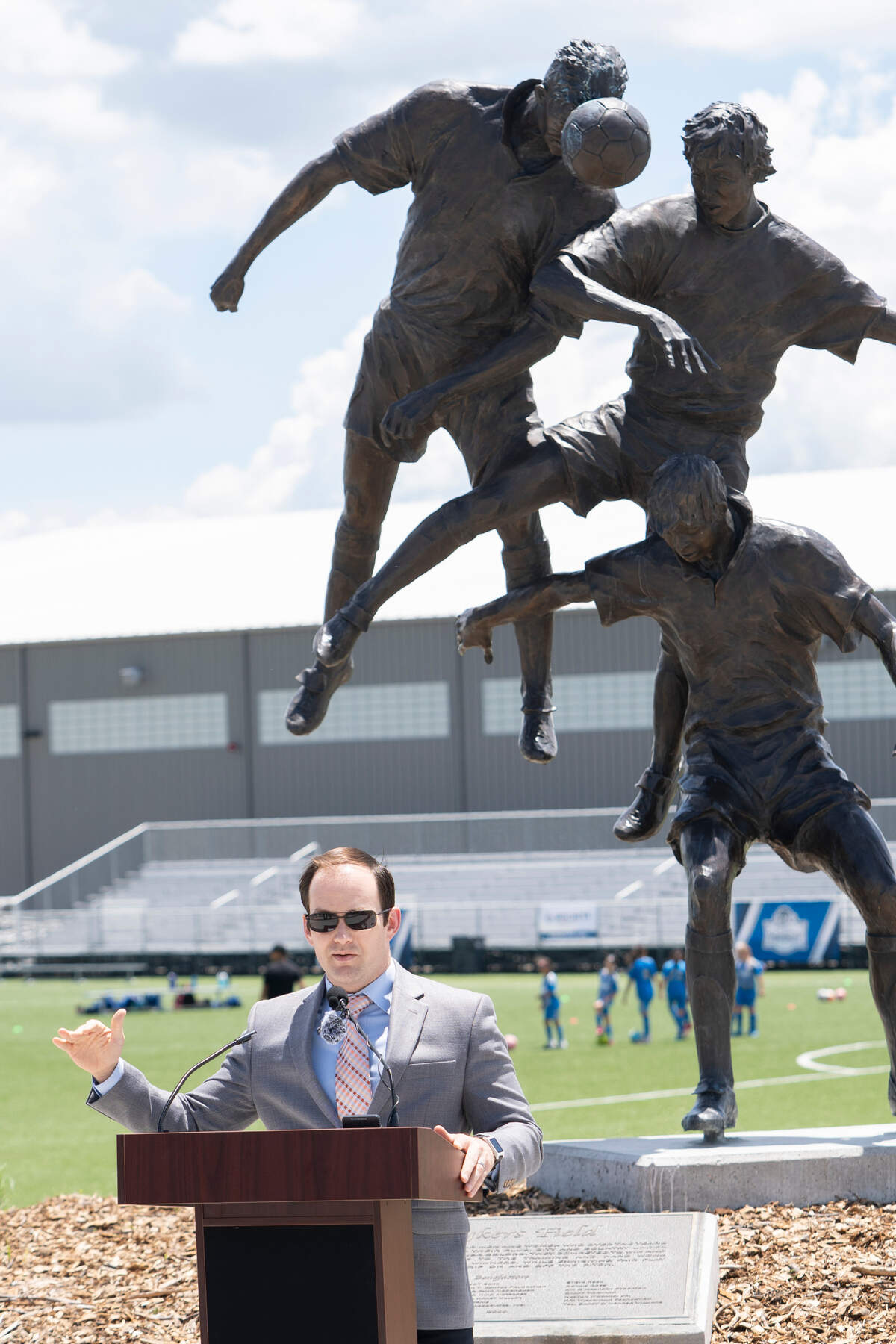
▪ Starting in 2018, City Hall rebuilt the Stryker Soccer Complex near K-96 and Greenwich, and privatized it. That crushed the nonprofit Sedgwick County Soccer Association, based at South Lakes Park — which once served 3,000 community youth — in favor of the for-profit operator that benefits from $23 million in new soccer fields funded by Sales Tax and Revenue, or STAR, bonds.
The association has approached the city about restarting a league at South Lakes, but it would likely be a lot smaller because several fields were removed and the city is planning a $3 million pickleball complex where those fields used to be. It is not yet known what private-sector components might be part of the PicklePlex.
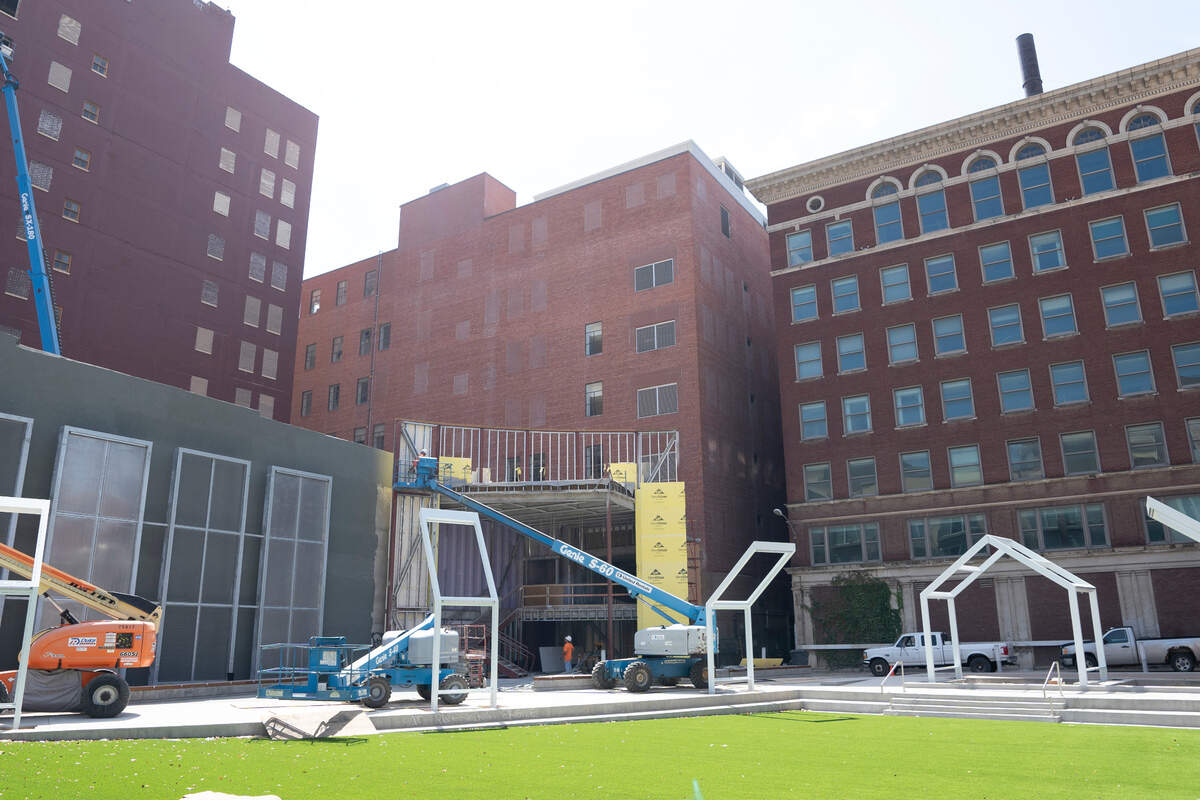
▪ Chester I. Lewis Reflecting Square Park near Douglas and Market, dedicated to Wichita’s civil-rights struggle, will soon do double duty as the decorative entryway for a new private osteopathic medical school. That $2.2 million project is under construction.
▪ The city closed one of its five golf courses, the former Clapp course at Harry and Oliver, and is leasing the former clubhouse and alcohol rights to a disc-golf entrepreneur for a token $300 a month while contemplating the future. The City Council has approved a $28 million plan to redevelop the site with park uses and some commercial components, but those plans are on hold and will almost certainly be scaled back.
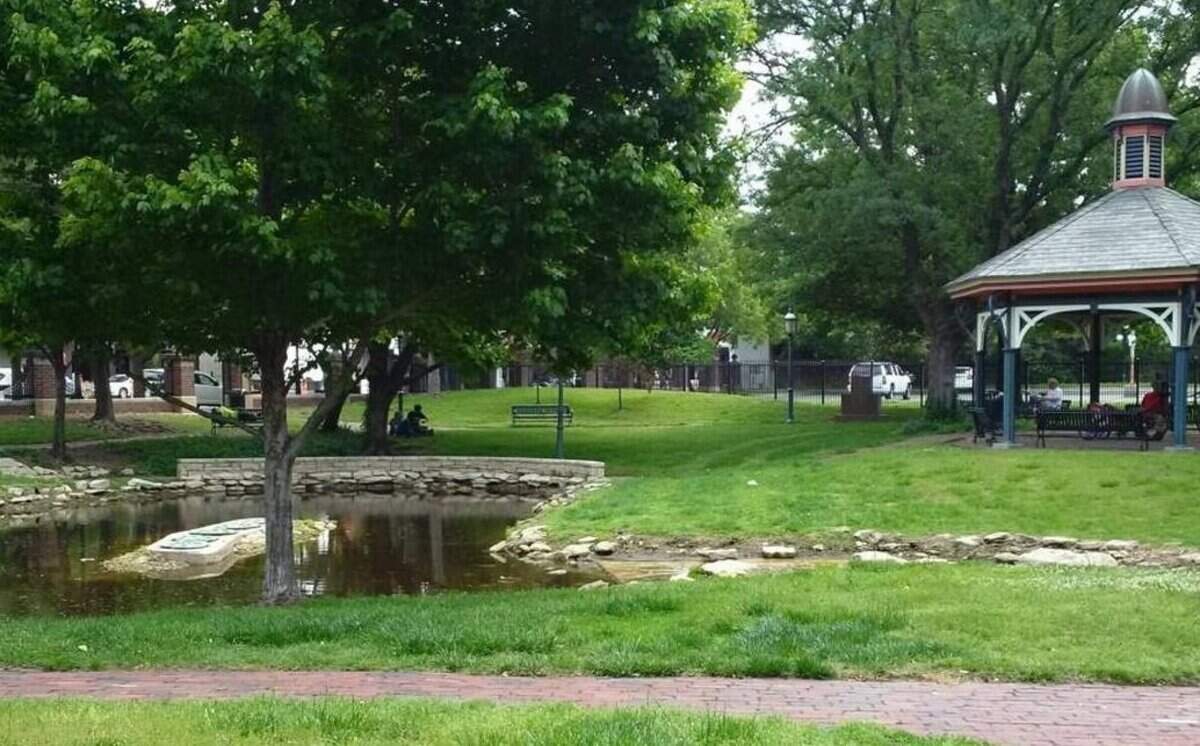
▪ The city has partially constructed Pracht Wetlands Park near 29th North and Maize Road for hiking, bird-watching and other wildlife observation. Some of the land for the park — flood-prone and essentially unbuildable — was donated by a developer of adjacent commercial properties. One of the first parts completed was a bridge into the park from a hotel that’s part of the development.
▪ Currently on hold is Crystal Prairie Lake Park in northwest Wichita. Another public-private venture, an ambitious $25 million plan for development has been sitting on a shelf since 2009 while a for-profit sand company excavates a 420-acre lake at the site. A tawdry history of city staff altering bids for the sand led to years of delay in creating the park. Now, the plan is so old that the cost of doing it has been estimated as much as four times what it would have been when it was drawn up. It’s likely to be dramatically scaled back, but developers around the site are still using it as a selling point for new homes.
A change of attitude
When it comes to Wichita government, nothing is ever certain, but the council may be losing its taste for those kinds of back-scratching business deals.
The makeup of the council has changed dramatically. Council members Cindy Claycomb and Jared Cerullo were voted out of office and Maggie Ballard and Mike Hoheisel were voted in.
Mayor Brandon Whipple says the conversation has shifted since the new members came on board in January.
Under the previous council, the main question was: How can the city help out the businesses?
Now, he said, there’s a more holistic approach and developers or operators are being asked to explain how their project will benefit the community, beyond just their own bottom line.
With parks, what could be the watershed example of change was the defeat of a plan to turn the city’s golf system over to a private operator, Kemper Sports. Kemper partnered on the deal with the well-liked nonprofit organization First Tee, which introduces youths to the game and helps them develop their skills.
When it was proposed in 2021, privatizing the city’s four golf courses — Auburn Hills, Consolver, MacDonald and Sim — appeared to be a one-foot gimme putt.
Privatization won a 5-1 recommendation from the Park Board. But the council vote went the opposite way, 5-2 against, after Ballard and Hoheisel took office.
Before the council vote, The Eagle had reported that financial information that had been presented to the Park Board was inaccurate. But what really killed the deal was that the city’s golfers, by and large, didn’t support it.
Whipple observed that the people backing the project were mainly the company seeking the contract and city staff and that both had something to gain from the deal. For Kemper, it was the potential profit; for staff, it was a reduction in workload.
“No one in the public that didn’t have a vested interest in the deal seemed to be for it,” he said.
He said if it had gone before the council last year, “100 percent it would have passed.”
He’s not wrong.
Privatizing the golf system probably would have generated more revenue than it currently does. But it would almost certainly have made it more expensive for residents to play in the future. And it would have essentially destroyed the city’s capability to take back and run the courses if things went wrong.
Ballard said the new council is more focused on preserving and maintaining what the city has, rather than farming out responsibilities and creating splashy new park developments that require a lot of for-profit involvement.
“They’ve deferred a lot of maintenance for a long time,” Ballard said. The attitude seemed to be, “Let’s continue to build and kind of let what we already have crumble.”
That, she said, is what creates the opportunity for private businesses to swoop in and take over.
Bathroom for dogs, not people
Naftzger Park’s the poster child for what Ballard’s talking about.
It was neglected for decades as the area around it was redeveloped.
It became a gathering spot for the city’s homeless population and its walls and vegetation created blind spots where drug dealing and other unsavory activities could and did occur. It was more or less useless for staging events in conjunction with the nearby Intrust Bank Arena that opened in 2010.
Change was clearly needed.
But the new Naftzger was designed by architects hired by the developers of the commercial and apartment spaces next door, with their priorities in mind.
Mature trees were wiped out and the park reshaped into an artificial-turfed front lawn for the nearby apartments and businesses. Its main feature is an open field where people can gather to watch events on the Evergy Plaza bandshell or the Evergy video board.
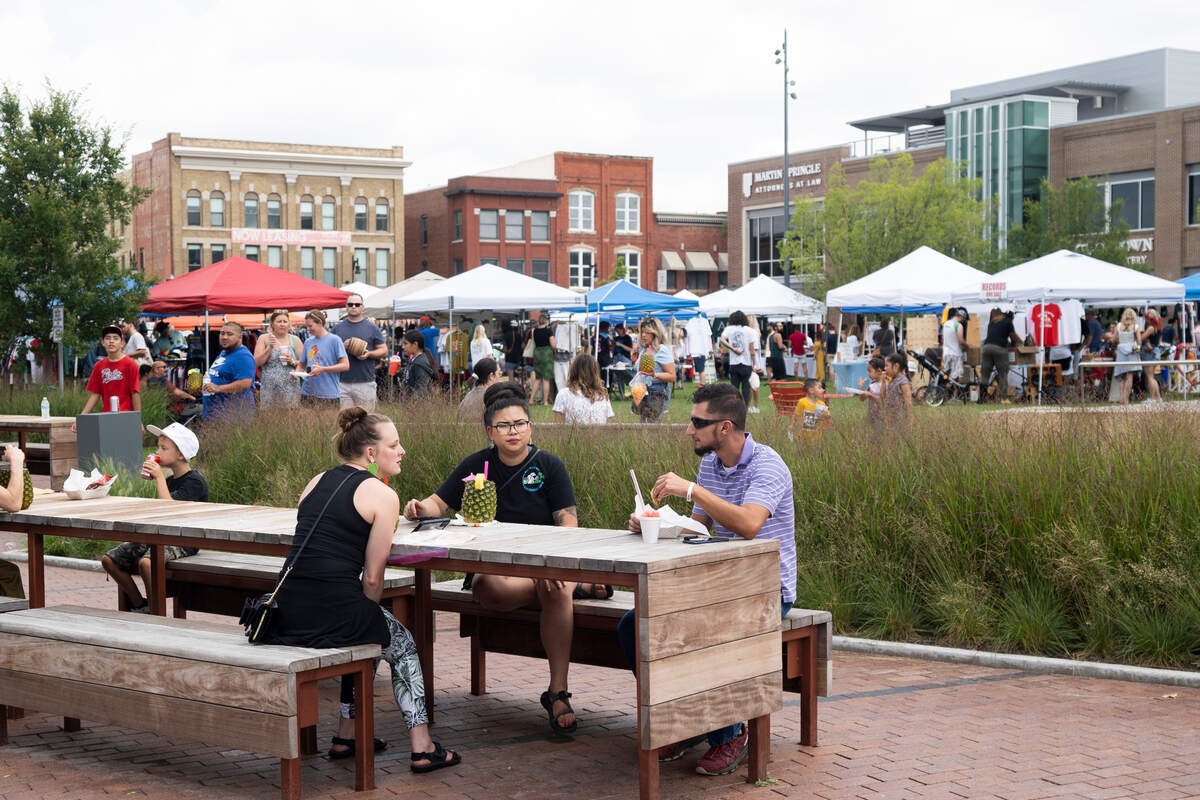
The commercial buildings are built to the edge of the park and the outdoor dining area of the HomeGrown restaurant is actually in the park. That seating is ironically labeled as the “Kindness Zone” and the next line on the sign says, “This seating area is reserved for our HomeGrown guests.”
The park includes a dog run where apartment dwellers can take their pets to do their business, but no bathrooms for human beings.
Chris Pumpelly, the president of the Park Board, is far from a Naftzger hater. In June, he was a key organizer of a large gathering there to celebrate Pride Month.
But he said some of the priorities of the park design are out of whack with the needs of the greater community.
“We build a dog run, but we don’t build a bathroom?” he said. “What kind of message are we sending? It’s don’t expect to be here for more than an hour unless you plan on buying something.”
And removing the park’s well-developed tree canopy was another bad call, because on hot days, people can only gather at the edge of the park where there’s some shade. “The park would not fill in (with people) until the sun sets behind the Eaton,” the apartment building immediately west of the park, Pumpelly observed.
A new approach?
But setting aside past mistakes, what really matters is where to go from here.
Last year, Misty Bruckner of Wichita State University’s Public Policy and Management Center floated one intriguing idea: merging Wichita’s parks and cultural affairs departments with Sedgwick County’s to create a countywide park and entertainment system.
While the idea hasn’t been heard from publicly since a joint City Council/County Commission meeting in June 2021, city and county staff have been “exploring a phased approach to cooperative programming and facility management,” City Manager Robert Layton said.
Those discussions paused as the county and city turned to their annual budget seasons, but they’re expected to resume this fall.
The concept of a comprehensive system makes sense on several levels, if run right: it could eliminate competition between city and county recreation programs, take advantage of economies of scale and reduce bureaucracy, leaving more money for programming.
But it would be a serious mistake to use consolidation as a step toward increased privatization, which Bruckner offered as a selling point. We have quite enough of that already.
The best thing about potential consolidation is that it could spur some innovative thinking on the role of public park and cultural services and how to distribute them in a way that is equitable to all residents, not just those who can afford top-flight activities and experiences.
It would certainly require a change in governance.
Part one would be reform of the Park Board.
For too long, it’s been controlled by what Dale Goter — who quit in disgust over the golf issue — calls “letterhead board members.”
These are people who like seeing their name on a board roster, but don’t do the hard work of understanding the issues and instead rubber-stamp whatever is recommended by staff.
Goter knows that when he sees it. He’s been both a journalist covering municipal government from the outside and later a lobbyist for the city who saw the inside story. If you’ve ever been to a Park Board meeting, you’ve probably seen it too.
One specific problem with Wichita’s Park Board is that it doesn’t have enough to do. Since that vote in 1990, it’s been relegated to an advisory role, sending recommendations to a City Council that may or may not follow them.
There’s little responsibility and even less accountability.
The appointment process, as Wichita State sociologist Chase Billingham noted in a recent guest column in The Eagle, is badly broken. Basically it consists of each individual council member trying to scrape together enough breathing bodies to fill all their slots on advisory boards.
Council votes on advisory board members are pro-forma and members almost always politely rubber-stamp whoever’s nominated, without knowing any more about them than their name.
Parks are too important for that approach.
If the city and county go through with consolidation — or even if they don’t — this might be a good time to consider establishing an independent park district, either citywide or countywide.
That may seem radical, but it’s not. It’s done in a lot of places.
Johnson County has the only independent park district in Kansas. When’s the last time you heard anybody complain about their parks?
Chicago’s parks are legendary, and they’re run by an independent district. Park districts are all over California, and whatever you may think of the rest of the Golden State’s political system, their district parks are generally first-rate and often phenomenal.
They too have commercial components, but unlike Wichita, they have the independence to stand up and tell businesses: We welcome you as part of our system. But we control the system, you don’t.
In some places, the board members are appointed by local government bodies. In others, they’re elected at large.
It doesn’t seem to matter, as long as whoever is selecting the members takes it seriously and isn’t just filling in names on a scorecard.
Whatever we end up doing, we need to remember this one thing: Public parks are called that because they belong to the public. And they should always be run for the benefit of the public — not privatized and profit-maximized for the benefit of private business interests or the convenience of city officials.
The sooner we understand that, the better off we’ll be.
This story was originally published August 25, 2022 at 5:25 AM.