
Mark McCormick: OU missed an opportunity in slapping down Sigma Alpha Epsilon
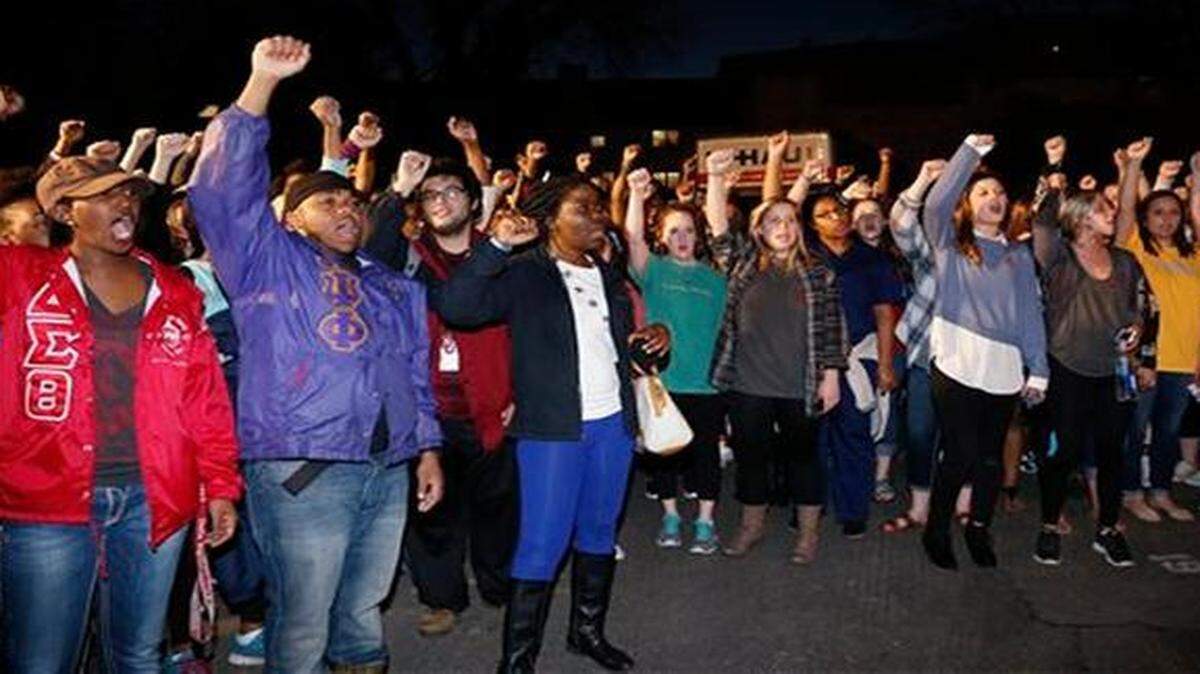
As much as I admire the spirit of University of Oklahoma president David Boren’s slap down of the Sigma Alpha Epsilon chapter on that campus, he missed an opportunity.
I’ll skip the legitimate arguments about the First Amendment and get right to my main point: Boren’s SAE beat down punishes people but lets the real problem of institutional racism off the hook.
People treat our chronic racial issues like a game of Whac-a-Mole. Whenever people make a mistake, out of ignorance or malice, we whack them on the head and allow the problem to slither back underground.
We never seem to address the core issue, which is complex and nuanced and requires deep learning.
If you caught the recent PBS special “American Denial,” a documentary about the groundbreaking work of Swedish economist and Nobel laureate Gunnar Myrdal, you may understand why we behave this way.
The Carnegie Corp. hired Myrdal to examine American society, and Myrdal found profound differences between what we profess to believe and how we actually behave. He titled his 1944 paper “An American Dilemma.”
Myrdal argued that the so-called “Negro problem” was actually an “American civilization problem.” For all of our talk about freedom and equality, he said, we fall woefully short of that ideal.
“It’s anything but a Negro problem,” sociologist Sudhir Venkatesh said in the documentary. “It’s a condition produced fundamentally by exclusion, racism and discrimination and the unequal distribution of resources.”
Myrdal believed Americans were in denial. There’s a lot of truth in that, it seems.
We’re quick to punish interpersonal instances of racism, but leave untouched and unexamined the systems and processes that constitute the real problem. Today, institutions oppress people, not individuals.
Why, for example, when black people and white people use marijuana at the same rate are black people four times more likely to be punished? And why, in the most multiethnic, multicultural, multiracial America ever, are so many of our workplaces virtually all white?
And isn’t it fair to believe that municipal governments like the one the Justice Department uncovered in Ferguson, Mo., where law enforcement and the courts preyed on black residents to finance the town, exist elsewhere? I don’t think they invented that scheme.
Those systems are the problem, but many of us would explain these examples away solely as personal behavior. There’s clearly a “choices” element, but that alone can’t explain such vast outcome disparity.
So when Boren smashed the individuals in SAE, some people thought, “problem solved.”
But those young men, the many others who think like them, and the rest of us missed out on a learning opportunity.
They didn’t have to face anyone they offended and understand why what they did hurt people so. There was no deep examination. They were sent packing to their Whac-a-Mole hole with a good country whoppin’, no correction, and likely harboring more resentment than ever of the people they mocked.
But it’s not too late to fix this.
Allow the SAEs to apply for reinstatement and make this learning opportunity a part of the path to reinstatement. Allow the campus to participate. Study it. That’s what universities are supposed do.
Given that OU had an honor code, a hard-earned reputation and black athletes to recruit, Boren may have had to drop the hammer as he did.
But if we’re going to make progress and break our cycle of denial, we need to be as intolerant of racism as we are of racists.
Mark McCormick is executive director of the Kansas African American Museum in Wichita.
This story was originally published March 14, 2015 at 7:04 PM with the headline "Mark McCormick: OU missed an opportunity in slapping down Sigma Alpha Epsilon."