
Kansas Buddhist meditation retreat revealed the wisdom of Pope Leo | Opinion
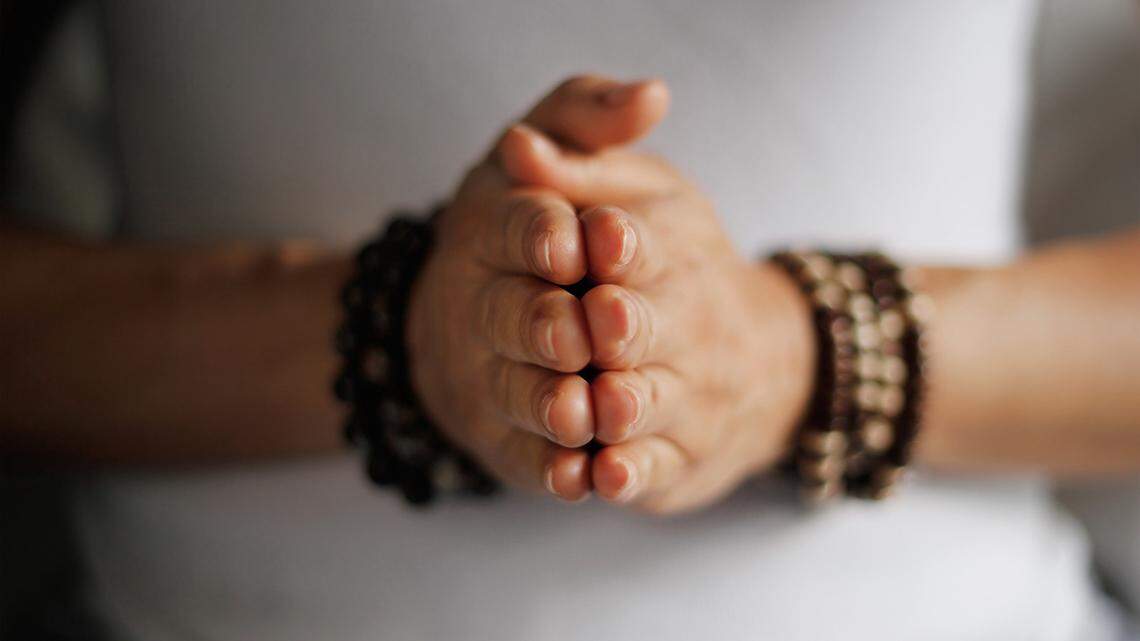
An accelerating desire for peace and quiet caused my wife and me to join a Buddhist meditation retreat hosted at a Catholic center near Kansas City after Christmas.
The news wouldn’t improve after Epiphany. But the world would go on. Our country club still would serve the best french fries when we reintegrated into our privileged, Country Club Plaza-area life. (Munching those fries, and digesting events in Venezuela, proved our forecast.)
Plus, the interfaith angle intrigued me. She’s a Malaysian-Chinese Buddhist, and Catholic school alumnus. Raised in the Hindu-Sikh tradition, I became Catholic on Easter Vigil 2001, 12 years after our marriage at the United Nations Chapel in New York by our family Methodist pastor.
What I didn’t expect at the weeklong, $600 per person (all-inclusive) retreat was a revelation that wasn’t idiosyncratic. Dare I say, it was a generalizable enlightenment with resonance beyond America’s heartland. As an international law professor, I disclose it to flip news in 2026 and advance world peace.
Prompting this disclosure is a Buddhist teaching about awareness of a reality about which there’s global avoidance: Many international legal conflicts have no enduring legal solutions. The answers are not in treaties, but in the heart. The heart never divides — but the mind does.
The hearts of our Buddhist lamas (teachers), host Catholic nuns and Jesuit priests were “all in” with our small sangha or community. We shuttered our iPhones and observed Noble Silence. We filled the secular void with sacred meditation and dharma or teaching talks. And, in my case, daily Mass, too.
The revelation?
Witnessing Pope Leo XIV’s episcopal formula embraced as the third of the three characteristics of human existence in Buddhist teaching. His pontificate’s motto is: In the One, we are one — In Illo uno unum.
Lessons on suffering, impermanence
That third characteristic is no self, anatta or not self. It’s the hardest — yet most important — to understand to reach world peace. Understanding, says Vietnamese monk Thích Nhất Hạnh, is love.
No self relates to the first two Buddhist identifications about life: suffering or dukkha, and impermanence or anicca. Suffering results from our ignorance of no self. Impermanence arises from our no self. For Christians, those first two hallmarks are intuitive.
First, whenever Christians contemplate a crucifix or cross, they’re aware of history’s greatest suffering, by God incarnate who endured the worst human rights degradations in sacrifice to save all. Buddhists, too. Don’t forget the doctrine of universal salvation. Ideally, our entry into the Paschal Mystery is of Buddhist quality: It’s clear, continuous and present in the moment. It’s free of distractions. We don’t grasp the temptation to check Jayhawk basketball scores on the ESPN app.
Second, when Christians hear this world is passing away — as in Matthew, 24:35, 1 John 2:17 and 1 Corinthians 7:31 — we resonate with the Buddhist characteristic that nothing in this existence plane endures. “Do not be afraid” is the most repeated Old and New Testament advice. Afraid of what? Of the status quo shifting. Yet, the crucifixion was the disruptive event necessary for a resurrection. So, in Buddhist terms, let pass the thought of fear, accept change is inevitable and know true reality manifests later.
Now for Pope Leo’s motto and no self in Buddhism.
Ask, “Who am I?” This inquiry requires awareness or consciousness of one’s state, like an examination of conscience before confession. Avoid anxiety about the answer, which tempts us to evasion.
Our true self is never fully visible — as Buddhist scholar Alan Watts says, no more than we can turn our eyeballs 180 degrees and look inside. What we think of “self” is not necessarily who we really are. But if we minimize our ego, cut out self-deceiving clutter — and with equanimity and open-heartedness — pursue this Socratic “know thyself” inquiry, we glimpse our true self. We travel toward self-lessness.
That’s redolent of the challenge Mary and Joseph faced. At the Annunciation, Mary said yes to the Archangel Gabriel. In his dream, Joseph said yes to the Angel, taking Mary and Jesus to Egypt. Thus, in the first year of Christ’s life, the Holy Family was homeless in their homeland, and refugees in a foreign land — dramatic consequences of two intentional, selfless choices that changed the world to serve all for all time.
Juxtaposing meditation, Mass
In Buddhism, the journey’s endpoint is discovering there’s no self. All is in each one. Each one is in all. None of us is distinct as separate from the universe.
John Donne’s “No Man is an Island” Meditation XVII sets this tone: A church bell tolling for one tolls for all, because we share mortality. Human rights law embodies oneness in the United Nations’ 1948 Universal Declaration of Human Rights, articulating principles for all people, regardless of status.
Is Pope Leo’s motto — in the One, we are one — akin to no self?
Yes, it seems so, worth exploring, came the answer at the retreat.
Christian human dignity proposes each person is unique, priceless and unrepeatable, created in God’s image and likeness. That’s not quite in Buddhist canon — but unity is, and it’s the motto. There’s a synthesis that the Holy Father and Dalai Lama “get.”
So, consider juxtaposing meditation with Mass. Buddhist practices may enhance Christian devotion. I was mindful of each word of the Lord’s Prayer. The Eucharist was a blessing consciously received internally to radiate externally. Our Catholic hosts intoned their love for all retreatants. They thanked me for worshiping with them. I cried. A lot.
Raj Bhala is University Distinguished Professor at the University of Kansas School of Law. The views expressed herein are his own and do not necessarily represent those of KU or the state of Kansas, nor of the Buddhist Temple or Catholic Center, or their clergy and associates involved in the retreat.
This story was originally published January 8, 2026 at 5:09 AM with the headline "Kansas Buddhist meditation retreat revealed the wisdom of Pope Leo | Opinion."