
Trade and immigration chaos threatens Kansas agriculture | Opinion
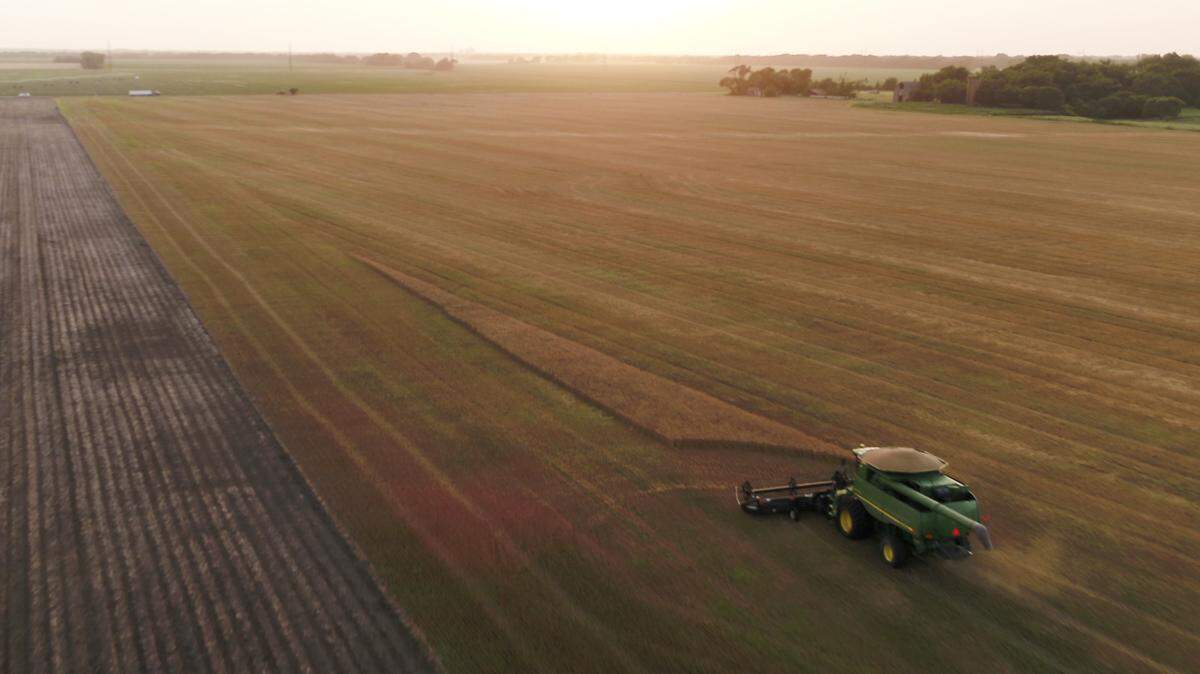
America’s food system and our farm families are navigating one of the most unpredictable economic environments in recent memory.
From labor shortages and rising input costs to trade disruptions and the lack of a new, five-year farm bill, the pressures on rural producers are mounting.
And the consequences are showing up in our balance sheets, putting at risk the viability of farming.
Here in southwest Kansas, where agriculture is not just an industry but a way of life, farmers and cooperatives like the one I lead are living this uncertainty every day.
This is not a distant threat — farm bankruptcies are already rising.
That poses a growing risk not just to individual operations, but to the vitality of small towns, the security of our national food supply, and the strength of our economy.
My team at Alliance Ag & Grain has seen firsthand how policy decisions in Washington ripple across America’s heartland.
Based in Spearville, our organization consists of six cooperatives that serve about 2,000 farmer-owners across 20 communities. We provide value-added services in agronomy, grain, energy, and feed that help producers maximize profitability while safeguarding their land and water.
Anybody can sell products and commodities. Our mission goes deeper: equipping farmers with precision ag technologies, sustainable practices, and grain marketing options that keep family farms viable for the next generation.
Our farmers need certainty, and they need an economic and policy environment that supports their profitability.
We must first get out of the immediate crisis.
Congressional leaders must prioritize passing an economic assistance package to assist U.S. farmers struggling to make ends meet.
Policymakers can then use the time provided by the recent farm bill extension to develop a new, five-year farm bill next year, so farmers have the certainty they need to plan for the future.
Any delay to these solutions comes at a time when farmers are already under strain.
Labor availability remains a top concern. Farmers have raised wages and offered year-round work but still can’t fill essential roles. Immigration reform is part of the solution but so is ensuring that our policies reflect the year-round, technical nature of modern agriculture.
Trade uncertainty is another drag on farmer livelihoods. Over the past few decades, farmers and agribusinesses have worked hard to build relationships and cultivate markets overseas that are essential to the survival of U.S. agriculture.
The numbers tell the story: Kansas agriculture contributes more than $76 billion annually to the state’s economy and supports over 250,000 jobs.
Wheat alone generates billions in receipts, while our livestock and beef industry provides jobs, markets for grain, and stability to communities large and small.
Agriculture is not just part of our state’s economy, it’s the backbone.
The pressures hit farmers twice: once when buying inputs, then again when selling into volatile markets. That’s a recipe for red ink, not resiliency.
We need trade policies that reward — not punish — American producers. We need immigration solutions that reflect the realities of modern agriculture. We must ensure that farmers across the U.S. have the confidence to plan, invest, and hire without fear of sudden disruption.
The good news is that Kansas has champions in Congress who understand these stakes. Rep. Tracey Mann has been a vocal advocate for agriculture as a member of the House Agriculture Committee.
Sen. Roger Marshall and Sen. Jerry Moran, both members of the Agriculture Committee, have long fought for rural communities and know that farm policy is essential to a strong economy and our national security.
Their leadership will be critical in ensuring Kansas farmers have the certainty they need to plan, invest and grow.
Farming is about more than a crop or a season.
A healthy crop means a successful farm. A successful farm means strong families. And strong families mean resilient communities that form the fabric of Kansas.
The future of family farming depends on commonsense solutions at home and strong trade relationships abroad. Recognizing the crisis we face isn’t enough. We need action — and we need it soon.
— Stan Stark is CEO of Alliance Ag & Grain, a farmer-owned cooperative headquartered in Spearville, Kansas.