
PBS, NPR defunding an attack on liberalism, but not like you may think | Opinion
A person who has access to my public Facebook profile asked me a troubling question:
“Aren’t you happy that the Trump administration is defunding NPR and PBS? I would think that you of all people, because you are a teacher and because you are so anti-Trump, would want government hands out of the media.“
My response was initially intended to be a three-sentence paragraph. But it turned into a missive that when I read it aloud to my friends, I found myself so encapsulated that I started annunciating as though I were Dan Rather reporting live from the battlefields of south Vietnam, and this was life and death.
I was far too excited.
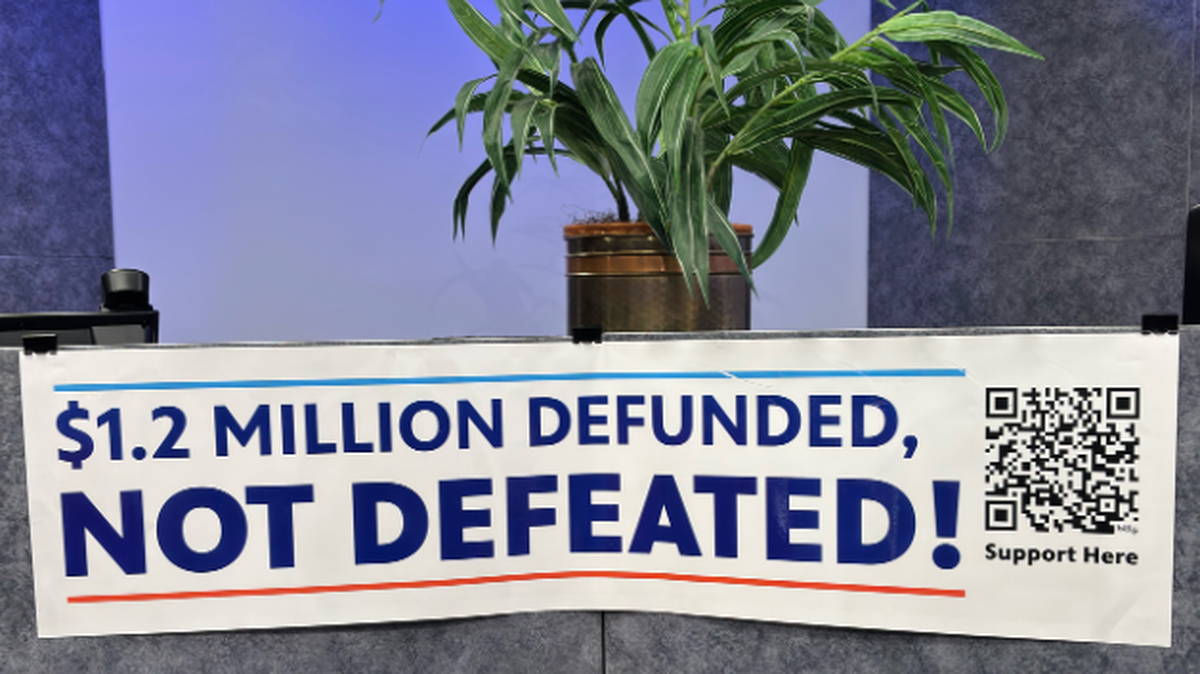
So, here’s the answer to my fellow citizen’s question: No, ma’am. It doesn’t make me happy that the Trump administration would rip the lifeline out of NPR and PBS. It actually appalls me and makes me pretty furious.
On my way to teach in the morning, I listen to NPR News and based on their stories, I do my own research.
It’s a good starting point. And it has to do with the fact that they at least make an attempt to limit bias.
Although they might be interpreted as biased, NPR reporters include interviews from all sides when it comes to broadcasting world news. As a person who spent many years, professionally, studying and practicing the art of journalism, NPR seems like one of the last vestiges of an attempt at ethical journalism in the popular American media.
It also lets the listener and the reader form their own opinion. Opinion, worldview, and cultural adoption are not for the news or any imbecile politician in a pinstriped suit to bestow upon anyone.
Opinion is something that you sculpt, craft, and sew for yourself. And with that opinion you mold and shape your moral compass and that of your precious, vulnerable kin.
There’s a complexity in this proposition that most people are oblivious to.
When a program is subsidized by the government, the people who do that work for a wage and are usually not motivated by the auspices of a biased government. These individuals are usually trying to pay their bills and just want to do a good job.
And if they received a quality journalism education, as did I, they usually do not want to be tools and spineless, mindless puppets of the oligarchs whom at present run this Wild West comedy show.
This is what has made programming broadcast on NPR and PBS good for the young and naïve mind. When a young person or any person is not full of biased government fodder, they’re free to have a liberal educational process.
When I use the word liberal here, it has nothing to do with the modern paradigm that surrounds it. It has everything to do with fostering enlightened thinking as pertains to retaining and preserving empathy for all people.
NPR and PBS have been government subsidized for a very long time. And when programs, any programs, are subsidized by an agency for long enough, they are more likely to maintain a level of fairness and balance, even if there is occasional subjectivity in the writing of the programming.
This balance comes because producers conceivably have the influence of multiple generations of bipartisan government contribution.
Just by virtue of having a huge level of influence, and a large number of benefactors, the content that ends up on these outlets is more diverse.
I don’t mean diverse in terms of the social justice definition of that word.
I mean it in terms of the definition that people like Thomas Payne and John Locke would have applied to it. I mean diverse in the classically liberal sense of being erudite, artistically logical, and detail oriented to the point of making both modern liberals’ and conservatives’ heads spin.
Contemporary citizens, even the best of thinkers, have very little faculty in understanding, and far less interpreting the concepts that these people formulated so long ago.
I find it deliciously and farcically ironic, that the people that preach and espouse the almost deity-like quality of the founding fathers, seemingly have read none of the literature that these people produced — which they are free to access in all libraries in America.
The writings with which they blueprinted, sculpted and engineered the United States have the same gravitational mythos surrounding them as do the stories of Romulus and Remus. So, they are deserving of our reference and reverence.
And it’s this literature and language and history and culture, that broadcasters and producers alike with PBS and NPR promote for the young and the not yet educated. They hold a set of keys to a door through which young and impressionable people may walk and/or run in order to become enlightened, critical thinkers.
I come from the poorest of poor backgrounds. I grew up in trailer parks in a small town. I was thought by my presumptuous public-school teachers to be nearly illiterate because I had a stutter and was severely dyslexic as a young man. I’ve battled with and beaten my struggles with depression, anxiety and ancestral trauma.
So, if I by virtue of my own personal volition, am able to attain this information and the accompanying wisdom, then I think the American public can do just a little bit better at discerning what is and is not the goodwill of the people in charge of this country, that has clearly been forsaken by the heavens.
To be clear, I do not think any general lack of critical thinking ability is entirely the fault of the people. That would be to intellectually indict my own ilk.
It is within any man or woman’s power to attain intelligence. However, the people in charge of dictating pedagogy are the ones I’m glaring it. Local politicians, library directors, and school board members: these people all have a stake in why we’ve found ourselves in this predicament.
I could have just refuted the Facebook citizen’s assertion by briefly remarking that I thought the defunding of public news and broadcast service was a bad idea.
This is a far more important issue though. Engaging with the public and extending a hand is what seemed more pressing. This is the fight for the American journalist now. And for my fellow educators as well, the prescient marching orders are at hand.
Do not let your eyes be diverted from a government scalping of public radio and childhood education.
— Matt Cooper is a teacher, writer, poet and a graduate student at Wichita State University.
This story was originally published September 12, 2025 at 11:48 PM.